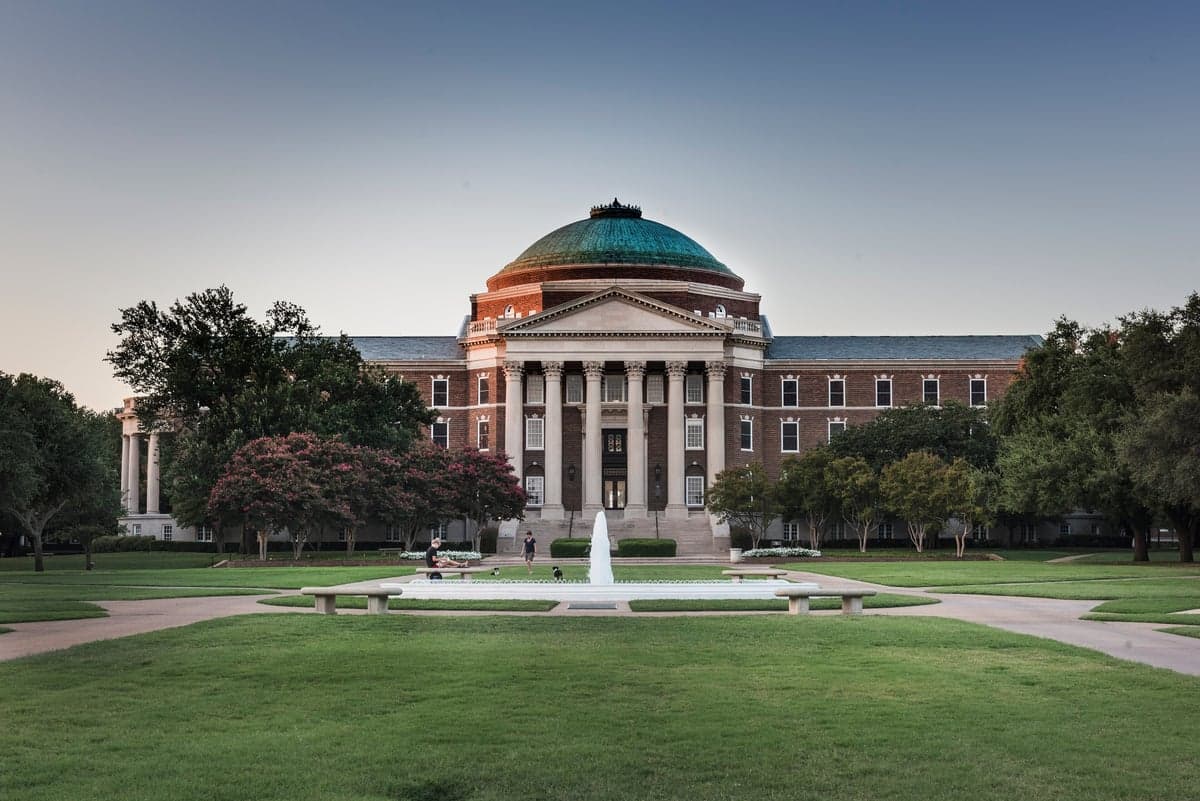
Photo: Wikipedia
Strategic Assessment of University Park, TX
Multiple tactical vulnerabilities. Population density, target proximity, or disaster risk are likely compounding. A retreat property and exit planning is required.
What does the Strategic Assessment tell us?
Our Strategic Assessment grades tactical survivability of an area. Major population centers, military targets, fallout zones, natural disasters, and border exposure all drive risk — lower exposure means a more defensible position in a crisis.
This is heavily inspired by Joel Skousen's Strategic Relocation book. Highly recommended you checkout the book ($)What does this tell us?
Our Strategic Assessment grades tactical survivability of an area. Major population centers, military targets, fallout zones, natural disasters, and border exposure all drive risk — lower exposure means a more defensible position in a crisis.
This is heavily inspired by Joel Skousen's Strategic Relocation book. Highly recommended you checkout the book ($)Strategic Pillars

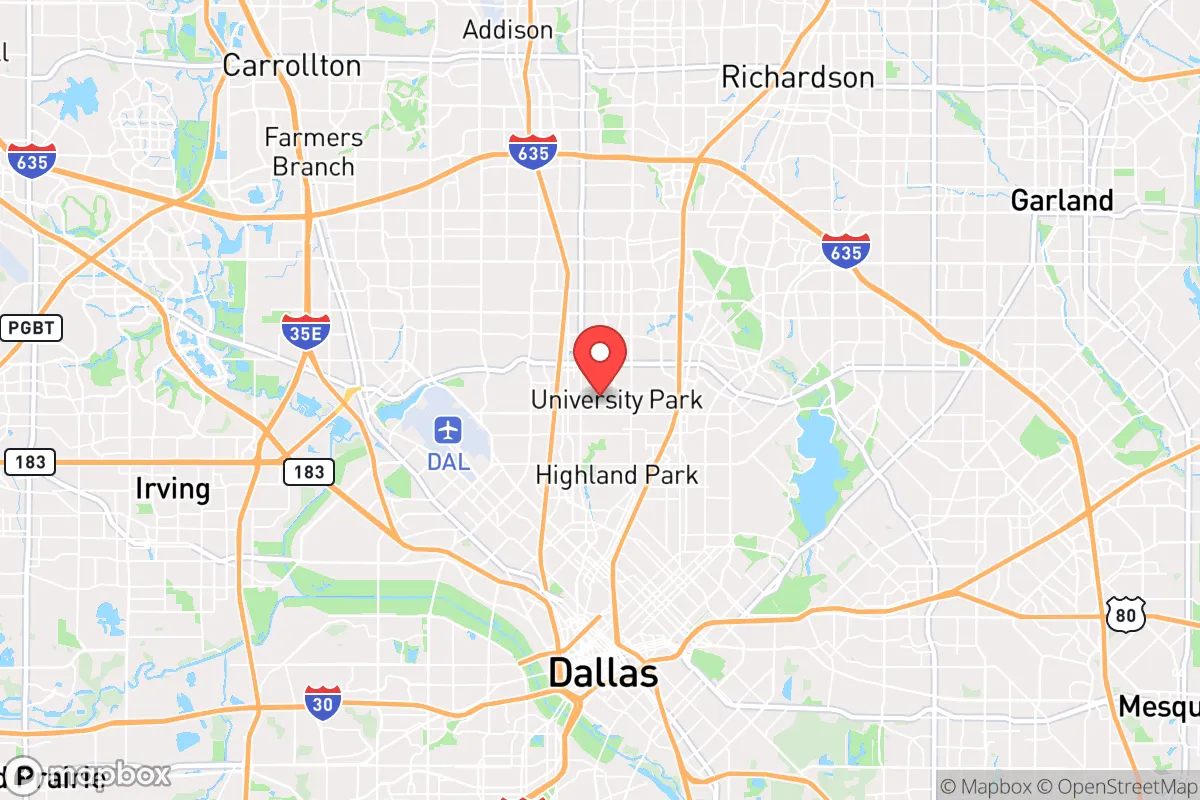
Key Distances
Regional Safe Places
Below is our recommended "safe zones" in Texas and the surrounding area based on our strategic heuristics. For most people, it's unrealistic to live in a “safe zone” full-time due to work, family or other personal reasons. They tend to be more rural. However, many of these areas are perfect for second homes and retreat properties that double as a vacation home or even a short-term rental.

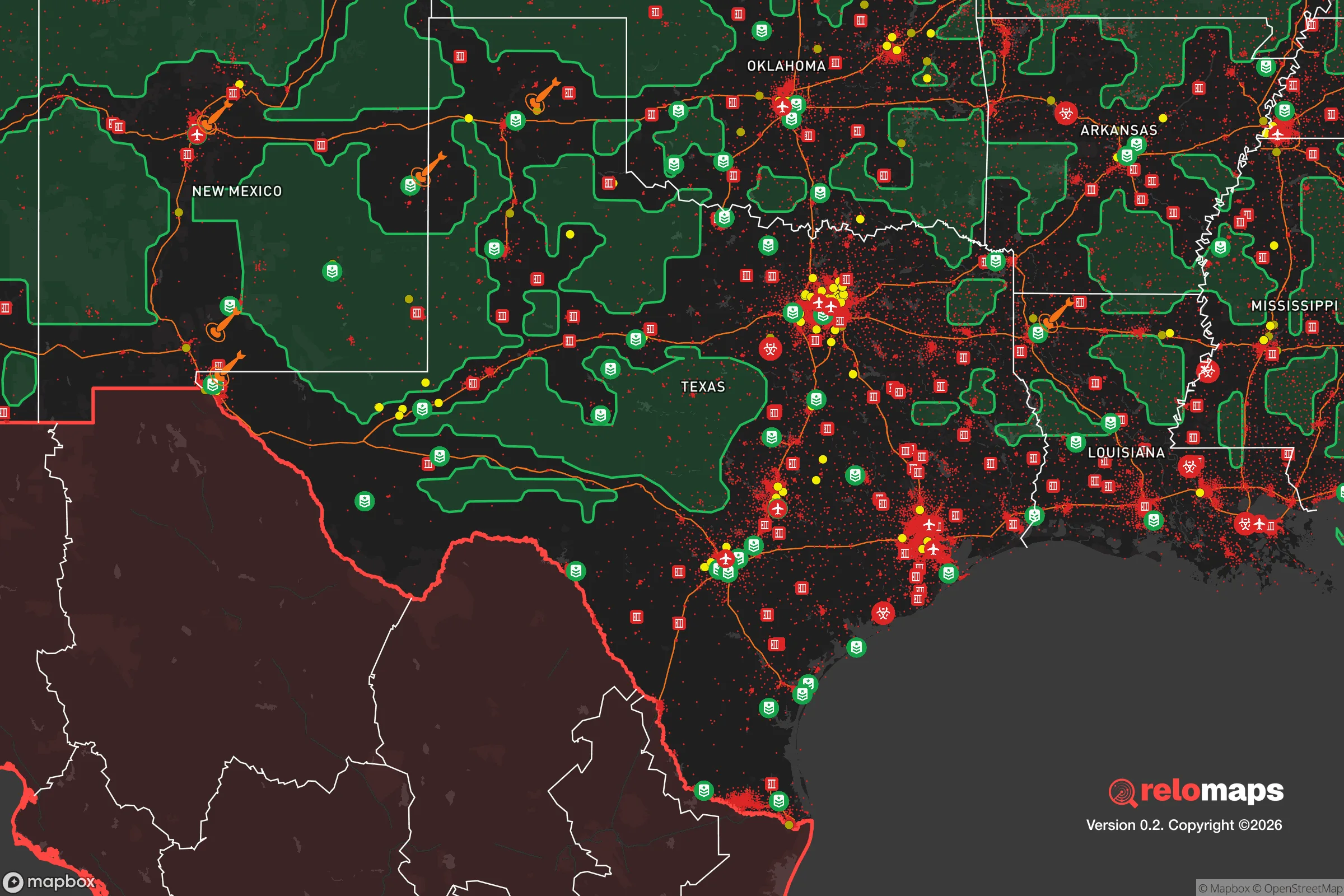


Important Note: For informational purposes only. This does not mean nothing bad ever happens in the green zones. Please use common sense. This is based on public data and modeled with AI. We tried to take a conservative approach but mistakes happen. We update this regularly as new information becomes available.
Solar Generator Recommendations
Backup power matters more here than in safer locations. We've picked three solar generators across budgets and capacity tiers — start with the budget unit if you only need a few essentials, or step up if you want to run a fridge and HVAC for days at a time.

Jackery Portable Power Station Explorer 300
Budget OptionPower on the Go: Weighing only 11 lbs, it's convenient to set up and store with book-sized foldable solar panels

BLUETTI Portable Power Station AC180
Designed for both indoor and outdoor scenarios, AC180 is highly capable as it has a robost capacity and continuous output power.

EF ECOFLOW DELTA Pro Ultra Power Station
Upgraded PickEcoFlow DELTA Pro Ultra is a whole-home energy system designed to grow with your family. Integrated with the Smart Home Panel 2, it scales to meet your evolving energy needs — keeping your home powered, intelligent, and secure through every stage of life.
We earn a commission, at no additional cost to you.
Strategic Assessment Analysis
University Park, Texas, presents a complex strategic picture for the conservative prepper. On one hand, its location within the Dallas-Fort Worth metroplex offers unmatched logistical advantages for supply chains and networking; on the other, that same proximity to a major urban center introduces significant vulnerabilities. The town’s high property values, strong local governance, and insulated, affluent demographic create a buffer against the immediate chaos of a societal collapse, but its physical position—a dense, suburban island surrounded by a sprawling city—demands a sober assessment of its long-term defensibility and resilience. For the single individual or family prioritizing preparedness, University Park is a high-risk, high-reward proposition: a place to thrive during stability, but one requiring a robust exit plan for when the grid falters.
Geographic position and natural advantages for long-term stability
University Park sits on the Blackland Prairie, a region of relatively flat, fertile land that historically supported agriculture. This is not a mountainous redoubt, but the area’s geology offers a few quiet advantages. The soil is deep clay, which, while challenging for building, provides excellent groundwater filtration and a stable foundation for underground structures like storm shelters or bunkers. The Trinity River, about five miles east, is a perennial water source, though it’s heavily polluted in its urban stretches. More practically, the region’s aquifer systems—the Trinity and Woodbine aquifers—lie at moderate depths, meaning a private well is a viable, if expensive, option for a property owner. The climate is continental, with hot summers and occasional severe weather, including tornadoes and hailstorms, which are a genuine risk. However, the lack of major seismic activity, hurricanes, or wildfires (relative to the West) makes this a lower-risk zone for natural catastrophes. The flat terrain also means that a determined prepper can establish a defensible perimeter with relative ease, though the suburban layout of University Park—with its grid of tree-lined streets and large lots—offers more concealment and chokepoints than a typical suburban sprawl. The town’s elevation, around 550 feet, provides no commanding views, but it does offer decent drainage and minimal flood risk compared to nearby areas like the Trinity River bottoms.
Risks, exposures, and proximity to high-value targets in the metroplex
The single greatest strategic liability of University Park is its location. It is less than five miles from downtown Dallas, a major economic and transportation hub that would be a primary target for any coordinated attack, whether from a foreign adversary, domestic terror, or a cascading grid failure. The proximity to Love Field Airport (about three miles northwest) and Dallas/Fort Worth International Airport (about 15 miles west) means that any disruption at these facilities—from a dirty bomb to a cyberattack on air traffic control—would create immediate chaos in the surrounding neighborhoods. Furthermore, the area is ringed by critical infrastructure: major interstate highways (I-35E, I-75, I-30) that would become instant chokepoints or escape corridors, and rail lines carrying hazardous materials through the metroplex. The Dallas Federal Reserve Bank and the Dallas County Courthouse are within a 10-minute drive, making University Park a potential fallout zone for any civil unrest targeting government or financial institutions. The town’s wealth also makes it a target for looting or organized crime during a breakdown—affluent suburbs are often the first to be raided when urban food supplies run dry. On the positive side, the local police department is well-funded and responsive, and the town’s low crime rate (violent crime is roughly 80% below the national average) suggests a community that would self-organize quickly. But the reality is that University Park is a soft target in a hard neighborhood.
Practical resilience for a relocator: food, water, energy, and defensibility
For a relocator serious about self-sufficiency, University Park offers a mixed bag. Food security is a challenge: the town has no significant agricultural land, and the large lots are mostly manicured lawns, not gardens. However, the Dallas Farmers Market (about six miles away) and numerous local grocery stores provide a robust supply chain during normal times. For long-term storage, a prepper would need to invest in a deep pantry, freeze-dried stores, and a root cellar—the latter is feasible given the clay soil. Water is more promising: the municipal supply comes from the Elm Fork of the Trinity River, treated at the Dallas Water Utilities plant. A grid-down scenario would cut that supply, but a private well (average depth 200-400 feet) is a realistic option for a property owner, though it requires a generator or hand pump. Rainwater harvesting is also viable, with average annual rainfall of about 37 inches. Energy independence is achievable but expensive: solar panels are common in the area, and the grid is relatively stable, but a home battery system (like a Tesla Powerwall) and a backup generator are essential for a prepper. Natural gas is widely available, so a dual-fuel generator is a smart choice. Defensibility is the weakest link. The town’s layout—with multiple entry points, a dense population, and no natural barriers—makes it difficult to secure. A single-family home on a corner lot is a liability; a home on a cul-de-sac with a fenced backyard and a reinforced door is better. The Highland Park Village shopping center, a mile away, would become a contested resource. The best strategy is to establish a mutual assistance pact with neighbors—the community’s homogeneity and shared values (high education, conservative leanings) make this more likely than in a diverse urban area. For a single individual, a bug-out location in the Hill Country (about 200 miles southwest) is a non-negotiable part of the plan.
The overall strategic picture for University Park is one of calculated risk. It is not a survivalist’s paradise—it lacks the remoteness, natural resources, and defensibility of a rural retreat. But for the conservative prepper who values community, infrastructure, and the ability to maintain a normal life while preparing for the worst, it offers a unique balance. The key is to treat University Park as a base of operations, not a final redoubt. Invest in a well, solar panels, and a deep pantry. Build relationships with like-minded neighbors. And always have a vehicle gassed up, a go-bag packed, and a route out of the metroplex memorized. The town’s greatest strength is its insulation from the immediate chaos of a city-wide event—its wealth and governance buy time. Its greatest weakness is that time is finite. For the prepared individual, University Park is a place to live well while the world burns, but only if you have a plan to leave before the fire reaches your doorstep.

* Values derived from national, state, county, city and local statistics and may differ in a specific area. Last updated: 2026-04-14T04:35:28.000Z
Narrative content on this page is AI-generated and may contain mistakes. Verify any details that matter before acting on them.
ReloMaps may earn a commission from affiliate links at no extra cost to you.

