Photo: Wikipedia
Quality of Life in University Park, TX
Above-average quality of iife. The area offers a reasonable cost of living, decent mobility, and a mix of neighborhood amenities.
What does Quality of Life tell us?
Quality of Life blends cost of living, nearby amenities, socioeconomic signals, and neighborhood character. City-level scores represent the whole municipality; individual neighborhoods can differ.
What does this tell us?
Quality of Life blends cost of living, nearby amenities, socioeconomic signals, and neighborhood character. City-level scores represent the whole municipality; individual neighborhoods can differ.
Cost of Living
302% above national average
The Real Cost of Living in University Park, TX for 2026
| Tier | Individual | Family (4) |
|---|---|---|
| Survival | $118k | $221k |
| Comfortable | $696k | $1M |
| Luxury | $452k+ | $700k+ |
| Elite (Top 5%) | $647k+ | $1M+ |
24%
The Area Signal
A metric tracking the socioeconomic signals of the area.


Hobbies
Explore the areaGroceries
0 within 10 miles
Gas
0 within 10 miles
Hospital
3 within 20 miles
Airport
DFW — Dallas Fort Worth International
Post Office
USPS — Frisco, TX
Critical Amenities
Quality-of-Life Analysis
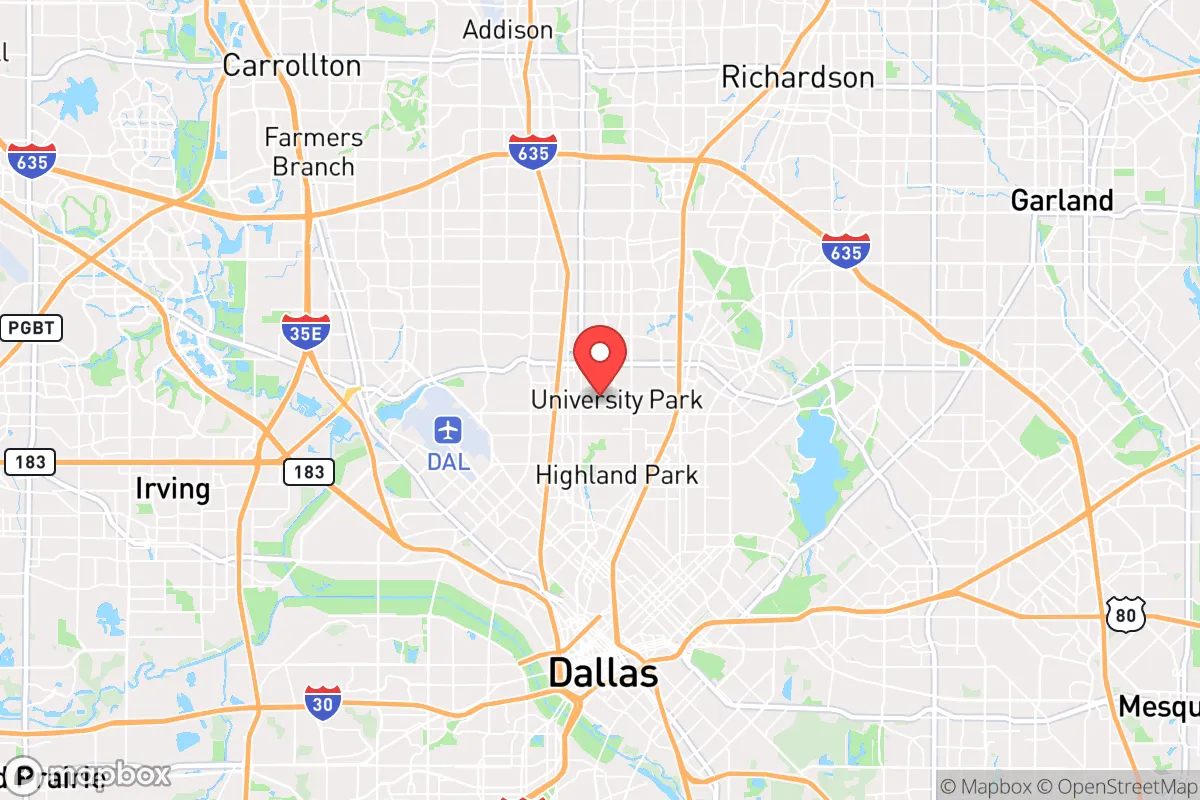
University Park, Texas, is one of the wealthiest enclaves in the Dallas-Fort Worth metroplex, a small, independently governed city of roughly 25,000 residents that functions as a high-end residential island within Dallas. The area is defined by its extreme affluence, with a cost of living index of 402 (four times the U.S. average), and it primarily attracts established professionals, corporate executives, and families who prioritize top-tier public schools, low crime, and a tight-knit suburban feel within minutes of downtown Dallas. Life here is less about affordability and more about access to premium services, elite education, and a meticulously maintained environment.
Cost of living, housing prices, and how University Park compares to nearby suburbs
The financial barrier to entry in University Park is among the highest in North Texas. The median home value sits at $1,766,700, placing it well above neighboring Highland Park (also over $1.5 million) and far beyond Dallas proper or suburbs like Richardson or Plano, where median values are typically in the $400,000–$600,000 range. Renting is similarly expensive, with a median rent of $2,940 per month, though this is slightly below the city's astronomical purchase prices. For context, the median rent in Dallas is roughly $1,500, meaning University Park renters pay nearly double the citywide average. Property taxes are high—typical for Texas—but residents receive direct value in the form of the University Park Independent School District (Highland Park ISD), which is consistently ranked among the top public school systems in the state. The average commute of 18.6 minutes is notably short for the region, reflecting the city's proximity to major employment centers like Uptown Dallas, the Dallas Arts District, and the Medical District, which offsets some of the housing cost burden for working professionals.
Daily life, schools, and amenities that define the University Park experience
Daily life in University Park revolves around a walkable, park-filled environment that feels more like a small town than a dense urban core. The city is served by Highland Park ISD, which includes the nationally recognized Highland Park High School, Armstrong Elementary, and McCulloch Intermediate School—all within walking distance for many residents. The community is anchored by Snider Plaza, a historic shopping district with boutique retailers, restaurants, and a weekly farmers market, while the nearby University Park Public Library and Caruth Park provide recreational and cultural hubs. Crime rates are among the lowest in the Dallas area, with violent crime virtually nonexistent and property crime well below national averages. The city's own police and fire departments, combined with strict zoning and code enforcement, maintain a pristine, orderly environment. Residents tend to be highly engaged in local governance and school activities, creating a social fabric that is both exclusive and community-oriented.
University Park is best suited for families and professionals who can absorb the high cost of living and who prioritize exceptional public education, safety, and a short commute over urban diversity or nightlife. It is a place where the trade-off is clear: you pay a premium for a predictable, high-quality suburban life that is physically and culturally close to Dallas's urban core. Those who thrive here are typically dual-income households with school-age children, empty nesters downsizing from larger estates, or executives who value the prestige and convenience of the Park Cities address. For anyone seeking affordable entry into the Dallas market or a more eclectic, walkable urban experience, University Park will likely feel prohibitively expensive and insular.

Crime in University Park, TX
Lower crime rates than 81% of comparable U.S. locations.
Violent CrimeViolent Crime Analysis
Property CrimeProperty Crime Analysis
Crime Analysis
University Park, Texas, is one of the safest cities in the Dallas-Fort Worth metroplex, with a violent crime rate of just 43.5 incidents per 100,000 residents—roughly one-tenth the national average. However, its property crime rate of 1,480.5 per 100,000 sits slightly above the national median, a common trade-off in affluent, densely populated enclaves. The city’s overall safety profile is strong, but residents should remain vigilant about theft and vehicle-related crimes, particularly given the broader context of progressive criminal justice policies in Dallas County that critics argue prioritize offender rehabilitation over public protection.
Crime in context
University Park’s violent crime rate is dramatically lower than both the Texas state average (roughly 460 per 100,000) and the U.S. national rate (approximately 380 per 100,000). This places the city among the safest 5% of municipalities nationwide for violent offenses. The property crime rate, while elevated relative to the national figure of about 1,950 per 100,000, is still below the Texas state average of roughly 2,500 per 100,000. However, these statistics must be weighed against the reality that University Park falls under the jurisdiction of Dallas County, where progressive district attorneys and judges have implemented policies such as reduced cash bail, diversion programs for repeat offenders, and sentencing guidelines that critics say embolden criminals. For a small, wealthy city surrounded by a large metro area, this means that offenders from neighboring jurisdictions—where enforcement is often softer—may view University Park’s high-value targets as attractive opportunities.
What residents experience
Daily life in University Park is characterized by a palpable sense of security, with the University Park Police Department maintaining a visible presence and rapid response times. The most common crimes reported are larceny-theft and motor vehicle theft, often from unlocked cars or driveways in the city’s tree-lined residential neighborhoods. Burglary rates are moderate but have ticked upward in recent years, a trend local officials attribute to organized theft rings operating across Dallas County. Violent crimes such as robbery, assault, and homicide are exceedingly rare—typically fewer than 10 incidents per year in a city of 25,000. Residents frequently cite the city’s neighborhood watch programs and the close-knit community as key deterrents, though some express frustration that Dallas County’s lenient prosecution of property crimes reduces the likelihood of stolen goods being recovered or repeat offenders being held accountable.
Neighborhood-level variation is minimal within University Park’s 2.5 square miles, as the city is uniformly affluent and well-policed. The area immediately adjacent to Southern Methodist University (SMU) sees slightly higher rates of bicycle theft and petty crime, but these remain low by any standard. The most significant safety concern for residents is not the crime that occurs within city limits, but the spillover effect from Dallas proper—where progressive policies have led to a 15% increase in auto thefts countywide since 2022. For those considering a move, University Park offers exceptional safety within its borders, but the surrounding metro area’s justice system creates a risk profile that demands proactive home security measures and common-sense precautions like locking vehicles and securing packages.
* Values derived from national, state, county, city and local statistics and may differ in a specific area. Last updated: 2026-04-14T04:35:28.000Z
Narrative content on this page is AI-generated and may contain mistakes. Verify any details that matter before acting on them.
ReloMaps may earn a commission from affiliate links at no extra cost to you.

