Photo: Wikipedia
Demographics of Vail, CO
Affluence Level in Vail, CO
A wealthy area with high-earning, well-educated households. Incomes, home values, and educational attainment meaningfully outpace national averages.
People of Vail, CO
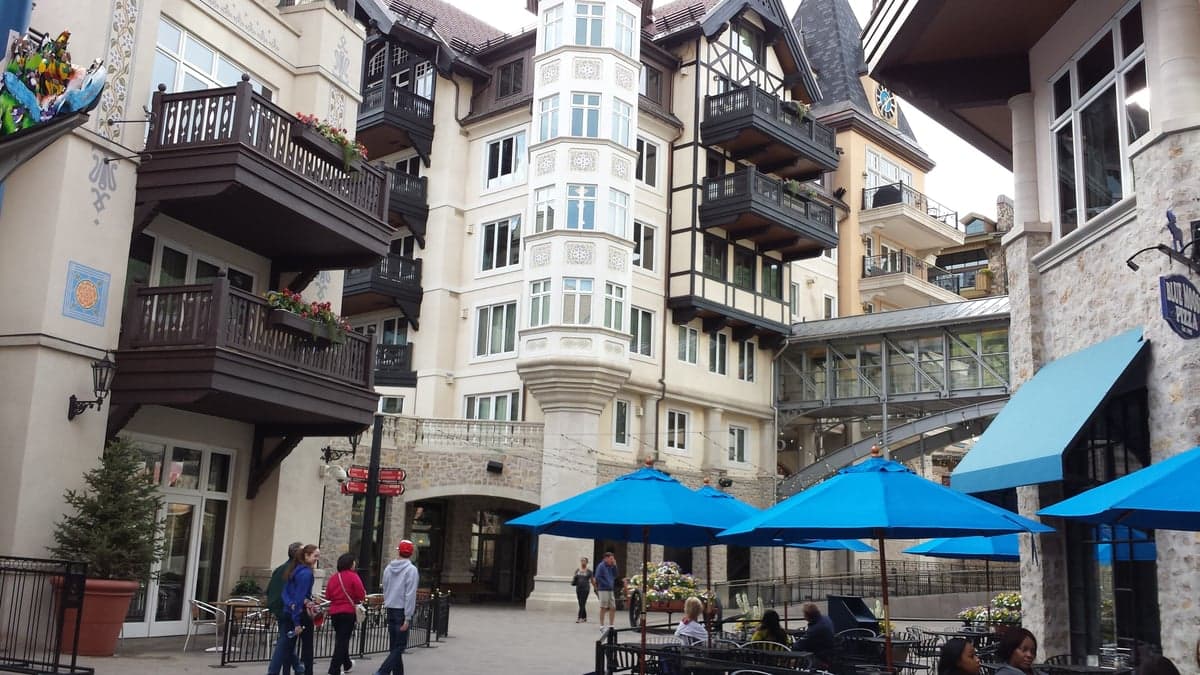
The people of Vail, Colorado, today form a predominantly white, highly educated, and affluent community of 4,729 year-round residents, with a distinctive character shaped by the town's dual identity as a world-class ski resort and a planned alpine village. The population is notably homogeneous—86.6% white and 68.4% college-educated—with a small but established Hispanic community of 9.7% and a foreign-born share of 5.5% that reflects the resort's reliance on international service workers. Vail's residents are a mix of wealthy second-home owners, resort professionals, and a tight-knit core of local families, creating a social fabric that is both transient and deeply rooted in the town's outdoor lifestyle.
How the city was settled and grew
Vail is a genuinely post-1900 planned community, with no pre-colonial or 19th-century settlement on its current site. The valley was historically used by Ute tribes for summer hunting, but no permanent Native American village existed here. The town's founding is directly tied to the vision of Pete Seibert, a World War II veteran and ski enthusiast, who scouted the area in the 1950s and, with financial backing from investors, opened Vail Ski Resort in 1962. The original population was a wave of ski-industry pioneers—young, mostly white, and predominantly male—who built the first lodges, lifts, and trails. The earliest residential neighborhoods, such as Lionshead and Vail Village, were constructed simultaneously with the resort, housing the initial workforce in modest apartments and duplexes. By the late 1960s, a second wave of domestic in-migration brought families and service workers from the Midwest and East Coast, who settled in West Vail, a more affordable, car-oriented neighborhood that became the town's primary year-round residential area. The 1970s saw the construction of East Vail, a lower-density neighborhood with larger lots, attracting wealthier second-home owners and resort executives. No significant immigrant communities formed during this period, as the town's population remained overwhelmingly white and native-born.
Modern era (post-1965)
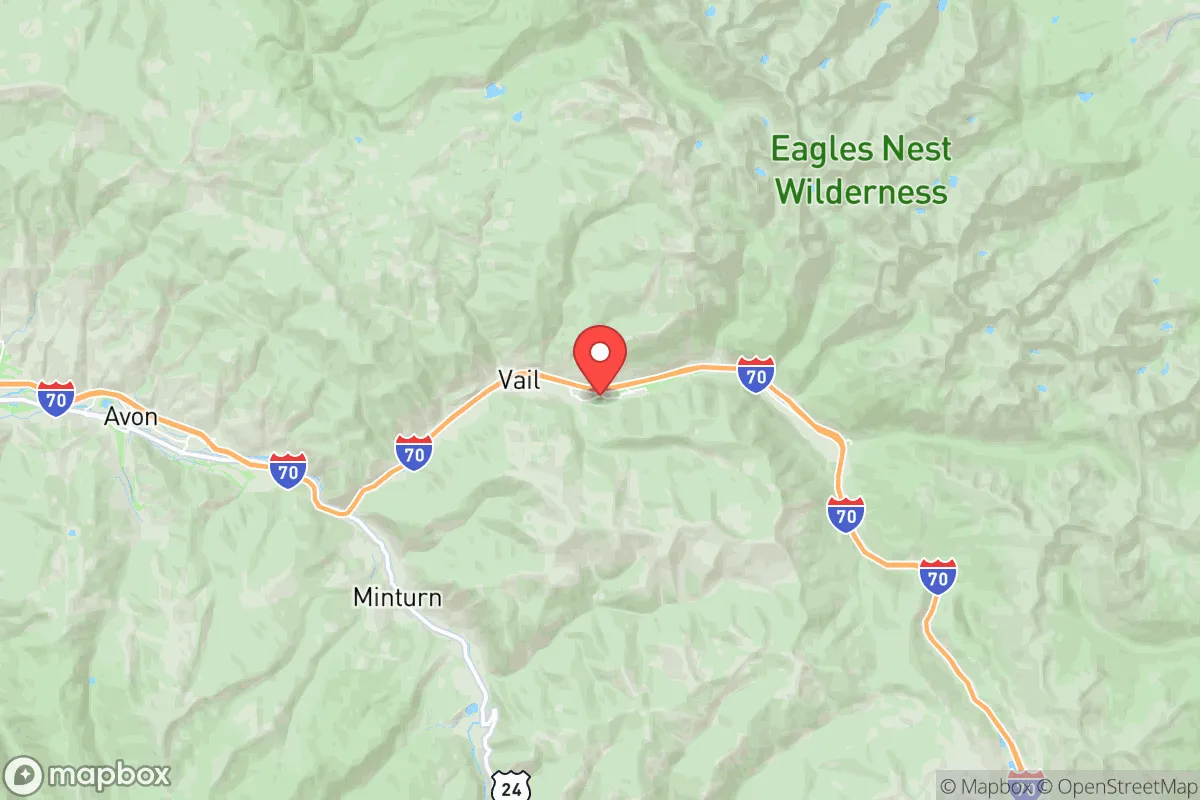
The post-1965 era, shaped by the Hart-Cellar Act's immigration reforms, had a muted effect on Vail compared to other Colorado towns. The town's high cost of living and seasonal employment structure limited large-scale immigration from any single group. The Hispanic population, now 9.7%, grew gradually from the 1980s onward, driven by demand for service workers in hospitality, construction, and landscaping. These workers, many from Mexico and Central America, initially settled in West Vail and the Interstate 70 corridor east of town, where older, lower-rent apartments and mobile home parks provided affordable housing. The East/Southeast Asian population (0.6%) and Indian subcontinent population (0.3%) are very small, consisting mostly of professionals in resort management, real estate, and medical fields, with no distinct ethnic enclave forming. The Black population is recorded at 0.0%, reflecting the town's lack of historical migration patterns for that group. Domestic in-migration has been the dominant demographic force since the 1990s, with wealthy retirees, remote workers, and second-home buyers from California, Texas, and the Northeast moving into Bachelor Gulch and Arrowhead—exclusive, gated communities within the Vail Valley that are technically outside Vail's town limits but functionally part of its social and economic orbit. This influx has driven up housing prices and intensified the town's character as an elite resort enclave.
The future
Vail's population is heading toward greater homogenization by wealth and lifestyle, rather than by race or ethnicity. The Hispanic community, while stable at around 10%, is not growing rapidly, as rising housing costs push service workers to more affordable towns like Eagle and Gypsum, 20–30 miles down-valley. The foreign-born share of 5.5% is likely to remain flat or decline slightly, as visa restrictions and housing shortages reduce the flow of international seasonal workers. The white, college-educated majority is expected to grow, driven by continued in-migration of affluent remote workers and retirees who can afford Vail's median home price of over $1.5 million. No new ethnic enclaves are forming; instead, the town is tribalizing by income and housing type—West Vail remains the most diverse and affordable neighborhood, while East Vail and the luxury developments in Bachelor Gulch are becoming more exclusive. The next 10–20 years will likely see Vail become even more of a high-income, predominantly white resort community, with a small, stable Hispanic service class commuting from outside the town limits.
For someone moving in now, Vail is becoming a place where wealth and lifestyle alignment matter more than racial or ethnic diversity. The town offers a safe, outdoor-oriented, and highly educated environment, but the cost of entry is steep, and the social fabric is increasingly divided between permanent residents in older neighborhoods and seasonal elites in luxury enclaves. New arrivals should expect a community that values discretion, environmental stewardship, and a shared love of skiing, but where the demographic profile is unlikely to shift significantly in the coming decades.

* Values derived from national, state, county, city and local statistics and may differ in a specific area. Last updated: 2026-04-29T00:31:05.000Z
Narrative content on this page is AI-generated and may contain mistakes. Verify any details that matter before acting on them.
ReloMaps may earn a commission from affiliate links at no extra cost to you.

