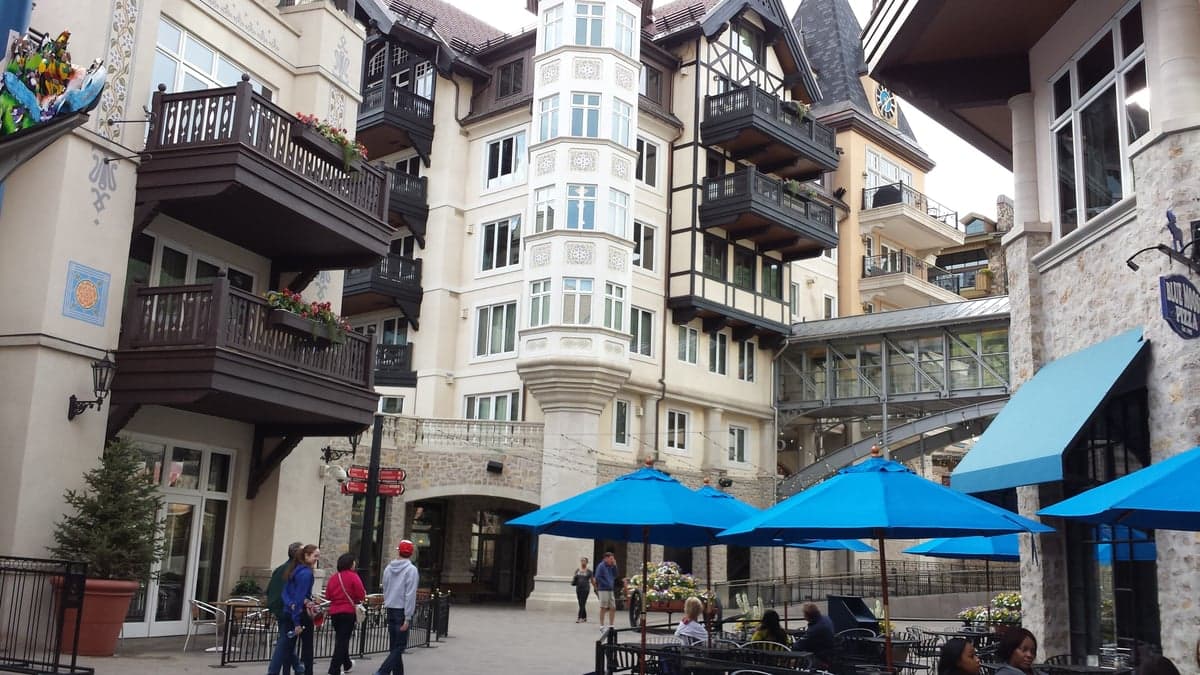
Photo: Wikipedia
Strategic Assessment of Vail, CO
Workable tactical position. Some exposure to population density or targets, but generally defensible in a crisis.
What does the Strategic Assessment tell us?
Our Strategic Assessment grades tactical survivability of an area. Major population centers, military targets, fallout zones, natural disasters, and border exposure all drive risk — lower exposure means a more defensible position in a crisis.
This is heavily inspired by Joel Skousen's Strategic Relocation book. Highly recommended you checkout the book ($)What does this tell us?
Our Strategic Assessment grades tactical survivability of an area. Major population centers, military targets, fallout zones, natural disasters, and border exposure all drive risk — lower exposure means a more defensible position in a crisis.
This is heavily inspired by Joel Skousen's Strategic Relocation book. Highly recommended you checkout the book ($)Strategic Pillars

Key Distances
Regional Safe Places
Below is our recommended "safe zones" in Colorado and the surrounding area based on our strategic heuristics. For most people, it's unrealistic to live in a “safe zone” full-time due to work, family or other personal reasons. They tend to be more rural. However, many of these areas are perfect for second homes and retreat properties that double as a vacation home or even a short-term rental.
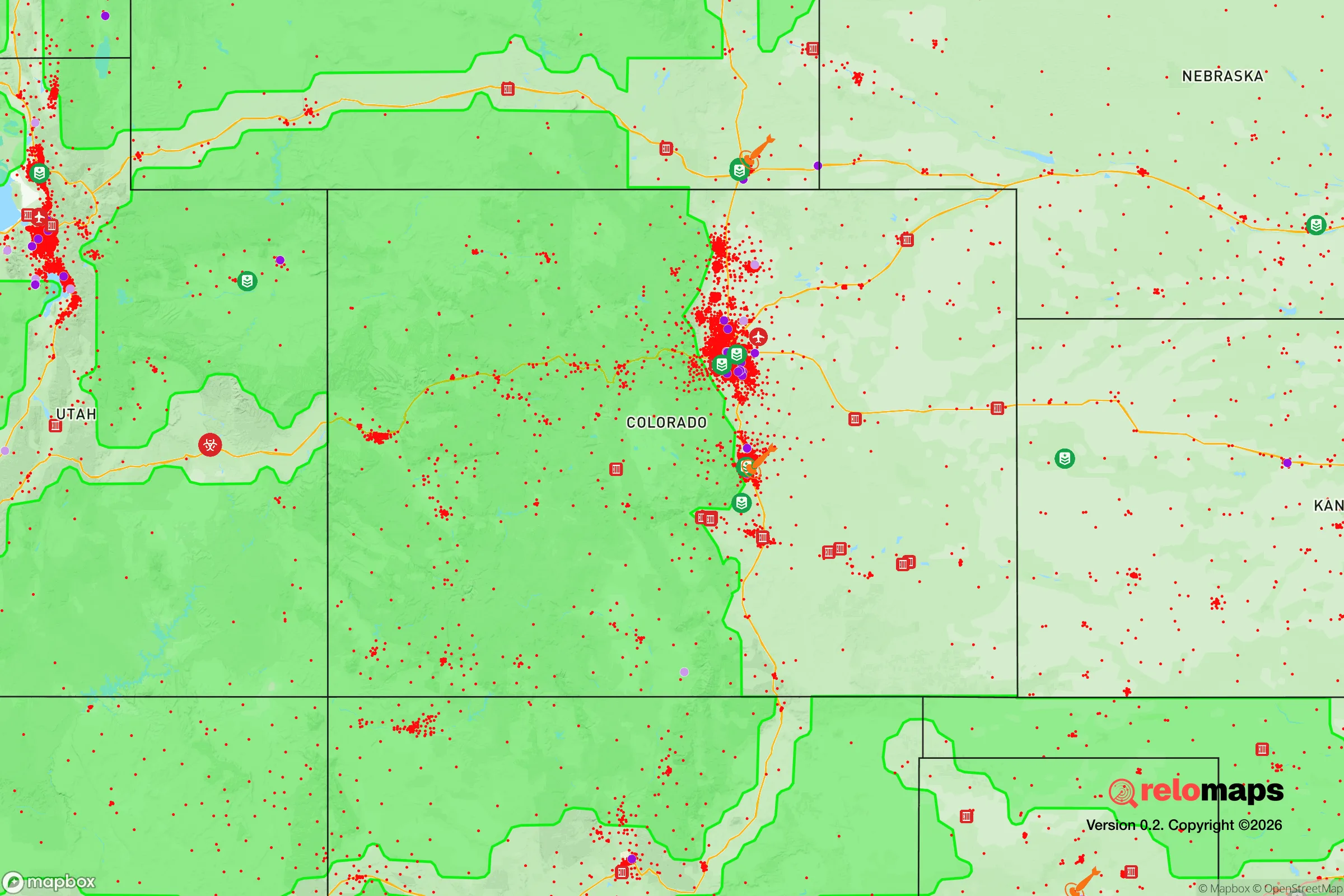
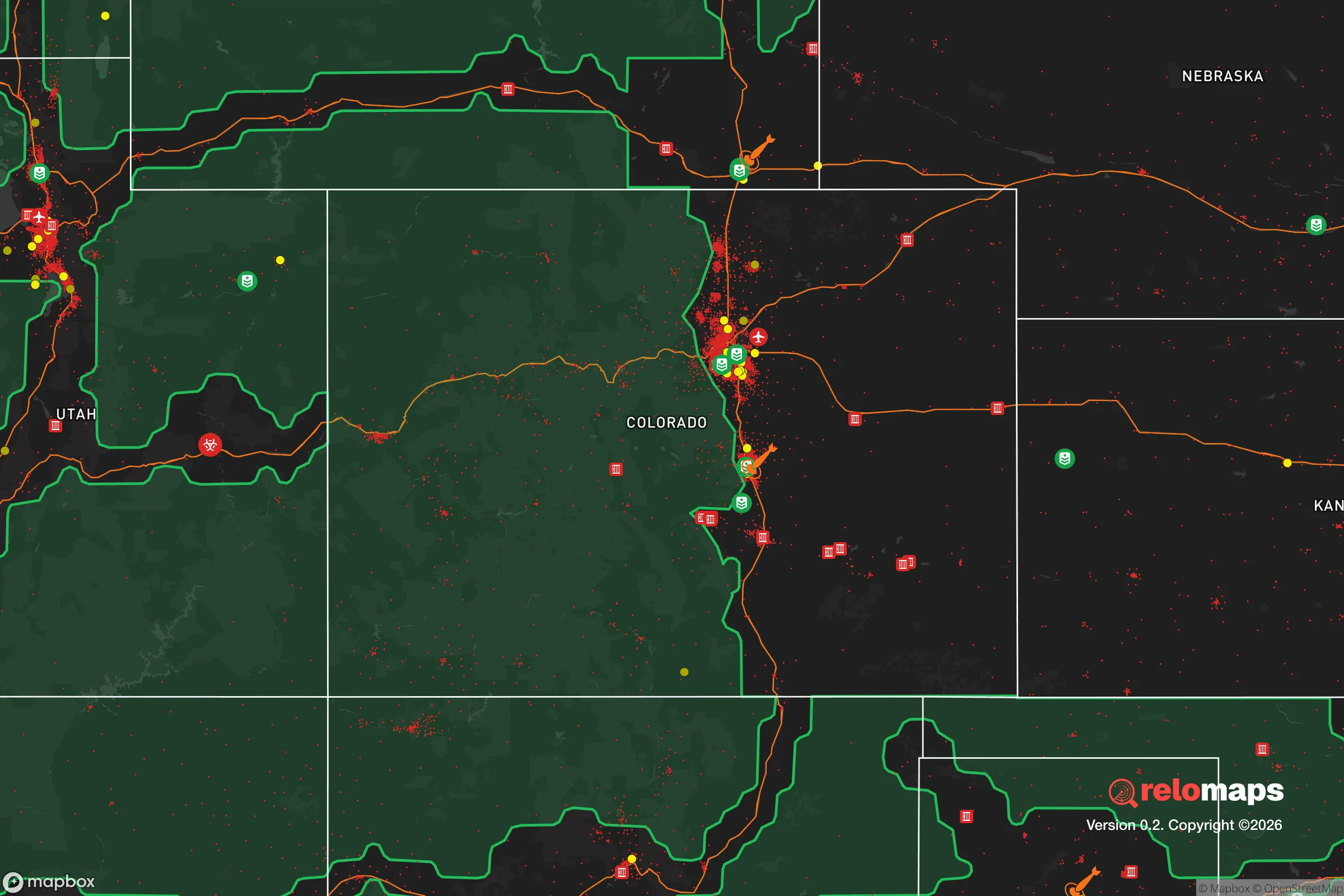


Important Note: For informational purposes only. This does not mean nothing bad ever happens in the green zones. Please use common sense. This is based on public data and modeled with AI. We tried to take a conservative approach but mistakes happen. We update this regularly as new information becomes available.
Solar Generator Recommendations
Backup power matters more here than in safer locations. We've picked three solar generators across budgets and capacity tiers — start with the budget unit if you only need a few essentials, or step up if you want to run a fridge and HVAC for days at a time.

Jackery Portable Power Station Explorer 300
Budget OptionPower on the Go: Weighing only 11 lbs, it's convenient to set up and store with book-sized foldable solar panels

BLUETTI Portable Power Station AC180
Designed for both indoor and outdoor scenarios, AC180 is highly capable as it has a robost capacity and continuous output power.

EF ECOFLOW DELTA Pro Ultra Power Station
Upgraded PickEcoFlow DELTA Pro Ultra is a whole-home energy system designed to grow with your family. Integrated with the Smart Home Panel 2, it scales to meet your evolving energy needs — keeping your home powered, intelligent, and secure through every stage of life.
We earn a commission, at no additional cost to you.
Strategic Assessment Analysis
Vail, Colorado, presents a complex strategic picture for the conservative prepper or survivalist. While its reputation as a luxury ski resort might suggest softness, the town’s high-altitude location (8,150 feet), deep mountain valley setting, and distance from major population centers offer genuine defensive and logistical advantages. However, the same geography that provides isolation also creates critical vulnerabilities, and the area’s dependence on tourism and external supply chains means that self-sufficiency is not a given—it must be deliberately built. For a relocator prioritizing resilience over recreation, Vail is a high-risk, high-reward proposition that demands a clear-eyed assessment of its strengths and weaknesses.
Geographic position and natural defensive advantages in the Rocky Mountains
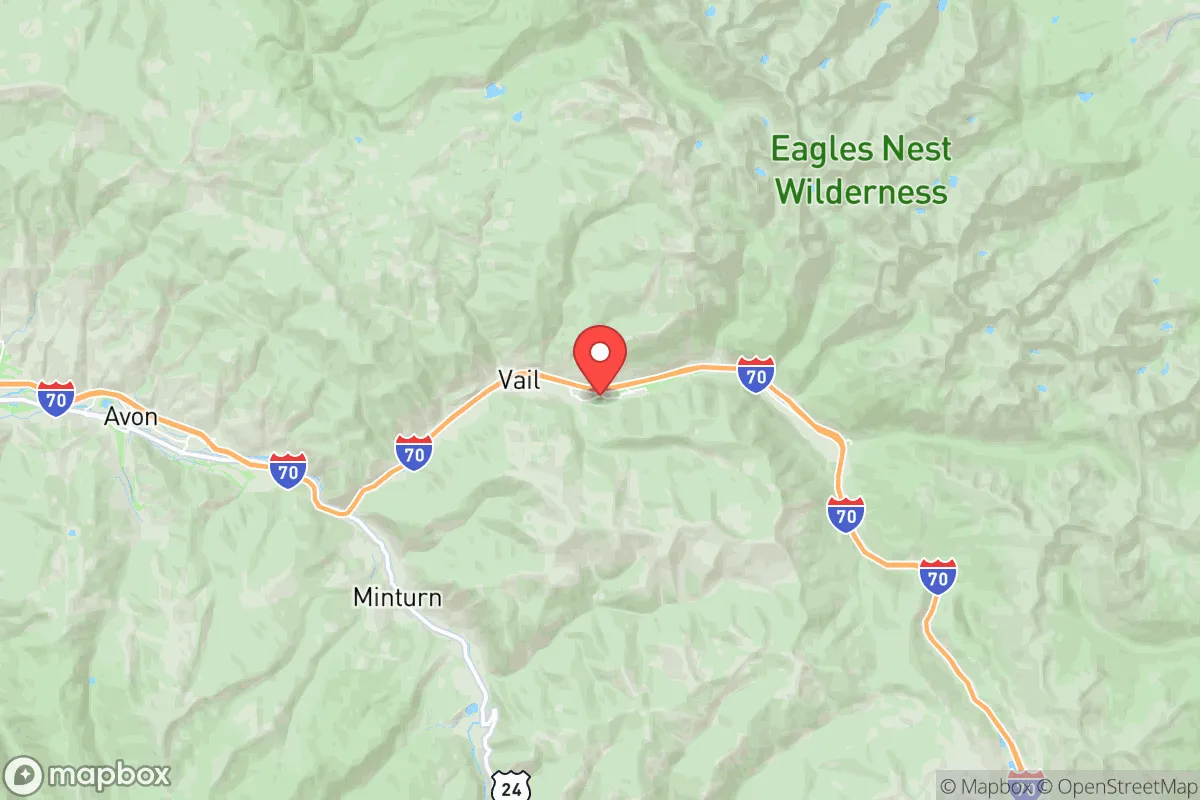
Vail sits in a narrow, east-west oriented valley along Gore Creek, flanked by the Gore Range to the north and the Sawatch Range to the south. This topography provides a natural funnel for movement—only two primary road corridors exist: Interstate 70 running through the valley floor, and the less-traveled U.S. Highway 6 over Vail Pass to the east. In a grid-down or civil unrest scenario, this chokepoint geography is a double-edged sword. On one hand, it makes the town highly defensible against large-scale incursions; a small, determined group could effectively block the I-70 corridor at the Eisenhower-Johnson Memorial Tunnels (roughly 10 miles west) or at Vail Pass (east). On the other hand, it also means that escape or resupply routes are severely limited. The surrounding national forest (White River National Forest) offers vast, rugged terrain for retreat, but the high alpine environment—with elevations above 10,000 feet in many areas—limits year-round mobility and agricultural potential. The area’s natural advantages are real but narrow: defensibility is high, but so is the risk of being trapped.
Risks, exposures, and proximity to fallout-relevant landmarks
The most significant strategic liability for Vail is its proximity to the Denver-Aurora metropolitan area, roughly 100 miles east via I-70. While 100 miles provides a meaningful buffer, it is not a safe distance from fallout or secondary effects of a major event targeting a population center. Denver is a primary target for any adversary seeking to cripple the U.S. energy, transportation, or financial systems—it hosts the Denver Federal Center, Buckley Space Force Base, and major rail and highway hubs. Prevailing westerly winds mean that fallout from a Denver-area detonation would likely blow east, away from Vail, but a ground burst or secondary strikes on the I-70 corridor itself could still pose a threat. Closer to home, the Eisenhower Tunnel and the I-70 mountain corridor are critical infrastructure pinch points that could be targeted to isolate the region. Additionally, Vail’s status as a high-profile international destination makes it a potential symbolic target for terrorism or civil unrest. The town’s reliance on a single major highway for food, fuel, and medical supplies is its greatest exposure. In a prolonged crisis, Vail could become a trap rather than a refuge.
Practical resilience for a relocator: food, water, energy, and defensibility
For a relocator serious about self-sufficiency, Vail’s practical resilience is mixed. Water is abundant—Gore Creek and its tributaries provide year-round surface water, and the high snowpack (averaging 300+ inches annually) ensures a reliable meltwater supply. However, treatment and storage are essential; raw mountain water carries giardia and other pathogens. Food production is severely limited by the short growing season (roughly 60-90 frost-free days), thin soils, and intense UV radiation. Greenhouse or hydroponic systems are mandatory for any serious gardening, and even then, caloric output will be minimal. The town’s grocery stores (City Market, Whole Foods) are supplied by trucks from Denver, meaning a disruption of I-70 empties shelves within days. Energy is a bright spot: Vail’s elevation and exposure provide excellent solar potential (though snow cover is a winter issue), and the area has strong micro-hydro possibilities for those with creek access. Wood heating is viable but requires significant labor and storage. Defensibility is high for a small, organized group—the valley’s narrow shape and limited access points make it easy to monitor and control. However, the town’s permanent population of roughly 5,000 swells to over 40,000 during peak ski season, creating a transient population that could become a liability in a crisis. For a relocator, the key is to establish a property with independent water, power, and food systems, and to build relationships with like-minded neighbors before any event. The local culture is overwhelmingly liberal and tourism-dependent, so a conservative prepper will need to operate discreetly and build trust slowly.
In the overall strategic picture, Vail is a niche option for the well-funded, technically skilled relocator who values isolation and defensibility over agricultural self-sufficiency. It is not a place for a family seeking to grow their own food or live off the land—the climate and soil simply won’t support it. But for a single individual or couple with the resources to invest in a hardened, self-contained property—complete with solar, micro-hydro, a greenhouse, and a deep pantry—Vail offers a rare combination of natural fortress-like geography and access to high-altitude wilderness. The trade-off is clear: you trade the ability to produce your own food for the ability to control your own perimeter. If the goal is to ride out a short-to-medium-term crisis (weeks to months) in a defensible, resource-rich environment, Vail can work. If the goal is long-term, multi-year self-sufficiency, look lower and flatter—the Front Range foothills or the San Luis Valley offer better agricultural potential. Vail is a strategic outpost, not a homestead. Know the difference before you commit.

* Values derived from national, state, county, city and local statistics and may differ in a specific area. Last updated: 2026-04-29T00:31:05.000Z
Narrative content on this page is AI-generated and may contain mistakes. Verify any details that matter before acting on them.
ReloMaps may earn a commission from affiliate links at no extra cost to you.

