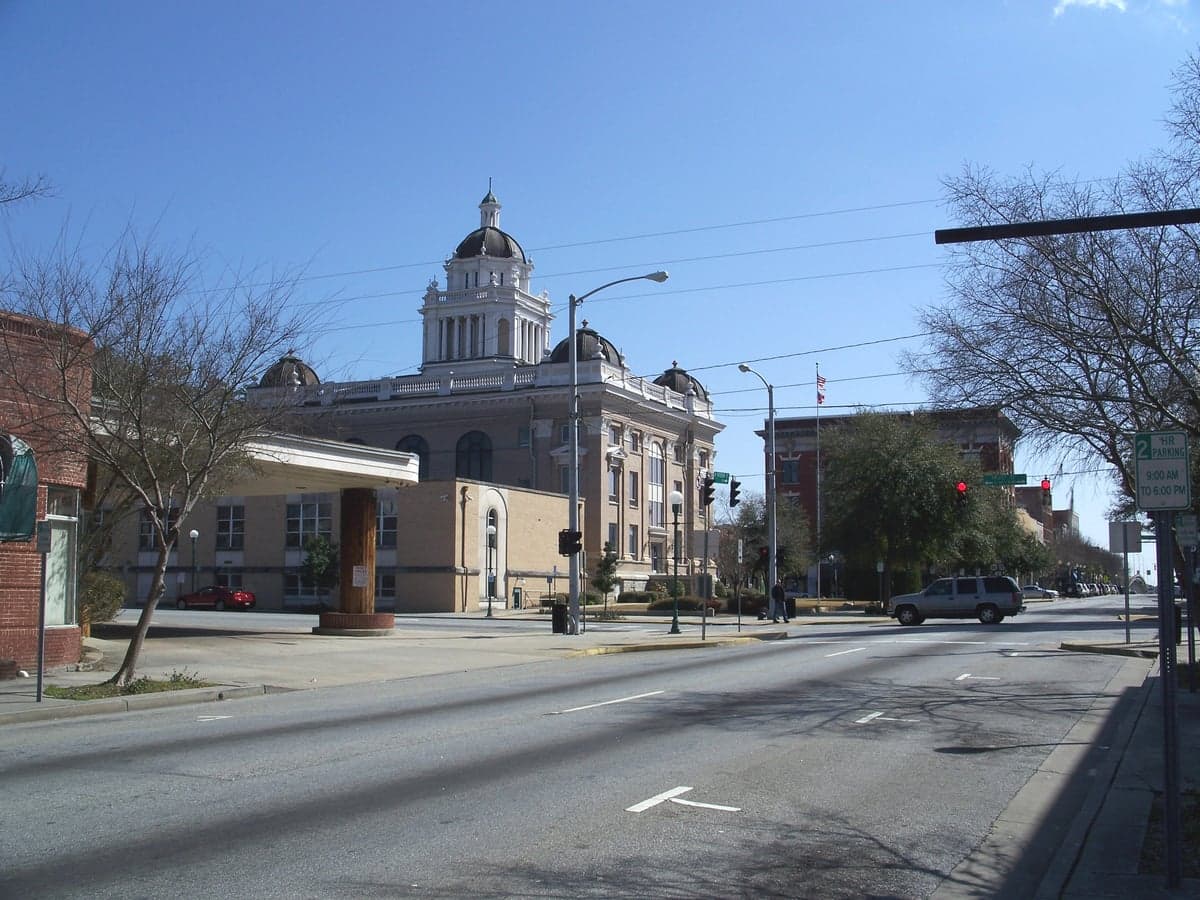
Photo: Wikipedia
Political ClimatePolitical Climate in Valdosta, GA
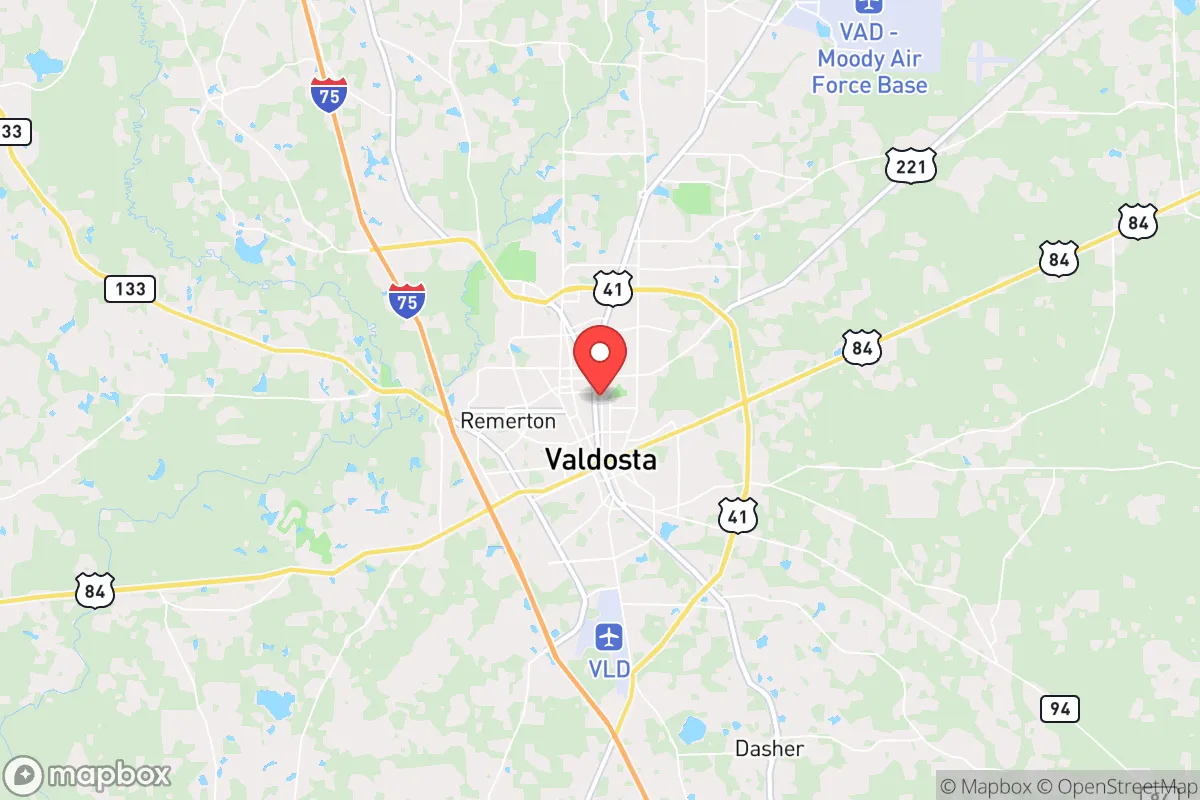
District shown is the primary district for this city’s centroid. Cities may span multiple districts.
Local Political AnalysisPolitical Analysis of Valdosta, GA
Valdosta, Georgia, has long been a reliably conservative stronghold, and the numbers back that up with a Cook PVI of R+15. But if you've lived here as long as I have, you know the political climate isn't just about voting patterns—it's about a way of life that's increasingly under pressure. The city itself leans more moderate than the surrounding rural areas, but the overall trajectory is still solidly red, though there are some worrying signs of creeping progressive influence, especially in local government and the school system.
How it compares
Compared to the rest of Lowndes County, Valdosta is actually the "liberal" outlier. Drive ten miles in any direction—towards Hahira, Lake Park, or Remerton—and you'll find communities that vote even more overwhelmingly Republican. The real contrast, though, is with cities like Atlanta or Savannah. Valdosta feels like a different country from those places. While Atlanta is deep blue and pushing policies that restrict personal freedoms—like heavy-handed COVID mandates or zoning laws that tell you what you can do with your own property—Valdosta still mostly respects the idea that government should stay out of your business. That said, the university (Valdosta State) brings in a steady stream of younger, more progressive voters, and you can see that influence in city council races and school board meetings. It's not a takeover, but it's a slow shift that makes you pay closer attention.
What this means for residents
For the average resident, the political climate here means you can still enjoy a lot of personal freedom without the government breathing down your neck. Gun rights are widely respected, property taxes are relatively low, and there's no serious push for the kind of overreach you see in blue states—like mask mandates that lasted years or business shutdowns that destroyed livelihoods. But you have to stay vigilant. The biggest battleground right now is the local school system, where there's a constant tug-of-war over curriculum and parental rights. Some folks want to bring in the same kind of progressive indoctrination you see in larger districts, while most of us are fighting to keep things focused on basics and local values. If you're moving here, understand that the political climate is generally hands-off, but it's not immune to the national trends. You'll need to get involved locally if you want to keep it that way.
One thing that sets Valdosta apart is its strong military and agricultural roots. Moody Air Force Base is a huge employer, and that brings in a lot of folks who are used to discipline, order, and respect for traditional values. The farming community—peanuts, cotton, timber—also tends to be deeply conservative and skeptical of government overreach. Culturally, you'll find a lot of churches, a lot of family-owned businesses, and a general expectation that people take care of themselves without asking the government for help. The biggest policy distinction is that Valdosta has largely resisted the kind of zoning and land-use restrictions that make it hard to build or start a business. It's still a place where you can buy a piece of land, put up a fence, and live your life without a dozen permits. That's the Valdosta I know, and I hope it stays that way. But it's not guaranteed—so if you're thinking about moving here, come ready to be part of the solution, not just a spectator.

State Political ClimatePolitical Climate in Georgia
State Political AnalysisPolitical Environment in the State
Georgia has transformed from a reliably conservative stronghold into a genuine battleground state over the past two decades, with its partisan lean shifting from a solid +8-point Republican advantage in 2004 to a razor-thin +0.2-point Democratic margin in 2020. The state’s political identity is now defined by a tug-of-war between the rapidly diversifying, left-leaning Atlanta metroplex and the deeply conservative rural and exurban counties that still cover most of the state’s landmass. For a conservative considering relocation, Georgia offers low taxes and business-friendly policies, but the cultural and electoral trajectory is unmistakably trending blue, driven by massive in-migration from other states and generational turnover.
Urban vs. rural divide
The political map of Georgia is a study in stark contrasts. The Atlanta metropolitan area, which contains roughly 60% of the state’s population, is the engine of Democratic growth. Fulton County (Atlanta) and DeKalb County (Decatur) are among the most reliably Democratic jurisdictions in the entire South, routinely delivering 75-85% of their votes to Democratic candidates. The suburbs have flipped dramatically: Cobb County (Marietta) and Gwinnett County (Lawrenceville), once conservative bastions, both voted for Joe Biden in 2020 after supporting Republicans for decades. Meanwhile, the rest of the state remains deeply red. Hall County (Gainesville), Houston County (Warner Robins), and Columbia County (Augusta suburbs) routinely vote 65-70% Republican. The rural southwest, including Colquitt County (Moultrie) and Thomas County (Thomasville), is solidly conservative, though population loss is eroding their electoral weight. The key battlegrounds are the exurban "collar counties" like Forsyth County (Cumming) and Cherokee County (Canton), which remain Republican but are seeing Democratic inroads as Atlanta’s sprawl pushes outward.
Policy environment
Georgia’s policy environment is a mixed bag for conservatives. On the positive side, the state has a flat income tax rate of 5.49% (down from 6% in 2022, with further cuts scheduled), no estate tax, and a right-to-work law that keeps union influence minimal. The regulatory climate is generally business-friendly, with no state-level minimum wage above the federal $7.25. However, the education landscape is concerning: Georgia’s school choice options are limited compared to states like Florida or Arizona, with only a modest tax credit scholarship program and no universal Education Savings Account. The state’s public schools are heavily centralized under the Georgia Department of Education, and curriculum battles are ongoing. On election integrity, Georgia passed SB 202 in 2021, which added voter ID requirements for absentee ballots and limited drop boxes—a win for election security that drew intense national criticism. Healthcare policy remains a sore spot: the state has not expanded Medicaid under the Affordable Care Act, which keeps premiums higher for private plans but avoids a massive new entitlement program.
Trajectory & freedom
Georgia’s trajectory on personal freedom is a mixed picture trending in the wrong direction. On the positive side, Georgia became a constitutional carry state in 2022, allowing permitless carry of firearms for law-abiding adults—a major win for Second Amendment rights. The state also passed the "Heartbeat Bill" (HB 481) in 2019, banning abortion after detection of a fetal heartbeat, which was a significant pro-life victory. However, there are troubling signs of government overreach. Atlanta’s city government has repeatedly pushed for stricter gun control measures, including a 2023 ordinance requiring gun owners to report lost or stolen firearms within 48 hours, which was partially blocked by state preemption law. On parental rights, Georgia passed the "Parental Rights in Education" bill (SB 88) in 2022, requiring schools to notify parents of any changes to a student’s mental or physical health—but enforcement has been weak, and school boards in metro Atlanta counties like DeKalb and Fulton have resisted. The state’s property tax system is also a concern: while there is no state-level property tax, local assessments have been rising rapidly, and there is no statewide homestead exemption cap, meaning homeowners in fast-growing areas like Forsyth County have seen tax bills double in five years.
Civil unrest & political movements
Georgia has been a flashpoint for political activism on both sides. The 2020 election cycle saw massive protests in Atlanta following the death of George Floyd, with the city experiencing several nights of property destruction and arson that damaged over 100 businesses. The "Stop Cop City" movement, opposing the construction of a police training facility in DeKalb County, has resulted in ongoing protests and arrests, with some activists labeled as domestic terrorists by state officials. On the right, the Georgia Republican Party has seen internal strife between establishment and grassroots factions, particularly over election integrity concerns. The 2021 passage of SB 202 sparked a national backlash, with Major League Baseball moving the 2021 All-Star Game from Atlanta to Denver—a move that energized conservatives but also highlighted the economic risks of taking a stand on election security. Immigration politics are relatively quiet compared to border states, but the Atlanta metro area has seen a surge in illegal immigration, particularly in Gwinnett County, where the foreign-born population has grown to over 25%. There are no sanctuary city policies in Georgia, as state law (HB 87, 2011) prohibits them, but local enforcement varies widely.
Projection
Looking five to ten years out, Georgia’s political trajectory is concerning for conservatives. The state is adding roughly 100,000 new residents per year, with the majority settling in the Atlanta metro area. These newcomers are disproportionately young, college-educated, and from blue states like California and New York—demographics that lean heavily Democratic. If current trends hold, Georgia could become a reliably blue state by 2032, similar to Virginia’s transformation over the past two decades. The rural counties that anchor Republican power are losing population, while the Atlanta suburbs continue to diversify and shift left. However, there are countervailing forces: the exurban counties like Forsyth and Cherokee are still growing and remain Republican, and the state’s conservative-leaning military communities around Warner Robins and Fort Moore (formerly Fort Benning) provide a stable base. The wild card is whether the state’s Republican leadership can hold the line on election integrity and prevent the kind of ballot harvesting and mail-in voting expansions that have accelerated Democratic gains in other states.
For a conservative considering a move to Georgia, the bottom line is this: you’ll find low taxes, strong gun rights, and a business-friendly environment, but you’ll be moving into a state that is actively trending away from your values. If you settle in the Atlanta metro area, you’ll be surrounded by progressive local governments and a rapidly changing culture. If you choose a rural or exurban county like Forsyth, Cherokee, or Columbia, you’ll find a more conservative community, but you’ll still be subject to state-level policies that are increasingly influenced by Atlanta’s voting power. Georgia is still a good place to live for conservatives, but it’s no longer a safe bet—and the next decade will determine whether it remains a red state or becomes another blue state in the making.
* Values derived from national, state, county, city and local statistics and may differ in a specific area. Last updated: 2026-04-30T07:11:07.000Z
Narrative content on this page is AI-generated and may contain mistakes. Verify any details that matter before acting on them.
ReloMaps may earn a commission from affiliate links at no extra cost to you.

