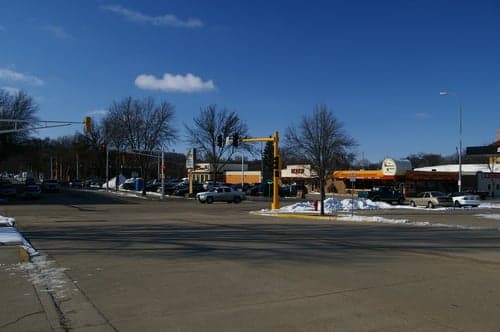
Photo: Wikipedia
Political ClimatePolitical Climate in Valley City, ND
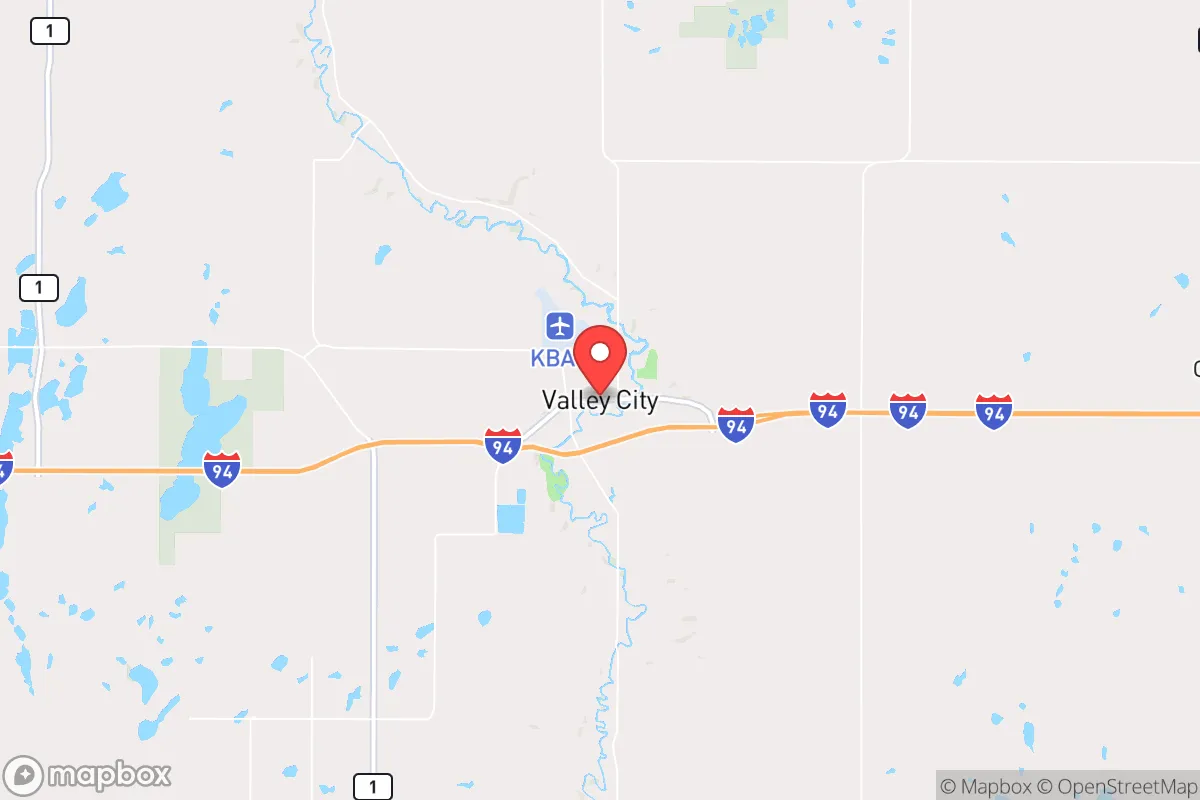
District shown is the primary district for this city’s centroid. Cities may span multiple districts.
Inherited from parent state — no local data available.
Local Political AnalysisPolitical Analysis of Valley City, ND
Valley City is about as solidly conservative as they come in North Dakota, and that’s not changing anytime soon. The Cook PVI of R+18 tells you the math—this area votes Republican by a wide margin, and it’s been that way for decades. You don’t see the wild swings you get in places like Fargo or Grand Forks, where college towns and new transplants have started to shift things left. Here, it’s steady, and most folks like it that way. The trajectory is holding firm, with local elections and county-level races consistently favoring candidates who keep government small and out of your business.
How it compares
Drive an hour east to Fargo, and you’ll feel the difference fast. That city’s growing fast, bringing in younger crowds and more progressive policies—things like higher taxes for “equity” programs and zoning rules that tell you what you can do with your own property. Head west to Bismarck, and it’s more like Valley City, but even there you see some creeping bureaucracy. Valley City stays closer to the rural, no-nonsense roots. Surrounding towns like Sanborn or Dazey are even more conservative, but they’re tiny. The real contrast is with the state’s larger metros—Valley City is a place where the Second Amendment isn’t debated, property rights are respected, and the idea of government telling you how to live your life gets laughed out of the room.
What this means for residents
For someone living here, the political climate means you’re not constantly fighting overreach. Local officials tend to keep taxes low—property taxes are among the most reasonable in the state—and they don’t meddle in things like school curriculum or business operations unless absolutely necessary. You won’t see mask mandates or lockdowns like you did in some coastal cities; the community pushed back hard on that nonsense. The downside? If you’re hoping for big government-funded projects or rapid social change, you’ll be disappointed. But for most of us, that’s a feature, not a bug. The long-term concern is if outside money or state-level mandates start creeping in—there’s always pressure from the feds or from progressive groups in larger cities. So far, Valley City’s local leaders have held the line, but it’s something to keep an eye on.
Culturally, Valley City stands out for its strong sense of personal responsibility. People here don’t look to the government for handouts or permission. The city’s annual events, like the Winter Show, are community-run and self-funded. There’s no push for “diversity, equity, and inclusion” offices or climate action plans—just practical, common-sense governance. The biggest policy distinction is the state’s lack of an income tax, which keeps more money in your pocket. If you value freedom from red tape and a government that stays in its lane, Valley City is a breath of fresh air. Just don’t expect it to change—it’s been this way for generations, and that’s exactly how most residents want it to stay.

State Political ClimatePolitical Climate in North Dakota
State Political AnalysisPolitical Environment in the State
North Dakota has long been one of the most reliably Republican states in the nation, with a deep-rooted conservative culture that has only strengthened over the past two decades. The state hasn’t voted for a Democratic presidential candidate since Lyndon B. Johnson in 1964, and in 2024, Donald Trump carried it by over 20 points. The dominant coalition is a mix of rural agricultural communities, energy-sector workers from the Bakken oil fields, and a growing population of conservative-leaning transplants fleeing higher-tax states. Over the last 10-20 years, the state has shifted further right, driven by an influx of workers to places like Williston and Watford City and a simultaneous exodus of younger, more moderate residents from the larger cities.
Urban vs. rural divide
The political map of North Dakota is starkly divided between its few urban centers and the vast rural expanse. The only real blue dot is Fargo, home to North Dakota State University and a growing tech and healthcare sector, which leans slightly Democratic but is still far from progressive by national standards. Grand Forks, with the University of North Dakota, is a swing area that has trended redder in recent cycles as the student population has become more transient. The real conservative strongholds are the rural counties and the oil patch in the northwest. Williams County, anchored by Williston, voted over 80% for Trump in 2024, fueled by an energy workforce that values low taxes and minimal regulation. Bismarck and Mandan are reliably Republican, with Bismarck’s state government and healthcare sectors providing a stable conservative base. The divide isn’t just about population density—it’s about economic dependence: rural and energy counties see government intervention as a threat to their livelihoods, while Fargo’s more diverse economy creates a small but persistent liberal enclave.
Policy environment
North Dakota’s policy environment is a textbook example of small-government conservatism. There is no state income tax on individuals, and the corporate income tax rate was slashed to a flat 1.5% in 2023, making it one of the most business-friendly states in the country. Property taxes are relatively low, though local levies can vary—Burleigh County (Bismarck) has some of the lowest rates in the state. The regulatory posture is aggressively pro-development, especially in the energy sector, where the state has resisted federal overreach on methane rules and drilling permits. Education policy is decentralized, with strong local control and a thriving school choice movement—the state expanded its private school tuition tax credit in 2023. Healthcare is a mixed bag: the state expanded Medicaid under the Affordable Care Act in 2013, a decision that still rankles many conservatives, but it has also resisted Medicaid expansion for able-bodied adults without dependents. Election laws are among the most secure in the nation: voter ID is required, same-day registration is not allowed, and the state has a robust system for purging inactive voters. There is no mail-in voting without an excuse, and absentee ballots require a notary or witness signature.
Trajectory & freedom
North Dakota is moving in a decidedly more free direction, especially on issues of personal liberty and government overreach. In 2023, the legislature passed a near-total ban on abortion, with exceptions only for rape, incest, and the life of the mother—a clear assertion of state sovereignty over federal mandates. Gun rights are expansive: the state has constitutional carry (no permit needed for concealed carry), and in 2021 it passed a Second Amendment Preservation Act that prohibits state cooperation with federal firearm confiscation efforts. Parental rights have been strengthened: the 2023 “Parents’ Bill of Rights” requires school districts to notify parents of any curriculum changes involving sexuality or gender identity and to obtain parental consent before students can access gender-transition services. On the tax front, the state has been steadily reducing its reliance on property taxes, with a 2024 law capping annual increases at 3% without a public vote. However, there are concerns: the state’s reliance on oil and gas revenue makes it vulnerable to boom-and-bust cycles, and some residents worry that future budget shortfalls could lead to new taxes or fees. Medical freedom is strong—there are no vaccine mandates for state employees or students, and the state banned COVID-19 vaccine passports in 2021.
Civil unrest & political movements
North Dakota has seen its share of political flashpoints, but they tend to be more about resource extraction than culture wars. The most notable was the Standing Rock protests in 2016-2017, where thousands of activists—many from out of state—clashed with law enforcement over the Dakota Access Pipeline. The protests were a major test of state sovereignty, with Governor Doug Burgum deploying the National Guard to maintain order. The state has since passed laws to criminalize trespassing by protesters and to protect critical infrastructure from sabotage. On the right, the Bismarck area has seen a growing “constitutional sheriff” movement, with local sheriffs publicly refusing to enforce federal gun laws. Immigration politics are relatively quiet—the state has a small foreign-born population, and there are no sanctuary cities. Election integrity remains a hot-button issue: the state’s voter ID law was challenged in court but upheld, and there have been no major fraud scandals. A new resident would notice that political activism is less visible than in coastal states—people here tend to vote and then go about their business, rather than taking to the streets.
Projection
Over the next 5-10 years, North Dakota is likely to become even more conservative, driven by two key trends. First, the energy sector in the Bakken region is expected to stabilize after a decade of volatility, bringing in more workers who value the state’s low-tax, low-regulation environment. Second, the state is seeing a slow but steady influx of remote workers and retirees from high-tax states like California and Minnesota, many of whom are drawn by the lack of income tax and the conservative culture. However, there are risks: the state’s population is aging, and younger residents often leave for opportunities in Minneapolis or Denver. If the energy sector contracts, the state could face budget pressures that force a reconsideration of its tax structure. The wild card is the Turtle Mountain and Fort Berthold reservations, where tribal sovereignty issues could create friction over energy development and law enforcement. For now, the trajectory is clear: more freedom, less government, and a political culture that rewards self-reliance.
For someone moving to North Dakota, the bottom line is this: you’ll find a state that respects your right to live as you see fit, with minimal interference from government. The trade-off is that you’ll need to be self-sufficient—the social safety net is thin, and the winters are brutal. But if you value low taxes, strong gun rights, and a community that doesn’t meddle in your personal affairs, this is one of the last places in the country where that ethos still holds. Just be prepared for the cold—and the fact that everyone you meet will probably agree with you politically.
* Values derived from national, state, county, city and local statistics and may differ in a specific area. Last updated: 2026-04-19T07:55:33.000Z
Narrative content on this page is AI-generated and may contain mistakes. Verify any details that matter before acting on them.
ReloMaps may earn a commission from affiliate links at no extra cost to you.

