 Popular
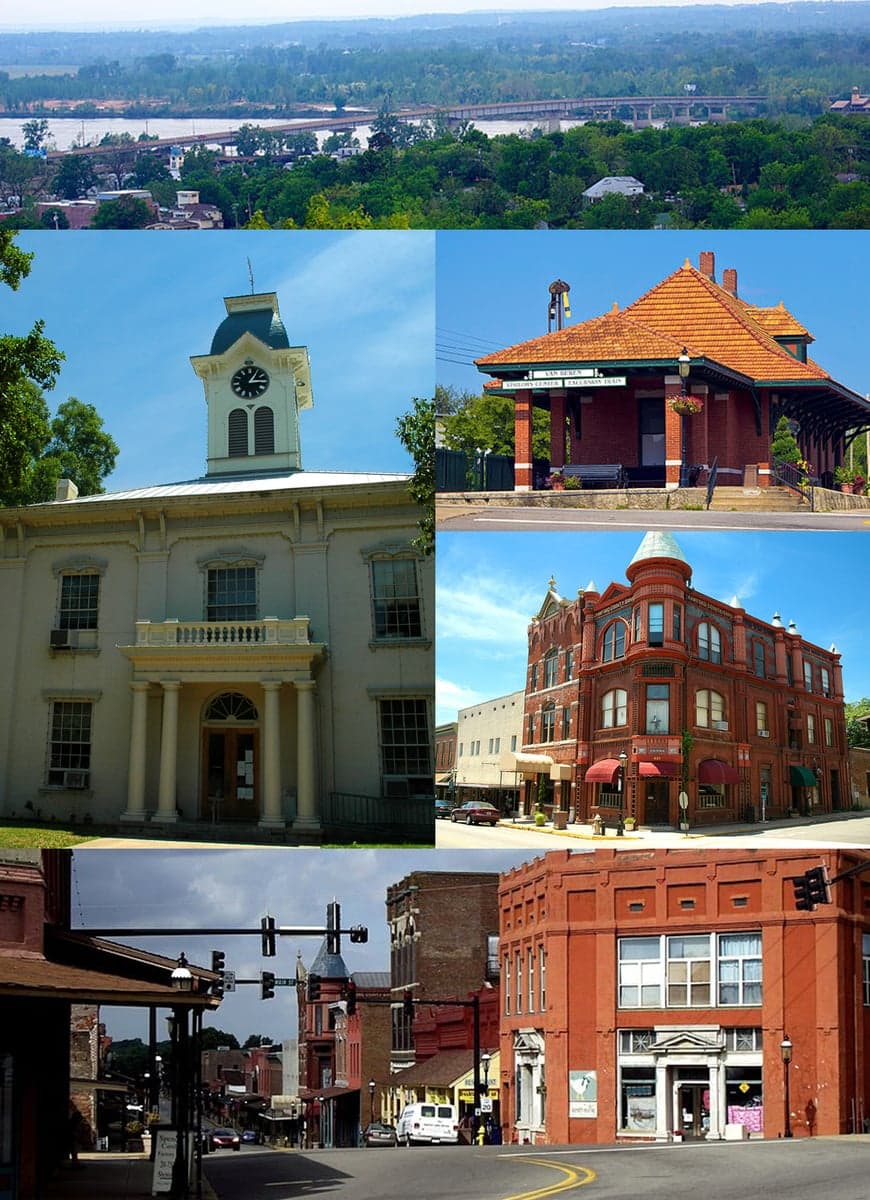
Photo: Wikipedia
Quality of Life in Van Buren, AR
A high quality of life with strong walkability, manageable living costs, healthy neighborhood signals, and solid amenity access.
What does Quality of Life tell us?
Quality of Life blends cost of living, nearby amenities, socioeconomic signals, and neighborhood character. City-level scores represent the whole municipality; individual neighborhoods can differ.
What does this tell us?
Quality of Life blends cost of living, nearby amenities, socioeconomic signals, and neighborhood character. City-level scores represent the whole municipality; individual neighborhoods can differ.
Cost of Living
32% below national average
The Real Cost of Living in Van Buren, AR for 2026
| Tier | Individual | Family (4) |
|---|---|---|
| Survival | $13k | $25k |
| Comfortable | $35k | $51k |
| Luxury | $90k+ | $140k+ |
| Elite (Top 5%) | $106k+ | $165k+ |
117%
The Area Signal
A metric tracking the socioeconomic signals of the area.
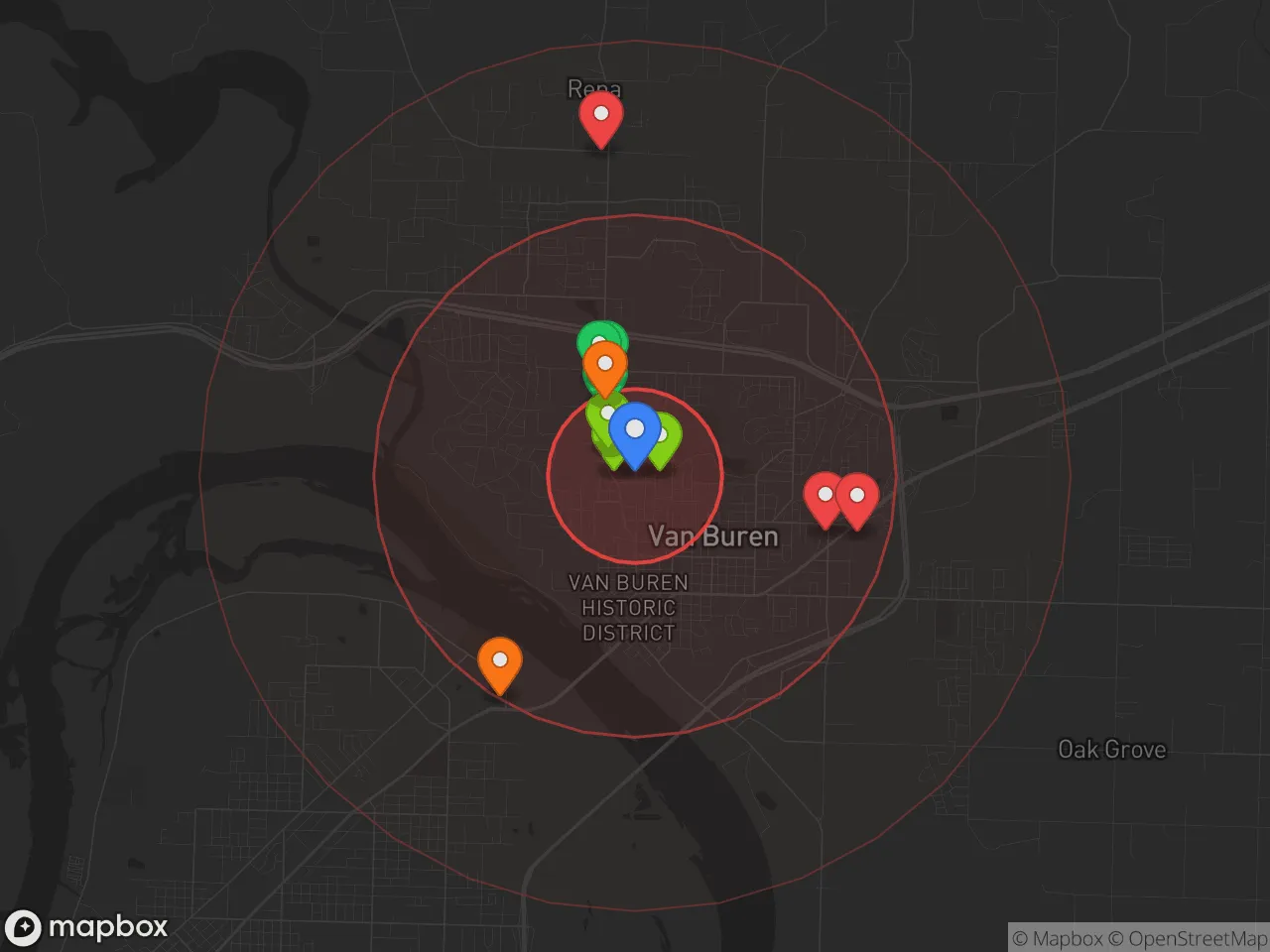
Hobbies
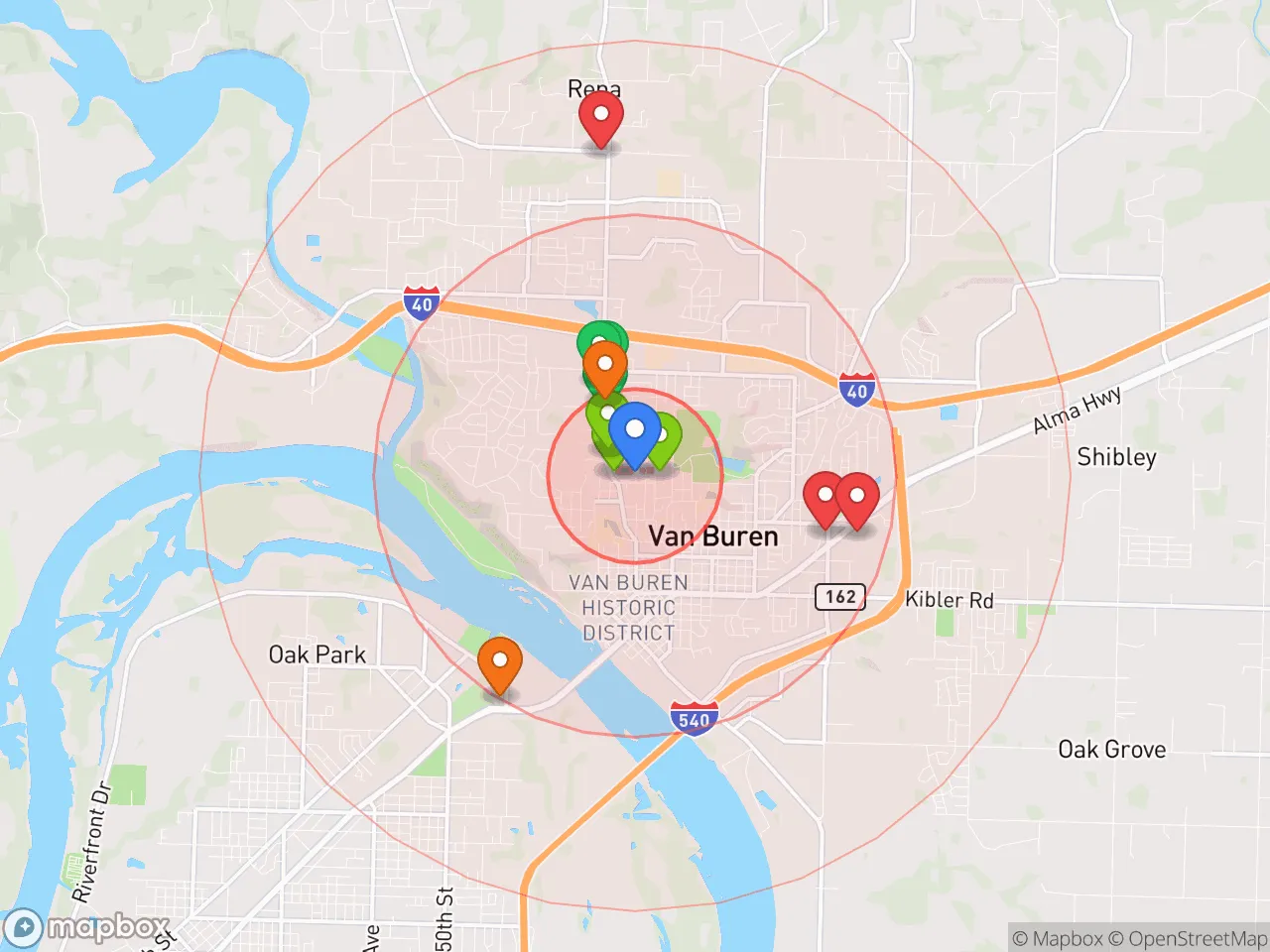
Explore the areaGroceries
4 within 10 miles
Gas
20 within 10 miles
Hospital
9 within 20 miles
Airport
DFW — Dallas/Fort Worth International
Post Office
USPS — Van Buren, AR
Critical Amenities
Quality-of-Life Analysis
Van Buren, Arkansas, offers a notably affordable quality of life that attracts a mix of young families, retirees, and commuters seeking a slower pace without sacrificing access to urban amenities. With a cost of living index of 68—32 percent below the national average—the city provides a financial cushion that allows residents to stretch their incomes further than in many parts of the country. The population skews slightly older than the national median, and the community is characterized by a strong sense of local pride, with many residents employed in education, healthcare, manufacturing, and retail sectors within the Fort Smith metro area.
How housing costs and everyday expenses compare to nearby cities
Van Buren’s housing market is a primary driver of its affordability. The median home value sits at $178,000, roughly half the national median, while the median rent is just $820 per month—well below the U.S. average of around $1,200. This makes homeownership accessible for first-time buyers and allows renters to save a significant portion of their income. Compared to neighboring Fort Smith, where median home values hover around $165,000, Van Buren is slightly pricier but offers newer subdivisions and larger lot sizes. However, when stacked against Fayetteville (median home value ~$310,000) or Bentonville (~$380,000), Van Buren is dramatically cheaper. The average commute of 18.6 minutes is notably short—far below the national average of 26 minutes—meaning residents spend less on gas and vehicle wear, further reducing monthly expenses. Utility costs and grocery prices also track below national averages, reinforcing the city’s reputation as a budget-friendly place to live.
What daily life is like for families: schools, parks, and local amenities
Daily life in Van Buren centers on a walkable historic downtown along the Arkansas River, which hosts a farmers market, local boutiques, and seasonal festivals like the Old Town Christmas Parade. The Van Buren School District serves most families, with Van Buren High School and Butterfield Trail Middle School receiving above-average ratings for academic performance and extracurricular offerings. For outdoor recreation, residents frequent Lee Creek Park for hiking and fishing, or the 1.5-mile Riverfront Trail that connects to the city’s amphitheater. The city lacks a major hospital, but Baptist Health Fort Smith is a 15-minute drive away, providing comprehensive medical services. Retail and dining options are concentrated along Highway 64 and in the nearby Fort Smith Pavilion, which includes big-box stores and chain restaurants. The overall rhythm is quiet and family-oriented, with low traffic congestion and a crime rate that is slightly below the national average for property crime, though residents should note that violent crime rates are roughly in line with similarly sized Arkansas towns.
Van Buren is best suited for those who prioritize affordability and a slower lifestyle over urban excitement. Young professionals commuting to Fort Smith or Fayetteville will appreciate the short drive and low housing costs, while retirees can stretch fixed incomes further here than in most of Northwest Arkansas. Families with school-age children will find a solid public school system and ample parks, though those seeking elite private schools or high-end cultural amenities may prefer Bentonville or Fayetteville. Ultimately, Van Buren offers a stable, cost-effective base for people who value community, outdoor access, and financial breathing room over the buzz of a larger city.

Crime in Van Buren, AR
Generally safer than 70% of comparable U.S. locations.
Violent CrimeViolent Crime Analysis
Property CrimeProperty Crime Analysis
Crime Analysis
Van Buren, Arkansas, reports a violent crime rate of 206.5 per 100,000 residents and a property crime rate of 2,061.2 per 100,000, placing it in a moderate safety tier compared to national averages. These figures suggest that while serious violent incidents are less common than in many peer cities, property-related offenses such as theft and burglary occur at a rate that warrants attention from prospective residents. The city’s position as a smaller community near the larger Fort Smith metro area introduces dynamics that can influence local crime patterns, particularly in relation to regional justice system policies.
Crime in context
Van Buren’s violent crime rate of 206.5 per 100,000 is roughly 40% lower than the national average of about 370 per 100,000, indicating a relatively safe environment for violent offenses like assault, robbery, and homicide. However, its property crime rate of 2,061.2 per 100,000 sits slightly above the national average of approximately 1,950 per 100,000, meaning residents face a marginally elevated risk of theft, vehicle break-ins, and vandalism. Compared to the state of Arkansas, which has a violent crime rate near 530 per 100,000, Van Buren is significantly safer in this category. The city’s proximity to Fort Smith, a larger metro area with its own crime challenges, can create spillover effects, particularly along the Interstate 40 corridor, where transient populations and drug-related activity may contribute to property crime.
What residents experience
Daily life in Van Buren is generally calm, with most crime concentrated in specific areas rather than being widespread. Residents commonly report concerns about vehicle break-ins and package theft, especially in neighborhoods near commercial strips like Fayetteville Road or the downtown historic district. The city benefits from a responsive police department that emphasizes community policing, but the broader regional context includes a justice system in Sebastian County that has seen progressive influences in recent years. Liberal-leaning judicial policies, including diversion programs and reduced sentencing for property crimes, can lead to higher recidivism rates and more offenders cycling back onto the streets. This dynamic is a legitimate concern for Van Buren residents, as it may undermine deterrence and increase the likelihood of repeat property offenses in the area.
Neighborhood-level variation is notable in Van Buren. Areas east of Interstate 49, including newer subdivisions like those near the Van Buren School District’s central campus, tend to have lower crime rates due to higher property values and stronger neighborhood watch presence. Older neighborhoods closer to the Arkansas River, such as those around Lee Creek, may experience slightly higher property crime due to easier access for transient offenders. The city’s overall safety profile is favorable for families and retirees, but prospective residents should research specific blocks and consider proximity to high-traffic corridors when choosing a home. Engaging with local neighborhood associations and reviewing the Van Buren Police Department’s online crime map can provide granular insight into block-level safety trends.
* Values derived from national, state, county, city and local statistics and may differ in a specific area. Last updated: 2026-04-23T03:01:48.000Z
Narrative content on this page is AI-generated and may contain mistakes. Verify any details that matter before acting on them.
ReloMaps may earn a commission from affiliate links at no extra cost to you.

