 Popular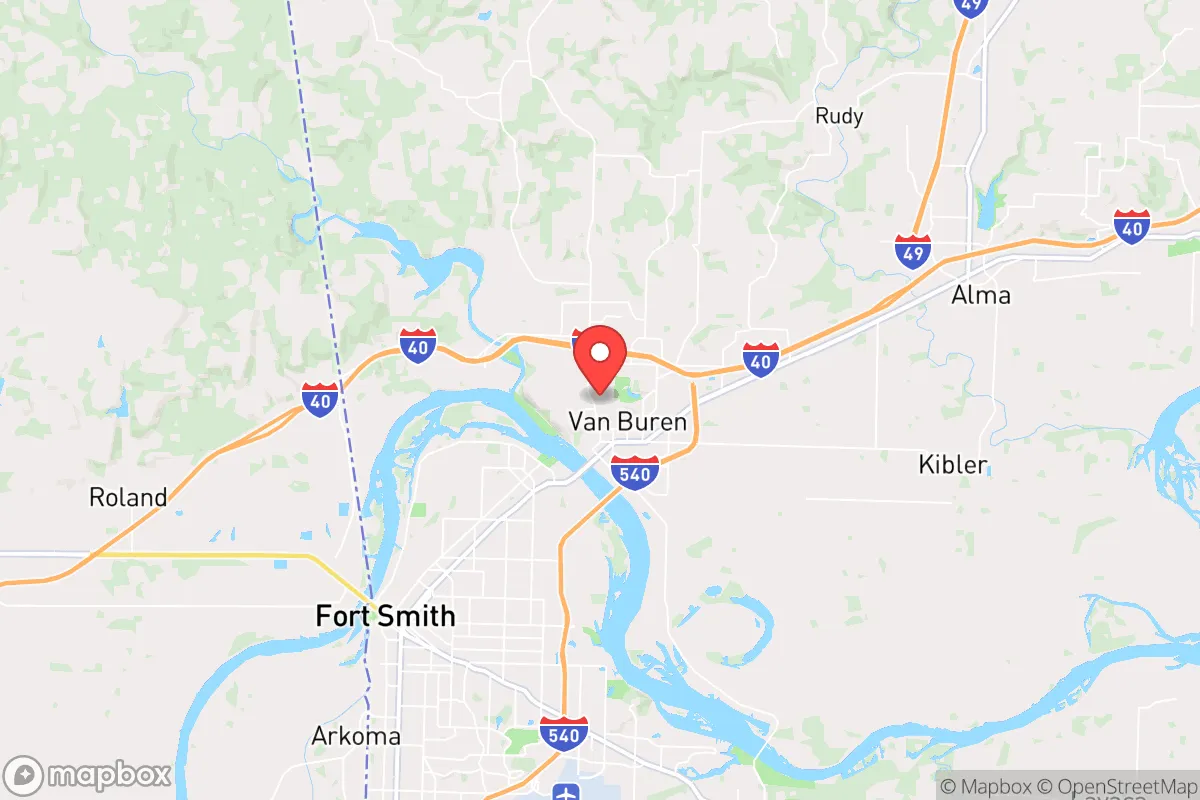
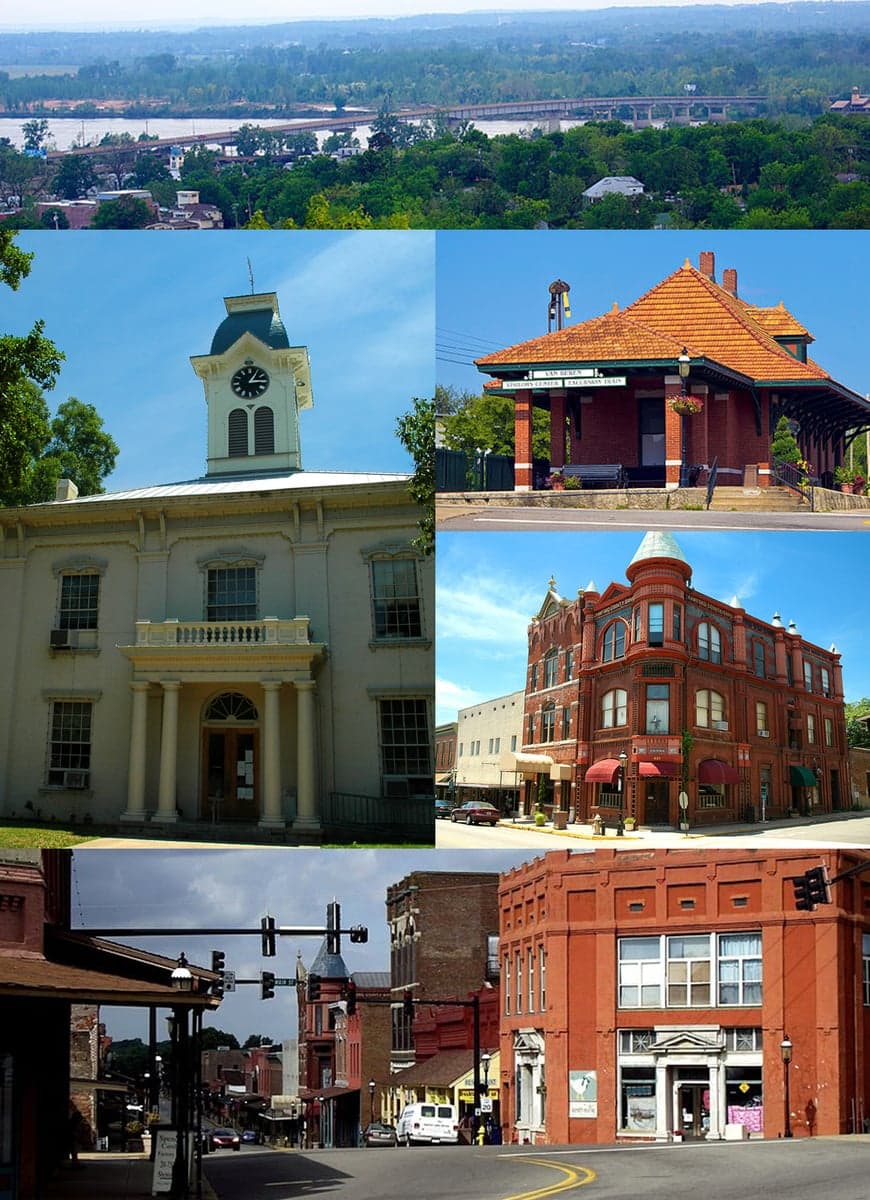
Photo: Wikipedia
Political ClimatePolitical Climate in Van Buren, AR
District shown is the primary district for this city’s centroid. Cities may span multiple districts.
Local Political AnalysisPolitical Analysis of Van Buren, AR
Van Buren, Arkansas, has long been a place where folks value their independence and aren't shy about telling the government to stay out of their business. The political climate here is solidly conservative, and the numbers back that up—the Cook PVI for the area sits at R+13, meaning it votes about 13 points more Republican than the national average. That's not a fluke; it's a reflection of a community that has consistently pushed back against the creeping expansion of federal and state power into our daily lives. While you might see some shifts toward progressive ideology in bigger cities like Fayetteville or even nearby Fort Smith, Van Buren has held the line, and most of us intend to keep it that way.
How it compares
If you drive just 15 miles east to Fort Smith, you'll find a more mixed bag politically—still conservative overall, but with a noticeable uptick in progressive voices, especially among younger transplants and folks tied to the university scene. Head another 20 miles north to Fayetteville, and you're in a whole different world: that's where you'll see the kind of government overreach and social engineering that makes a lot of us in Van Buren shake our heads. In contrast, Van Buren feels like a throwback to a time when local control meant something. The county commission and school board here are still dominated by folks who believe in limited government, low taxes, and the Second Amendment. It's not just about party labels—it's about a culture that values personal responsibility over government handouts. The R+13 rating isn't just a statistic; it's a warning to anyone who thinks they can come in and tell us how to live our lives.
What this means for residents
For the people who call Van Buren home, this political climate means a few concrete things. First, you're not going to see the kind of heavy-handed zoning or business regulations that choke small towns in blue states. Want to start a side hustle out of your garage? Go for it. Want to keep and bear arms without a permission slip from the state? That's still the norm here. Second, property taxes stay reasonable because the local government isn't constantly dreaming up new programs to spend your money on. Third, and maybe most importantly, the schools here still teach kids how to think, not what to think—there's no room for the kind of woke indoctrination that's taken over districts in places like Little Rock or Northwest Arkansas. That said, we're not immune to outside pressure. Every election cycle, you see a little more money flowing in from out-of-state groups trying to flip the county blue. So far, it hasn't worked, but it's a reminder that the fight to keep Van Buren conservative is never really over.
One thing that sets Van Buren apart from some of its neighbors is the strong sense of local identity that pushes back against national trends. You won't find a lot of talk about "diversity, equity, and inclusion" initiatives here—instead, you'll hear folks talking about neighbor helping neighbor, which is the real way communities thrive. The city council has been careful to avoid the kind of mask mandates and business shutdowns that other towns rushed into during the pandemic, and that's earned them a lot of trust from residents. Looking ahead, the biggest concern is whether we can keep the progressive influence from seeping in through the school board or county planning commissions. If you're thinking about moving here, know that you're coming to a place where personal freedom isn't just a talking point—it's the way things have always been done, and most of us plan to keep it that way for our kids and grandkids.

State Political ClimatePolitical Climate in Arkansas
State Political AnalysisPolitical Environment in the State
Arkansas has long been a reliably red state, but its political character is more nuanced than a simple partisan label suggests. The Natural State has shifted from a Democratic-leaning Southern state in the 1990s to a solidly Republican stronghold today, with the GOP holding every statewide office and supermajorities in the legislature. This transformation has been driven by a combination of cultural conservatism, a growing evangelical population, and a backlash against national Democratic policies, particularly on gun rights, abortion, and education. For a conservative-leaning individual or family looking to relocate, Arkansas offers a policy environment that largely aligns with traditional values, but the state is not without its internal tensions and ongoing debates.
Urban vs. rural divide
The political map of Arkansas is a classic study in contrasts. The state’s two major metros, Little Rock and Fayetteville (home to the University of Arkansas), are the primary blue dots in a sea of red. Pulaski County (Little Rock) has trended Democratic for years, with the city itself becoming increasingly progressive, while the surrounding suburbs like Benton and Bryant remain reliably conservative. Northwest Arkansas, anchored by Fayetteville, is a fascinating case: the city itself votes blue, but the surrounding counties of Benton and Washington are deeply red, driven by the massive presence of Walmart, Tyson Foods, and JB Hunt. The rural areas—places like Jonesboro in the northeast, Texarkana in the southwest, and the Arkansas River Valley around Russellville—are overwhelmingly Republican. The real political action, however, is in the fast-growing exurbs of Conway and Cabot, where families fleeing Little Rock’s urban problems are solidifying the state’s conservative majority.
Policy environment
Arkansas’s policy environment is a dream for those wary of government overreach. The state has a flat income tax rate of 4.4%, with plans to phase it down further, and no state-level property tax on vehicles. The regulatory posture is business-friendly, with right-to-work laws and minimal red tape. On education, the LEARNS Act (2023) is a landmark piece of legislation that expanded school choice, created a voucher program, and banned critical race theory and “indoctrination” in classrooms. Healthcare is a mixed bag: the state expanded Medicaid under the private option, but it also passed one of the nation’s strictest abortion bans (trigger law) after Dobbs. Election integrity is a priority—Arkansas has voter ID laws, limits on ballot harvesting, and a ban on private funding of elections. For a conservative, the policy environment is largely a win, though the Medicaid expansion remains a point of contention among fiscal hawks.
Trajectory & freedom
Arkansas is on a clear trajectory of expanding personal freedom, particularly in areas that matter most to conservatives. The LEARNS Act gave parents unprecedented control over their children’s education, including the ability to use state funds for private or homeschool. On gun rights, the state passed constitutional carry in 2021, allowing permitless carry of firearms. The Second Amendment Sanctuary Act (2021) prohibits state resources from being used to enforce federal gun laws that violate the state constitution. Medical autonomy was bolstered by the ban on gender transition procedures for minors (2023) and the prohibition of vaccine mandates by private employers. Property rights were strengthened with the passage of a law limiting eminent domain for economic development. However, there are concerns: the state’s reliance on federal funding (about 40% of the budget) creates a vulnerability to federal overreach, and the ongoing push for a state-level income tax cut is being debated against the need for infrastructure spending.
Civil unrest & political movements
Arkansas has not seen the level of civil unrest seen in larger states, but there have been flashpoints. The Black Lives Matter protests in Little Rock in 2020 were relatively small and peaceful compared to Portland or Seattle, but they did expose a growing progressive activist base in the capital. On the right, the “Patriot” movement is active, particularly in rural counties like Baxter and Stone, where there is strong support for Second Amendment sanctuary resolutions and anti-federal land transfer rhetoric. Immigration politics are relatively quiet—Arkansas has no sanctuary cities, and the state passed a law requiring law enforcement to cooperate with ICE. Election integrity controversies have been minimal, though the 2020 election saw some local disputes over absentee ballot procedures. The most visible political movement is the school choice advocacy, which has energized conservative parents across the state, particularly in Bentonville and Rogers, where new charter schools are popping up.
Projection
Over the next 5-10 years, Arkansas is likely to become more conservative, not less. The in-migration pattern is telling: people are moving to the state from California, Illinois, and other high-tax states, and they are overwhelmingly conservative. The fastest-growing counties are in Northwest Arkansas (Benton and Washington) and the exurbs around Little Rock (Faulkner and Saline). These new arrivals are not bringing progressive politics with them—they are fleeing it. The state’s demographic profile is also shifting: the white, evangelical population is aging, but the Hispanic population (growing rapidly in Springdale and Rogers) tends to be socially conservative. The biggest wildcard is the potential for a state income tax elimination, which would supercharge growth but require cuts to services. Expect continued battles over school choice expansion, further restrictions on abortion, and a push for a state-level constitutional amendment to protect gun rights from federal encroachment.
For a new resident, the bottom line is this: Arkansas is a state where your personal freedoms—to raise your children, own firearms, and keep more of your money—are respected and likely to be strengthened over time. The trade-off is that you’ll be living in a state with a lower cost of living but also fewer amenities and a slower pace of life. The political climate is stable and predictable, with no major threats to conservative values on the horizon. If you’re looking for a place where the government stays out of your way and your vote actually counts, Arkansas is a solid bet. Just be prepared for the humidity and the fact that everyone you meet will ask you what church you go to.
* Values derived from national, state, county, city and local statistics and may differ in a specific area. Last updated: 2026-04-23T03:01:48.000Z
Narrative content on this page is AI-generated and may contain mistakes. Verify any details that matter before acting on them.
ReloMaps may earn a commission from affiliate links at no extra cost to you.

