Photo: Wikipedia
Demographics of Vancouver, WA
Affluence Level in Vancouver, WA
A middle-class area roughly in line with national averages across income, home values, education, and employment.
People of Vancouver, WA
The people of Vancouver, Washington, in 2026 form a predominantly white (65.4%) but diversifying city of 192,696, characterized by a strong family-oriented, middle-class identity and a growing Hispanic presence (17.2%). Distinct from Portland’s urban intensity across the river, Vancouver’s population is notably less dense and more suburban in character, with a lower share of foreign-born residents (7.2%) than the national average. The city’s identity is shaped by its role as a relatively affordable, tax-friendly alternative to Oregon, attracting both long-time Pacific Northwest families and newer waves of domestic migrants seeking space and stability.
How the city was settled and grew
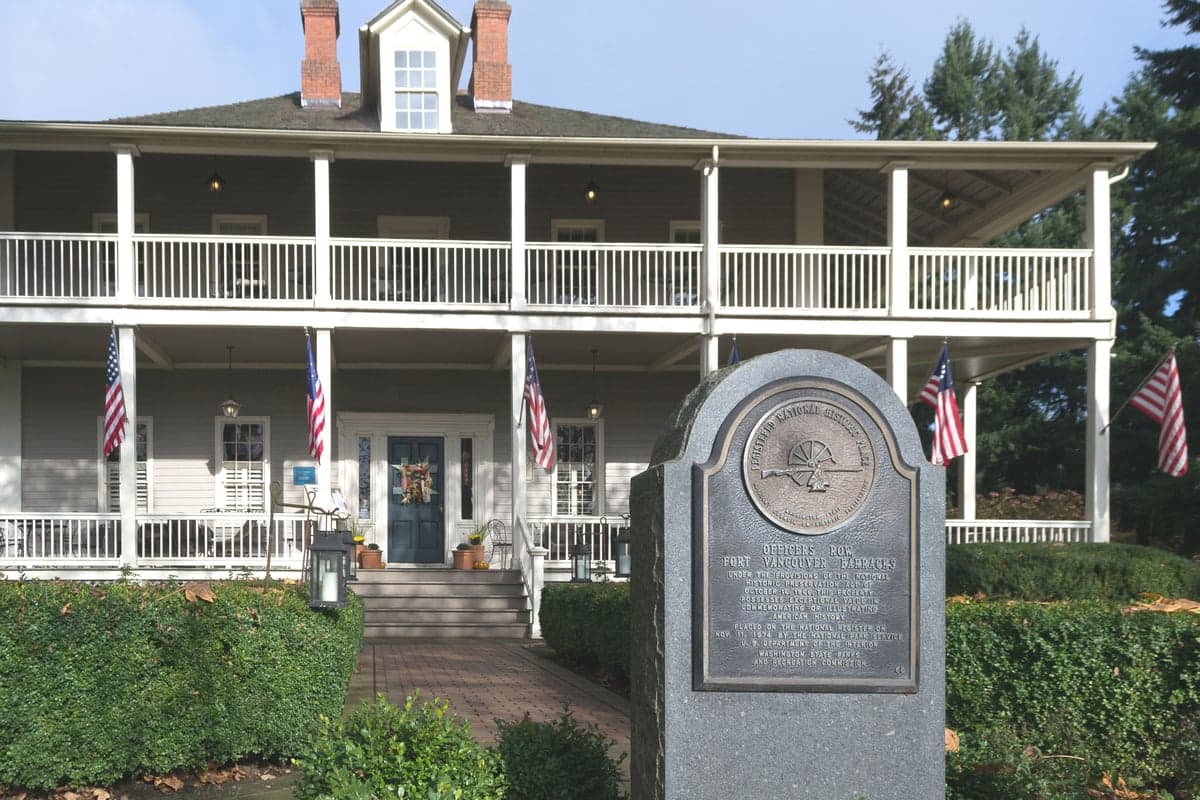
Vancouver’s population history begins with its 1825 founding as a Hudson’s Bay Company fur trading post, Fort Vancouver, which drew a small, mixed workforce of European, French-Canadian, and Native Hawaiian laborers. The U.S. Army established Vancouver Barracks in 1849, and the city’s early growth was driven by military families and the timber industry. The Donation Land Claim Act of 1850 attracted American settlers, primarily of Northern European stock, who farmed the fertile plains. By the early 20th century, the Kaiser Shipyards during World War II triggered a massive population surge, drawing workers from across the Midwest and South, many of whom settled in the Fruit Valley and Hough neighborhoods, areas that still retain a blue-collar, older-home character. The post-war era saw suburban expansion into Felida and Salmon Creek, which became strongholds for white, middle-class families fleeing Portland’s density and higher taxes.
Modern era (post-1965)
The 1965 Hart-Cellar Act had a modest effect on Vancouver compared to larger West Coast cities, but it did initiate a small but steady influx of East/Southeast Asian immigrants, particularly Vietnamese and Filipino families, who concentrated in the VanMall area and along the Fourth Plain corridor. The city’s most significant demographic shift since the 1990s has been the rapid growth of the Hispanic population, rising from roughly 5% in 2000 to 17.2% today. This wave, driven by agricultural and construction labor demand, has established a visible presence in Orchards and Burnt Bridge Creek, where Hispanic-owned businesses and Spanish-language services are common. The Black population remains small at 3.0%, concentrated in the Lincoln neighborhood near the former Vancouver Housing Authority projects. Domestic in-migration from California and Oregon has accelerated since 2020, bringing a more college-educated cohort (31.5% now hold a bachelor’s degree) and pushing up home prices, particularly in Fisher’s Landing and Cascade Park, which have become hubs for tech-adjacent professionals and remote workers.
The future
Vancouver’s population is heading toward greater ethnic diversity but within a framework of distinct, somewhat tribalized enclaves rather than wholesale integration. The Hispanic share is projected to reach 22-25% by 2040, driven by both natural increase and continued migration, with Orchards solidifying as a majority-minority area. The East/Southeast Asian community (4.7%) is plateauing, as newer immigrants bypass Vancouver for suburbs with denser co-ethnic networks like Beaverton or Hillsboro. The Indian-subcontinent population (0.6%) remains tiny and is not a significant growth driver. The white share, while declining, will remain the majority for the foreseeable future, especially in the northern and eastern neighborhoods like Felida and Salmon Creek, which are attracting conservative-leaning families from California and Oregon seeking lower taxes and larger lots. The city is not homogenizing; rather, it is developing a patchwork of neighborhoods with distinct ethnic and political identities.
For someone moving in now, Vancouver is becoming a more layered, less uniformly white suburb, but one where the dominant culture remains middle-class, family-focused, and politically moderate-to-conservative. The city offers a stable, growing tax base and good schools, but newcomers should expect neighborhood character to vary significantly by quadrant, with the east side trending newer and more diverse, and the north and west sides retaining a more traditional, older-stock feel.

* Values derived from national, state, county, city and local statistics and may differ in a specific area. Last updated: 2026-04-21T11:07:28.000Z
Narrative content on this page is AI-generated and may contain mistakes. Verify any details that matter before acting on them.
ReloMaps may earn a commission from affiliate links at no extra cost to you.

