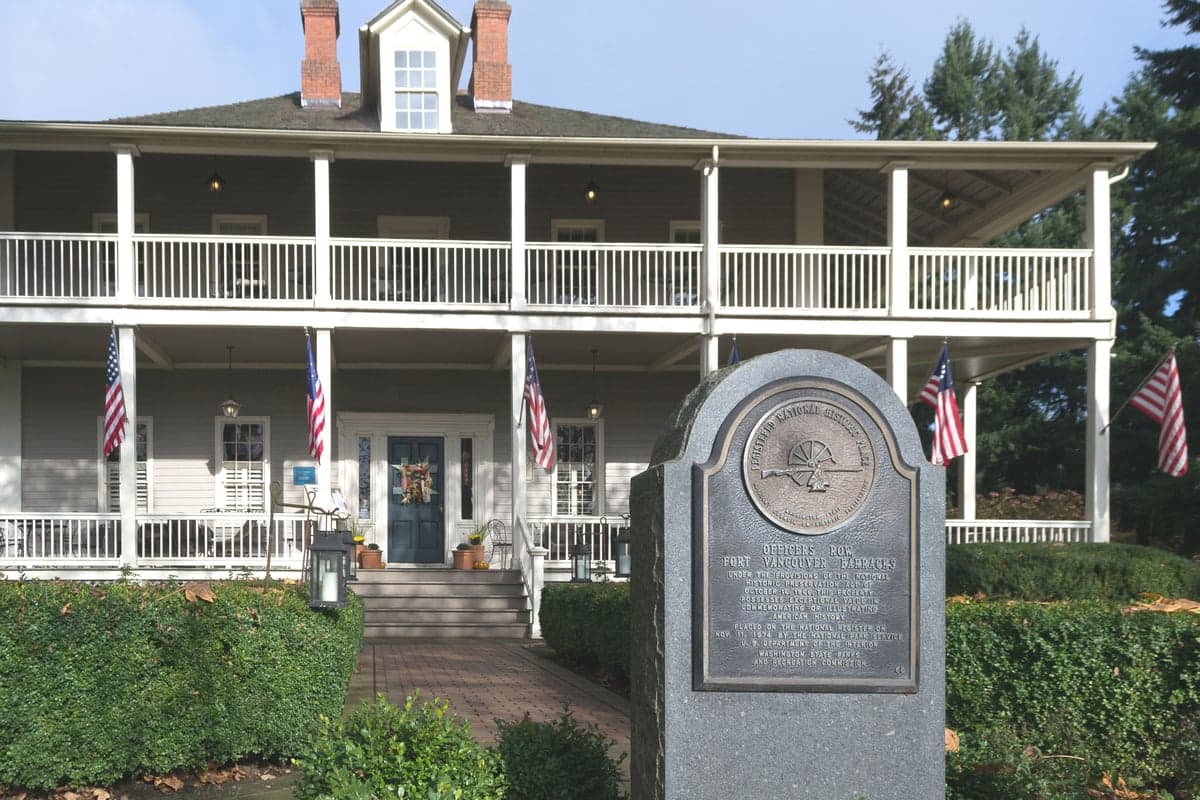
Photo: Wikipedia
Personal Sovereignty in Vancouver, WA
Viable for self-reliance. Generally workable, though some barriers may limit total independence.
What does Personal Sovereignty tell us?
Personal Sovereignty measures your capacity for self-reliance and independence with minimal government friction. Higher scores mean fewer barriers between you and the way you want to live... but it assumes you have the space you need and good neighbors.
What does this tell us?
Personal Sovereignty measures your capacity for self-reliance and independence with minimal government friction. Higher scores mean fewer barriers between you and the way you want to live... but it assumes you have the space you need and good neighbors.
State Policy
Energy independence: Importer (55% of energy produced in-state)
Personal Liberty
Homesteading

Personal Liberty Analysis
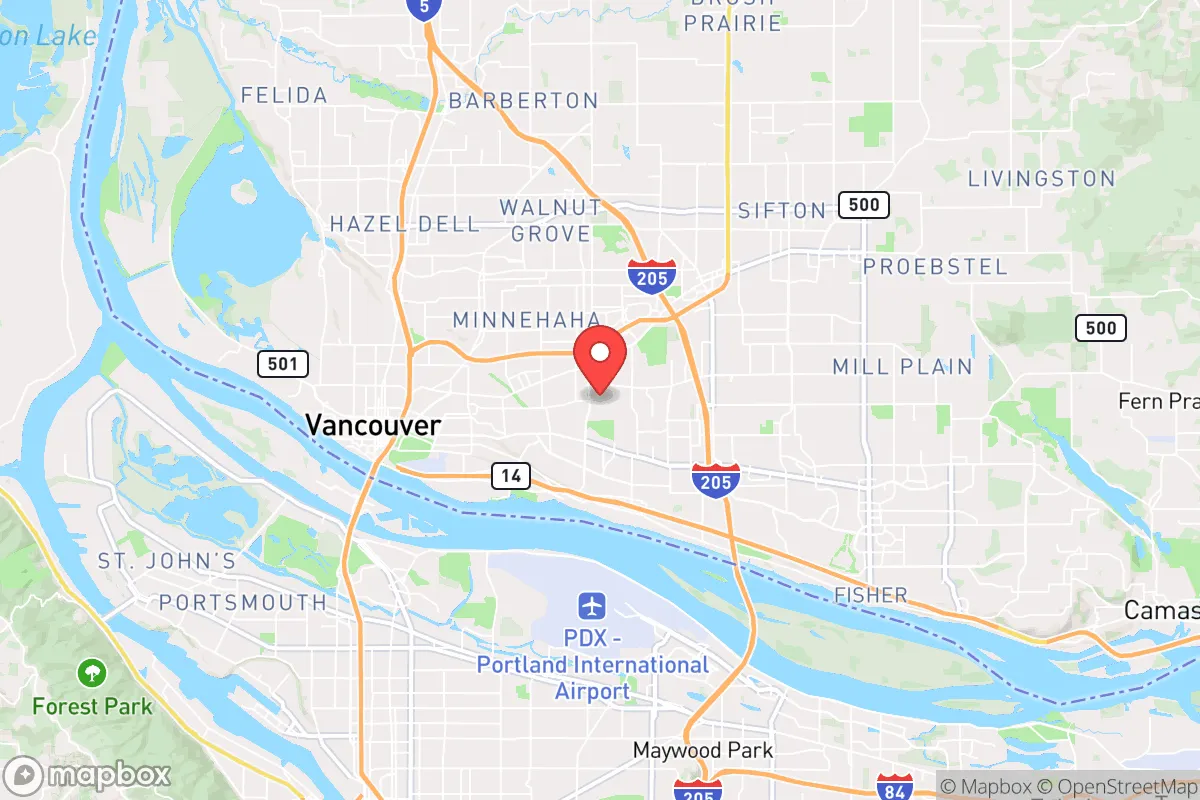
For the strategic-minded individual or family prioritizing personal sovereignty, Vancouver, Washington presents a complex calculus. Located just across the Columbia River from Portland, Oregon, this city of roughly 200,000 sits in a state with a strong progressive tilt, yet its own local culture and geography offer distinct advantages for those seeking autonomy. The core tension here is between a state-level governance that increasingly centralizes control and a local environment that still permits a degree of self-reliance uncommon in the Pacific Northwest's major metro areas. Understanding this balance is critical before making a relocation decision.
Tax burden and regulatory posture: how Washington's policies affect your autonomy
Washington State’s lack of a personal income tax is the single most powerful lever for personal sovereignty here. Unlike Oregon, which taxes income up to 9.9%, or California’s punishing rates, every dollar you earn in Vancouver stays in your pocket. This directly funds your ability to invest in land, supplies, and self-sufficiency projects without the state taking a cut. However, the trade-off is a high sales tax (8.4% in Clark County) and property taxes that have risen steadily, though they remain below Oregon’s average. The regulatory posture is where the friction appears. Washington’s state government has aggressively expanded its reach into land use, energy mandates, and building codes. The Growth Management Act (GMA) heavily restricts rural development, making it difficult to simply buy acreage and build without navigating a thicket of permits. For the prepper or homesteader, this means Vancouver’s urban growth boundary is a real constraint—you cannot just “go off-grid” within city limits without significant legal hurdles. The state’s push for electrification and net-zero energy standards in new construction also limits your ability to choose your own energy infrastructure. In short, the tax environment gives you financial freedom, but the regulatory environment takes some of it back.
Self-defense and gun law specifics: what you can and cannot do in Clark County
Washington was once a stronghold for gun rights, but recent legislation has shifted the ground significantly. As of 2024, the state bans the sale of many semi-automatic rifles (defined as “assault weapons”), requires a 10-day waiting period for all firearm purchases, and mandates a background check for every sale, including private transfers. Magazine capacity is capped at 10 rounds for rifles and 17 for handguns. For the survivalist, this is a direct limitation on your ability to acquire and stockpile defensive tools. However, Vancouver’s proximity to Oregon—where these restrictions do not yet exist—creates a practical loophole for those willing to travel. Concealed carry is shall-issue, but the state has also passed a law requiring a permit to purchase a semi-automatic rifle, adding another layer of bureaucracy. On the positive side, Clark County has a strong culture of firearm ownership, with multiple ranges, gun clubs, and a sheriff’s office that has historically been more supportive of Second Amendment rights than King County. Castle Doctrine and Stand Your Ground laws apply in Washington, meaning you have no duty to retreat in your home or vehicle. But the legal landscape is fragile; a single election cycle could bring further restrictions. For the strategic mover, Vancouver offers a baseline of self-defense rights that are under active threat, requiring constant vigilance and political engagement to preserve.
Self-reliance and homesteading viability: lot sizes, zoning, and off-grid feasibility
Within Vancouver city limits, true homesteading is nearly impossible. Standard residential lots are typically 5,000 to 7,000 square feet, with strict zoning that prohibits livestock, limits outbuildings, and requires connection to municipal water and sewer. The city’s code enforcement is active, and neighbors will report unpermitted structures or visible self-sufficiency projects. The real opportunity lies in unincorporated Clark County, particularly east of Vancouver toward the Cascade foothills. Here, you can find parcels of 5 to 20 acres with agricultural zoning that allows chickens, goats, and even small-scale farming. Off-grid feasibility is limited by state law: Washington requires a permit for any permanent dwelling, and the state’s energy code effectively mandates grid connection or a very expensive solar-plus-battery system that meets code. Rainwater collection is legal for outdoor use but restricted for potable water without a permit. Septic systems are allowed on larger lots, but the permitting process is rigorous. For the serious prepper, the best strategy is to buy a property with an existing well and septic, then gradually build out your systems within the legal framework. The area’s mild climate and abundant rainfall are assets for food production, but the regulatory overhead means you cannot simply “bug out” to a remote cabin without years of planning and paperwork.
Personal liberties: parental rights, medical autonomy, speech, and property
Washington State has moved aggressively into areas that directly affect family sovereignty. Parental rights in education have been eroded by laws that allow schools to withhold information about a child’s gender identity from parents, and the state’s comprehensive sex education mandate overrides local school board control. For conservative parents, this is a red line. Medical autonomy is similarly constrained: Washington has a strict vaccine mandate for school attendance, and the state’s public health apparatus has broad emergency powers that were used extensively during the pandemic. On speech and property, the picture is mixed. The state’s public records act is strong, but its campaign finance laws and “hate speech” statutes create chilling effects for certain political expressions. Property rights are under constant pressure from environmental regulations, including the Shoreline Management Act and critical areas ordinances that can restrict what you do on your own land. The silver lining is that Clark County voters have consistently rejected many of the most progressive state-level initiatives, and local officials often push back against Olympia’s overreach. For the individualist, Vancouver offers a community of like-minded people who are actively resisting, but the legal framework is stacked against you. You will need to be politically engaged and legally savvy to protect your freedoms here.
Overall, Vancouver’s personal sovereignty profile is one of high potential but high maintenance. The tax advantage and proximity to Oregon’s less restrictive gun laws are genuine assets, but the state’s regulatory creep into land use, education, and medical choice is a persistent threat. Compared to Idaho or Montana, Vancouver offers better economic opportunity and milder climate, but far less legal freedom. Compared to Portland, it is a sanctuary. For the strategic relocator, this is not a place to passively enjoy liberty—it is a place to actively defend it, build networks, and prepare for the possibility that the state’s trajectory may force a future move. If you are willing to fight for your autonomy, Vancouver can work. If you want it handed to you, look elsewhere.

* Values derived from national, state, county, city and local statistics and may differ in a specific area. Last updated: 2026-04-21T11:07:28.000Z
Narrative content on this page is AI-generated and may contain mistakes. Verify any details that matter before acting on them.
ReloMaps may earn a commission from affiliate links at no extra cost to you.

