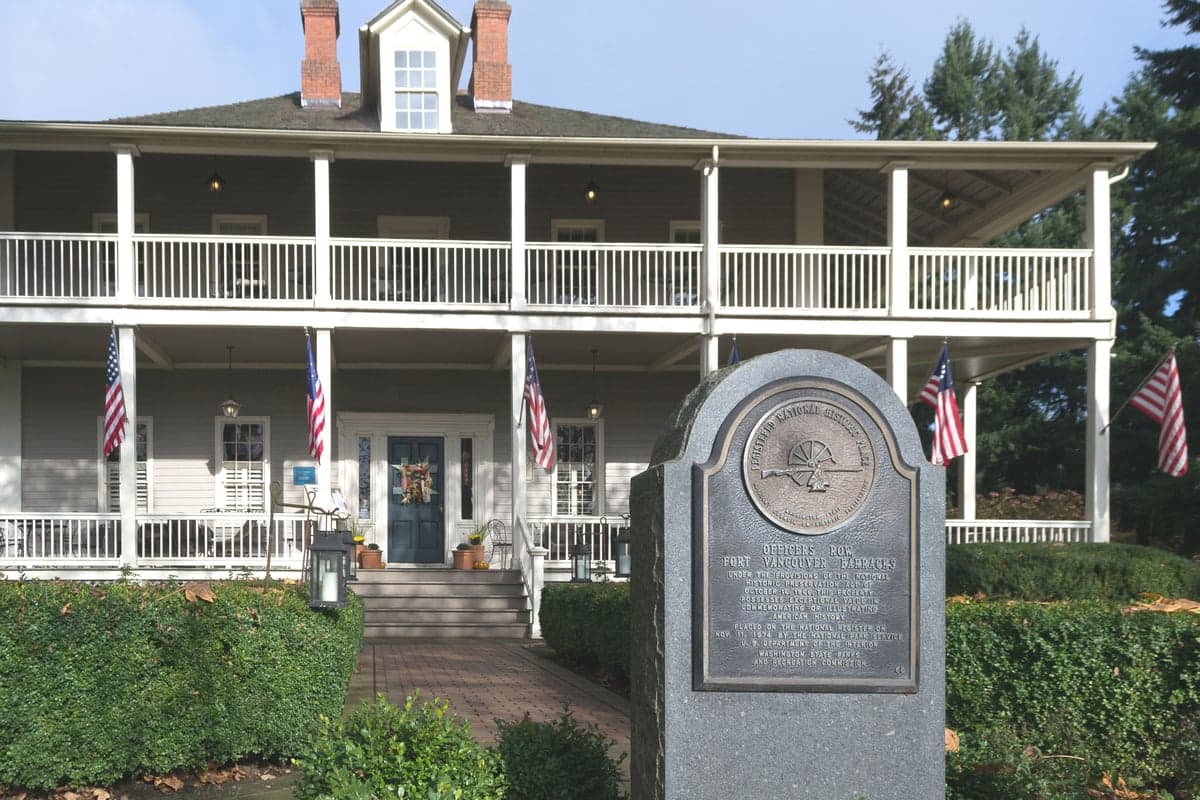
Photo: Wikipedia
Political ClimatePolitical Climate in Vancouver, WA
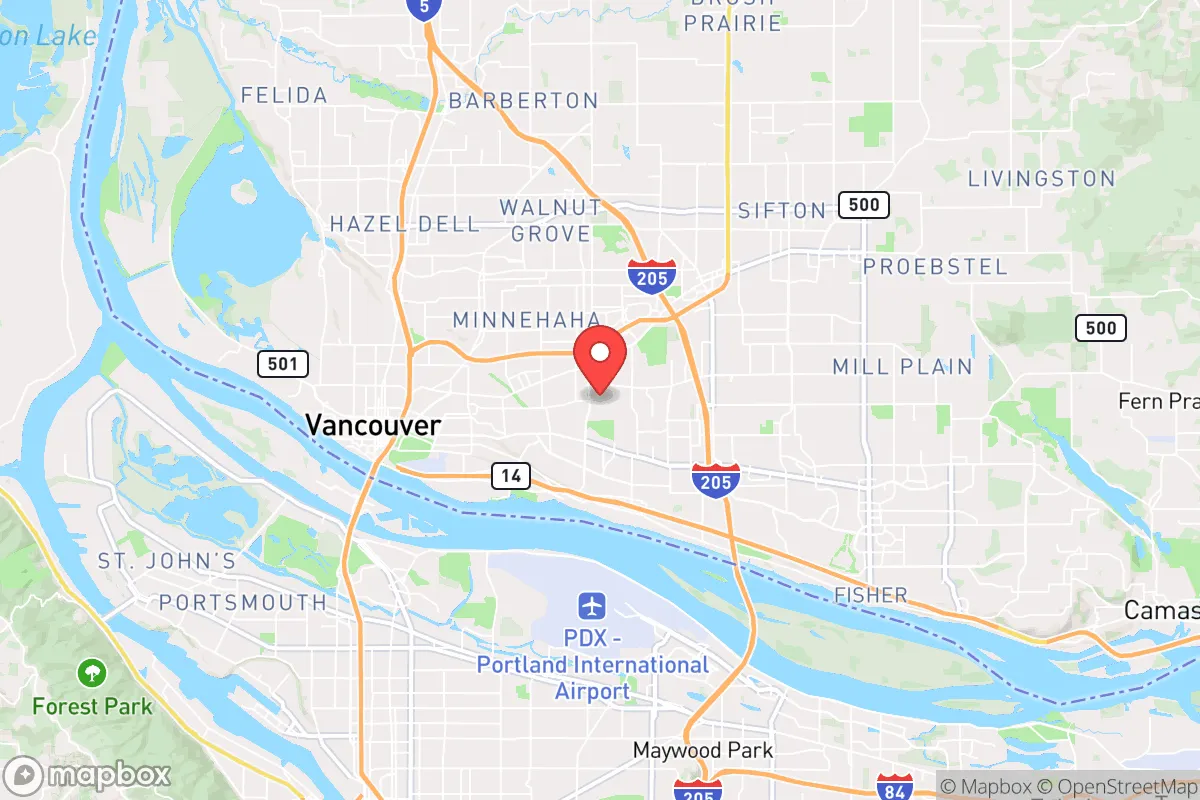
District shown is the primary district for this city’s centroid. Cities may span multiple districts.
Local Political AnalysisPolitical Analysis of Vancouver, WA
Vancouver, Washington, has historically been a bit of a political island within the otherwise deep-blue I-5 corridor, but that’s changing faster than most locals are comfortable with. The Cook PVI rating of R+2 tells you the district is still technically a toss-up, but if you’ve lived here as long as I have, you’ve watched the old-school, live-and-let-live conservative vibe get slowly drowned out by the wave of transplants from California and Portland proper. The county itself still leans right on paper, but the city council and school board have been tilting hard toward progressive policies that feel imported from across the river, and it’s starting to rub a lot of us the wrong way.
How it compares
Drive ten minutes south over the I-5 bridge into Portland, and you’re in a city that’s fully embraced the kind of government overreach we’re trying to avoid—homeless encampments on every corner, defund-the-police rhetoric, and a tax structure that punishes small businesses. Vancouver used to be the sane alternative, the place where you could own a firearm without a permission slip and keep more of your paycheck. But now, when you compare us to places like Camas or Battle Ground, you see the contrast sharp and clear. Those towns still hold onto the old-school Washington values: low taxes, minimal zoning nonsense, and a general distrust of the city telling you how to live. Vancouver, meanwhile, is starting to adopt Portland’s bad habits—higher property taxes, more regulations on landlords, and a city council that seems more interested in bike lanes and equity commissions than in keeping the streets safe and the cost of living manageable.
What this means for residents
For the average family or retiree, the shift means you’re paying more for less freedom. The local government has been pushing things like mandatory paid sick leave and rent control studies, which sound nice on paper but end up driving up costs for everyone and squeezing out the small landlords who used to keep rents reasonable. The school board has gotten tangled up in curriculum battles that have nothing to do with reading and math, and there’s a growing sense that your voice at town hall doesn’t carry the weight it used to. If you’re a conservative who values personal responsibility and limited government, you’re starting to feel like the odd man out in your own city. The long-time residents I know are either digging in their heels or quietly looking at property in Ridgefield or La Center, where the county commission still remembers what fiscal restraint looks like.
The cultural and policy distinctions are becoming harder to ignore. Vancouver still has a strong veterans’ community and a lot of folks who work in the trades, but the city’s leadership seems embarrassed by that identity. They’d rather chase the Portland model of “progressive” urbanism, complete with density mandates and climate action plans that add red tape to everything from building a deck to opening a small shop. If the trend keeps up, I wouldn’t be surprised to see Vancouver flip from R+2 to a solid blue district within the next decade. For now, it’s still a place where you can live your life without too much interference, but you’ve got to keep your eye on the ballot box and the city council agenda. The old Vancouver is worth fighting for, but it’s not going to defend itself.

State Political ClimatePolitical Climate in Washington
State Political AnalysisPolitical Environment in the State
Washington State has shifted from a purple swing state to a solidly blue stronghold over the past two decades, driven overwhelmingly by the explosive growth of the Seattle metropolitan area. While the state last voted for a Republican presidential candidate in 1984, the legislature has moved sharply left since 2010, with Democrats now holding a trifecta and passing some of the nation’s most aggressive progressive policies. For a conservative-leaning individual or family, the state presents a stark choice: the urban corridor runs deep blue, while the eastern and rural halves remain a red island fighting for relevance.
Urban vs. rural divide
The political map of Washington is a tale of two states. The I-5 corridor from Seattle down through Tacoma and Olympia is the engine of Democratic dominance, producing massive vote margins that swamp the rest of the state. King County alone, home to Seattle, casts roughly one-third of all votes and routinely delivers 70-75% Democratic margins. Neighboring Snohomish and Pierce counties have trended blue as well, with Pierce (Tacoma) flipping from a swing county to reliably Democratic in presidential races since 2016. Meanwhile, the eastern half of the state—Spokane, the Tri-Cities (Kennewick, Pasco, Richland), and Yakima—votes reliably Republican, but their populations are too small to offset the Seattle metro. Spokane County, once a GOP stronghold, has become a competitive swing county, with Democrats making gains in the city proper while the rural outskirts hold red. The most conservative enclaves are the rural counties east of the Cascades—Ferry, Stevens, Pend Oreille, and Garfield—where Trump won by 40-50 points in 2020. Even the suburban ring around Seattle, like Bellevue and Redmond, has shifted left as tech workers flood in, making once-moderate districts now safely Democratic.
Policy environment
Washington’s policy environment is a case study in progressive governance with a heavy hand. The state has no personal income tax, which sounds appealing, but it levies a high state sales tax (6.5% base, often 9-10% with local add-ons) and has some of the highest property taxes in the nation after recent valuation spikes. The regulatory climate is hostile to business expansion outside of tech and green energy—permitting for housing or commercial construction can take years. On education, the state has a fully funded public school system but has embraced critical race theory-inspired curriculum and gender identity policies that allow students to change names and pronouns without parental notification, a major red flag for conservative parents. Healthcare is heavily regulated, with a state-run insurance exchange and strict abortion access laws codified into statute. Election laws are among the most liberal: all-mail voting is universal, same-day registration is allowed, and no voter ID is required—a system that has drawn repeated concerns about integrity from conservative groups. The state also has a strict assault weapons ban passed in 2023 (HB 1240) and a high-capacity magazine ban, making it one of the most restrictive states for gun owners.
Trajectory & freedom
Washington is unequivocally becoming less free for conservatives. The 2023 legislative session was a watershed: the assault weapons ban (HB 1240) and magazine ban (SB 5078) effectively ended legal purchase of most semi-automatic rifles. The state also passed a "parental rights" bill that actually weakened parental authority by allowing schools to withhold information about a child’s gender identity from parents (SB 5599). On the medical front, the state expanded taxpayer-funded abortion coverage and passed a "shield law" protecting providers who perform abortions on out-of-state patients. Property rights have eroded under the state’s Growth Management Act, which allows counties to downzone land without compensation, and a new capital gains tax (7% on gains over $250,000) was upheld by the state Supreme Court in 2023, despite being labeled an income tax by opponents. The only bright spot for liberty was a 2024 law limiting the use of facial recognition by police, but that’s cold comfort when your Second Amendment rights are gutted. The trend is clear: every session brings new restrictions on guns, speech (hate crime laws expanded), and parental autonomy.
Civil unrest & political movements
Washington has a long history of civil unrest, most notoriously the 2020 CHOP/CHAZ occupation in Seattle’s Capitol Hill neighborhood, where activists took over several blocks for weeks, resulting in multiple shootings and a complete breakdown of law enforcement. The state’s sanctuary status—codified in 2019’s Keep Washington Working Act—limits local police cooperation with federal immigration authorities, making it a magnet for illegal immigration and creating visible tensions in border communities like Yakima and Pasco. On the right, the secession movement for a "State of Liberty" or "Cascadia" has gained traction in eastern counties, with several counties passing symbolic resolutions to join Idaho. The Washington State Republican Party has become more populist and Trump-aligned, but internal divisions between moderates and MAGA factions have hampered electoral gains. Election integrity remains a flashpoint: the 2020 and 2022 elections saw widespread allegations of ballot harvesting and signature verification issues, though no major court cases succeeded. The most visible flashpoint for a new resident is likely the homeless encampments and drug crisis in Seattle and Portland-adjacent Vancouver, where public drug use is tolerated under the state’s decriminalization policies (though a 2023 law recriminalized possession after public backlash).
Projection
Over the next 5-10 years, Washington will likely continue its leftward drift. The Seattle metro is growing faster than the rest of the state, and in-migration from California and Oregon brings more progressive voters. The state’s Democratic supermajority is likely to pass a statewide income tax, a public option for healthcare, and further gun restrictions. The rural-urban divide will widen, with eastern counties becoming more vocal about secession or autonomy, but no realistic path to splitting the state exists without federal approval. For a conservative moving in now, expect to live in a state where your vote for president or Senate is effectively meaningless, but local elections in red counties still matter for school boards and county commissions. The best bet for a conservative family is to target Spokane County’s outskirts, the Tri-Cities, or the rural Skagit Valley north of Seattle—places where you can still find like-minded neighbors and lower taxes, but you’ll still be subject to state-level policies you oppose.
Bottom line: Washington is a beautiful state with stunning geography and a strong economy, but for a conservative individual or parent, it’s a hostile political environment. You’ll pay high taxes, face strict gun laws, and watch your children’s schools adopt policies you disagree with. If you’re willing to fight for your values at the local level and can afford the cost of living, the eastern half offers a redoubt. But if you’re looking for a state that respects your freedoms, you’re better off looking at Idaho, Montana, or Texas. Washington is a blue state, and it’s only getting bluer.
* Values derived from national, state, county, city and local statistics and may differ in a specific area. Last updated: 2026-04-21T11:07:28.000Z
Narrative content on this page is AI-generated and may contain mistakes. Verify any details that matter before acting on them.
ReloMaps may earn a commission from affiliate links at no extra cost to you.

