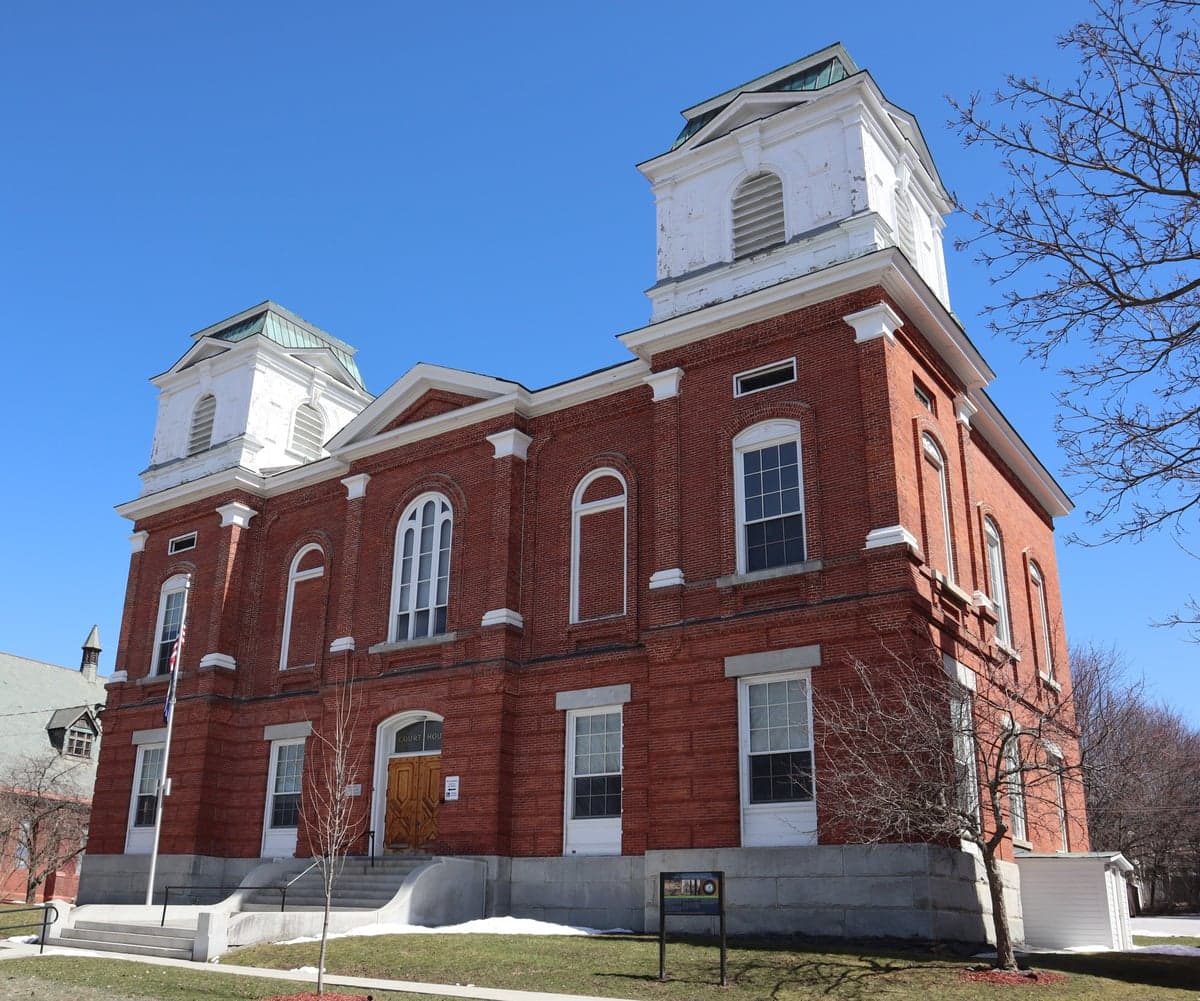
Photo: Wikipedia
Personal Sovereignty in Franklin County
Moderate friction. Expect trade-offs in some aspect of personal liberty and independence.
What does Personal Sovereignty tell us?
Personal Sovereignty measures your capacity for self-reliance and independence with minimal government friction. Higher scores mean fewer barriers between you and the way you want to live... but it assumes you have the space you need and good neighbors.
What does this tell us?
Personal Sovereignty measures your capacity for self-reliance and independence with minimal government friction. Higher scores mean fewer barriers between you and the way you want to live... but it assumes you have the space you need and good neighbors.
State Policy
Energy independence: Importer (15% of energy produced in-state)
Personal Liberty
Homesteading

Personal Liberty Analysis
Franklin County, Vermont offers a notably higher degree of personal sovereignty than most of New England, but it operates within the constraints of a state government that has increasingly centralized authority in Montpelier. For the conservative-leaning individual or family prioritizing autonomy, the county presents a mixed picture: local culture and enforcement often tilt toward self-reliance, while state-level statutes on taxation, education, and health mandates can feel intrusive. The key for a survivalist or prepper mindset is understanding where the county’s towns—like St. Albans City, Enosburgh, and Richford—diverge from the state’s progressive trajectory, and where the regulatory landscape still allows for meaningful self-determination.
Tax burden and regulatory posture: How Franklin County compares to Vermont’s state-level overreach
Vermont’s state income tax is flat at 3.35% on the first $45,400 for single filers, rising to 8.75% above $231,250, which is among the highest in the nation. Property taxes are also steep, with an effective rate around 1.8% of assessed value, funding a school system that Montpelier tightly controls. However, Franklin County’s towns—particularly Swanton, Sheldon, and Montgomery—tend to have lower municipal tax rates than Chittenden County, and local zoning boards are generally less aggressive. The state’s Act 250 land-use law still applies to larger subdivisions and commercial projects, but for a single-family homestead on a few acres, the regulatory burden is manageable. The real friction comes from state mandates: Vermont’s universal paid family leave (funded by a payroll tax) and its push for renewable energy standards can feel like government overreach. For a prepper, the takeaway is that Franklin County’s tax burden is high by national standards, but the local enforcement culture is more hands-off than in Burlington or Montpelier, leaving room for quiet self-sufficiency if you keep a low profile.
Self-defense and gun law specifics: What Franklin County’s culture means for your rights
Vermont is a constitutional carry state—no permit required to carry a concealed firearm—and preemption laws prevent local municipalities from enacting their own restrictions. This is a significant win for personal sovereignty. However, the state legislature has passed several restrictions in recent years: Act 69 (2018) raised the purchase age to 21, banned bump stocks, and required background checks on private sales. Act 70 (2023) banned magazines over 15 rounds and prohibited carrying in certain public places like hospitals and schools. Franklin County’s sheriff’s office and local police in St. Albans City and Enosburgh Falls are generally pro-Second Amendment, but enforcement of state laws is uneven. In practice, the county’s rural character means that private land use and hunting culture remain strong, and you’re unlikely to face harassment for open carry. For a survivalist, the key limitation is the magazine ban—stockpiling standard-capacity AR-15 magazines is now illegal, and compliance requires either grandfathering or moving to a less restrictive state. Still, compared to neighboring New York or Massachusetts, Franklin County is a relative haven for gun owners, with a culture that respects the right to self-defense.
Self-reliance and homesteading viability: Lot sizes, zoning, and off-grid feasibility across the county
Franklin County’s rural towns offer some of the best homesteading opportunities in Vermont, but the feasibility varies sharply by location. In Montgomery and Richford, near the Canadian border, land is affordable—often under $5,000 per acre—and zoning is minimal. You can find parcels of 5 to 20 acres with no subdivision restrictions, allowing for gardens, livestock, and even small-scale timber harvesting. Off-grid living is legally possible, but Vermont’s building codes require that any dwelling with a roof must meet state energy standards (the Residential Building Energy Standards, or RBES), which mandate insulation and heating efficiency. Solar panels are permitted, but net metering rules are state-controlled, and you cannot simply disconnect from the grid without a variance. In Swanton and St. Albans Town, zoning is slightly more restrictive, with minimum lot sizes of 2 acres in agricultural districts and stricter septic requirements. Water rights are a concern: Vermont follows the “reasonable use” doctrine for groundwater, but the state has authority over large withdrawals. For a prepper, the best strategy is to buy raw land in Enosburgh or Sheldon, build a small cabin under the radar, and rely on a well and solar—just be prepared for occasional state inspections if you ever need a permit for a septic system.
Personal liberties: Parental rights, medical autonomy, speech, and property in Franklin County
Parental rights in Vermont have been eroded by state mandates. Act 1 (2022) requires schools to adopt policies that affirm students’ gender identity without parental notification, which has caused friction in conservative towns like St. Albans City and Enosburghosburgh. Local school boards in Franklin County have pushed back, but state law overrides them. Medical autonomy is similarly constrained: Vermont’s vaccine mandates for school attendance (including COVID-19, though currently not enforced) and its universal health care framework mean that opting out of the system is difficult. Religious exemptions exist but are narrow. Free speech is protected under the First Amendment, and Franklin County’s public forums—like town meeting days—are robust, but the state’s campaign finance laws and hate speech statutes can chill certain expressions. Property rights are generally strong, but Act 250 and state wetlands regulations can delay or block development. For a survivalist, the most concerning trend is the state’s increasing control over education and health decisions, which directly impacts family autonomy. However, the county’s distance from Montpelier and its independent-minded population mean that local enforcement is often lax—many families simply homeschool or use private medical providers across the border in New York or Quebec.
Overall, Franklin County offers a higher degree of personal sovereignty than most of Vermont, but it is not a libertarian paradise. The state’s tax burden, gun restrictions, and education mandates are real constraints that require strategic navigation. For a conservative individual or family willing to live quietly on a few acres in MontgomeryMontgomery or Richford, the county provides a viable base for self-reliance, with a culture that respects firearms and property rights. Compared to Chittenden County or the Northeast Kingdom, Franklin County strikes a balance: less government overreach than the urban core, but more infrastructure and community support than the remote north. The bottom line is that if you’re willing to work within Vermont’s state-level framework—paying higher taxes and complying with magazine bans—you can carve out a meaningful degree of autonomy here, especially if you choose your town wisely.

* Values derived from national, state, county, city and local statistics and may differ in a specific area. Last updated: 2026-05-17T09:02:27.000Z
Narrative content on this page is AI-generated and may contain mistakes. Verify any details that matter before acting on them.
ReloMaps may earn a commission from affiliate links at no extra cost to you.

