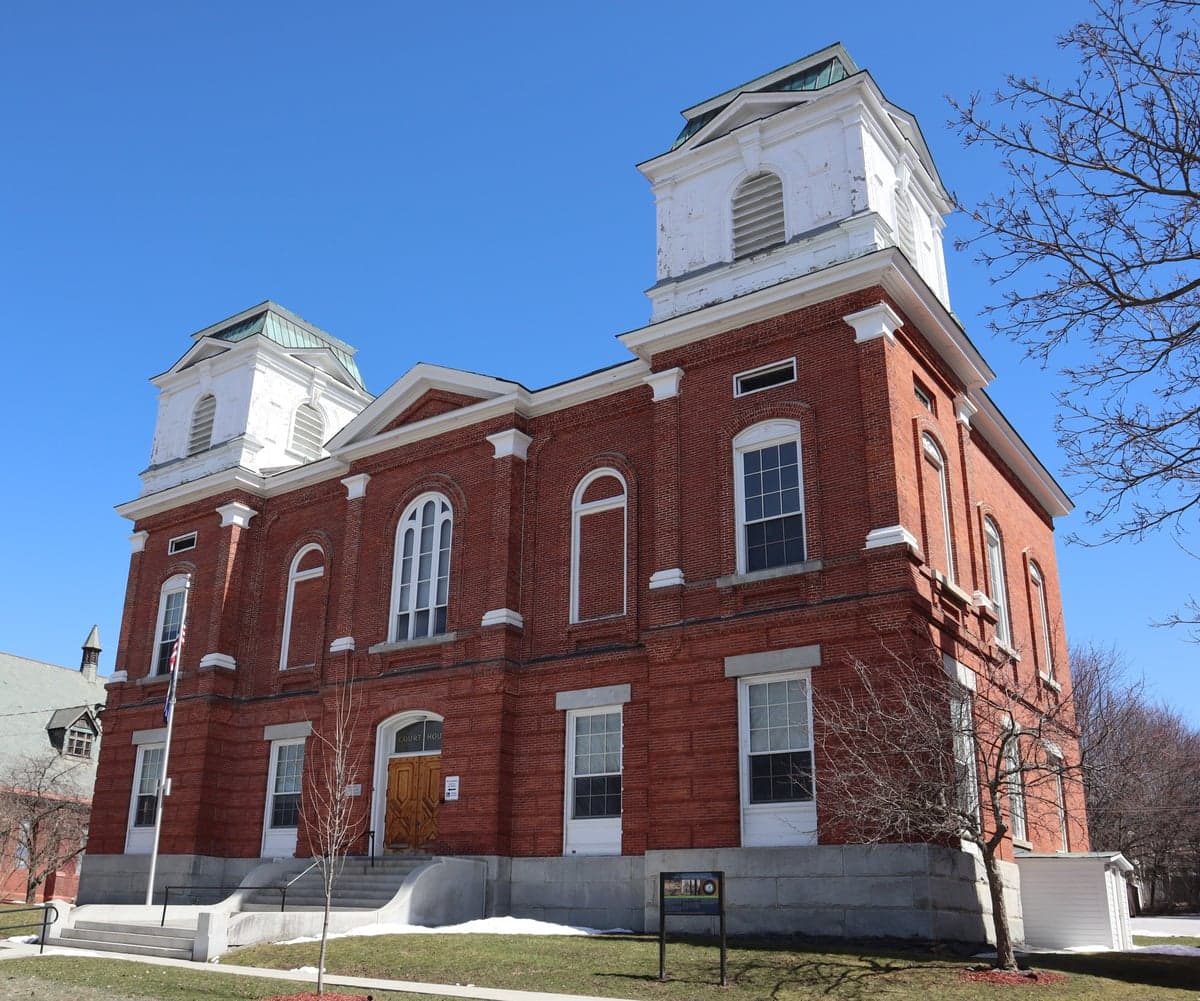
Photo: Wikipedia
Political ClimatePolitical Climate in Franklin County
Showing state-level results — no local-only data available.
Local Political AnalysisPolitical Analysis of Franklin County
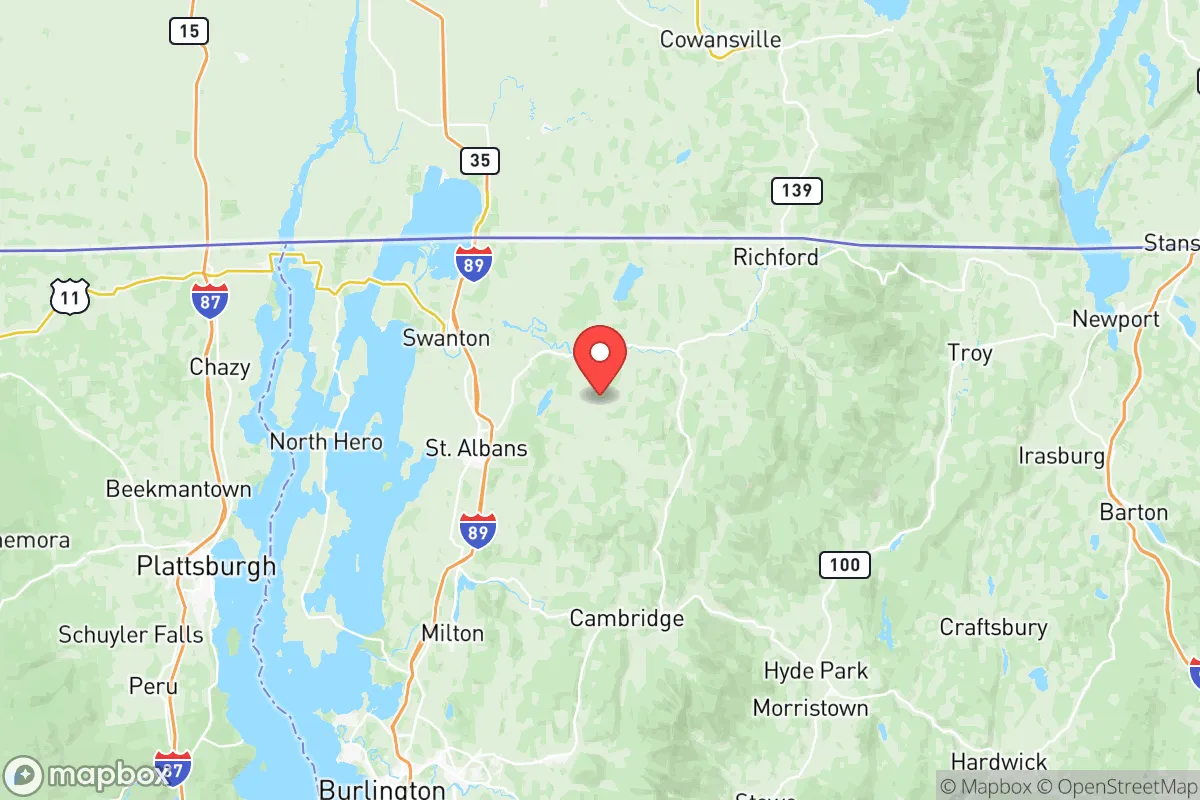
Franklin County, Vermont, carries a Cook PVI of D+17, matching the state’s overall lean, but don’t let that single number fool you—this place has a lot more political texture than the statewide average suggests. While the county has voted reliably Democratic in presidential races for decades, the real story is the growing divide between the more conservative, rural towns like Enosburg and Montgomery and the progressive strongholds of St. Albans City and Swanton. I’ve lived here long enough to remember when local elections were decided on character, not party labels, and that’s shifting in ways that feel increasingly concerning for anyone who values personal freedoms and limited government.
How it compares
On paper, Franklin County’s D+17 rating is identical to Vermont’s, but the lived reality is far from uniform. St. Albans City, the county seat, is the epicenter of progressive activism—think bike lanes, plastic bag bans, and town meetings where zoning restrictions get tighter every year. Head east to Enosburg Falls or north to Montgomery, and you’ll find a different world: working-class dairy farmers, loggers, and small business owners who are fed up with Montpelier’s one-size-fits-all mandates. In the 2022 gubernatorial race, Republican candidate Phil Scott—a moderate, sure—still pulled over 40% in Enosburg precincts, while St. Albans City gave him barely 25%. The swing precincts are in places like Fairfield and Sheldon, where independent voters are increasingly skeptical of the state’s push for universal healthcare mandates and carbon taxes that hit rural families hardest. The gap between the county’s blue label and its red-leaning towns is widening, and it’s not hard to see why: as Montpelier tightens regulations on everything from land use to school curriculum, folks in the hill towns feel like their voices are being drowned out.
What this means for residents
For those of us who value personal liberty, the trend is troubling. The state’s recent push for Act 250 reforms—which could expand environmental review to smaller farms and home renovations—feels like government overreach into how we use our own land. In Franklin County, where many families still heat with wood and hunt for their own meat, these policies land with a thud. School boards in towns like Richford and Berkshire are fighting against state-mandated diversity, equity, and inclusion training that many parents see as ideological indoctrination. The local gun culture is strong—you’ll see “Come and Take It” stickers on trucks in the Maplefields parking lot—and the 2023 magazine capacity ban was a gut punch to many here. If you’re considering a move, know that your property taxes are among the highest in the nation, funding schools that increasingly push a progressive agenda. The county’s Republican Party is small but vocal, and they’re winning some local races—like the 2024 selectboard seats in Swanton—by focusing on fiscal restraint and parental rights.
What daily life is like for families
Day-to-day, the political tension is more of a background hum than a shouting match. Neighbors still help each other with haying and snowplowing regardless of party affiliation. But the cultural divide is real: you’ll see “Black Lives Matter” signs in St. Albans City and “Don’t Tread on Me” flags in the rural hollows. The local paper, the St. Albans Messenger, covers both the town’s new affordable housing project and the county fair’s tractor pull with equal seriousness. For families, the biggest practical concern is school choice—Vermont’s open enrollment system lets you send your kids to any public school in the state, but the cost of living is squeezing middle-class households. The median home price in Franklin County hit $350,000 in 2025, up 40% from 2020, driven partly by out-of-staters fleeing COVID restrictions elsewhere. That influx is slowly shifting the county’s politics leftward, and longtime residents worry that the independent, live-and-let-live ethos that defined this place is fading. If you’re looking for a community where government stays out of your business, you’ll find pockets of it here—but you’ll have to look harder than you did a decade ago.

State Political ClimatePolitical Climate in Vermont
State Political AnalysisPolitical Environment in the State
Vermont has long been one of the most reliably Democratic states in the nation, with a Cook Partisan Voting Index of D+17, meaning it votes about 17 points more Democratic than the country as a whole. Over the past 10-20 years, the state has shifted steadily leftward, driven by an influx of out-of-state transplants from places like New York and Massachusetts, and a hollowing out of its rural, working-class towns. While the state still elects a Republican governor occasionally—Phil Scott has won four terms by positioning himself as a moderate fiscal conservative—the legislature and statewide offices are firmly under progressive control, and the trend lines point toward even deeper blue dominance.
Urban vs. rural divide
The political map of Vermont is a classic story of a few dense, liberal islands surrounded by a sea of conservative-leaning countryside. Burlington, the state's largest city and home to the University of Vermont, is the epicenter of progressive politics—Bernie Sanders territory, with rent control, sanctuary city policies, and a city council that has pushed defunding the police. Montpelier and Brattleboro follow the same pattern, with activist-heavy populations that drive the state's legislative agenda. In contrast, the Northeast Kingdom—counties like Essex, Orleans, and Caledonia—votes reliably Republican, with towns like Newport and St. Johnsbury holding onto traditional values and resisting the progressive tide. Rutland and Bennington are more mixed, but even there, the rural precincts lean red while the downtown cores trend blue. The divide isn't just about party—it's about worldview: urban Vermonters prioritize climate action and social justice, while rural residents focus on property rights, school choice, and keeping taxes low.
Policy environment
Vermont's policy environment is a case study in progressive governance, with consequences that conservatives find deeply concerning. The state has the highest property tax burden in the nation, driven by a school funding system that relies on statewide property taxes rather than local control. Income taxes are also steep, with a top marginal rate of 8.75% kicking in at just over $200,000. The regulatory climate is heavy: Act 250, the state's landmark land-use law, gives unelected boards veto power over development, making it notoriously difficult to build housing or expand businesses. On education, Vermont was an early adopter of universal school choice—but that's being undermined by a push to eliminate town-based school districts and consolidate under a single, state-run system, which critics say erodes local control. Healthcare is dominated by the state's Green Mountain Care system, which has expanded Medicaid to cover all low-income residents but left private insurance premiums among the highest in the country. Election laws are permissive: same-day voter registration, automatic voter registration via the DMV, and no voter ID requirement—a setup that raises eyebrows among those concerned about election integrity.
Trajectory & freedom
Over the past five years, Vermont has moved decisively in the direction of less personal freedom, particularly for gun owners, parents, and taxpayers. In 2018, the legislature passed Act 94, which banned magazines over 10 rounds, raised the purchase age to 21, and required background checks on private sales. In 2023, Act 45 went further, banning the sale of many semi-automatic firearms and requiring a state permit to carry a concealed weapon—effectively ending constitutional carry. On parental rights, the state passed Act 1 in 2022, which removed the requirement that schools notify parents if a child changes their gender identity or pronouns—a direct blow to family autonomy. Medical freedom took a hit with the state's aggressive COVID-19 mandates, which included one of the nation's longest-running school mask mandates and a vaccine mandate for healthcare workers that remains in place. Property rights are under constant pressure from Act 250 and a growing push for statewide zoning reform that would override local decisions. The trajectory is clear: more state control, less local and individual discretion.
Civil unrest & political movements
Vermont has seen its share of political flashpoints, though they tend to be more organized and less violent than in other states. The Burlington area has been a hotbed for left-wing activism, with groups like the Rights and Democracy coalition pushing for rent control, police reform, and a $15 minimum wage. In 2020, protesters in Burlington toppled a statue of Christopher Columbus and occupied a park for weeks, demanding the city defund its police department—which the city council partially did. On the right, the Vermont Republican Party is small but active, with grassroots groups like the Vermonters for Liberty organizing around gun rights and school choice. The Northeast Kingdom has seen a rise in secessionist rhetoric, with some residents floating the idea of joining New Hampshire or forming a separate state—though it remains fringe. Immigration politics are relatively quiet, but Vermont is a sanctuary state by practice, with Burlington and Montpelier refusing to cooperate with ICE. Election integrity concerns have been muted, but the state's lack of voter ID and its universal mail-in ballot system have drawn scrutiny from conservative watchdogs.
Projection
Looking ahead 5-10 years, Vermont is likely to become even more progressive. The in-migration pattern is clear: people moving in are disproportionately from blue states, often retirees or remote workers with liberal values, while young families and working-class residents are leaving for lower-cost, lower-tax states like New Hampshire, Texas, or Florida. The state's population is aging and shrinking, which means the remaining voters are increasingly concentrated in the urban centers that drive the political agenda. Expect more gun control, more state-level mandates on education and housing, and higher taxes to fund an expanding welfare state. The Republican Party is unlikely to regain a legislative majority; the best conservatives can hope for is a moderate governor who can veto the worst bills. For a conservative moving in now, the realistic expectation is that Vermont will continue to feel like a blue island in a red region—beautiful, safe, and quiet, but with a government that increasingly intrudes on personal freedoms.
Bottom line for a new resident: If you value low taxes, gun rights, parental control over education, and local autonomy, Vermont is a tough place to call home. The natural beauty and small-town charm are real, but they come with a heavy price tag—both financially and in terms of personal liberty. You'll find like the scenery, but you'll have to fight for your freedoms every step of the way.
* Values derived from national, state, county, city and local statistics and may differ in a specific area. Last updated: 2026-05-17T09:02:27.000Z
Narrative content on this page is AI-generated and may contain mistakes. Verify any details that matter before acting on them.
ReloMaps may earn a commission from affiliate links at no extra cost to you.

