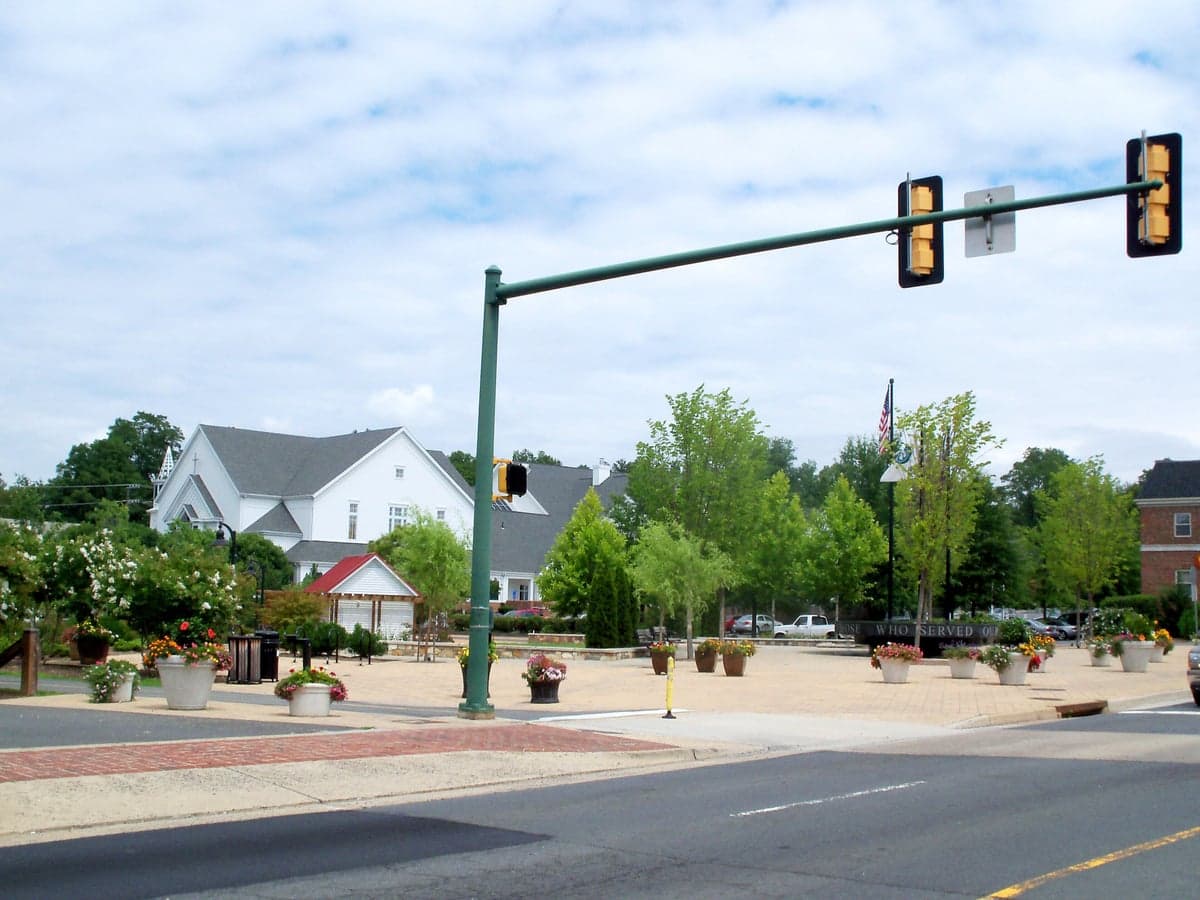
Photo: Wikipedia
Strategic Assessment of Vienna, VA
Multiple tactical vulnerabilities. Population density, target proximity, or disaster risk are likely compounding. A retreat property and exit planning is required.
What does the Strategic Assessment tell us?
Our Strategic Assessment grades tactical survivability of an area. Major population centers, military targets, fallout zones, natural disasters, and border exposure all drive risk — lower exposure means a more defensible position in a crisis.
This is heavily inspired by Joel Skousen's Strategic Relocation book. Highly recommended you checkout the book ($)What does this tell us?
Our Strategic Assessment grades tactical survivability of an area. Major population centers, military targets, fallout zones, natural disasters, and border exposure all drive risk — lower exposure means a more defensible position in a crisis.
This is heavily inspired by Joel Skousen's Strategic Relocation book. Highly recommended you checkout the book ($)Strategic Pillars

Key Distances
Regional Safe Places
Below is our recommended "safe zones" in Virginia and the surrounding area based on our strategic heuristics. For most people, it's unrealistic to live in a “safe zone” full-time due to work, family or other personal reasons. They tend to be more rural. However, many of these areas are perfect for second homes and retreat properties that double as a vacation home or even a short-term rental.
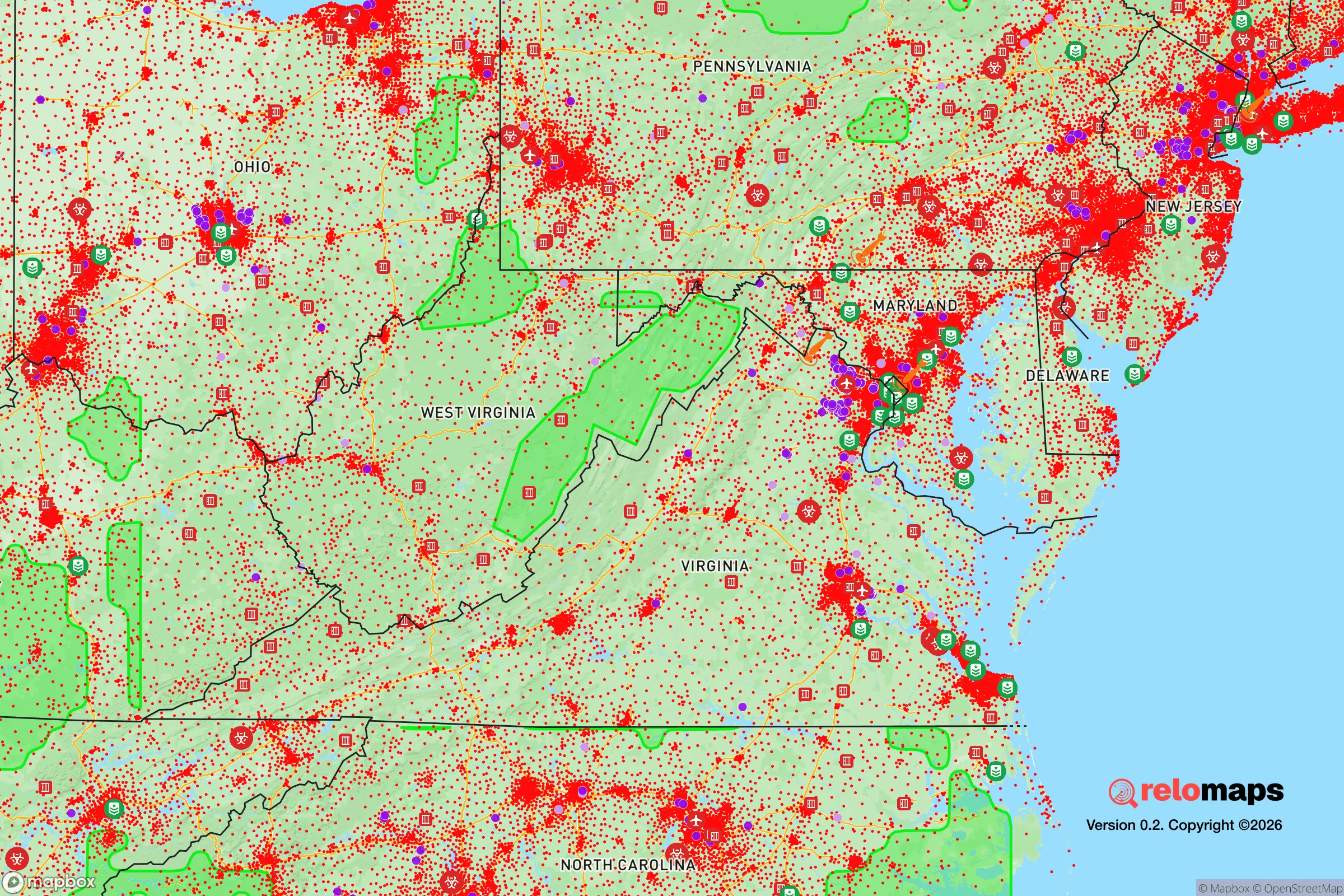
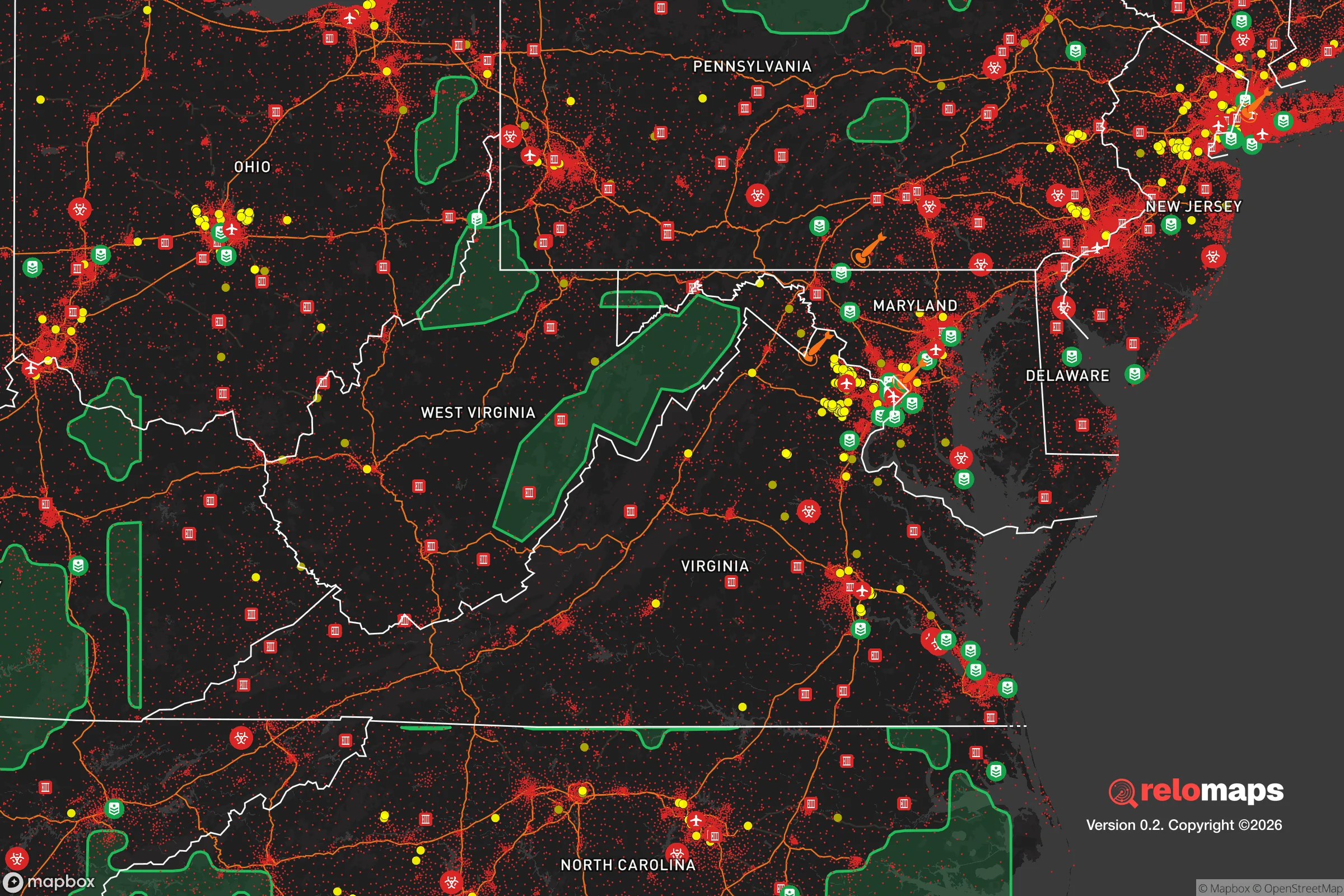


Important Note: For informational purposes only. This does not mean nothing bad ever happens in the green zones. Please use common sense. This is based on public data and modeled with AI. We tried to take a conservative approach but mistakes happen. We update this regularly as new information becomes available.
Solar Generator Recommendations
Backup power matters more here than in safer locations. We've picked three solar generators across budgets and capacity tiers — start with the budget unit if you only need a few essentials, or step up if you want to run a fridge and HVAC for days at a time.

Jackery Portable Power Station Explorer 300
Budget OptionPower on the Go: Weighing only 11 lbs, it's convenient to set up and store with book-sized foldable solar panels

BLUETTI Portable Power Station AC180
Designed for both indoor and outdoor scenarios, AC180 is highly capable as it has a robost capacity and continuous output power.

EF ECOFLOW DELTA Pro Ultra Power Station
Upgraded PickEcoFlow DELTA Pro Ultra is a whole-home energy system designed to grow with your family. Integrated with the Smart Home Panel 2, it scales to meet your evolving energy needs — keeping your home powered, intelligent, and secure through every stage of life.
We earn a commission, at no additional cost to you.
Strategic Assessment Analysis
Vienna, Virginia, presents a complex strategic picture for the conservative prepper. On paper, it offers proximity to power and influence, but in practice, its location within the Washington, D.C. metropolitan area introduces severe vulnerabilities that outweigh its conveniences. The town’s resilience is fundamentally compromised by its position in a densely populated, politically charged corridor that would be a primary target during any large-scale disruption. For a relocator prioritizing long-term security, self-sufficiency, and distance from fallout zones, Vienna requires a sober, critical assessment of its risks versus its rewards.
Geographic position and natural advantages for long-term security
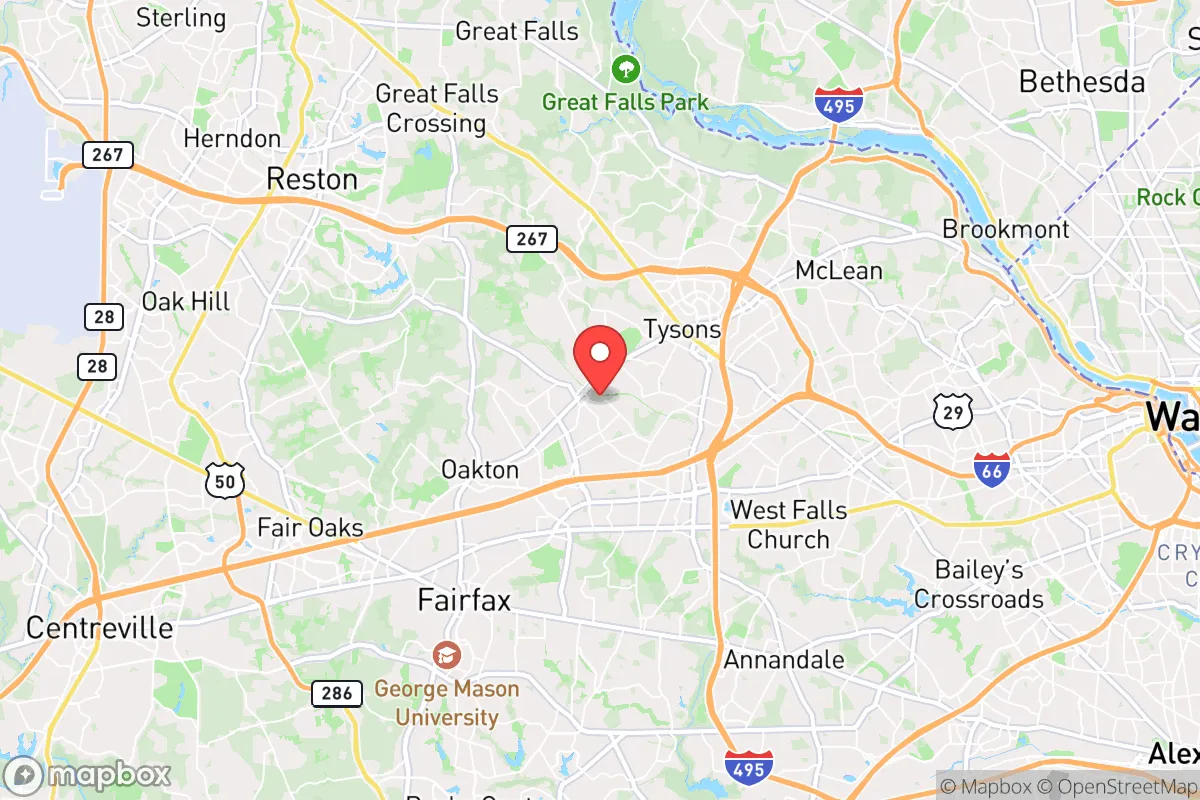
Vienna sits in Fairfax County, roughly 14 miles west of downtown D.C., nestled along the banks of Difficult Run and near the Potomac River. Its topography is gently rolling Piedmont terrain, with moderate tree cover that offers some concealment and natural resources. The area’s primary natural advantage is its access to water—the Potomac and its tributaries provide a reliable surface water source, though it would require treatment. The climate is temperate, with four distinct seasons, allowing for subsistence gardening and foraging, but the growing season is short (roughly 170 days) and the soil is clay-heavy, requiring amendment for serious food production. The region’s elevation (around 300-400 feet) offers no significant defensive high ground, and the dense suburban development means that any retreat into the woods would be into fragmented, privately owned parcels. The nearby Blue Ridge Mountains, about 50 miles west, offer a more defensible fallback zone, but reaching them would require navigating choke points like I-66 and Route 7, which would be clogged during an evacuation.
Risks, exposures, and proximity to fallout-relevant landmarks
The single greatest strategic liability for Vienna is its proximity to Washington, D.C. The town lies within the blast and fallout radius of any nuclear or radiological event targeting the capital. The Pentagon, White House, Capitol, and numerous military installations (Fort Belvoir, Joint Base Andrews, Quantico) are all within 20-30 miles. A surface burst at the National Mall would produce lethal fallout extending east-northeast, but Vienna’s position west of D.C. places it in a less immediate downwind zone for prevailing westerlies. However, any ground burst or dirty bomb in the city would still create a plume that could drift unpredictably. Additionally, the area is home to multiple high-value targets: the CIA headquarters in Langley (6 miles east), the National Counterterrorism Center, and numerous defense contractors (Northrop Grumman, Booz Allen Hamilton) with offices in Tysons Corner, just 3 miles east. During civil unrest, Vienna would be a natural chokepoint for traffic fleeing D.C. on I-66 and the Dulles Toll Road, making it a potential site for roadblocks, looting, or confrontation. The 2020 protests demonstrated that even affluent suburbs are not immune to spillover violence. The town’s dense population (over 16,000 residents in 3.9 square miles) means that any evacuation would be chaotic, with limited egress routes.
Practical resilience for a relocator: food, water, energy, and defensibility
For a relocator seeking to hunker down, Vienna’s practical resilience is poor. The town is entirely dependent on the regional power grid, with no municipal backup generation. Natural gas is the primary heating fuel, but pipelines are vulnerable to disruption. Water comes from the Potomac via the Washington Aqueduct and Fairfax Water, a centralized system that could be compromised by contamination or infrastructure failure. A single point of failure—like the Dalecarlia Reservoir or the Blue Plains treatment plant—would cut supply to the entire region. Food security is minimal: the town has no significant agricultural land, and the nearest farms are in Loudoun County, 20 miles west. The local grocery stores (Wegmans, Giant, Harris Teeter) would be stripped within hours of a crisis. Defensibility is virtually nonexistent. Vienna is a grid of suburban streets with no natural barriers, and the town’s police force (part of Fairfax County PD) would be overwhelmed. The nearest hardened structure is the CIA’s Langley compound, but that would be locked down and inaccessible. For a prepper, the best option is to have a well-stocked basement or a bug-out location west of the Blue Ridge. The town’s HOA-heavy neighborhoods also restrict things like backyard chickens, rainwater collection, or visible security measures, making low-profile preparedness difficult. The local hospital, Inova Fairfax, is a Level 1 trauma center, but it would be overwhelmed in a mass casualty event.
The overall strategic picture for Vienna is one of high risk with limited reward. Its proximity to the nation’s capital makes it a prime target for any adversary, and its dense, infrastructure-dependent layout offers little room for self-sufficiency. For a conservative relocator focused on long-term survival, the town’s advantages—good schools, low crime, and access to high-paying jobs—are overshadowed by its vulnerability to fallout, civil unrest, and supply chain collapse. The prudent move is to treat Vienna as a temporary base for work, not a permanent retreat. A serious prepper would use it to build financial resources while establishing a more defensible property in a rural area like Shenandoah County or West Virginia’s Eastern Panhandle, at least 50 miles from any major target. If you must live here, invest in a deep underground shelter, a robust water filtration system, and a vehicle capable of off-road travel to bypass gridlocked highways. But the honest assessment is that Vienna is a place to pass through, not to dig in.

* Values derived from national, state, county, city and local statistics and may differ in a specific area. Last updated: 2026-05-01T04:21:54.000Z
Narrative content on this page is AI-generated and may contain mistakes. Verify any details that matter before acting on them.
ReloMaps may earn a commission from affiliate links at no extra cost to you.

