Photo: Wikipedia
Personal Sovereignty in Vienna, VA
Viable for self-reliance. Generally workable, though some barriers may limit total independence.
What does Personal Sovereignty tell us?
Personal Sovereignty measures your capacity for self-reliance and independence with minimal government friction. Higher scores mean fewer barriers between you and the way you want to live... but it assumes you have the space you need and good neighbors.
What does this tell us?
Personal Sovereignty measures your capacity for self-reliance and independence with minimal government friction. Higher scores mean fewer barriers between you and the way you want to live... but it assumes you have the space you need and good neighbors.
State Policy
Energy independence: Importer (20% of energy produced in-state)
Personal Liberty
Homesteading

Personal Liberty Analysis
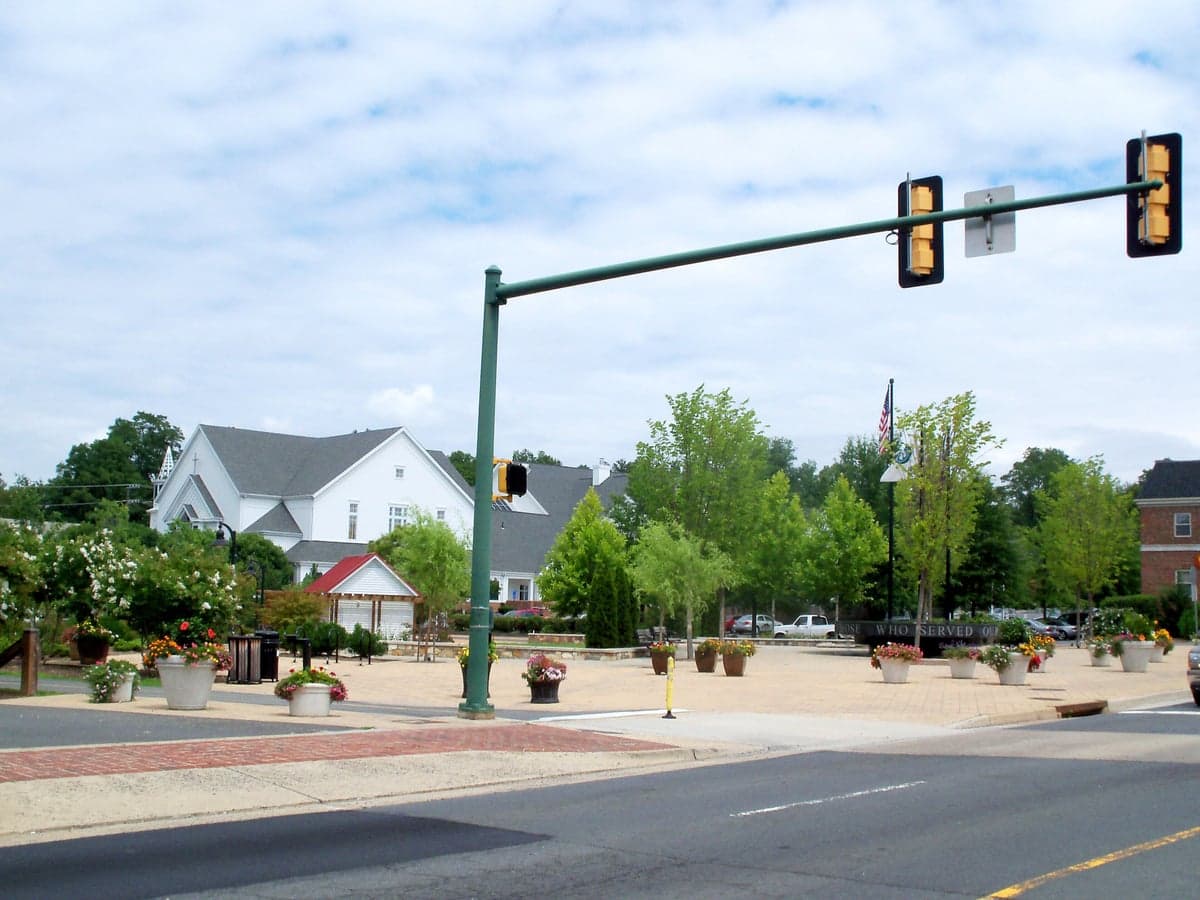
Vienna, Virginia presents a complex sovereignty picture for the liberty-minded individual. While the town itself offers a quiet, family-oriented atmosphere with strong property rights and a high degree of local control, it sits squarely within a state government that has aggressively expanded its reach into personal freedoms, particularly in the realms of taxation, self-defense, and medical autonomy. For the strategic relocator who prioritizes personal sovereignty, Vienna is a tactical compromise: excellent local conditions for self-reliance and community, but with a state-level regulatory environment that demands constant vigilance and proactive legal compliance. The key is understanding where you have leverage and where you are exposed.
Tax burden and regulatory posture: How Virginia’s fiscal policies affect your autonomy
Virginia’s tax posture is a mixed bag for the sovereignty-minded. The state imposes a progressive income tax with rates from 2% to 5.75%, which directly reduces your disposable income and, by extension, your capacity for self-funded preparedness. Property taxes in Fairfax County, where Vienna resides, are moderate at roughly $1.08 per $100 of assessed value, but assessments have climbed steadily, meaning your tax bill rises even without local rate increases. On the positive side, Virginia has a right-to-work law, which limits forced union membership and preserves your economic freedom. The state also lacks a specific "red flag" law as of 2026, though such legislation has been debated. The regulatory posture for small-scale homesteading is generally permissive at the county level, but state-level environmental and building codes can add layers of bureaucracy. For the prepper, the biggest fiscal threat is the state’s reliance on income tax—if you’re running a home-based business or side hustle to fund your preparations, expect a significant cut from Richmond. The local government in Vienna is relatively lean, but Fairfax County’s broader regulatory apparatus can feel intrusive, particularly regarding land use and noise ordinances that might affect generator use or construction projects.
Self-defense and gun law specifics: What you can and cannot do in Vienna
This is the sharpest edge of the sovereignty trade-off in Vienna. Virginia is a shall-issue state for concealed carry permits, meaning if you meet the requirements, the state must issue the permit. However, the state has enacted universal background checks for all firearm transfers, including private sales, and a one-handgun-per-month purchase limit. These laws directly impede your ability to build an arsenal efficiently or transfer firearms to family members without government oversight. Open carry is legal for those 18 and older, but local ordinances in Fairfax County can create friction. The most concerning development for the liberty-minded is the ban on "assault weapons" and "high-capacity" magazines passed in 2020, which remains in effect. This means you cannot legally purchase new AR-15s, AK-pattern rifles, or magazines holding more than 10 rounds (for rifles) or 20 rounds (for handguns) in Virginia. Pre-ban items are grandfathered but must be registered. For the survivalist, this is a significant limitation on defensive capability. Stand-your-ground laws do not exist in Virginia; you have a duty to retreat before using deadly force outside your home. Castle doctrine applies inside your dwelling, but the legal burden shifts to you to prove you had no safe avenue of retreat. In practice, this means self-defense scenarios outside the home are legally treacherous. The local police in Vienna are professional but operate under state law—expect no local leniency on firearm regulations.
Self-reliance and homesteading viability: Lot sizes, zoning, and off-grid feasibility
Vienna’s residential character offers some surprising opportunities for self-reliance, but with strict limits. Typical lot sizes in the town proper range from 0.25 to 0.5 acres, with some older neighborhoods offering larger parcels up to 1 acre. Zoning is predominantly R-1 (single-family residential), which allows for vegetable gardens, small fruit trees, and limited livestock—chickens are permitted in most areas, but roosters are typically banned. Larger animals like goats or pigs are generally prohibited. Off-grid feasibility is low. The town is fully connected to municipal water, sewer, and grid electricity. Installing solar panels is allowed but requires permits and must meet HOA standards in many neighborhoods. Rainwater collection is legal but limited to 250 gallons per property without a permit. Composting toilets are not permitted as primary sanitation. For the serious prepper, Vienna is more about community resilience and stockpiling than full self-sufficiency. The proximity to the Potomac River and the C&O Canal offers some wilderness access, but you’re never more than a few miles from suburban infrastructure. The real value here is the ability to build a deep pantry, maintain a substantial garden, and network with like-minded neighbors—all while maintaining a low profile. The local farmers’ market and community-supported agriculture (CSA) programs provide backup food sources. For those seeking true off-grid independence, Vienna is a stepping stone, not a destination.
Personal liberties: Parental rights, medical autonomy, speech, and property
Virginia’s record on personal liberties is uneven. Parental rights are generally strong—the state has no mandatory vaccination laws for school attendance (though exemptions require paperwork), and parents have broad authority over their children’s education, including homeschooling, which is relatively straightforward to register. However, the state has expanded medical autonomy restrictions in recent years, including vaccine mandates for healthcare workers and certain public-facing roles. The COVID-era emergency powers have been rolled back, but the precedent remains concerning. Free speech is protected under the First Amendment, and Vienna’s local government has not shown hostility to political expression, though Fairfax County has a reputation for progressive social policies. Property rights are the strongest pillar here—Virginia has a robust eminent domain law that requires just compensation, and local zoning is stable. However, the state’s land use regulations can affect what you build on your property, including setbacks, height limits, and accessory dwelling units (ADUs), which are permitted but subject to strict rules. For the sovereignty-minded parent, the ability to homeschool, choose medical treatments for your children, and speak freely without fear of government retaliation is a significant plus. The main concern is the trajectory—Virginia has shown a willingness to expand state power in health and education, and the political climate in Northern Virginia leans heavily toward government intervention. You can live freely here, but you must stay informed and engaged to protect those freedoms.
Overall, Vienna offers a moderate-to-high level of personal sovereignty relative to other suburban areas in the Northeast corridor. It compares favorably to Maryland or New York, where gun laws are far more restrictive and taxes are higher. It falls short of states like Texas, Tennessee, or New Hampshire, where self-defense laws are stronger, taxes are lower, and off-grid living is more feasible. For the strategic relocator, Vienna is a defensible position—good schools, strong property rights, and a community that values self-reliance. But it requires a clear-eyed understanding that you are operating within a state government that views personal sovereignty as conditional, not absolute. The smart move is to treat Vienna as a base of operations: build your local network, secure your property, and maintain legal compliance while keeping one eye on the exit. If the state continues its trend toward greater control, you’ll have the resources and awareness to relocate. For now, it’s a workable compromise for those who value both community and freedom.

* Values derived from national, state, county, city and local statistics and may differ in a specific area. Last updated: 2026-05-01T04:21:54.000Z
Narrative content on this page is AI-generated and may contain mistakes. Verify any details that matter before acting on them.
ReloMaps may earn a commission from affiliate links at no extra cost to you.

