Photo: Wikipedia
Demographics of Vienna, VA
Affluence Level in Vienna, VA
A wealthy area with high-earning, well-educated households. Incomes, home values, and educational attainment meaningfully outpace national averages.
People of Vienna, VA
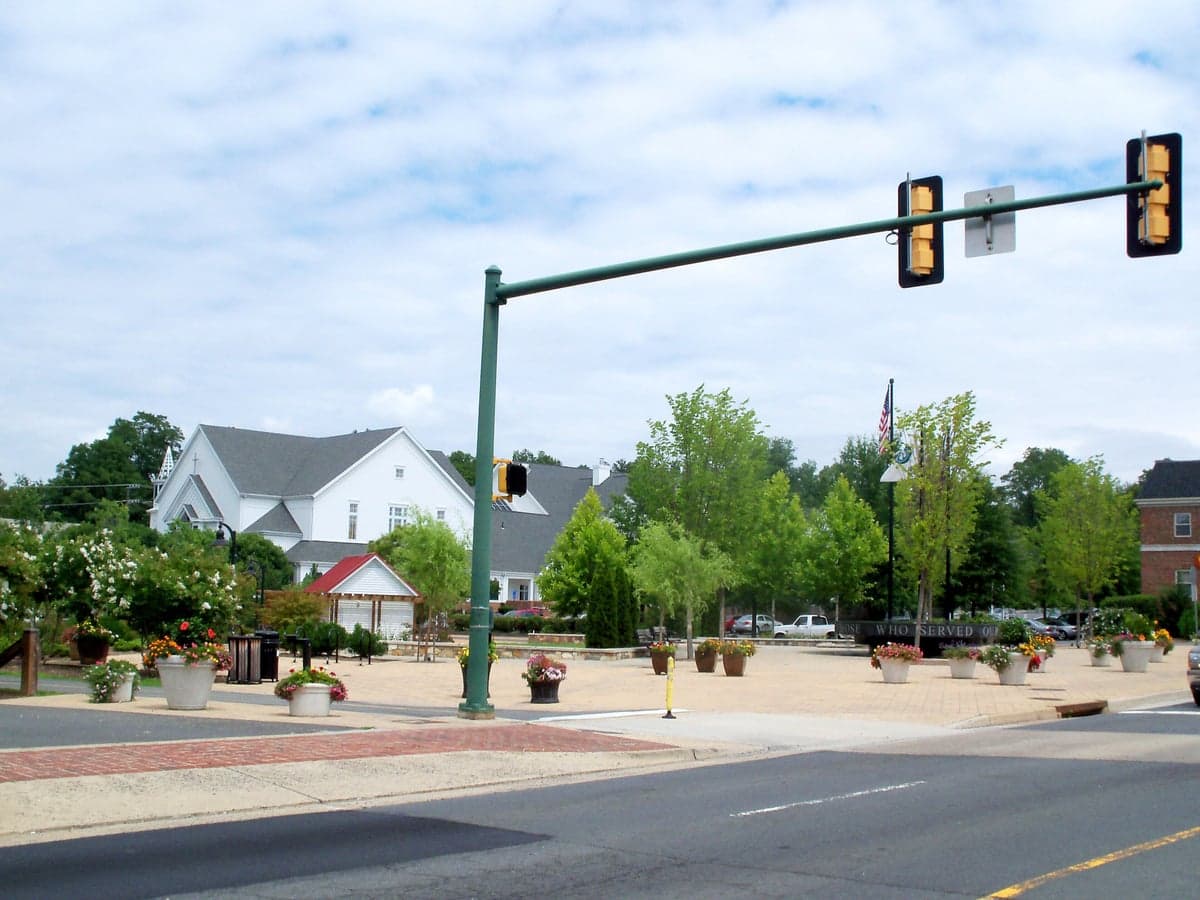
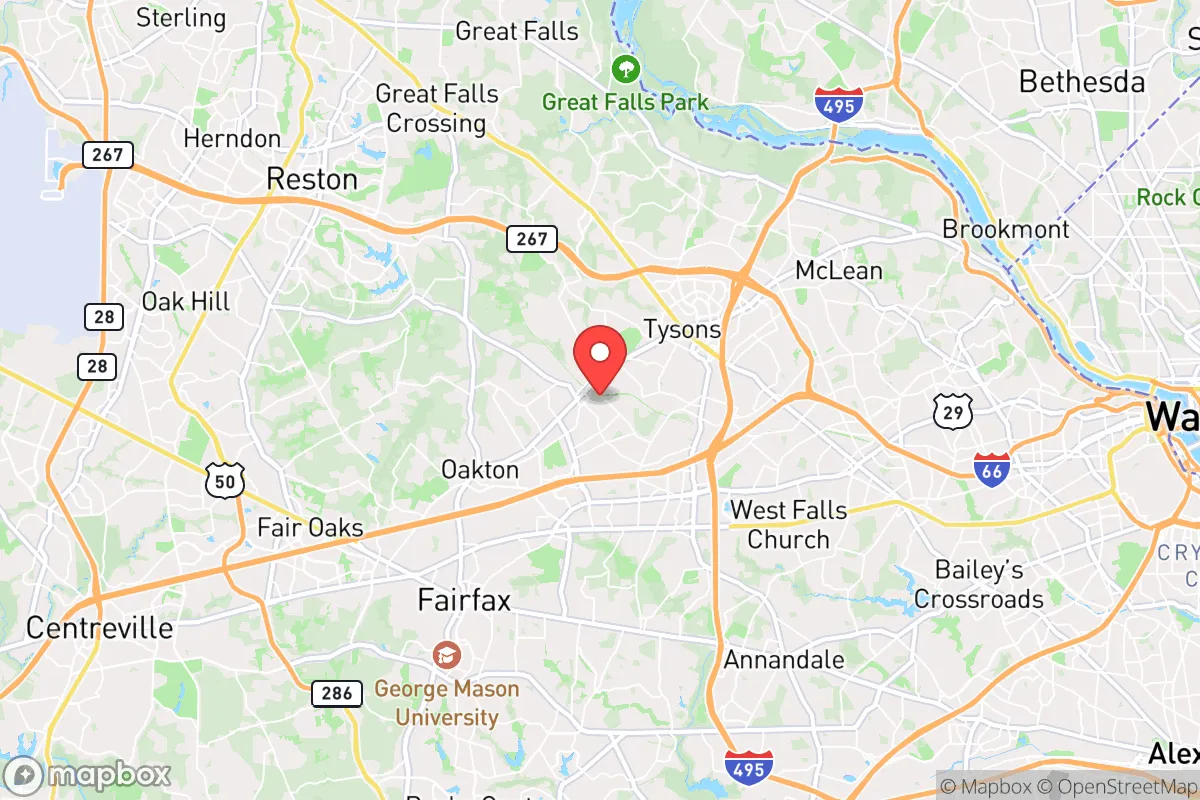
The people of Vienna, Virginia today form a highly educated, predominantly white-collar community of 16,369 residents, with a distinctive blend of long-standing Northern Virginia families and newer immigrant groups drawn by the area's top-ranked schools and proximity to Washington, D.C. The population is 63.9% white, 10.1% Hispanic, 8.9% East/Southeast Asian, 4.9% Black, and 4.5% Indian (subcontinent), with 73.6% holding a college degree. Despite its small-town feel, Vienna is demographically diverse by suburban standards, though its foreign-born share of 5.7% is notably lower than neighboring Falls Church or Arlington. The community retains a strong civic identity centered on its historic downtown, the annual Viva! Vienna! festival, and a reputation as one of the safest, most family-oriented enclaves in Fairfax County.
How the city was settled and grew
Vienna's original population was drawn by the intersection of the Leesburg Turnpike (now Maple Avenue) and the Washington & Old Dominion Railroad in the mid-19th century. The town was formally incorporated in 1890, but its early growth was slow, anchored by small-scale farming and a handful of mills along Wolftrap Creek. The first significant wave of settlement came in the 1920s and 1930s, when middle-class white families from Washington, D.C. built summer cottages and year-round homes in what is now the Historic Church Street District, centered around the 1857 Freeman Store and the old train depot. These early residents were largely of German and English Protestant stock, and their descendants still form a visible portion of the town's older families. A second pre-war wave filled the Vienna Woods neighborhood with modest bungalows and Cape Cods, built for federal employees and military personnel stationed at nearby Fort Myer. The post-World War II boom transformed Vienna from a rural crossroads into a commuter suburb, with the Parkview Hills and Vienna Heights subdivisions rising in the 1950s to accommodate the influx of white-collar workers from the expanding federal government. By 1960, the population had reached roughly 11,000, and the town was overwhelmingly white and native-born.
Modern era (post-1965)
The 1965 Hart-Celler Act and the subsequent expansion of the federal workforce reshaped Vienna's population more gradually than in neighboring communities. Unlike Falls Church or Annandale, Vienna did not experience a sudden influx of Vietnamese or Korean immigrants in the 1970s and 1980s. Instead, the town's demographic shift came primarily through domestic in-migration of highly educated professionals from other states, drawn by the Madison High School and Thoreau Middle School feeder system. The Lawyers Road corridor and the Windover Heights neighborhood became popular with families relocating from the Midwest and Northeast for technology and consulting jobs. The East/Southeast Asian population, now 8.9%, began arriving in the 1990s and 2000s, with Chinese and Korean families settling in the Vienna Station and Beulah Road areas, attracted by the same school reputation. The Indian-subcontinent population (4.5%) grew later, largely after 2010, and is concentrated in newer subdivisions like Vienna Chase and the Hunter Mill Estates area. The Hispanic population (10.1%) is more dispersed but has a visible presence in the Maple Avenue West corridor, where many work in service and construction trades. Notably, the Black population (4.9%) has remained relatively stable since the 1980s, with many families living in the Vienna Park and Southside neighborhoods near the town's southern boundary with Oakton.
The future
Vienna's population is likely to continue its slow, steady diversification, though the pace will be tempered by high housing costs and limited new construction. The town is essentially built out, with few vacant parcels for large-scale development, meaning demographic change will occur primarily through turnover of existing homes. The East/Southeast Asian and Indian-subcontinent populations are expected to grow modestly, as second-generation families remain in the area and new arrivals from tech hubs like Seattle and San Francisco choose Vienna for its schools. The Hispanic share may plateau or decline slightly, as rising home prices push lower-income families into more affordable parts of Fairfax County or Prince William County. The white share, while still a majority at 63.9%, will likely continue a slow decline as older residents age out and are replaced by younger, more diverse buyers. The town is not tribalizing into distinct ethnic enclaves; rather, neighborhoods like Vienna Woods and Parkview Hills are becoming more mixed with each sale. The foreign-born share, at 5.7%, is low for the region and may rise only slightly, as Vienna remains a destination for domestic professionals rather than a primary immigrant gateway.
For someone moving in now, Vienna is becoming a more diverse but still predominantly white, highly educated, and family-focused suburb where stability is the defining trait. The population is not undergoing rapid transformation but rather a gradual, generational shift that preserves the town's character while slowly broadening its cultural makeup. New residents will find a community that values its history, its schools, and its quiet, tree-lined streets, with a demographic trajectory that points toward continued affluence and moderate diversification rather than any dramatic change.

* Values derived from national, state, county, city and local statistics and may differ in a specific area. Last updated: 2026-05-01T04:21:54.000Z
Narrative content on this page is AI-generated and may contain mistakes. Verify any details that matter before acting on them.
ReloMaps may earn a commission from affiliate links at no extra cost to you.

