Photo: Wikipedia
Political ClimatePolitical Climate in Vienna, VA
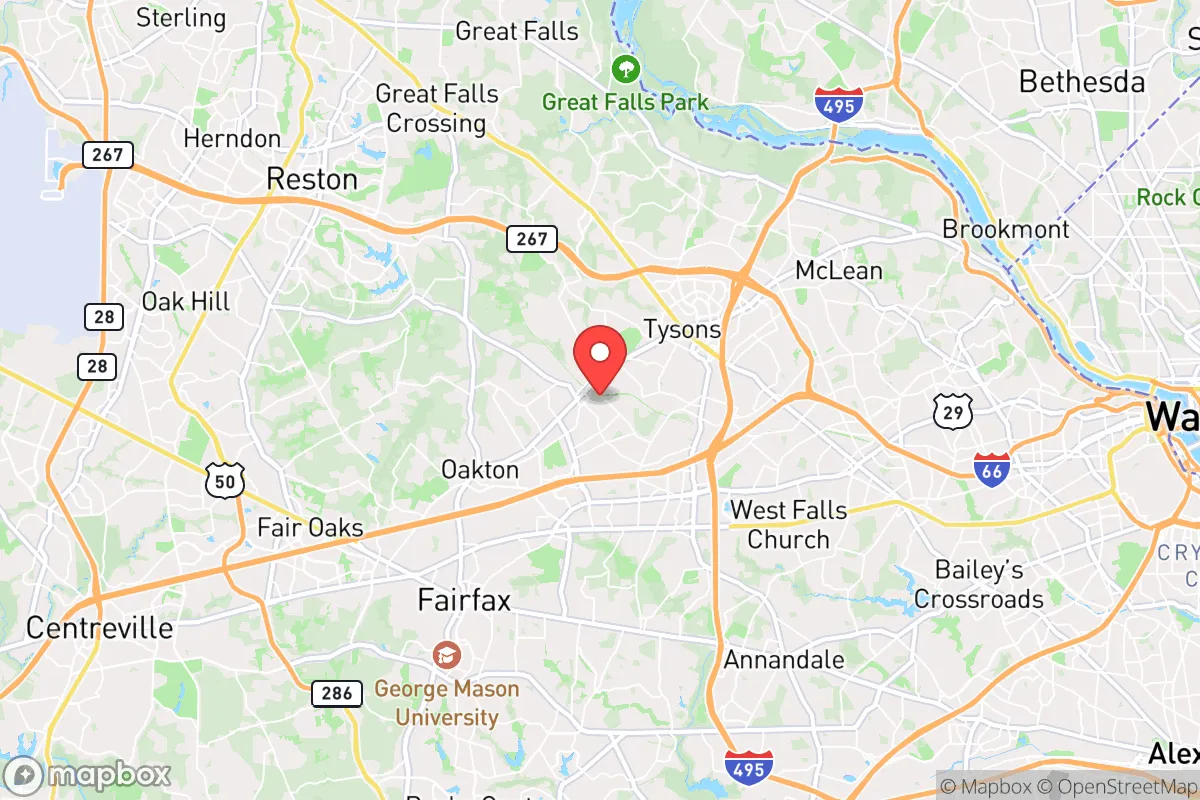
District shown is the primary district for this city’s centroid. Cities may span multiple districts.
Local Political AnalysisPolitical Analysis of Vienna, VA
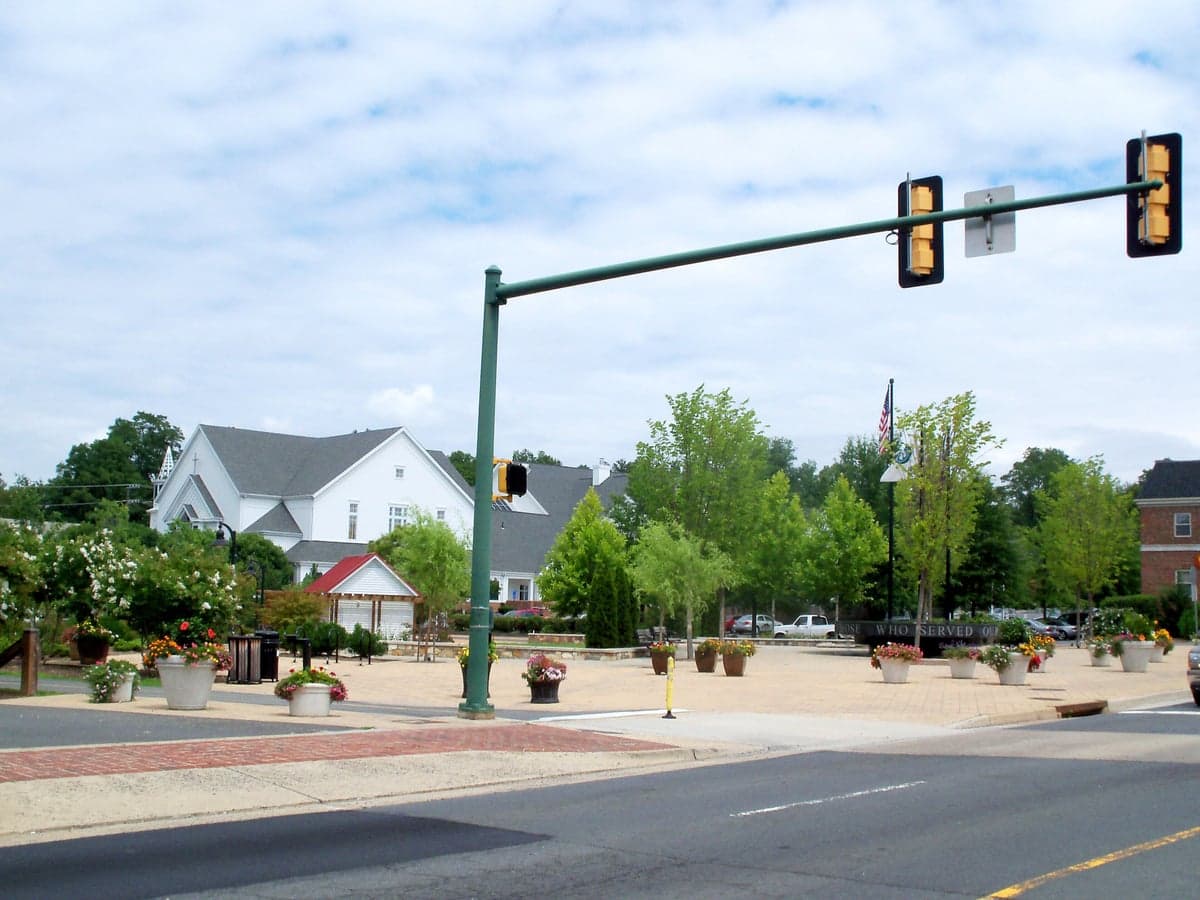
Vienna, Virginia, has a Cook PVI of D+18, meaning it votes about 18 points more Democratic than the national average. That’s a pretty stark shift from what I remember growing up here in the 90s, when this town was a lot more purple—you’d see as many Reagan bumper stickers as Clinton ones. Now, it’s solidly blue, and the trajectory has been accelerating since the 2010s. The last few presidential cycles have seen Democrats win Fairfax County by 30+ points, and Vienna is right in the thick of that. It’s not just voting patterns either; the local culture has changed, and if you’re a conservative, you’ll feel like you’re in the minority at the grocery store or the school board meeting.
How it compares
Drive 15 minutes west to Reston or Herndon, and you’ll find a similar political vibe—both are D+15 or higher, with the same progressive energy. But head 20 minutes southwest to Centreville or Clifton, and the landscape flips. Those areas are more mixed, with Centreville leaning slightly Republican in local races and Clifton still holding onto a rural, independent streak. Even closer, Oakton and Vienna’s own western edges (near the 123 corridor) have a few more conservative households, but they’re getting swallowed up by the tide. The contrast is stark: Vienna’s town council and school board are dominated by Democrats, while places like Loudoun County’s western precincts or Prince William’s rural south still elect Republicans. If you’re a conservative here, you’re not just outnumbered—you’re often dismissed as out of touch.
What this means for residents
For daily life, the political lean means you’ll see a lot of government overreach dressed up as “community values.” The town council has pushed higher property taxes year after year, funding bike lanes and “equity initiatives” that sound nice but hit your wallet hard. The school board, meanwhile, has embraced critical race theory-adjacent curricula and gender ideology policies that leave parents with little say—your kid’s classroom might have a “preferred pronouns” poster, but you won’t get a heads-up. The county’s zoning rules are getting tighter too, with talk of upzoning single-family neighborhoods to pack in more townhouses, which feels like a direct attack on property rights. And don’t get me started on the gun control ordinances—Fairfax County passed a ban on “assault weapons” in 2020, and Vienna’s council cheered it on. If you value personal freedoms, you’ll find yourself fighting for them at every level.
Culturally, Vienna has become a place where progressive ideology is the default, and dissent is quietly punished. The local farmers’ market and town festivals are full of “In This House We Believe” signs, but you won’t see a single Trump flag. The Vienna Volunteer Fire Department still has a traditional parade, but the town council now debates whether to include “diversity floats.” Long-term, I see this getting worse: the DC exodus is bringing more federal workers and tech transplants who vote straight-ticket blue, and the 2024 election only cemented that trend. If you’re a conservative, you’ll need to pick your battles—maybe join the Fairfax County Republican Committee or just keep your head down. But don’t expect the pendulum to swing back anytime soon. The culture here is set, and it’s not friendly to folks who think government should stay out of your life.

State Political ClimatePolitical Climate in Virginia
State Political AnalysisPolitical Environment in the State
Virginia has long been a political bellwether, but over the past two decades it has shifted from a reliably purple swing state to a solidly blue-leaning one, driven primarily by explosive growth in the Washington, D.C. suburbs. The state’s overall partisan lean now favors Democrats by about 5-7 points in statewide races, a dramatic reversal from the early 2000s when it voted Republican in four consecutive presidential elections. The dominant coalition is an urban-suburban alliance centered on Northern Virginia, Richmond, and Hampton Roads, while rural and exurban areas remain deeply conservative but lack the population to counterbalance the metro growth. This trajectory has accelerated since 2016, with Democrats winning every statewide election since 2009 and holding both U.S. Senate seats, the governorship, and both chambers of the General Assembly as of 2025.
Urban vs. rural divide
The political map of Virginia is a tale of two states. The urban crescent—Arlington, Alexandria, Fairfax County, and Loudoun County—is the engine of Democratic dominance, with Fairfax alone casting more votes than many rural regions combined. These areas vote 65-70% Democratic, driven by federal employees, tech workers, and a highly educated, diverse population. Richmond and its inner suburbs like Henrico County have also trended blue, while Virginia Beach and Norfolk in Hampton Roads are more competitive but leaning Democratic. In contrast, rural Southside and Southwest Virginia—places like Roanoke, Lynchburg, and the coal counties of Buchanan and Wise—vote 70-75% Republican. The exurban fringe of Northern Virginia, such as Prince William County and Stafford County, has been a battleground; Prince William flipped from red to blue in the 2010s as D.C. commuters moved further out. The divide is stark: the 10 most populous counties and cities now deliver a Democratic margin of roughly 400,000 votes, which Republicans cannot overcome without winning independents in the suburbs.
Policy environment
Virginia’s policy environment has shifted leftward significantly since 2019, when Democrats took full control of state government. The tax structure remains relatively moderate—a flat 5.75% income tax and a 4.3% sales tax—but the trend is toward higher spending, not lower. The 2020 General Assembly passed the Clean Economy Act, mandating a 100% carbon-free grid by 2050, which has driven up electricity costs. Education policy is a flashpoint: the state eliminated its charter school cap in 2021 but has not seen a surge in new schools, and parental rights in curriculum have been contentious. In 2023, Governor Glenn Youngkin signed a bill requiring schools to notify parents of sexually explicit content, but a 2024 law banned corporal punishment in private schools, which some conservatives saw as overreach. Healthcare expanded under Medicaid in 2019, and the state now has a public option for insurance plans. Election laws have tightened: Virginia requires a photo ID to vote and has no-excuse absentee voting, but it also has same-day registration and automatic voter registration, which critics argue weakens ballot security. The regulatory posture is business-friendly in name but increasingly green and labor-friendly in practice, with a $12 minimum wage (rising to $13.50 in 2026) and a new paid sick leave mandate for large employers.
Trajectory & freedom
On the freedom index, Virginia is moving in a concerning direction for conservatives. The most notable contraction of personal liberty came in 2020, when the General Assembly passed a suite of gun control measures: universal background checks, a one-handgun-per-month limit, a red flag law (allowing temporary firearm seizure without a criminal conviction), and a ban on assault weapons for those under 21. These laws were passed on a party-line vote and have survived court challenges. Parental rights took a hit in 2024 when the state banned conversion therapy for minors, a law that some religious families view as infringing on their ability to seek counseling aligned with their values. Medical autonomy has been mixed: Virginia legalized marijuana possession in 2021 but has not set up a retail market, creating a gray area. Property rights are under pressure from the aforementioned Clean Economy Act, which has led to large-scale solar farm siting disputes in rural counties like Halifax and Pittsylvania, where locals feel their land use is being dictated by Richmond. On the positive side, Youngkin’s 2022 executive order on critical race theory gave parents more transparency in K-12 curricula, and the state has not adopted sanctuary city policies—though Fairfax County and Arlington have limited cooperation with ICE. The overall trend is toward more state-level control over local decisions, which alarms conservatives who value county-level autonomy.
Civil unrest & political movements
Virginia has been a stage for high-profile political flashpoints. The 2017 Unite the Right rally in Charlottesville left a lasting scar, leading to the removal of Confederate statues and a statewide law giving localities authority to remove monuments—a move that sparked backlash in conservative areas like Bedford and Franklin County, where statues remain. The 2020 protests in Richmond saw the Robert E. Lee monument become a focal point, and the city’s police response was criticized from both sides. Immigration politics are less heated than in border states, but the 2023 debate over a bill to ban sanctuary cities failed in the General Assembly, though several Northern Virginia jurisdictions continue to limit ICE cooperation. Election integrity remains a live issue: the 2020 election in Virginia was smooth, but the 2021 gubernatorial race saw Youngkin win by 2 points amid voter concerns about education and parental rights, not fraud. Organized activist movements are strong on both sides: the Virginia Citizens Defense League is a powerful gun rights group, while the Democratic Party of Virginia has a robust progressive infrastructure. A new resident would notice the stark contrast between the “Virginia is for Lovers” bumper stickers in the suburbs and the “Don’t Tread on Me” flags in the countryside.
Projection
Over the next 5-10 years, Virginia will likely continue its leftward drift, driven by demographic trends. Northern Virginia is adding 50,000-60,000 new residents annually, most of whom are young professionals from blue states. The Richmond metro is also growing, with a younger, more diverse population. Rural areas are losing population, meaning their political weight will shrink further. The 2030 redistricting cycle, controlled by a bipartisan commission, may slow but not reverse the trend. A conservative moving to Virginia now should expect that by 2035, the state will likely have a Democratic trifecta permanently, with policies on taxes, energy, and education moving further left. The wild card is whether the exurban counties like Loudoun and Prince William can be flipped back—they swung to Youngkin in 2021 but returned to Democratic control in 2023. If Republicans can hold the suburbs on parental rights and economic issues, they might keep the state competitive, but the demographic math is daunting.
For a new resident, the bottom line is that Virginia offers a mix of economic opportunity and cultural tension. The job market is strong, especially in Northern Virginia, and the schools are top-tier in the suburbs. But the political climate is increasingly hostile to conservative values on guns, parental rights, and local control. If you’re moving here, expect to fight for your freedoms at the local level—county board meetings and school board elections matter more than ever. The state is not yet California, but it’s heading in that direction faster than many realize.
* Values derived from national, state, county, city and local statistics and may differ in a specific area. Last updated: 2026-05-01T04:21:54.000Z
Narrative content on this page is AI-generated and may contain mistakes. Verify any details that matter before acting on them.
ReloMaps may earn a commission from affiliate links at no extra cost to you.

