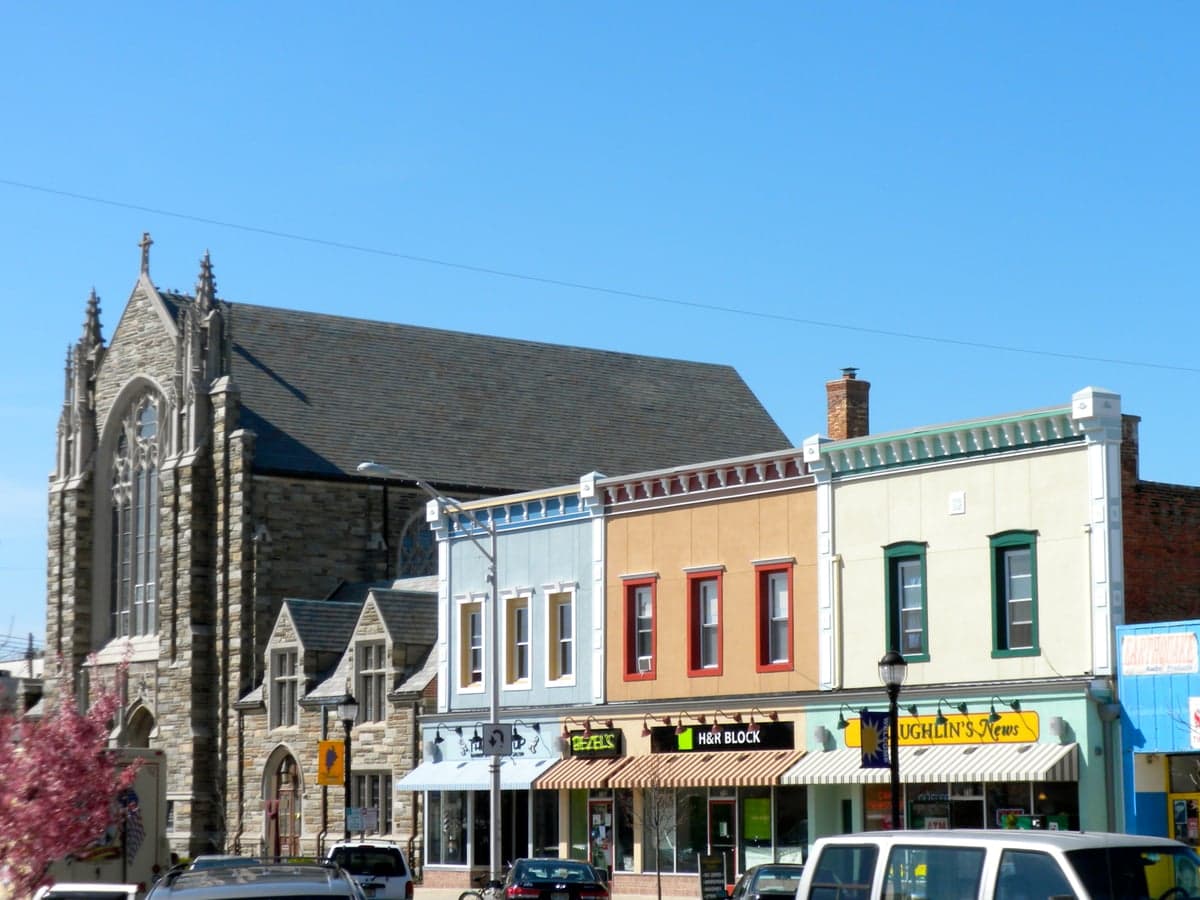
Photo: Wikipedia
Personal Sovereignty in Vineland, NJ
Viable for self-reliance. Generally workable, though some barriers may limit total independence.
What does Personal Sovereignty tell us?
Personal Sovereignty measures your capacity for self-reliance and independence with minimal government friction. Higher scores mean fewer barriers between you and the way you want to live... but it assumes you have the space you need and good neighbors.
What does this tell us?
Personal Sovereignty measures your capacity for self-reliance and independence with minimal government friction. Higher scores mean fewer barriers between you and the way you want to live... but it assumes you have the space you need and good neighbors.
State Policy
Energy independence: Importer (8% of energy produced in-state)
Personal Liberty
Homesteading

Personal Liberty Analysis
Vineland, New Jersey, presents a complex environment for personal sovereignty, where the state's aggressive regulatory posture and high tax burden significantly constrain individual autonomy, making it a challenging location for those prioritizing self-reliance and minimal government overreach. While the city itself offers some practical advantages for homesteading and property ownership, the overarching legal and fiscal framework of New Jersey imposes substantial limits on gun rights, medical freedom, and parental control. For a survivalist or prepper mindset, Vineland represents a trade-off: affordable land and a semi-rural feel within a state that actively curtails the very liberties many seek to protect. The net result is a location where personal sovereignty is heavily negotiated, not assumed.
Tax burden and regulatory posture: the cost of autonomy in New Jersey
New Jersey's tax burden is among the highest in the nation, and Vineland is no exception. The state's progressive income tax tops out at 10.75% for high earners, while the average property tax rate in Cumberland County hovers around 2.5% of assessed value, meaning a $200,000 home carries an annual tax bill of roughly $5,000. This directly erodes the financial independence that is central to personal sovereignty. Beyond taxes, the regulatory environment is dense: the state imposes strict environmental rules, building codes, and licensing requirements that can frustrate off-grid or self-sufficient projects. For example, installing solar panels or rainwater collection systems requires permits and inspections that add cost and delay. The state's overall regulatory burden ranks among the top five in the U.S., according to the Mercatus Center, meaning every aspect of daily life—from vehicle inspections to home renovations—is subject to bureaucratic oversight. For those seeking to minimize government entanglement, this is a significant drag on autonomy.
Self-defense and gun law specifics: navigating New Jersey's restrictive framework
New Jersey's gun laws are among the most restrictive in the country, and Vineland residents must navigate a system that heavily regulates firearm ownership and carry. The state requires a Firearms Purchaser Identification Card (FPID) for long guns and a separate permit for each handgun purchase, with a mandatory 30-day waiting period between handgun purchases. Concealed carry is effectively a privilege, not a right, following the state's "justifiable need" standard that was only partially loosened after the Supreme Court's Bruen decision in 2022. Even post-Bruen, New Jersey has enacted a "sensitive places" law that bans firearms in parks, libraries, and private businesses unless the owner explicitly allows them, creating a patchwork of legal risk. Magazine capacity is capped at 10 rounds, and "assault weapons" are banned by name, including many common semi-automatic rifles. For a prepper, this means stockpiling ammunition and firearms requires careful legal compliance, and self-defense in a crisis could easily become a criminal matter if the state's complex rules are violated. The local sheriff's office in Cumberland County is generally more pro-2A than state authorities, but state preemption means local discretion is limited.
Self-reliance and homesteading viability: lot sizes, zoning, and off-grid feasibility
Vineland offers a surprisingly viable environment for homesteading compared to much of New Jersey, thanks to its agricultural zoning and relatively large lot sizes. The city is part of the state's "Garden Spot," with many residential parcels exceeding one acre, and some rural areas offering five-acre or larger lots. Zoning codes in the city's agricultural districts allow for chickens, goats, and even small livestock, though pigs and cattle require additional permits. Off-grid living, however, faces significant hurdles: New Jersey requires connection to the electrical grid for new construction, and solar systems must be grid-tied to qualify for net metering. Rainwater collection is legal but limited to 100 gallons per property without a permit, and composting toilets are not approved for primary residences. The state's strict well and septic regulations add thousands to the cost of developing raw land. For a serious prepper, Vineland's soil is fertile and the growing season is long (April to October), but achieving true self-sufficiency requires navigating a thicket of local and state rules that favor grid dependence over independence.
Personal liberties: parental rights, medical autonomy, speech, and property
New Jersey's approach to personal liberties is a mixed bag for conservative-leaning individuals. Parental rights are under constant pressure: the state mandates comprehensive sex education in public schools, including LGBTQ+ content, with no opt-out for parents who object on moral or religious grounds. Medical autonomy is similarly constrained—New Jersey has a vaccine mandate for school attendance that includes COVID-19 for certain healthcare workers, and the state's "Right to Die" law allows physician-assisted suicide, which some conservatives view as a slippery slope. Free speech is protected under the First Amendment, but the state's bias intimidation law and hate crime statutes can be used to prosecute speech deemed threatening or harassing, creating a chilling effect for those expressing controversial views. Property rights are relatively strong in terms of ownership, but the state's eminent domain powers are broad, and environmental regulations can restrict land use. For example, the Pinelands Commission has jurisdiction over large swaths of Cumberland County, limiting development and even tree removal on protected lands. The cumulative effect is a state that respects personal liberty only within narrow, government-defined boundaries.
In the broader context of the United States, Vineland offers a lower cost of entry for land and housing than many other regions, but the price of that entry is submission to one of the most interventionist state governments in the country. For a survivalist or prepper, the calculus is stark: the land is affordable and the soil is productive, but the legal and tax environment actively works against the accumulation of resources, the exercise of self-defense, and the pursuit of off-grid independence. Compared to states like Texas, Idaho, or New Hampshire, where personal sovereignty is more deeply embedded in law and culture, Vineland represents a defensive posture—a place to hunker down and work within the system rather than escape it. Those who value autonomy above all else would likely find better options in the South or Mountain West, but for those tied to the Northeast for family or work, Vineland is one of the more practical compromises available, provided they are prepared to fight for every inch of freedom the state allows.

* Values derived from national, state, county, city and local statistics and may differ in a specific area. Last updated: 2026-04-29T21:12:45.000Z
Narrative content on this page is AI-generated and may contain mistakes. Verify any details that matter before acting on them.
ReloMaps may earn a commission from affiliate links at no extra cost to you.

