Photo: Wikipedia
Personal Sovereignty in Orange County
Viable for self-reliance. Generally workable, though some barriers may limit total independence.
What does Personal Sovereignty tell us?
Personal Sovereignty measures your capacity for self-reliance and independence with minimal government friction. Higher scores mean fewer barriers between you and the way you want to live... but it assumes you have the space you need and good neighbors.
What does this tell us?
Personal Sovereignty measures your capacity for self-reliance and independence with minimal government friction. Higher scores mean fewer barriers between you and the way you want to live... but it assumes you have the space you need and good neighbors.
State Policy
Energy independence: Importer (20% of energy produced in-state)
Personal Liberty
Homesteading

Personal Liberty Analysis
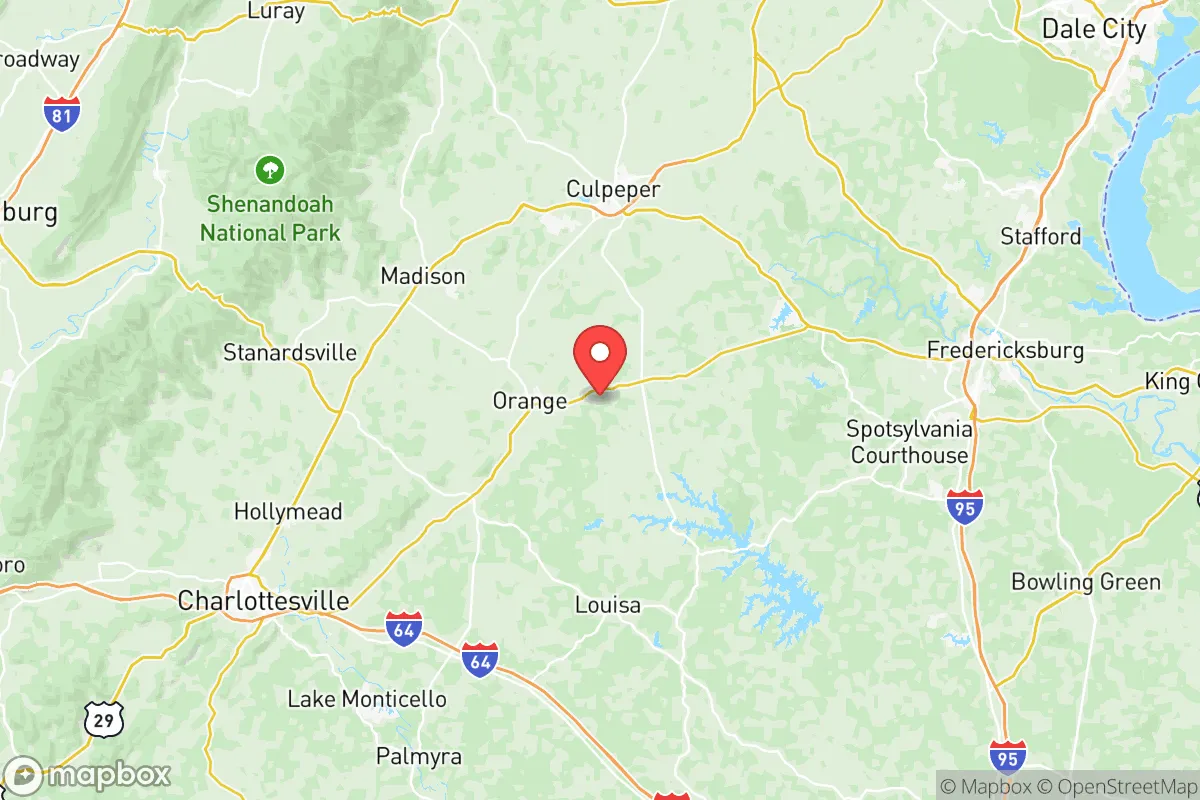
Orange County, Virginia offers a notably high degree of personal sovereignty relative to much of Northern Virginia and the D.C. suburbs, with a regulatory environment that generally favors individual autonomy in property use, self-defense, and daily life. Located in the Piedmont region roughly 30 miles west of Fredericksburg, the county combines a rural character with a growing population of freedom-minded residents seeking lower taxes and fewer restrictions. While not as libertarian-leaning as some western Virginia counties, Orange provides a practical balance of personal liberty and community governance that appeals to families and individuals who value self-reliance.
Tax burden and regulatory posture: How Orange County compares to surrounding areas
Orange County's tax burden is moderate by Virginia standards, with a real property tax rate of approximately $0.67 per $100 of assessed value as of 2025, significantly lower than neighboring Spotsylvania County ($0.82) and far below Fairfax County ($1.11). The county does not impose a local personal property tax on vehicles beyond the state-mandated rate, though tangible business property is taxed. Virginia's state income tax is a flat 5.75%, and sales tax in Orange County is 5.3% (state plus local), which is below the 6% rate in many surrounding localities. The regulatory posture is generally light-touch: building permits are required for new construction and major renovations, but the county's zoning ordinance allows for agricultural and residential uses with fewer hurdles than in more urbanized areas. The town of Orange, the county seat, has its own planning commission that reviews developments within town limits, while the unincorporated areas like Locust Grove and Unionville fall under county jurisdiction, where permitting is typically straightforward for standard residential projects. The county's comprehensive plan emphasizes preserving rural character, which means large-scale commercial development faces more scrutiny, but individual property owners generally experience minimal bureaucratic friction for home-based businesses or agricultural operations.
Self-defense and gun law specifics: What Virginia's legal framework means for residents
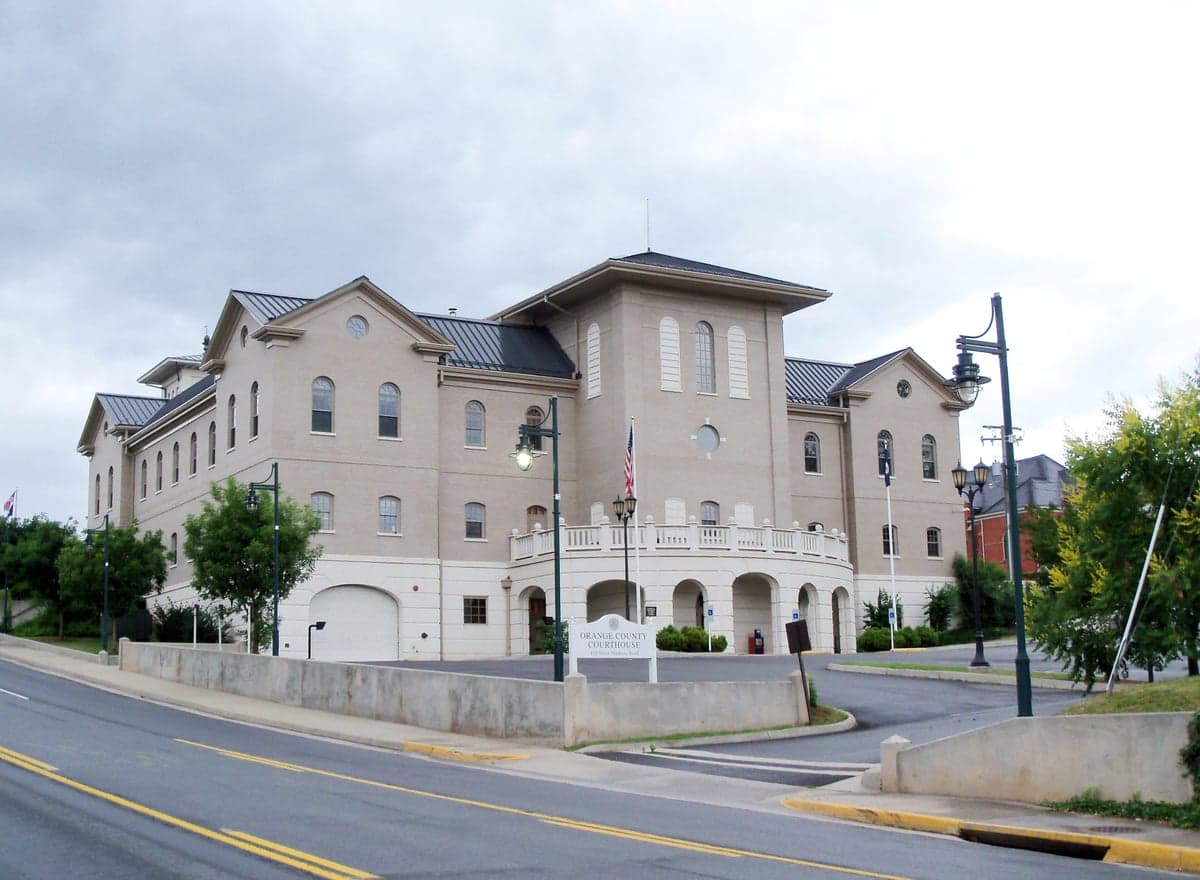
Virginia is a shall-issue state for concealed handgun permits, meaning Orange County residents who meet basic criteria (age 21, no disqualifying criminal record, completion of a firearms safety course) can obtain a permit without demonstrating a specific need. The county sheriff's office processes applications efficiently, with typical turnaround under 45 days. Open carry is legal for anyone 18 or older who can legally possess a firearm, and there are no county-specific restrictions beyond state law. Virginia does not require registration of firearms, and private sales between individuals (without a federal firearms license) are permitted, though a state police background check is required for handgun transfers. The county has no local ordinances restricting magazine capacity or banning specific firearm types, so residents in Gordonsville and Barboursville enjoy the same gun rights as those in rural areas. However, state law prohibits firearms in certain locations like K-12 schools and courthouses, and the Orange County Courthouse has metal detectors at entrances. For self-defense in the home, Virginia's Castle Doctrine applies, with no duty to retreat if a person is lawfully present and reasonably believes force is necessary to prevent imminent death or great bodily harm. Stand Your Ground provisions extend to public places, though the law requires a reasonable belief of imminent threat. Overall, Orange County's gun culture is strong but not extreme, with multiple shooting ranges within a 20-minute drive, including the Rapidan Wildlife Management Area range and private clubs near Mine Run.
Self-reliance and homesteading viability: Lot sizes, zoning, and off-grid feasibility
Orange County is one of the more homestead-friendly areas in Central Virginia, with agricultural zoning that allows for a wide range of self-reliant activities. Minimum lot sizes in the Agricultural (A-1) district are 3 acres, though many properties in the western part of the county near Raccoon Ford and Burr Hill are 10 acres or larger. The county's zoning ordinance explicitly permits keeping livestock, including cattle, horses, sheep, goats, and poultry, on parcels of 3 acres or more, with no limit on the number of animals beyond reasonable carrying capacity. Beekeeping is allowed on any parcel, and small-scale aquaculture (fish ponds) is permitted without special permits. Off-grid living is feasible but requires compliance with state building codes: the county does not require connection to public water or sewer if a private well and septic system are installed, and solar panels are allowed as an accessory use on any residential property. However, the county does not have explicit provisions for composting toilets or graywater systems, so residents must follow Virginia Department of Health regulations for alternative wastewater treatment. The town of Orange has stricter ordinances within its limits, including a requirement for trash collection service, but unincorporated areas have no such mandates. For those seeking maximum self-reliance, properties in the Montford area offer the best combination of large acreage, minimal neighbors, and lax enforcement of nuisance ordinances. The county's extension office provides resources for small-scale farming, including soil testing and livestock management workshops, which supports the homesteading community.
Personal liberties: Parental rights, medical autonomy, speech, and property
Orange County reflects Virginia's broader legal framework for personal liberties, with some local nuances. Parental rights are strong under state law: Virginia Code §1-290.1 affirms that parents have a fundamental right to direct the upbringing, education, and care of their children. The Orange County School Board has maintained a policy of transparency in curriculum materials, and parents can opt their children out of specific instructional content without penalty. Medical autonomy is generally respected, though Virginia's vaccine mandates for school attendance (including MMR and polio) apply county-wide, with medical and religious exemptions available. The county has no local mask mandates or business closure orders, and during the COVID-19 pandemic, the Board of Supervisors voted to remain open as an essential service. Free speech protections are robust, with no local ordinances restricting political signage beyond standard time limits for campaign signs. Property rights are protected under Virginia's eminent domain laws, which require just compensation and a public purpose, and Orange County has not engaged in aggressive condemnation practices. The county's zoning board of appeals hears variance requests regularly, and approval rates are high for reasonable requests like accessory dwelling units or home occupations. For residents in Terrys Run and Rhoadesville, property rights are further strengthened by the absence of homeowners' associations in most rural subdivisions, allowing for greater freedom in land use decisions.
Overall, Orange County offers a solid balance of personal sovereignty that ranks favorably compared to Northern Virginia and the Richmond suburbs, though it is less libertarian than counties further west like Highland or Bath. The tax burden is moderate, gun laws are permissive, homesteading is practical on larger parcels, and personal liberties are well-protected under state law. For families and individuals who prioritize autonomy without wanting to live in a completely unregulated environment, Orange County provides a workable middle ground where self-reliance is encouraged and government overreach is minimal. The county's proximity to Charlottesville and Fredericksburg adds economic opportunity without sacrificing the rural character that supports a freedom-oriented lifestyle.

* Values derived from national, state, county, city and local statistics and may differ in a specific area. Last updated: 2026-09-23T19:19:17.000Z
Narrative content on this page is AI-generated and may contain mistakes. Verify any details that matter before acting on them.
ReloMaps may earn a commission from affiliate links at no extra cost to you.

