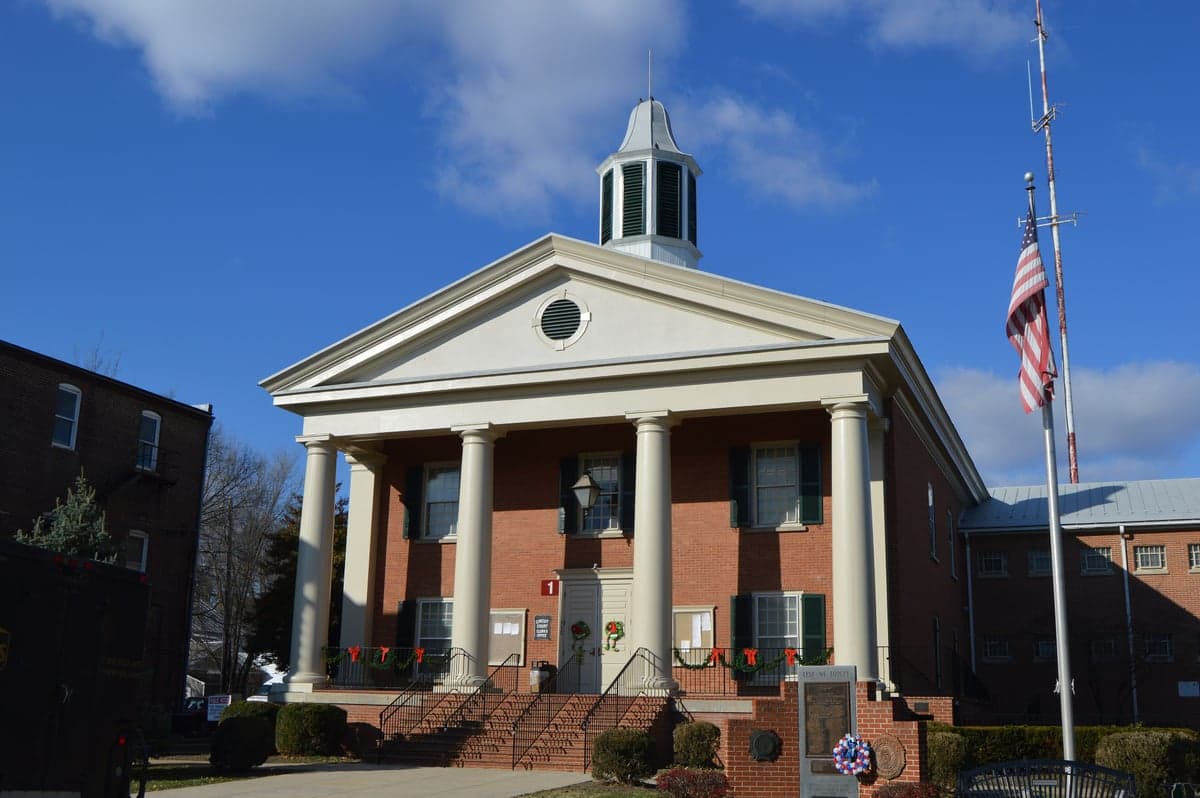
Photo: Wikipedia
Demographics of Shenandoah County
Affluence Level in Shenandoah County
A middle-class area roughly in line with national averages across income, home values, education, and employment.
People of Shenandoah County
The people of Shenandoah County, Virginia, today number 44,630 and are overwhelmingly white (84.4%), with a notable Hispanic minority (8.8%) and small Black (2.7%) and East/Southeast Asian (1.2%) populations. The county is characterized by a rural, small-town identity, with a foreign-born share of just 3.3% and a college-educated rate of 21.4%, reflecting a community rooted in agriculture, manufacturing, and local service industries. Distinctive markers include a strong sense of place tied to the Shenandoah Valley’s history, a politically conservative lean, and a population that is older than the national median age, with many residents tracing their families back several generations.
Settlement & growth (pre-1960)
Before European contact, the Shenandoah Valley was inhabited by various Native American groups, most notably the Shawnee and the Iroquois Confederacy, who used the valley as a hunting ground and travel corridor. The region was sparsely populated by indigenous peoples when European settlers began arriving in the early 18th century, as the valley was largely a contested borderland between tribes. The first permanent European settlers were primarily German and Scots-Irish immigrants, who began moving into the area around the 1730s, drawn by the promise of fertile land and relative religious freedom.
The Germans, many of whom were Lutheran or Reformed, established tight-knit farming communities in the northern and central parts of the county. Towns like New Market and Mount Jackson became early centers of German settlement, with their descendants still forming a significant cultural backbone today. The Scots-Irish, who were predominantly Presbyterian, settled more widely across the valley, including in the county seat of Woodstock and the southern town of Edinburg. These groups were largely subsistence farmers and small-scale traders, and their influence is still visible in the county’s many historic stone churches and barns.
During the 19th century, the county’s population grew steadily, fueled by natural increase and some additional migration from other parts of Virginia and Pennsylvania. The construction of the Valley Turnpike (now U.S. Route 11) and later the railroad in the mid-1800s connected Shenandoah County to broader markets, encouraging the growth of towns like Strasburg and Toms Brook. The Civil War devastated the region, with the Valley Campaigns causing widespread destruction and loss of life, but the population recovered in the post-war decades through agricultural recovery and the rise of small-scale manufacturing, such as flour milling and tanning.
Into the early 20th century, the county remained overwhelmingly rural and white, with a small Black population concentrated in and around Woodstock and Strasburg, many of whom were descendants of enslaved people who stayed after emancipation. The Great Depression and World War II saw some out-migration to industrial cities, but the county’s population remained relatively stable. By 1960, Shenandoah County was still a predominantly agricultural society, with a population of around 21,000, and its ethnic makeup was nearly entirely of German and Scots-Irish descent.
Modern era (post-1965)
The post-1965 era, shaped by the Hart-Cellar Act, brought only modest demographic change to Shenandoah County compared to urban and suburban areas of Virginia. The county’s foreign-born population remains very low at 3.3%, and the vast majority of residents are native-born. The most significant shift has been the growth of the Hispanic population, which now stands at 8.8%, up from negligible levels in 1970. This growth is largely driven by domestic migration from other parts of the U.S. and some direct immigration from Mexico and Central America, with families settling in Woodstock and Strasburg for work in poultry processing, agriculture, and construction.
The Black population has remained small and stable at 2.7%, with most Black residents living in Woodstock and Mount Jackson. The East/Southeast Asian population, at 1.2%, is a very recent addition, with a small number of families moving to the county for employment in the healthcare and education sectors, particularly around Woodstock. There is no measurable Indian subcontinent population (0.0%). Domestic migration from the Washington, D.C., metropolitan area has been a notable trend since the 1990s, as some families and retirees seek lower housing costs and a slower pace of life in towns like Edinburg and New Market. This has brought a modest influx of more educated and politically moderate residents, but the county’s overall character remains deeply conservative and rural.
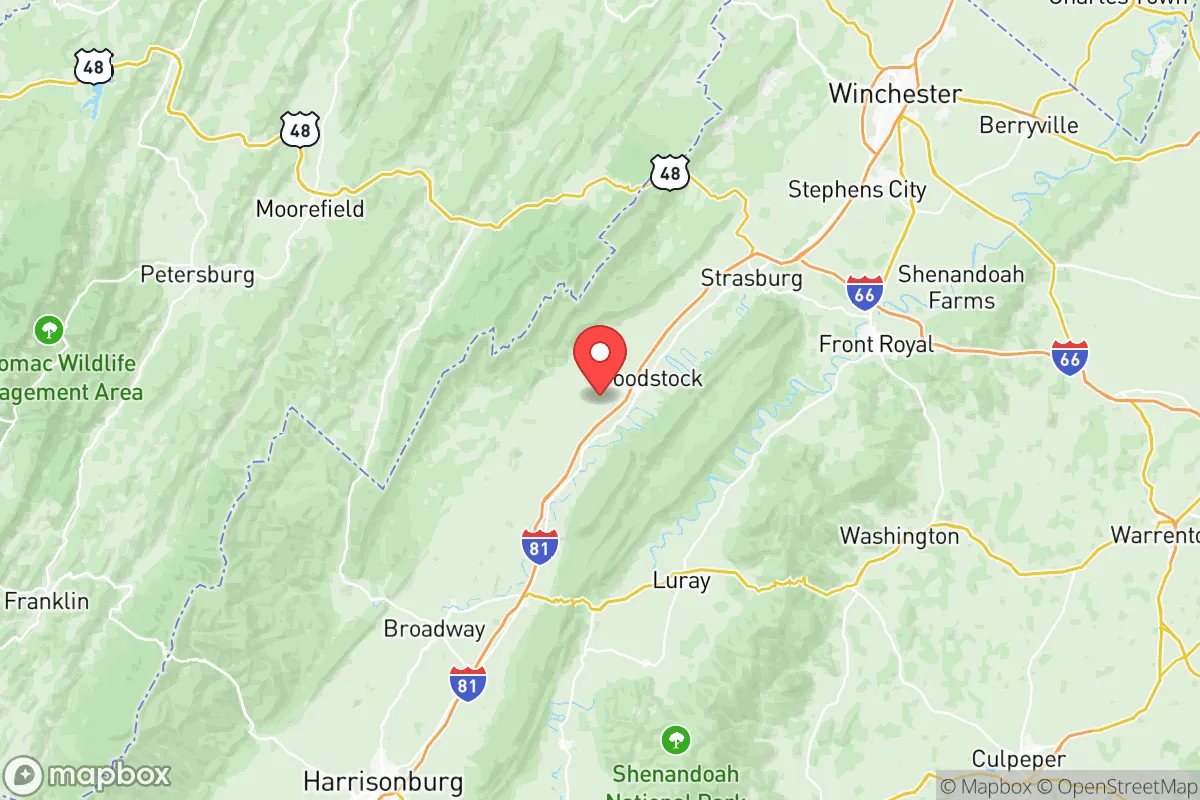
Suburbanization has been limited, with most new housing development occurring along the Interstate 81 corridor near Strasburg and Woodstock, where commuters to jobs in Harrisonburg and Winchester have settled. The county has not experienced the rapid suburban sprawl seen in Northern Virginia, and its population density remains low.
The future
The population of Shenandoah County is projected to grow slowly, likely reaching around 48,000 by 2040, driven primarily by domestic migration from more expensive parts of Virginia and the Mid-Atlantic. The Hispanic share of the population is expected to continue rising, potentially reaching 12-15% by 2040, as families already in the county have children and new migrants arrive for agricultural and service-sector jobs. The white population will likely remain the overwhelming majority but will slowly decline as a share of the total, while the Black and East/Southeast Asian populations are expected to remain small but stable.
The county is not becoming more diverse in the way that urban Virginia is; instead, it is experiencing a gradual, incremental shift. New communities are concentrating in the I-81 corridor towns, particularly Woodstock and Strasburg, while the more remote rural areas remain almost entirely white and older. The cultural identity of the county is evolving slowly, with the growing Hispanic community adding new festivals, restaurants, and religious congregations, particularly in Woodstock. However, the dominant German and Scots-Irish heritage, along with a strong conservative political culture, will likely remain the defining features of the county for the foreseeable future.
For someone moving in now, Shenandoah County offers a stable, low-density, and historically rooted community. It is a place where the population is slowly diversifying but remains overwhelmingly white and native-born, and where the pace of change is measured in decades, not years. The county is becoming a quieter, more affordable alternative to the booming cities of the Shenandoah Valley, with a future that looks much like its present, only slightly more diverse and slightly more connected to the broader region.

* Values derived from national, state, county, city and local statistics and may differ in a specific area. Last updated: 2026-10-02T02:35:38.000Z
Narrative content on this page is AI-generated and may contain mistakes. Verify any details that matter before acting on them.
ReloMaps may earn a commission from affiliate links at no extra cost to you.

