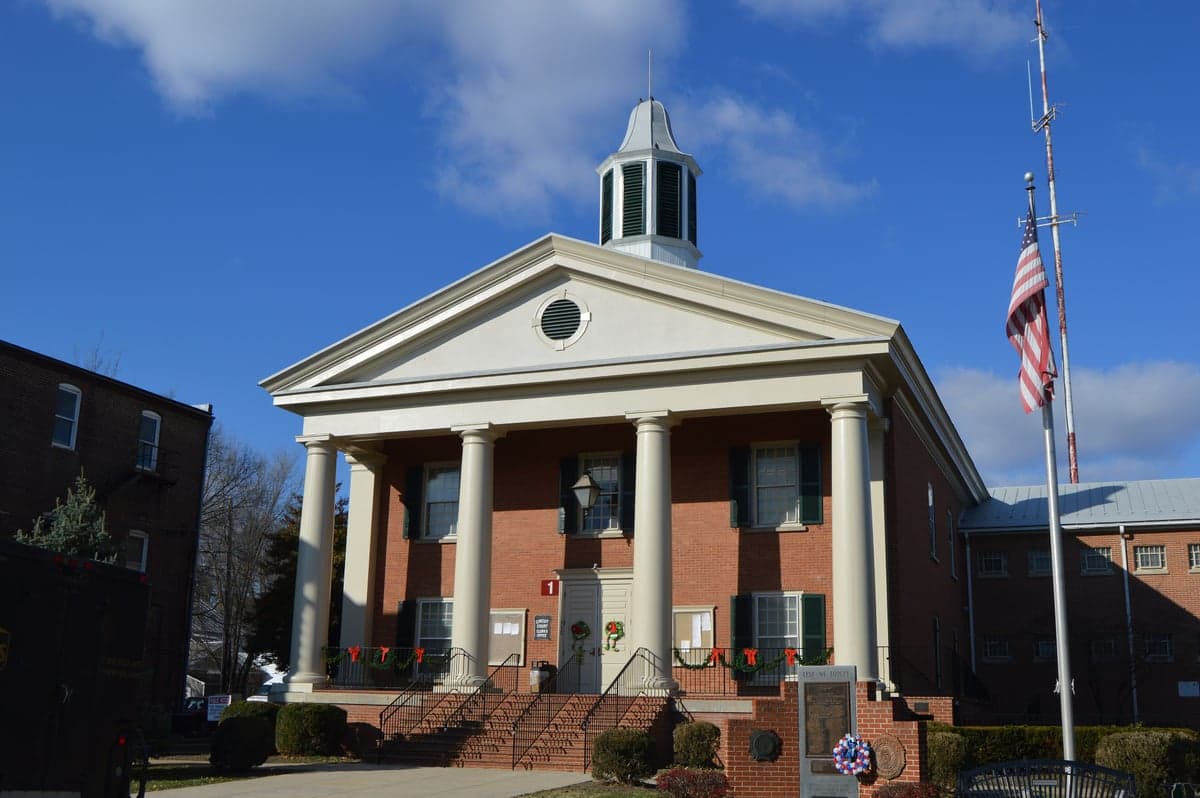
Photo: Wikipedia
Personal Sovereignty in Shenandoah County
Viable for self-reliance. Generally workable, though some barriers may limit total independence.
What does Personal Sovereignty tell us?
Personal Sovereignty measures your capacity for self-reliance and independence with minimal government friction. Higher scores mean fewer barriers between you and the way you want to live... but it assumes you have the space you need and good neighbors.
What does this tell us?
Personal Sovereignty measures your capacity for self-reliance and independence with minimal government friction. Higher scores mean fewer barriers between you and the way you want to live... but it assumes you have the space you need and good neighbors.
State Policy
Energy independence: Importer (20% of energy produced in-state)
Personal Liberty
Homesteading

Personal Liberty Analysis
Shenandoah County, Virginia, offers a notably high degree of personal sovereignty relative to much of Northern Virginia and the state's urban crescent, with a regulatory environment that generally favors individual autonomy in daily life. The county's rural character, combined with Virginia's status as a "shall-issue" concealed carry state and its relatively light-touch approach to land use outside incorporated towns, creates a setting where self-reliance is both practical and culturally embedded. While not as libertarian-leaning as some western states, Shenandoah County provides a meaningful buffer against the denser regulatory frameworks found in places like Fairfax or Arlington, making it a viable option for relocation-minded individuals and families who prioritize personal freedom.
Tax burden and regulatory posture in Shenandoah County
Virginia's overall tax burden is moderate, ranking roughly in the middle nationally, but Shenandoah County's local posture is notably lighter than the state average. The county's real property tax rate is $0.54 per $100 of assessed value, which is significantly lower than rates in nearby urban centers like Harrisonburg ($0.74) or Winchester ($0.85). Personal property tax on vehicles and business equipment applies, but the county does not impose a local meals tax or a transient occupancy tax on short-term rentals, a contrast to many Virginia localities. Business regulation is minimal for most home-based enterprises; the county does not require a business license for sole proprietorships operating from a residence, though zoning restrictions apply in certain subdivisions. The towns of Woodstock, Strasburg, and Mount Jackson each have their own zoning ordinances that are somewhat more prescriptive than the county's unincorporated areas, particularly regarding signage and home occupation permits. For a reader accustomed to the regulatory density of Northern Virginia, Shenandoah County's posture feels distinctly hands-off, though not entirely laissez-faire.
Self-defense rights and gun law specifics in the area
Virginia is a "shall-issue" state for concealed handgun permits, meaning the sheriff's office in Shenandoah County must issue a permit to any qualified applicant who passes a background check and completes a certified training course. The county sheriff's office processes permits efficiently, with typical turnaround under 45 days. Open carry is legal without a permit for anyone 18 or older who can legally possess a firearm, and the county has no local ordinances restricting the carrying of firearms in public parks or on public property. The towns of Edinburg and New Market have no additional firearm restrictions beyond state law, and local gun culture is strong, with multiple shooting ranges and gun shops operating openly. It is worth noting that Virginia's 2020 "one-handgun-a-month" law remains in effect, limiting handgun purchases to one per 30-day period, and the state's "red flag" law (enacted in 2020) allows law enforcement to seek temporary firearm removal via court order. Shenandoah County's sheriff has publicly stated a limited enforcement posture on certain state-level firearm restrictions, but this is not codified policy. For a reader prioritizing self-defense rights, the county offers a solid baseline of legal protection, though not the constitutional carry found in 25 other states.
Self-reliance and homesteading viability: lot sizes, zoning, and off-grid feasibility
Shenandoah County's land use policies are among the most homestead-friendly in Virginia's Shenandoah Valley. The county's Agricultural and Forestal District program allows landowners to enter into voluntary agreements that protect large tracts from subdivision and development pressure, keeping land affordable for those seeking acreage. Minimum lot sizes in the county's Agricultural (A) zoning district are 3 acres for a single-family dwelling, with no requirement for public water or sewer connection if a private well and septic system are feasible. Off-grid living is legally viable: the county does not require connection to the electrical grid, and solar panel installations are permitted as accessory uses without special permitting. Rainwater collection for non-potable uses is unrestricted, and the county health department permits composting toilets with approved designs. The unincorporated areas around Fort Valley and Orkney Springs are particularly attractive for homesteaders, with larger parcels (often 10-50 acres) available at prices well below the national average—typically $5,000-$8,000 per acre for raw land. However, the towns of Woodstock and Strasburg have more restrictive zoning within their corporate limits, including minimum lot sizes of 0.25 acres and requirements for public water and sewer hookups. For a family seeking to build a self-sufficient homestead with minimal government oversight, the county's unincorporated areas offer a realistic path, though the Virginia Department of Health's well and septic permitting process adds a layer of state-level regulation that cannot be bypassed.
Personal liberties: parental rights, medical autonomy, speech, and property
Shenandoah County's political culture leans conservative, which shapes the local approach to several personal liberty issues. Parental rights in education are broadly respected: the county's school board has maintained policies that allow parents to opt their children out of specific instructional materials or activities without penalty, and the district does not enforce mask or vaccine mandates for students beyond state requirements. Medical autonomy is generally respected, though Virginia's certificate-of-need (CON) laws limit the number of healthcare facilities and services available, which can constrain choice in medical providers. The county has no local ordinances restricting speech or assembly, and public comment periods at board of supervisors and school board meetings are open and often well-attended. Property rights are protected by Virginia's right-to-farm law, which shields agricultural operations from nuisance lawsuits if they have been operating for more than one year, a significant protection for homesteaders and farmers. The county does not have a rental inspection program or rent control, and short-term rental regulations are minimal outside the town limits. For a reader concerned about government overreach in daily life, Shenandoah County's posture is one of general restraint, though state-level laws on vaccine mandates and medical choice remain subject to change with each election cycle.
Overall, Shenandoah County offers a level of personal sovereignty that is strong for Virginia but moderate by national standards. The county's low tax burden, permissive land use policies, and respect for gun rights and parental autonomy create an environment where self-reliant individuals and families can operate with relatively little friction. However, Virginia's state-level constraints—the red flag law, the one-handgun-a-month rule, and the CON healthcare regulations—mean that Shenandoah County is not a fully libertarian jurisdiction. For a relocation-minded reader comparing it to areas like West Virginia's Eastern Panhandle (which has constitutional carry and no red flag law) or Tennessee's rural counties (which have no state income tax), Shenandoah County represents a middle ground: significantly freer than Northern Virginia or the urban corridor, but still operating within a moderately regulated state framework. For those who value community, agricultural heritage, and a slower pace of life alongside their personal freedoms, it remains one of the more attractive options in the Mid-Atlantic region.

* Values derived from national, state, county, city and local statistics and may differ in a specific area. Last updated: 2026-10-02T02:35:38.000Z
Narrative content on this page is AI-generated and may contain mistakes. Verify any details that matter before acting on them.
ReloMaps may earn a commission from affiliate links at no extra cost to you.

