Demographics of Waco, TX
Affluence Level in Waco, TX
A below-average socioeconomic profile. Incomes, home values, and educational attainment trail the U.S., with higher poverty and unemployment.
People of Waco, TX
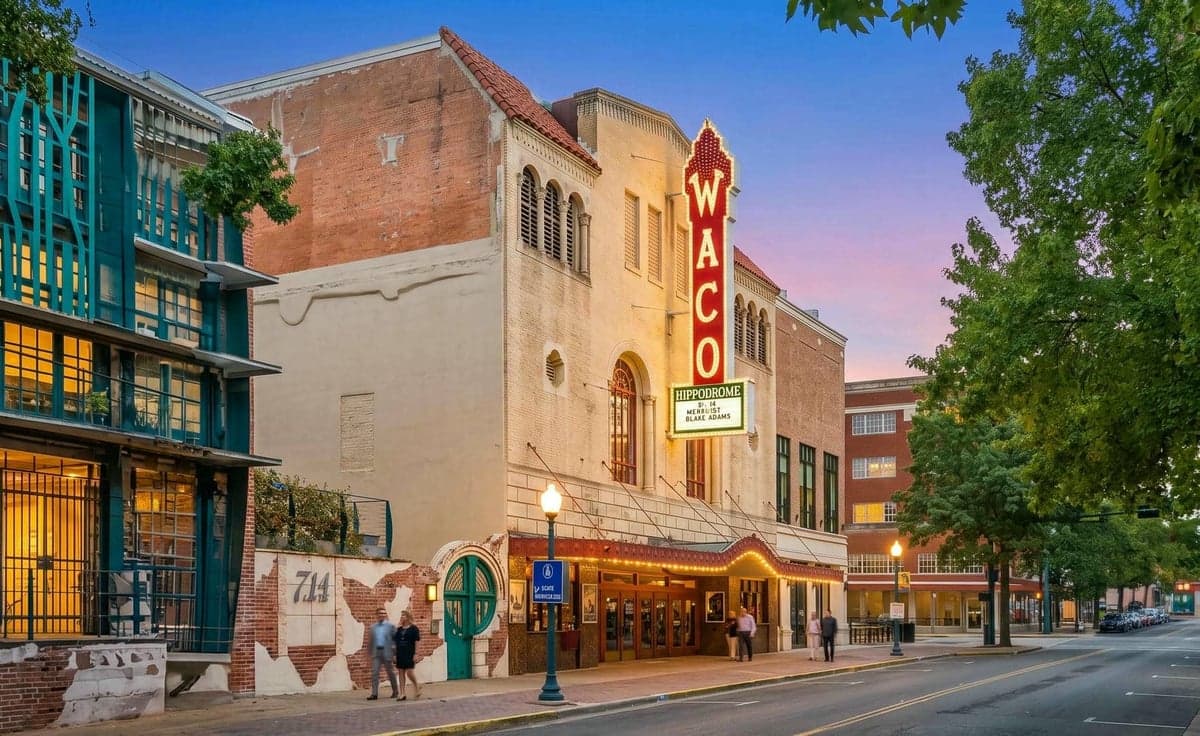
The people of Waco, Texas today number 141,925, forming a city that is more ethnically diverse than much of Central Texas but still defined by its historic Black and white populations. With a foreign-born share of just 7.3%, Waco is less immigrant-heavy than nearby Austin or Dallas, and its character remains rooted in native-born Texan culture, Baptist institutions, and a growing Hispanic working class. The city is denser than its suburban neighbors, with a distinctive identity shaped by Baylor University, the Magnolia empire, and a legacy of racial division that is slowly giving way to a more integrated, though still segregated, present.
How the city was settled and grew
Waco was founded in 1849 on the site of a Waco Indian village, but its permanent population began with Anglo-American settlers drawn by the fertile Blackland Prairie and the Brazos River crossing. The arrival of the railroad in the 1870s turned Waco into a cotton and cattle shipping hub, attracting a wave of German and Czech immigrants who settled in East Waco and the North Waco industrial corridor. By 1900, the city had a substantial Black population, many of whom were former sharecroppers moving from rural East Texas; they concentrated in Elm Street and the Bridge Street area, building churches, schools, and a commercial district that became the heart of Black Waco. The early 20th century brought a smaller wave of Mexican laborers, who settled near the railroad yards in South Waco and along the river bottoms, forming the foundation of the city's Hispanic community. The 1950s saw white flight from the urban core to new subdivisions like Lake Air and Beverly Hills, leaving the central city increasingly Black and poor.
Modern era (post-1965)
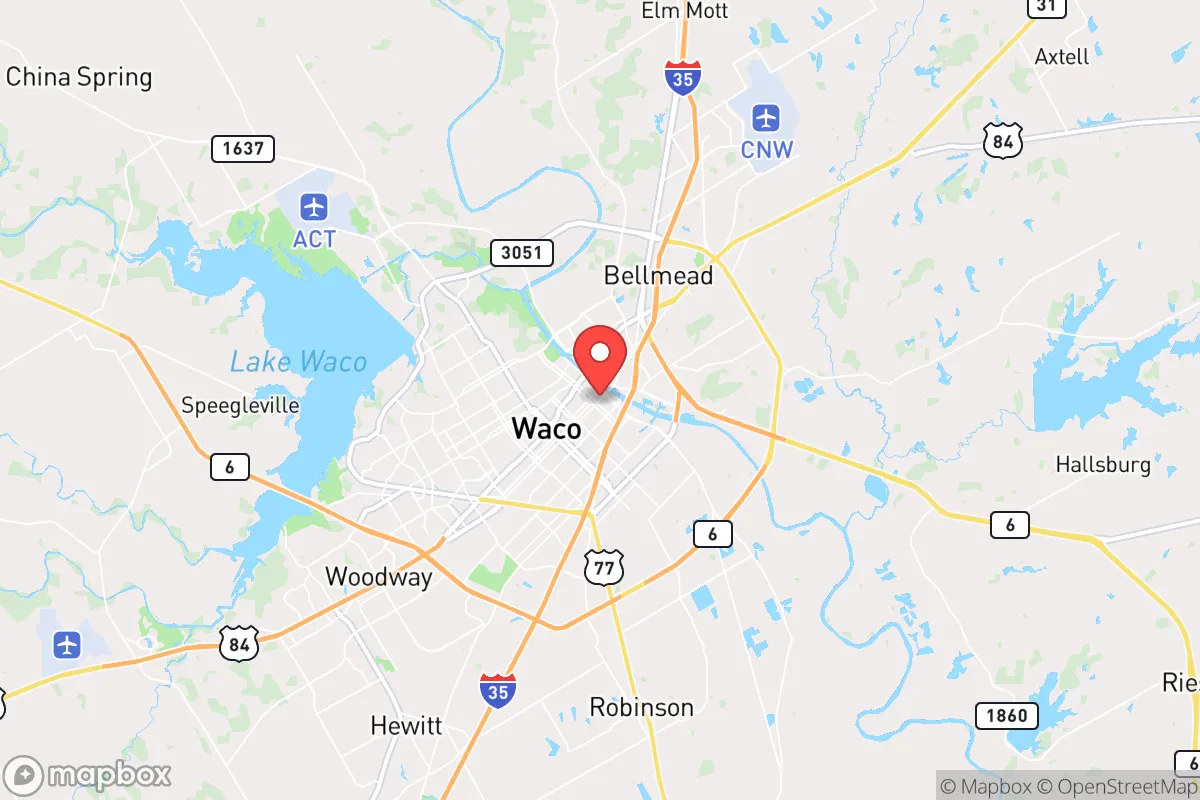
The post-1965 immigration reforms had a modest impact on Waco compared to larger Texas cities. The foreign-born share remains low at 7.3%, and the largest immigrant group today is Hispanic, primarily from Mexico and Central America, who have settled in South Waco and the Brazos River corridor. East/Southeast Asian communities (1.4% of the population) arrived in small numbers after 1980, many as professionals or students at Baylor, and are scattered rather than concentrated in a single enclave. The Indian subcontinent population (0.6%) is even smaller, mostly tied to Baylor's medical and research sectors. The most significant demographic shift since 1965 has been the growth of the Hispanic population from a small minority to 29.9% of the city, driven by both immigration and higher birth rates. Meanwhile, the white share has fallen to 44.9%, and the Black share has held steady at 19.9%, though Black residents have suburbanized somewhat into Hewitt and Robinson on the city's fringe. The city remains residentially segregated: North Waco and East Waco are predominantly Black and low-income, while South Waco is heavily Hispanic, and the western and northern suburbs are overwhelmingly white.
The future
Waco's population is heading toward a more Hispanic and more college-educated future, but not necessarily a more integrated one. The Hispanic share is projected to continue rising, potentially reaching 35-40% by 2040, driven by natural increase and continued immigration from Central America. The white share will likely continue its slow decline, while the Black share may remain stable or shrink slightly as younger Black residents move to Dallas or Houston for better opportunities. The Asian and Indian populations are small but growing, tied to Baylor's expansion and the medical school; they are likely to remain professional-class enclaves rather than forming large ethnic neighborhoods. The city is not homogenizing — it is tribalizing into distinct enclaves, with South Waco becoming more uniformly Hispanic, East Waco remaining Black, and the western suburbs staying predominantly white. The biggest unknown is whether the Magnolia-driven revitalization of downtown will attract enough new residents to break the old segregation patterns, or whether it will simply create a new, wealthier white enclave in the center.
For someone moving to Waco now, the city offers a clear trade-off: a low cost of living and a strong sense of community, but a population that is still sorting itself along racial and economic lines. The city is becoming more Hispanic and more educated, but the old divisions remain visible in where people live, worship, and send their children to school. Newcomers should expect a place that is changing, but not yet changed.

* Values derived from national, state, county, city and local statistics and may differ in a specific area. Last updated: 2026-04-19T07:27:14.000Z
Narrative content on this page is AI-generated and may contain mistakes. Verify any details that matter before acting on them.
ReloMaps may earn a commission from affiliate links at no extra cost to you.

