Political ClimatePolitical Climate in Waco, TX
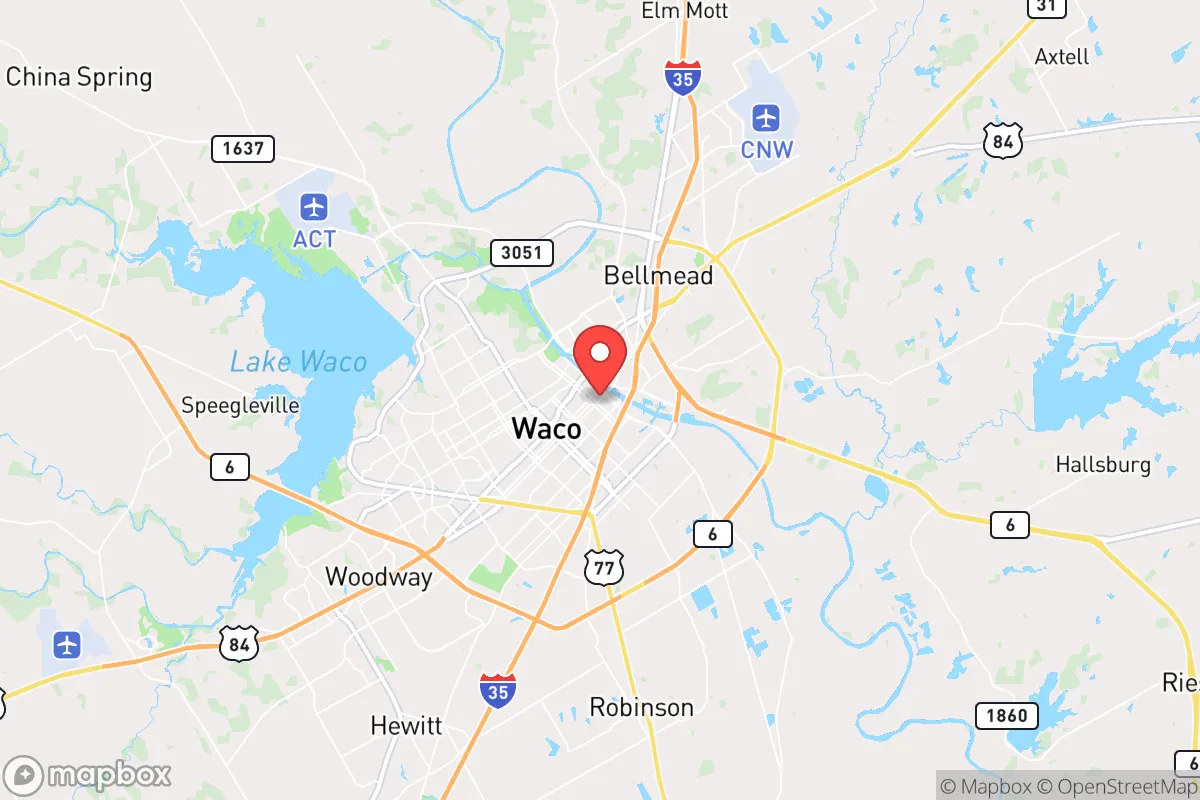
District shown is the primary district for this city’s centroid. Cities may span multiple districts.
Local Political AnalysisPolitical Analysis of Waco, TX
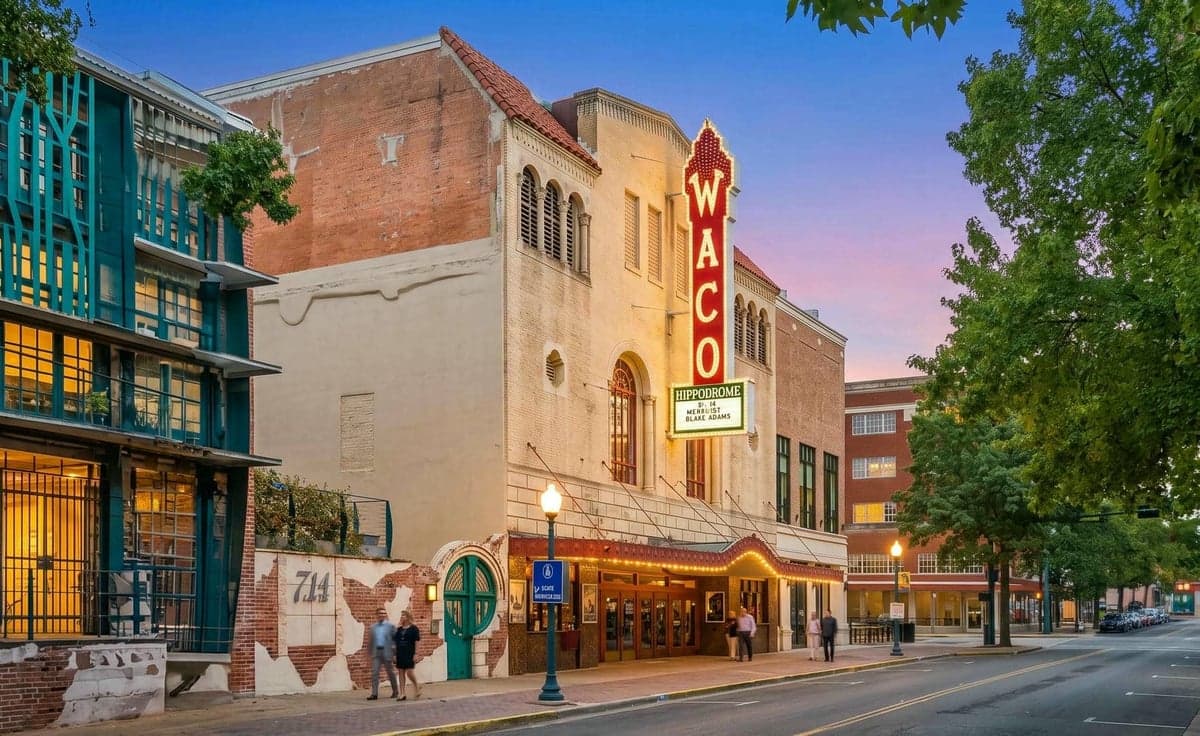
Waco sits in the heart of Texas, and for most of its history, that’s meant a reliably conservative political climate. The Cook PVI rating of R+14 tells you the district leans heavily Republican, and that’s been the baseline for as long as anyone can remember. But if you’ve lived here a while, you’ve noticed the ground shifting under your feet. The old-school, leave-us-alone conservatism that defined Waco for generations is now competing with a steady influx of folks from bluer states and a growing progressive push, especially around Baylor University and the downtown core. It’s not a blue wave, but it’s a noticeable undertow that has a lot of long-time residents watching the local elections a little closer.
How it compares
Drive twenty minutes north to West or Bellmead, and you’re in solid, no-nonsense conservative territory where the R+14 rating feels like a floor, not a ceiling. Head south to Woodway or Hewitt, and you’ll find the same — folks who vote on pocketbook issues and personal liberty, not the latest social trends. The real contrast is right inside Waco itself. The city council and county commission have seen a slow creep of progressive priorities — think zoning fights over “inclusionary” housing policies and debates over police funding that would have been unthinkable a decade ago. Meanwhile, Robinson and China Spring, just outside the city limits, remain reliably red, with no such debates. The divide isn’t between Waco and its neighbors; it’s between the old Waco and the new one being built by transplants and university-driven growth.
What this means for residents
For someone who values limited government and personal freedom, the biggest concern is the slow expansion of local government into areas it doesn’t belong. You’re seeing more zoning restrictions, talk of “equity” audits in city departments, and a general drift toward the kind of regulatory overreach that makes you feel like you need permission to live your life. Property taxes are already high for Texas, and the city’s appetite for new programs — often tied to progressive social goals — means those taxes aren’t likely to drop. On the flip side, the county and school board races are still very winnable for conservatives, and the Second Amendment culture here is still strong. You can still buy a gun at a pawn shop without a background check delay, and open carry is a common sight. But if you’re not paying attention to local elections, you might wake up to a city that feels a lot more like Austin than the Waco you remember.
Culturally, Waco still has its distinctions. The Texas Ranger Hall of Fame and the Dr Pepper Museum are more than tourist stops — they’re symbols of a self-reliant, independent spirit. The Magnolia effect has brought in a wave of new residents and businesses, but it’s also brought a certain coastal sensibility that rubs against the grain. The biggest policy fight in recent memory was over a proposed “sanctuary city” ordinance for the homeless, which the council ultimately rejected — a rare win for common sense and local control. Looking ahead, the long-term trajectory depends on whether the old guard can hold the line on taxes and regulations, or whether the newcomers’ progressive leanings start to dominate city hall. For now, Waco is still a place where your neighbor minds his own business and expects you to do the same — but that’s a tradition that requires active defense.

State Political ClimatePolitical Climate in Texas
State Political AnalysisPolitical Environment in the State
Texas remains a solidly Republican state at the statewide level, but the coalition that keeps it red is shifting under your feet. The GOP hasn’t lost a statewide election since 1994, and Donald Trump carried the state by 5.6 points in 2024, a narrower margin than his 9-point win in 2016. Over the last 20 years, the state has drifted from deep red to lean red, driven by explosive growth in the blue-leaning metros of Austin, Dallas, Houston, and San Antonio, while rural and exurban counties have hardened their Republican margins. The dominant coalition is still conservative—pro-business, low-tax, and culturally traditional—but it’s increasingly a coalition of rural and suburban voters pushing back against a rising progressive tide in the cities.
Urban vs. rural divide
The political map of Texas is a story of two worlds. The big four metros—Houston, Dallas-Fort Worth, San Antonio, and Austin—are the engines of Democratic growth. Austin and Travis County are the bluest major urban area in the state, voting for Biden by 56 points in 2020 and for Harris by a similar margin in 2024. Dallas County and Harris County (Houston) are reliably blue, with Harris County flipping to the Democrats in 2018 and staying there. Meanwhile, the rural and exurban counties that ring these metros are where the GOP’s base is hardening. Collin County north of Dallas, once a swing area, voted for Trump by 13 points in 2024, up from 8 points in 2020. The Panhandle and West Texas—places like Lubbock, Amarillo, and Midland-Odessa—are deep red, with Trump winning 80%+ in many rural precincts. The Rio Grande Valley, historically a Democratic stronghold, has been shifting right; Hidalgo County (McAllen) went from +40 Democratic in 2012 to +15 in 2024, a massive realignment driven by working-class Hispanic voters moving toward the GOP on economic and cultural issues. The divide isn’t just urban vs. rural—it’s also suburban vs. exurban. Suburbs like Fort Bend County (southwest of Houston) are now competitive, flipping to Biden in 2020 and staying close in 2024, while farther-out exurbs like Kaufman County (east of Dallas) are getting redder.
Policy environment
Texas’s policy environment is a mixed bag for conservatives. On the plus side, there’s no state income tax, which is a huge draw for families and businesses. Property taxes are high—averaging about 1.6% of home value—but the state has used budget surpluses to buy down school property tax rates, with a $12 billion tax cut package in 2023. The regulatory posture is famously business-friendly: no state-level occupational licensing for many trades, a right-to-work law, and tort reform that caps non-economic damages in medical malpractice cases. On education, the state has expanded school choice through Education Savings Accounts (ESAs) for special-needs students in 2023, and there’s a strong push for universal ESAs in the 2025 session. Texas also passed a law in 2021 banning critical race theory in K-12 classrooms and requiring the display of “In God We Trust” in schools. On healthcare, the state has refused to expand Medicaid under the ACA, leaving about 1.5 million Texans in the coverage gap. Election laws tightened in 2021 with SB 1, which banned 24-hour and drive-through voting, added ID requirements for mail ballots, and empowered poll watchers. Texas also passed a near-total abortion ban (SB 8) in 2021, with no exceptions for rape or incest, enforced through private civil lawsuits. The state has also passed permitless carry for handguns (2021) and banned transgender athletes from women’s sports (2021).
Trajectory & freedom
On balance, Texas has been expanding personal liberty in several key areas over the last five years, but there are worrying signs of government overreach. Permitless carry (HB 1927, 2021) was a major expansion of Second Amendment rights, allowing any law-abiding adult to carry a handgun without a license. Parental rights were strengthened with the 2023 law requiring school districts to notify parents of any changes to a child’s mental or physical health, effectively blocking gender-transition support without parental consent. Medical autonomy took a hit with the abortion ban, but that’s a values-driven trade-off many conservatives accept. On property rights, the state has been mixed: the 2023 law limiting homeowners’ association (HOA) fines was a win, but eminent domain battles over the Texas Bullet Train project remain a concern. The biggest red flag for freedom is the state’s aggressive use of the Texas National Guard and state police to arrest migrants at the border under Operation Lone Star, which has cost over $10 billion and raised constitutional questions about federal preemption. That said, the state has also passed laws protecting religious freedom, including the 2021 law allowing foster care agencies to refuse placements based on religious beliefs. The trajectory is toward more freedom on guns, education, and parental rights, but less freedom on immigration enforcement and medical choices for women.
Civil unrest & political movements
Texas has seen its share of political flashpoints. The 2020 Black Lives Matter protests in Austin were among the largest in the country, with the city council cutting the police budget by $150 million—a move that was later partially reversed after a spike in violent crime. On the right, the “Patriot” movement is strong in rural areas, with groups like the Texas Freedom Coalition organizing around election integrity and school board races. Immigration politics are the most visible flashpoint. The state’s busing of migrants to New York, Chicago, and other sanctuary cities has been a constant news cycle, and the border wall construction under Operation Lone Star is a physical reality in the Rio Grande Valley. Election integrity remains a hot-button issue, with the 2020 audit of Harris County’s results (which found no widespread fraud) and ongoing lawsuits over mail ballot rules. Secession rhetoric is more talk than action—the Texas Nationalist Movement has never gotten a referendum on the ballot—but it’s a persistent undercurrent in conservative circles. A new resident would notice the political polarization in local media, with conservative outlets like the Texas Scorecard and liberal ones like the Texas Tribune offering very different realities.
Projection
Over the next 5-10 years, Texas is likely to become more competitive at the statewide level, but not necessarily more liberal. The in-migration of 1,000+ people per day is split between conservatives from California and blue states and liberals from the same places, but the net effect is that the suburbs are becoming more purple. The Hispanic shift rightward, especially in the Valley and along the border, could offset some of the urban gains. The 2026 governor’s race will be a bellwether: if Greg Abbott wins by less than 5 points, the state is in play for 2028. The biggest wildcard is the state’s demographic future: Texas is already 40% Hispanic, and younger voters are more liberal on social issues but more conservative on economics. The state’s policy environment will likely stay conservative on taxes and business, but the culture war battles over education, gender, and abortion will intensify. A new resident moving in now should expect a state that remains Republican-controlled but with a narrower margin, where local politics in the suburbs will be the real battleground. The freedom trajectory is positive on guns and parental rights, but the border crisis and property tax burden are unresolved problems that could tip the balance.
For a conservative family or individual, Texas still offers a strong package: no income tax, a business-friendly climate, and a government that respects gun rights and parental authority. But the political landscape is not static. The cities are becoming more progressive, the suburbs are contested, and the state government is increasingly assertive on immigration enforcement. The bottom line: Texas is still a good bet for someone who values low taxes and traditional values, but you’ll need to pick your county carefully. The exurbs and rural areas are where the conservative culture is strongest, while the inner suburbs are where the fight for the state’s soul is happening. If you’re moving for freedom, aim for the collar counties—places like Parker County (west of Fort Worth) or Comal County (north of San Antonio)—and keep an eye on the school board races. That’s where the next decade’s Texas will be decided.
* Values derived from national, state, county, city and local statistics and may differ in a specific area. Last updated: 2026-04-19T07:27:14.000Z
Narrative content on this page is AI-generated and may contain mistakes. Verify any details that matter before acting on them.
ReloMaps may earn a commission from affiliate links at no extra cost to you.

