Personal Sovereignty in Waco, TX
Strong independent fundamentals that actively favor personal liberty and low regulation.
What does Personal Sovereignty tell us?
Personal Sovereignty measures your capacity for self-reliance and independence with minimal government friction. Higher scores mean fewer barriers between you and the way you want to live... but it assumes you have the space you need and good neighbors.
What does this tell us?
Personal Sovereignty measures your capacity for self-reliance and independence with minimal government friction. Higher scores mean fewer barriers between you and the way you want to live... but it assumes you have the space you need and good neighbors.
State Policy
Energy independence: Net exporter (220% of energy produced in-state)
Personal Liberty
Homesteading

Personal Liberty Analysis
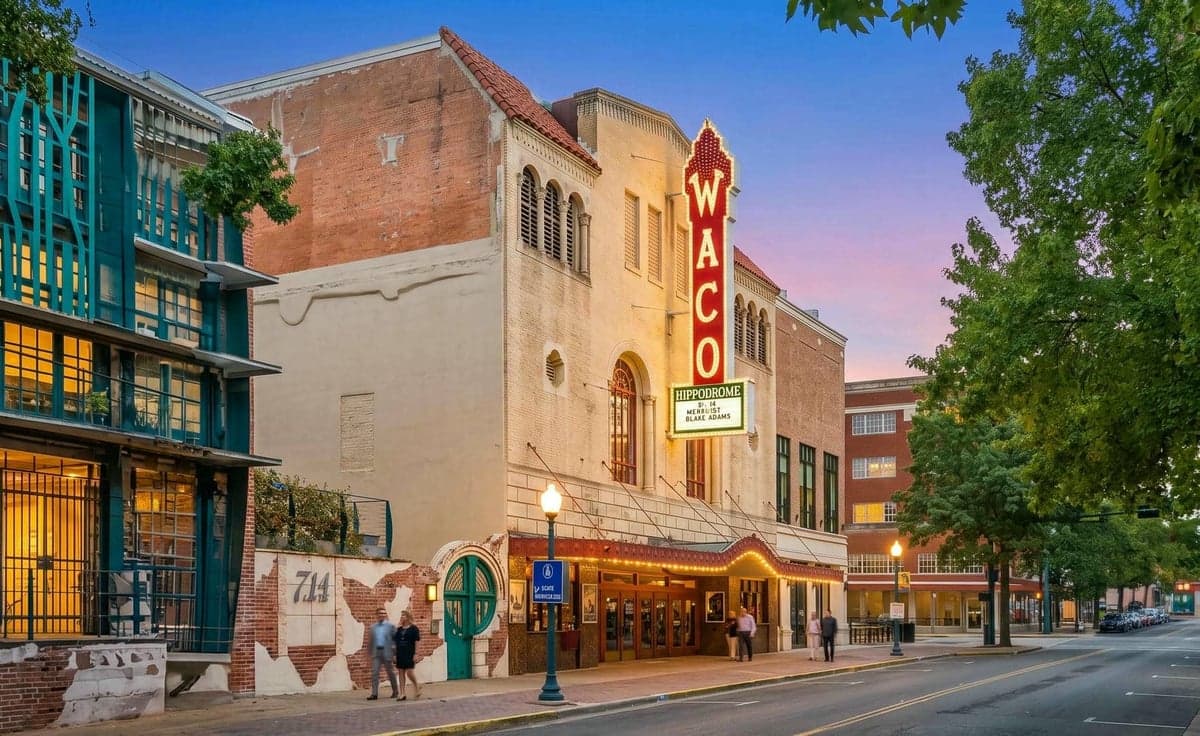
Waco, Texas offers a notably high degree of personal sovereignty compared to most of the United States, driven primarily by Texas’s strong legal protections for individual rights, a low-tax environment, and a regulatory culture that generally favors personal responsibility over government mandates. For the strategic relocator—whether a single individual or a parent—this translates into a place where you can largely live by your own rules, provided you respect property rights and local ordinances. The city sits within McLennan County, which leans conservative, and the surrounding rural areas amplify the sense of autonomy, making Waco a viable hub for those seeking to minimize government overreach while maintaining access to urban amenities.
Tax burden and regulatory posture in Waco compared to Texas norms
Texas has no state income tax, which immediately puts more money in your pocket and reduces the government’s claim on your earnings. Waco’s total tax burden is moderate for the state, with a combined state and local sales tax rate of 8.25% (6.25% state plus 2% local) and property taxes that average around 2.2% of assessed home value—slightly above the Texas median but still far lower than high-tax states like California or New York. The regulatory environment in Waco is business-friendly, with minimal zoning restrictions outside of specific historic districts and floodplains. There are no county-level building codes for unincorporated areas, and the city’s permitting process for home improvements or small-scale agriculture is straightforward. This means you can modify your property, build a workshop, or keep livestock with fewer bureaucratic hurdles than in most urban centers. For the prepper mindset, this regulatory lightness is a direct advantage: fewer layers of government permission needed to secure your own infrastructure.
Self-defense and gun law specifics in Waco and McLennan County
Texas is a constitutional carry state, meaning no permit is required to carry a handgun openly or concealed for anyone legally allowed to possess a firearm. Waco fully reflects this: you can carry without a license in all public spaces, including parks and most businesses unless posted otherwise. The city has a few gun-free zones—courthouses, schools, and certain government buildings—but these are clearly marked and limited. McLennan County is a Second Amendment sanctuary, with local officials publicly opposing any state or federal infringements. For parents, this means you can teach your children firearm safety and ownership without fear of overbearing local laws. The sheriff’s office is known for issuing licenses to carry (LTC) quickly if you choose to get one for reciprocity in other states. Stand-your-ground and castle doctrine laws are fully in effect, giving you the legal right to defend your home and person without a duty to retreat. For the survivalist, this legal framework is a cornerstone of personal sovereignty—your ability to protect your family and property is not subject to local political whims.
Self-reliance and homesteading viability: lot sizes, zoning, and off-grid feasibility
Waco’s zoning allows for significant self-reliance within city limits, but the real opportunity lies in the surrounding unincorporated areas of McLennan County. Inside the city, residential lots typically range from 0.25 to 0.5 acres, and you can keep up to four chickens, bees, and some small livestock with a permit. However, off-grid living is far more feasible just outside city limits, where lot sizes of 1 to 10 acres are common and zoning restrictions are virtually nonexistent. In unincorporated areas, you can install solar panels, rainwater catchment systems, and composting toilets without permits, and there are no restrictions on larger livestock like goats or cattle. The county does not enforce building codes for rural structures, so you can erect a workshop, root cellar, or even a small bunker without government approval. Water rights are a consideration—Texas follows the rule of capture for groundwater, meaning you can drill a well on your property and use as much water as you can access, subject to local groundwater district rules. For the prepper, this combination of large lots, minimal regulation, and water access makes the Waco area a strong candidate for a self-sufficient homestead.
Personal liberties: parental rights, medical autonomy, speech, and property
Texas law strongly protects parental rights, including the right to direct your child’s education, medical care, and religious upbringing. Waco has a robust homeschooling community, with no state requirements for curriculum approval or standardized testing—just a simple notice of intent. Medical autonomy is also well-protected: Texas does not have a state vaccine mandate for adults, and while schools require certain immunizations, exemptions (including philosophical and religious) are available. The city has a few vaccine-friendly doctors but also a growing network of practitioners who respect patient choice. Free speech is broadly protected under Texas law, which prohibits local governments from restricting speech in public forums beyond narrow time, place, and manner rules. Property rights are reinforced by Texas’s strong eminent domain protections—the state constitution requires full compensation and a public use test, and local governments rarely abuse this power. For the conservative relocator, these liberties mean you can raise your children, manage your health, and speak your mind without fear of government retaliation, which is increasingly rare in many parts of the country.
Overall, Waco offers a level of personal sovereignty that places it in the top tier of mid-sized American cities for those prioritizing autonomy. The combination of no income tax, constitutional carry, minimal rural zoning, strong parental rights, and a culture of self-reliance creates an environment where government overreach is the exception, not the rule. While it is not a libertarian utopia—property taxes are real, and city ordinances still apply—it is far more accommodating than the coastal metros or even some other Texas cities like Austin or Houston. For the survivalist or prepper, Waco’s balance of access to resources, legal protections, and regulatory lightness makes it a strategic base for building a resilient, self-determined life.

* Values derived from national, state, county, city and local statistics and may differ in a specific area. Last updated: 2026-04-19T07:27:14.000Z
Narrative content on this page is AI-generated and may contain mistakes. Verify any details that matter before acting on them.
ReloMaps may earn a commission from affiliate links at no extra cost to you.

