Photo: Wikipedia
Personal Sovereignty in Waianae, HI
Moderate friction. Expect trade-offs in some aspect of personal liberty and independence.
What does Personal Sovereignty tell us?
Personal Sovereignty measures your capacity for self-reliance and independence with minimal government friction. Higher scores mean fewer barriers between you and the way you want to live... but it assumes you have the space you need and good neighbors.
What does this tell us?
Personal Sovereignty measures your capacity for self-reliance and independence with minimal government friction. Higher scores mean fewer barriers between you and the way you want to live... but it assumes you have the space you need and good neighbors.
State Policy
Energy independence: Importer (2% of energy produced in-state)
Personal Liberty
Homesteading

Personal Liberty Analysis
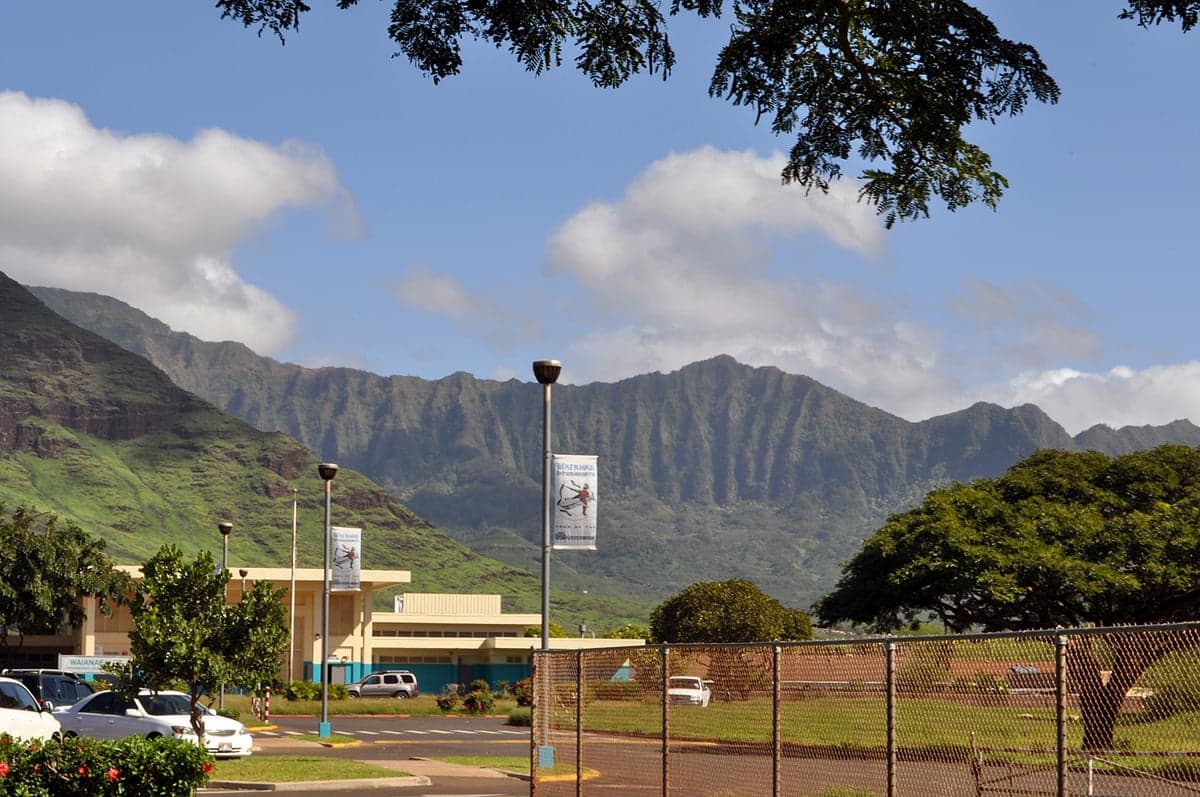
Waianae, on Oahu's leeward coast, presents a complex personal sovereignty environment that is a study in contrasts. While the area's physical isolation and strong local community ethos foster a certain degree of self-reliance, it remains firmly under the thumb of Hawaii's highly centralized state government, which imposes some of the nation's most restrictive laws on firearms, property use, and individual liberties. For the strategic relocator with a survivalist or prepper mindset, Waianae offers a unique trade-off: a rugged, off-the-grid lifestyle potential that is rare in Hawaii, but within a legal framework that actively limits the tools and autonomy needed to fully secure that lifestyle. The state's overarching regulatory posture means that personal sovereignty here is less about legal freedom and more about navigating a system that often views self-sufficiency with suspicion.
Tax burden and regulatory posture in Hawaii's centralized system
Hawaii's state-level tax burden is among the highest in the nation, and this directly impacts personal sovereignty in Waianae. There is no local income tax, but the state's progressive income tax tops out at 11%, and the general excise tax (GET) of 4% applies to nearly all goods and services, including groceries and medical supplies—a hidden cost that erodes purchasing power. Property taxes in Honolulu County are relatively low compared to mainland rates (around 0.35% of assessed value), but this is a double-edged sword: the state's heavy reliance on tourism and federal spending means local economic resilience is weak. For the prepper, this creates a vulnerability—any disruption to tourism or federal funding could trigger a rapid fiscal crisis. The regulatory environment is equally challenging. Hawaii's land use laws are among the most restrictive in the country, with the state Land Use Commission dictating zoning for the entire island chain. In Waianae, much of the land is designated as "Agricultural" or "Conservation," which severely limits what you can build, how you can use the land, and whether you can keep livestock or grow food for commercial sale. Permitting for even minor structures is a bureaucratic ordeal, often taking months or years. The state's attitude toward self-sufficiency is not one of encouragement; it is one of control, with strict rules on rainwater catchment, composting toilets, and even the number of chickens you can keep. For the individual seeking to minimize reliance on government systems, this regulatory thicket is a significant barrier.
Self-defense and gun law specifics in a restrictive state
For the survivalist, Hawaii's gun laws are a major red flag. The state has some of the strictest firearm regulations in the United States, and Waianae offers no exemption. To legally possess a firearm, you must obtain a permit from the Honolulu Police Department, which requires a background check, fingerprinting, and a 14-day waiting period. Open carry is effectively banned, and concealed carry permits are issued only on a "may-issue" basis, meaning the police chief has near-total discretion to deny them. In practice, concealed carry permits are almost never granted to ordinary citizens, even for self-defense. The state also maintains a registry of all firearms and ammunition purchases, and there are strict limits on magazine capacity (10 rounds for handguns, 10 for long guns). "Assault weapons" are defined broadly and are heavily restricted. For the prepper, this means that the ability to defend your home or family in a crisis is severely curtailed by law. The state's rationale is public safety, but the effect is to disarm law-abiding citizens in a region where police response times can be long due to Waianae's remote location and limited road access. If you value the right to keep and bear arms as a cornerstone of personal sovereignty, Hawaii—and Waianae specifically—is one of the worst places in the country to live. The legal environment is designed to make self-defense a matter of calling 911, not of individual capability.
Self-reliance and homesteading viability: lot sizes, zoning, and off-grid feasibility
Despite the regulatory hurdles, Waianae offers some of the best opportunities for off-grid living in Hawaii. The area is characterized by large agricultural lots, many of which are zoned for "Country" or "Agricultural" use. Lot sizes in the rural parts of Waianae often range from one to five acres, which is rare for Oahu and provides space for gardening, small livestock, and rainwater catchment systems. The climate is dry and sunny, making solar power highly viable, and many residents already rely on catchment water due to limited municipal water service in outlying areas. However, the state's building codes and permitting process make it difficult to construct a truly self-sufficient homestead legally. Off-grid systems like composting toilets and greywater recycling require permits and inspections, and the state has been known to fine homeowners who bypass the system. The cost of land is also a factor: while cheaper than Honolulu, a one-acre lot in Waianae can still run $200,000 to $400,000, and building materials are expensive due to shipping costs. For the prepper, the physical environment is promising—ample sun, decent rainfall in the mountains, and fertile volcanic soil—but the legal environment is a constant drag. You can live off-grid here, but you will likely have to do so quietly, avoiding the attention of county inspectors. The local community, which is largely Native Hawaiian and deeply rooted, is generally supportive of self-reliance, but the state government is not.
Personal liberties: parental rights, medical autonomy, speech, and property
Hawaii's state government has a strong progressive tilt, which directly impacts personal liberties valued by conservative-leaning individuals. Parental rights are not as robust as in many mainland states. Hawaii has mandatory vaccination requirements for school attendance with limited exemptions, and the state Department of Education has broad authority over curriculum, including sex education and social-emotional learning programs that some parents find objectionable. Medical autonomy is also constrained: Hawaii has strict prescription drug monitoring programs, and while medical marijuana is legal, the state's dispensary system is heavily regulated and expensive. Recreational marijuana remains illegal, and possession can lead to fines or jail time. Property rights are another area of concern. The state's land use laws give the government significant power to restrict what you can do on your own land, including the ability to build fences, keep animals, or even cut down trees without a permit. Eminent domain is a real concern, as the state has a history of using it for development projects, including in rural areas. Free speech is protected by the First Amendment, but Hawaii's political culture is overwhelmingly liberal, and expressing conservative views—especially on issues like gun rights, immigration, or climate change—can lead to social ostracism in tight-knit communities like Waianae. For the individual who values the right to live according to their own values without government interference, Hawaii's legal and cultural environment is a constant source of friction.
Overall, personal sovereignty in Waianae is a mixed bag that requires careful calculation. The physical environment offers genuine opportunities for self-reliance—large lots, solar potential, and a community that values independence—but the state's legal framework is designed to limit that independence at every turn. Compared to states like Idaho, Montana, or Texas, Waianae scores poorly on nearly every metric of personal sovereignty: gun rights, property rights, medical autonomy, and tax burden. For the survivalist or prepper, the trade-off is that you can live in a beautiful, remote, and relatively affordable part of Hawaii, but you will be doing so under a government that views your preparedness as a threat rather than a virtue. If your priority is maximum legal freedom to defend yourself, build your own home, and raise your family according to your values, Waianae is likely not the right choice. But if you are willing to operate in the gray areas of the law and value the physical isolation and community resilience of the leeward coast, it can be a viable—if legally precarious—option for a self-sufficient lifestyle.

* Values derived from national, state, county, city and local statistics and may differ in a specific area. Last updated: 2026-05-01T10:15:24.000Z
Narrative content on this page is AI-generated and may contain mistakes. Verify any details that matter before acting on them.
ReloMaps may earn a commission from affiliate links at no extra cost to you.

