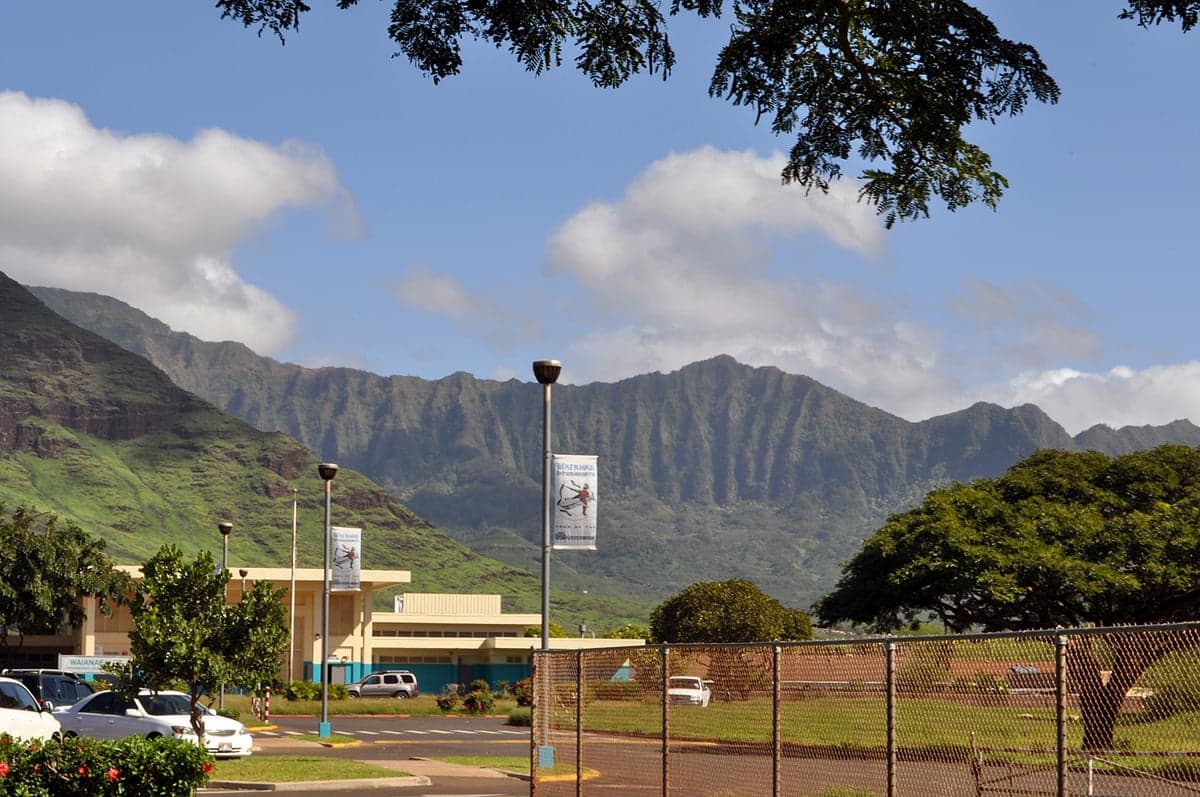
Photo: Wikipedia
Strategic Assessment of Waianae, HI
Workable tactical position. Some exposure to population density or targets, but generally defensible in a crisis.
What does the Strategic Assessment tell us?
Our Strategic Assessment grades tactical survivability of an area. Major population centers, military targets, fallout zones, natural disasters, and border exposure all drive risk — lower exposure means a more defensible position in a crisis.
This is heavily inspired by Joel Skousen's Strategic Relocation book. Highly recommended you checkout the book ($)What does this tell us?
Our Strategic Assessment grades tactical survivability of an area. Major population centers, military targets, fallout zones, natural disasters, and border exposure all drive risk — lower exposure means a more defensible position in a crisis.
This is heavily inspired by Joel Skousen's Strategic Relocation book. Highly recommended you checkout the book ($)Strategic Pillars

Key Distances
Regional Safe Places
Below is our recommended "safe zones" in Hawaii and the surrounding area based on our strategic heuristics. For most people, it's unrealistic to live in a “safe zone” full-time due to work, family or other personal reasons. They tend to be more rural. However, many of these areas are perfect for second homes and retreat properties that double as a vacation home or even a short-term rental.

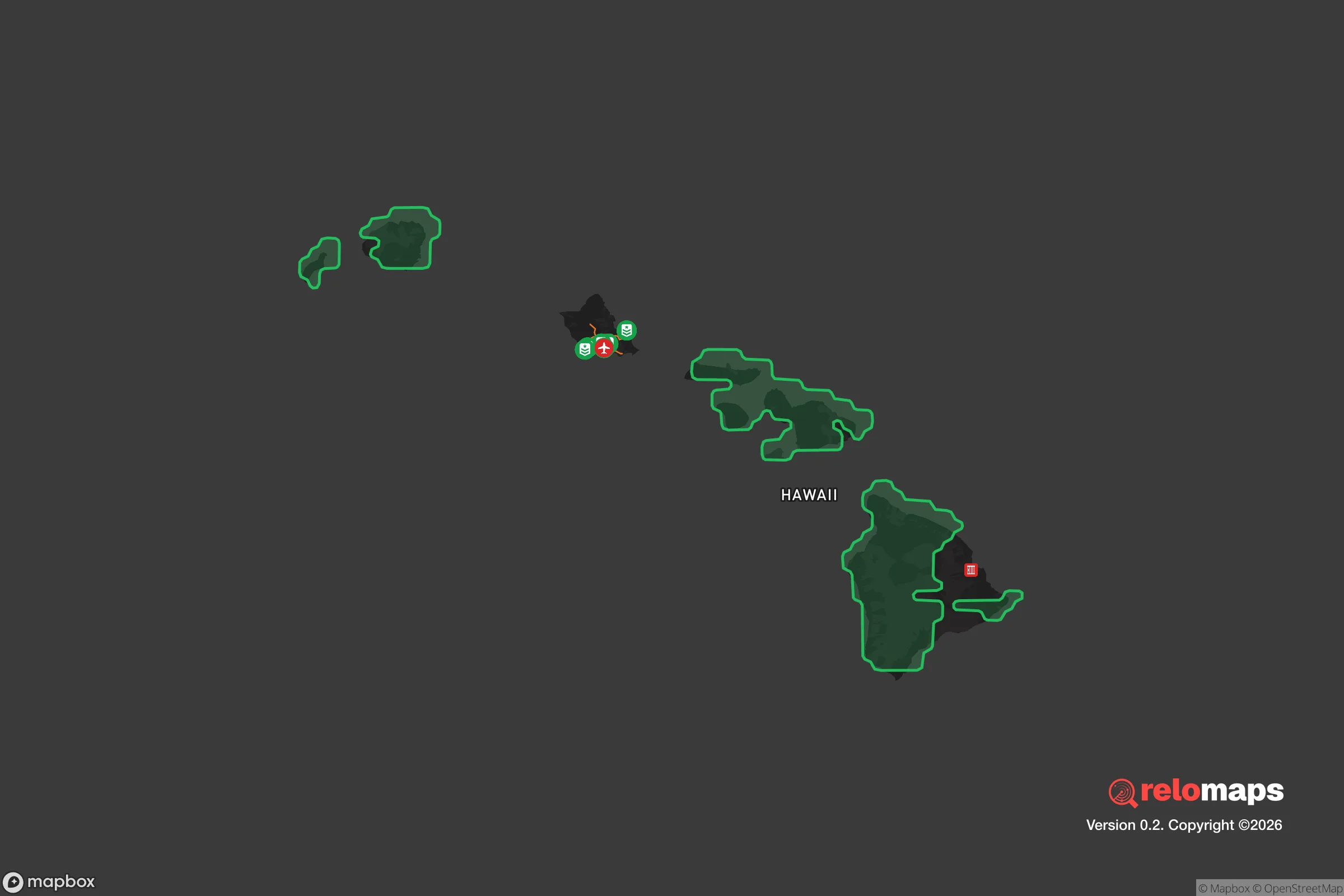


Important Note: For informational purposes only. This does not mean nothing bad ever happens in the green zones. Please use common sense. This is based on public data and modeled with AI. We tried to take a conservative approach but mistakes happen. We update this regularly as new information becomes available.
Solar Generator Recommendations
Backup power matters more here than in safer locations. We've picked three solar generators across budgets and capacity tiers — start with the budget unit if you only need a few essentials, or step up if you want to run a fridge and HVAC for days at a time.

Jackery Portable Power Station Explorer 300
Budget OptionPower on the Go: Weighing only 11 lbs, it's convenient to set up and store with book-sized foldable solar panels

BLUETTI Portable Power Station AC180
Designed for both indoor and outdoor scenarios, AC180 is highly capable as it has a robost capacity and continuous output power.

EF ECOFLOW DELTA Pro Ultra Power Station
Upgraded PickEcoFlow DELTA Pro Ultra is a whole-home energy system designed to grow with your family. Integrated with the Smart Home Panel 2, it scales to meet your evolving energy needs — keeping your home powered, intelligent, and secure through every stage of life.
We earn a commission, at no additional cost to you.
Strategic Assessment Analysis
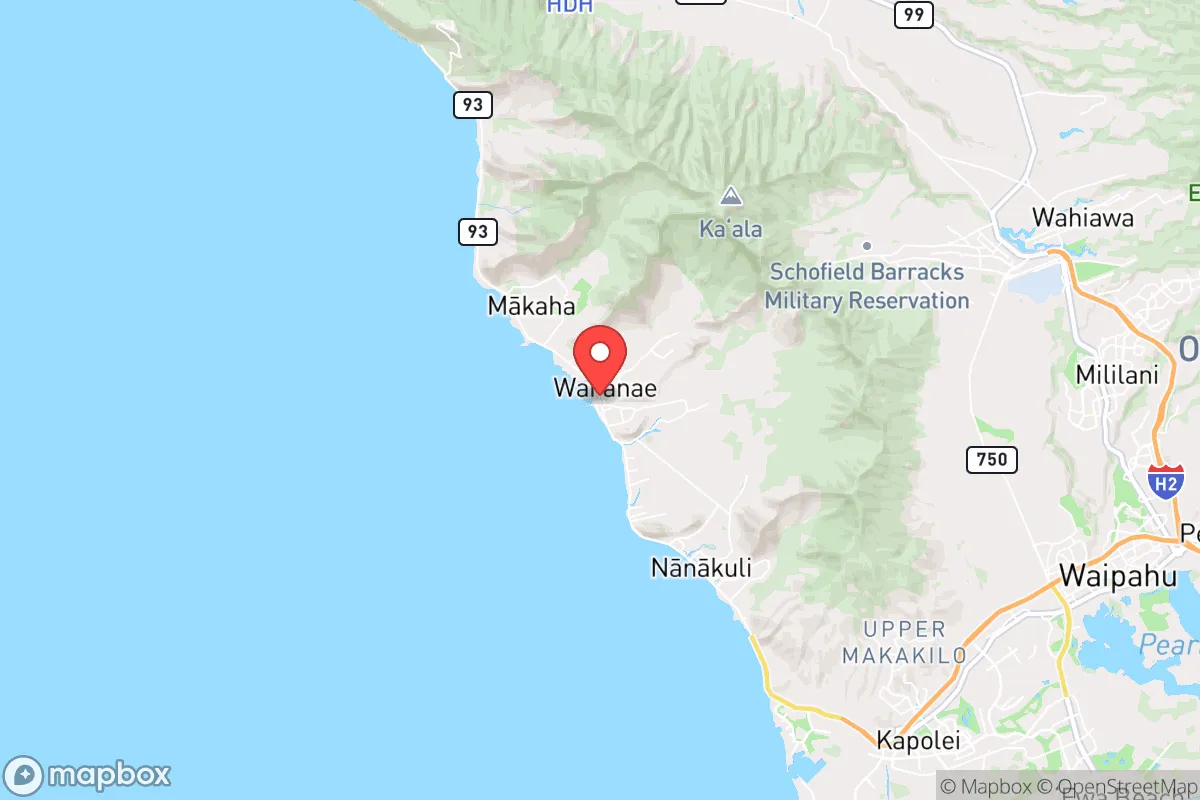
Waianae, on Oahu’s leeward coast, offers a strategic paradox: it’s remote enough to feel like a rural outpost yet sits within 30 miles of Honolulu’s urban core, making it a potential fallback position for those who want proximity to infrastructure without being in the blast zone. The area’s natural resilience stems from its geography—tucked between the Waianae mountain range and the Pacific, it’s shielded from the island’s windward storms and provides multiple escape routes by sea or over the mountains. For a relocator with a prepper mindset, Waianae’s isolation from the tourist-heavy south shore and its working-class, tight-knit community offer a defensible base, but the trade-offs in logistics, exposure to natural hazards, and proximity to military targets demand a hard-eyed assessment.
Geographic position and natural advantages for long-term survival
Waianae’s location on the dry, leeward side of Oahu means it avoids the heavy rainfall and flooding that plague windward areas like Kailua or Kaneohe. The Waianae mountain range forms a natural barrier to the east, slowing any overland approach from Honolulu and providing high-ground observation points for those who know the trails. The coastline offers multiple small boat launches and coves, which could serve as evacuation routes or resupply points if roads become compromised. The area’s volcanic soil, though rocky, supports dryland farming—taro, sweet potato, and fruit trees are viable with irrigation, and the year-round growing season means food security is more achievable here than on the mainland. The nearby Kaena Point Natural Area Reserve, a remote coastal wilderness, offers a last-resort bug-out location with limited access, though it’s exposed to surf and lacks fresh water. For a relocator, the key advantage is that Waianae is not a primary target—no major military bases, no dense commercial centers, no high-value infrastructure. It’s a low-signature area where a prepared individual could operate under the radar, provided they secure water and energy independently.
Risks, exposures, and proximity to fallout-relevant landmarks
The biggest strategic liability is Waianae’s proximity to Pearl Harbor and Joint Base Pearl Harbor-Hickam, roughly 20 miles southeast. In a major conflict, those are prime nuclear or conventional strike targets, and fallout patterns from a detonation over Pearl Harbor would likely drift west-northwest toward Waianae depending on trade winds. The prevailing northeast trade winds typically blow fallout away from the leeward coast, but a shift during a strike could put the area in a downwind plume. Additionally, the Waianae Coast is vulnerable to tsunamis generated by distant seismic events—the 2011 Tohoku tsunami caused minor damage here, but a larger event could inundate low-lying areas near the shore. The area also sits on the leeward side of the Ko’olau range, meaning it’s drier and more prone to wildfire during drought years, which could compound a crisis. For a relocator, the risk calculus is moderate: you’re not in the immediate blast zone of Honolulu or Pearl Harbor, but you’re close enough that a major event would disrupt supply chains, communications, and medical evacuation. The community’s reliance on a single main road (Farrington Highway) is a critical vulnerability—any blockage at the Waianae-Kapolei choke point would isolate the coast for days.
Practical resilience for a relocator: food, water, energy, and defensibility
Water is the first hard limit. Waianae receives only 20-30 inches of rain annually, far less than the windward side, and the municipal supply comes from the Waianae Water System, which is vulnerable to power outages and contamination. A relocator must have a plan for rainwater catchment—roof gutters, storage tanks, and filtration—or access to the few perennial streams in the Waianae Kai area. The dry climate also means that traditional wells are deep and expensive, so off-grid water security requires upfront investment. Food-wise, the area has a strong local fishing culture—spearfishing, net fishing, and shoreline gathering are common skills here—and the nearshore waters are productive for ulua, papio, and octopus. Small-scale agriculture is possible, but the soil is thin and rocky; raised beds with imported soil or hydroponics are more reliable. Energy is manageable: the leeward coast gets abundant sun, so solar panels with battery storage are a no-brainer, and the trade winds make small wind turbines viable for supplemental power. Defensibility is mixed. The community is tight-knit and suspicious of outsiders, which can be a double-edged sword—you’ll need to build trust over time, but once accepted, you gain a network of local eyes and ears. The terrain is rugged, with narrow roads and limited ingress/egress, which makes it hard for a large group to approach undetected. However, the same geography that provides cover also limits your own mobility; if you need to exfiltrate quickly, you’re down to one road or a boat launch. For a single individual or family, the best approach is to integrate quietly, establish a defensible homestead with stored supplies, and maintain a low profile—Waianae rewards patience and self-reliance, not flashy prepping.
Overall, Waianae presents a viable but niche strategic option for the conservative prepper. It’s not a fortress, and it’s not a self-sufficient paradise—it’s a working-class coastal community with real vulnerabilities in water, road access, and proximity to military targets. But for someone willing to invest in off-grid systems, learn local fishing and farming, and navigate the social dynamics of a tight-knit Hawaiian community, it offers a defensible base with natural barriers, a year-round growing season, and a low-signature profile. The key is to treat it as a fallback position, not a primary stronghold—have a plan to ride out the first 72 hours of a crisis in place, then assess whether to stay or move to a more remote location like the Big Island. If you’re looking for a place that’s close enough to Honolulu for resupply but far enough to avoid the worst of a collapse, Waianae is worth a hard look—just don’t expect it to be easy.

* Values derived from national, state, county, city and local statistics and may differ in a specific area. Last updated: 2026-05-01T10:15:24.000Z
Narrative content on this page is AI-generated and may contain mistakes. Verify any details that matter before acting on them.
ReloMaps may earn a commission from affiliate links at no extra cost to you.

