Photo: Wikipedia
Demographics of Warren, OH
Affluence Level in Warren, OH
A below-average socioeconomic profile. Incomes, home values, and educational attainment trail the U.S., with higher poverty and unemployment.
People of Warren, OH
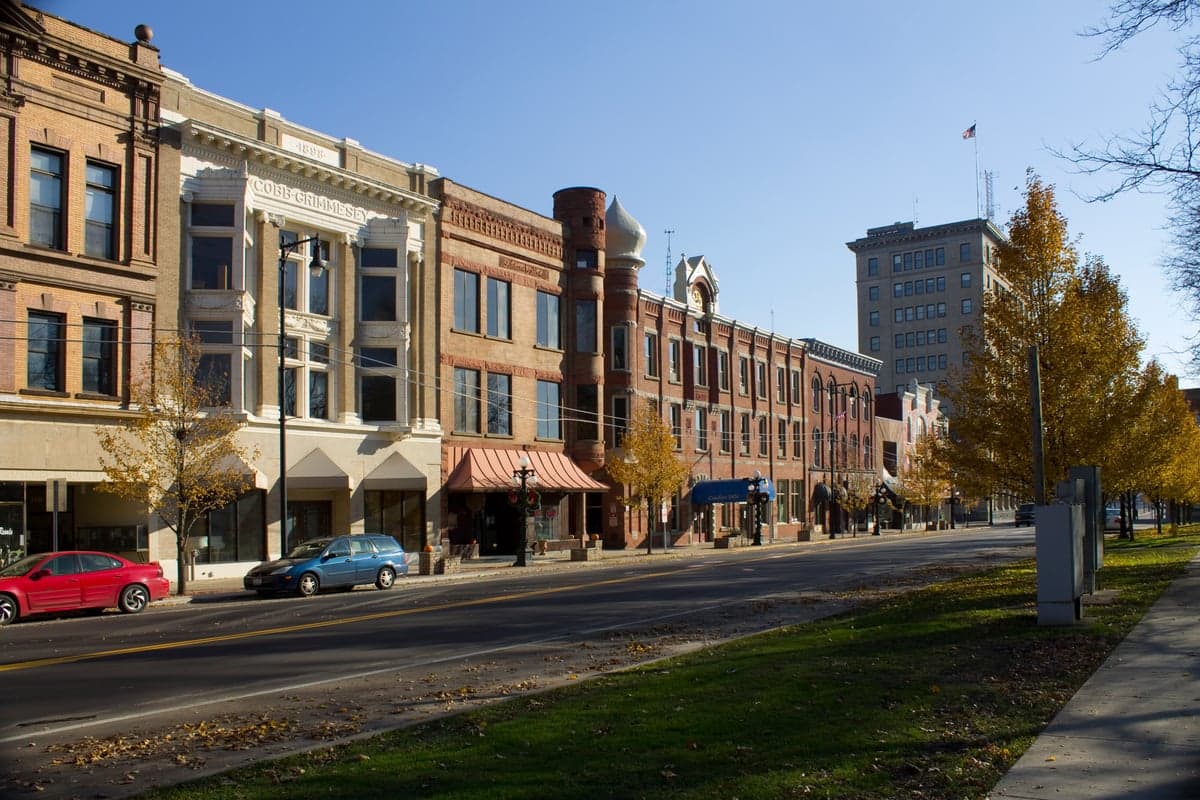
The people of Warren, Ohio today form a predominantly white and Black community of roughly 39,000 residents, marked by a working-class character rooted in the city's industrial past. With a foreign-born population of just 0.6% and a college attainment rate of 15.3%, the city remains one of Ohio's least diverse and least educated urban centers by these measures. The population is older than the national median, and the city has experienced steady decline since its steel-era peak, giving it a sense of stability but also stagnation. Distinctive identity markers include a strong local pride in the city's manufacturing heritage and a noticeable absence of the immigrant-driven growth seen in larger Ohio cities like Columbus or Cleveland.
How the city was settled and grew
Warren was founded in 1798 as the seat of the Connecticut Western Reserve, drawing early settlers primarily of English and Scots-Irish stock from New England and upstate New York. The arrival of the Pennsylvania and Ohio Canal in the 1840s, followed by the railroad in the 1850s, transformed the town into a manufacturing hub. The real population boom came with the rise of the steel industry in the late 19th and early 20th centuries, anchored by the Warren Steel Company and later Republic Steel. This drew a large wave of Southern and Eastern European immigrants—Italians, Slovaks, Poles, and Hungarians—who settled in the Oakland Avenue and South Side neighborhoods, building ethnic churches and social halls that still stand. A second major wave came during the Great Migration (1910–1970), when Black families from the Deep South arrived to work in the mills and foundries, concentrating in the South Park and Northwest Warren areas. By 1950, Warren's population peaked at over 63,000, with a white majority and a growing Black minority.
Modern era (post-1965)
The post-1965 era brought dramatic change. The collapse of the steel industry in the 1970s and 1980s triggered a population exodus of over 30%, hitting the white ethnic neighborhoods of the South Side and Oakland Avenue particularly hard. The Black population, which had grown to roughly 25% by 1980, consolidated in the South Park and Northwest Warren neighborhoods as white flight accelerated. Today, the city is 61.4% white and 28.2% Black, with the white population concentrated in the Howland Township area (a census-designated place within the city limits) and the North Side. Hispanic residents, at 3.6%, are a small but growing presence, primarily in the South Side near the former mill sites. East/Southeast Asian communities (1.0%) and Indian-subcontinent residents (0.1%) are negligible, with most Asian-origin residents being professionals at Trumbull Regional Medical Center or local universities. The foreign-born share of 0.6% is among the lowest in Ohio, reflecting no significant post-1965 immigration wave.
The future
Warren's population is projected to continue its slow decline, with the 2020 census showing 39,057 residents—down from 41,557 in 2010. The city is not homogenizing but rather tribalizing into distinct enclaves: the white population is aging in place in Howland Township and the North Side, while the Black population remains concentrated in South Park and Northwest Warren. Hispanic growth is modest and unlikely to reshape the city's demographics significantly. No new immigrant communities are emerging, and the 0.6% foreign-born share is static. The next 10–20 years will likely see further population loss, with the city becoming older, whiter in its remaining white areas, and Blacker in its core neighborhoods. The college attainment rate of 15.3% suggests limited in-migration of educated professionals, reinforcing the city's working-class character.
For someone moving in now, Warren is a city where demographic lines are drawn clearly and change is slow. The lack of immigrant-driven growth means a stable but aging population, with few new cultural or economic influences. The city's future is one of gradual contraction, not transformation, making it a place for those seeking affordability and familiarity rather than diversity or dynamism.

* Values derived from national, state, county, city and local statistics and may differ in a specific area. Last updated: 2026-04-21T19:38:34.000Z
Narrative content on this page is AI-generated and may contain mistakes. Verify any details that matter before acting on them.
ReloMaps may earn a commission from affiliate links at no extra cost to you.

