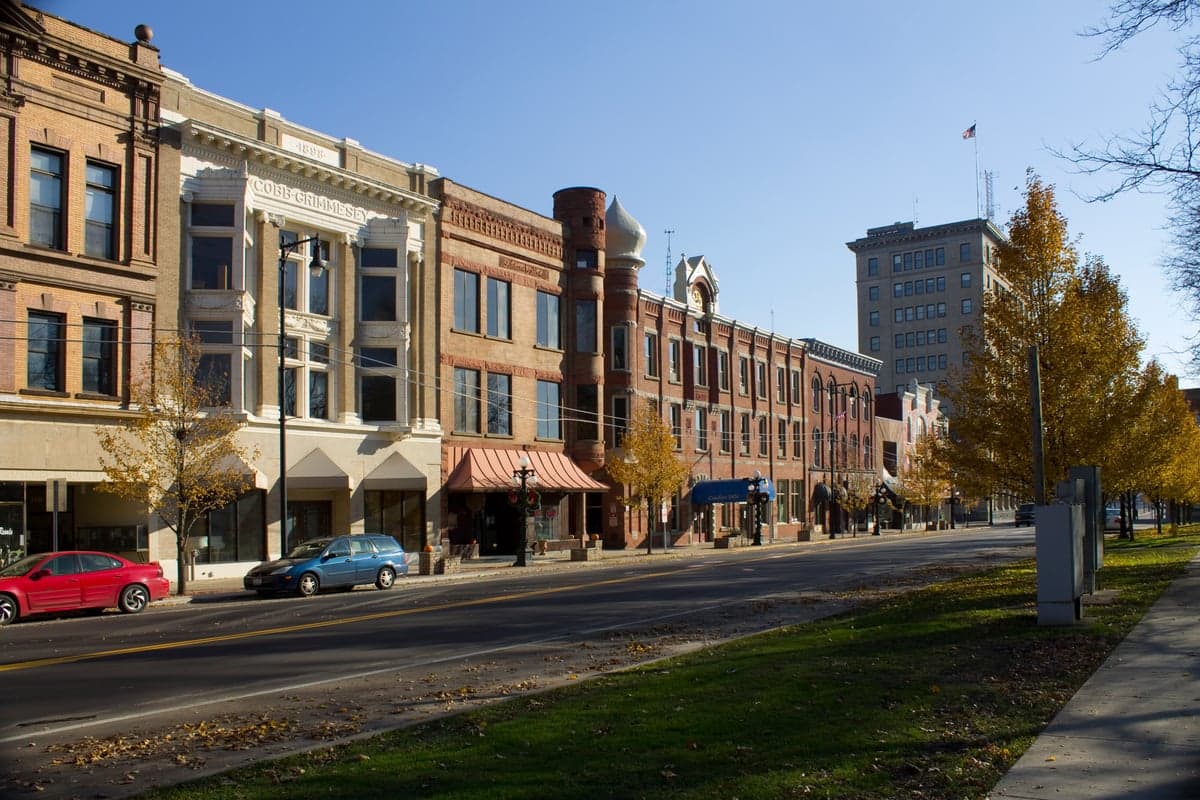
Photo: Wikipedia
Political ClimatePolitical Climate in Warren, OH
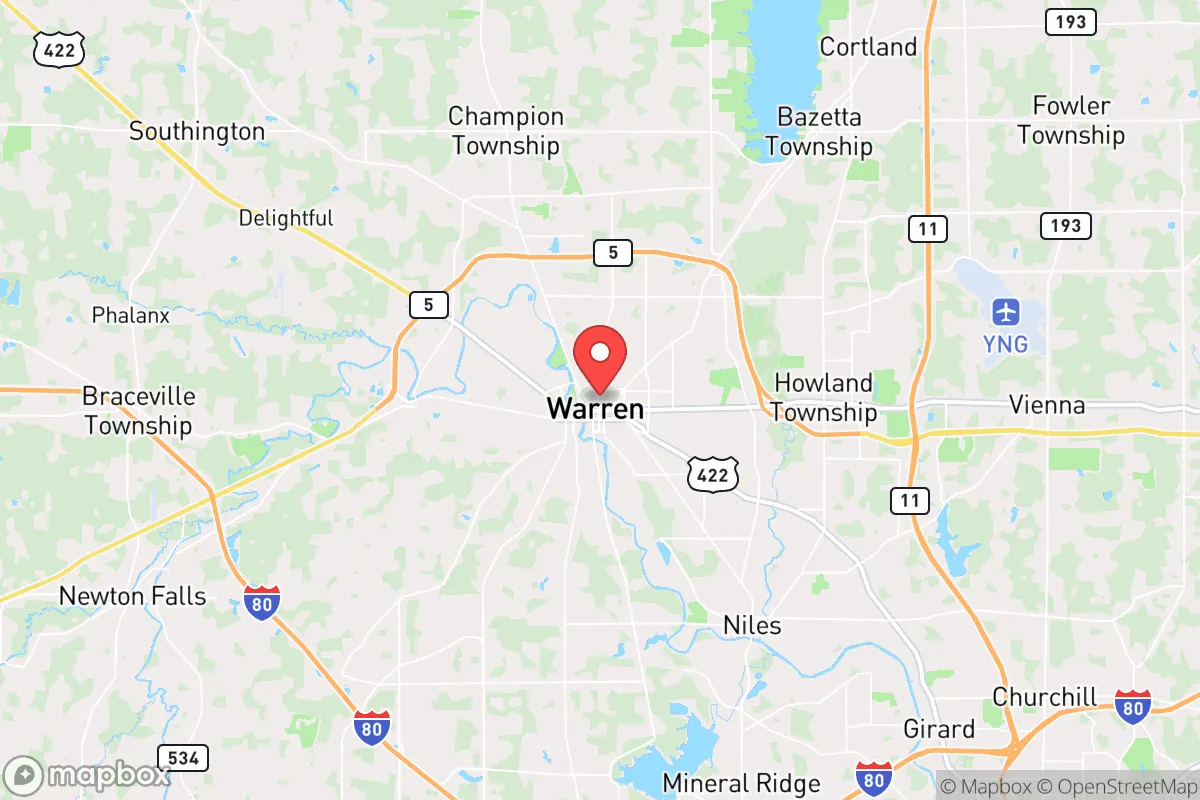
District shown is the primary district for this city’s centroid. Cities may span multiple districts.
Local Political AnalysisPolitical Analysis of Warren, OH
Warren, Ohio, has long been a solidly conservative stronghold in the Mahoning Valley, and that hasn't changed much. The Cook PVI of R+9 tells you the real story—this area leans Republican by a comfortable margin, and it's been that way for decades. You can feel it in the local chatter, the yard signs, and the way folks talk about taxes and government. But like a lot of places, there's been a slow, quiet shift in the air, especially as younger people move in or commute from nearby cities like Youngstown or Cleveland. The old-school factory-worker conservatism is still the backbone, but you'll see more "progressive" bumper stickers than you did ten years ago, and that's got some of us watching closely.
How it compares
Compared to the rest of Trumbull County, Warren is actually a bit more red than the county as a whole, which has been trending purple in recent cycles. Drive 20 minutes south to Youngstown, and you're in a completely different world—that city's been reliably blue for generations, with a strong union and Democratic machine presence. Head west to Niles or Howland, and you'll find communities that are even more conservative than Warren, with lower taxes and a stronger "leave us alone" attitude. The contrast is stark: Warren sits right on the edge of that blue-collar, pro-2A, pro-life territory, but you can feel the pressure from the more liberal areas bleeding in. It's not a full-on invasion, but it's enough to make you wonder if the next few elections will hold the line or start slipping.
What this means for residents
For the people who live here, the political climate means a few practical things. First, you're not going to see the kind of government overreach you'd get in a place like Columbus or Cleveland—no mask mandates that last forever, no heavy-handed business closures, and no talk of defunding the police. The local leadership still respects the idea that your home, your business, and your family are your own business. Property taxes are reasonable, and there's a general distrust of any new regulation that sounds like it came from a statehouse desk. That said, the shift is real: you'll hear more chatter about "equity" initiatives in the schools and more pressure to adopt "green" policies that drive up costs. If you're a conservative who values personal freedom, you can still live comfortably here, but you'll want to keep an eye on the city council meetings and school board elections—that's where the real battles are happening.
One thing that sets Warren apart from some of its neighbors is the cultural vibe. It's not a place that's trying to be trendy or woke. The local diners still serve coffee without a lecture, and the hardware store owner will talk your ear off about the Second Amendment without batting an eye. There's a strong sense of community that pushes back against the idea that government knows better than you do. But the long-term trend is concerning: as the older, more conservative generation ages out, the younger crowd is more exposed to the progressive messaging from the bigger cities. If you're thinking of moving here, you'll find a place that still values your rights, but you'll want to get involved early to make sure it stays that way. The next decade will tell the tale.

State Political ClimatePolitical Climate in Ohio
State Political AnalysisPolitical Environment in the State
Ohio has been a classic swing state for decades, but over the last 10-20 years it has shifted decisively to the right, becoming a reliably red state in presidential elections. The dominant coalition is now a mix of working-class voters in small cities and rural areas, suburban conservatives, and a shrinking but still influential union base that has broken with national Democratic trends. In 2020, Donald Trump won Ohio by 8 points, and in 2024 he carried it by 11 points, a stark contrast to the state’s toss-up status in 2004 and 2012. This isn’t a fluke — it’s a structural realignment driven by cultural and economic concerns that have made the GOP the default party for most of the state outside of a few urban strongholds.
Urban vs. rural divide
The political map of Ohio is a textbook example of the urban-rural split. The three big C’s — Cleveland, Columbus, and Cincinnati — are deep blue islands in a sea of red. Cuyahoga County (Cleveland) and Franklin County (Columbus) alone account for nearly all Democratic votes statewide, while Hamilton County (Cincinnati) has become more competitive but still leans left. Meanwhile, the rest of the state is overwhelmingly Republican. Counties like Mercer, Auglaize, and Holmes in the west regularly vote 75-80% Republican, while southeastern Ohio, once a Democratic stronghold due to union coal miners, has flipped hard red over cultural and gun issues. The suburbs around Columbus — like Delaware County — are now reliably red, while the inner-ring suburbs of Cleveland (like Shaker Heights) remain liberal. The divide is stark: drive 20 minutes outside any major city and you’re in Trump country.
Policy environment
Ohio’s policy environment has shifted rightward in recent years, but it’s still a mixed bag for conservatives. The state has a flat income tax rate of 3.5% (down from 4.8% in 2020), and the sales tax is 5.75% with local add-ons. Property taxes are moderate but vary widely by county. The regulatory posture is generally business-friendly, with right-to-work laws not on the books but union influence waning. Education policy is a flashpoint: Ohio has one of the largest school voucher programs in the country (the EdChoice program), which conservatives love, but the state also mandates a controversial “science of reading” curriculum that some see as federal overreach. Healthcare is a mixed bag — Medicaid expansion was accepted under Kasich, but the state has pushed back on vaccine mandates and COVID restrictions. Election laws have tightened: voter ID requirements were strengthened in 2023, and drop boxes are limited to one per county. For a conservative, the policy environment is trending in the right direction, but there’s still room for improvement on taxes and school choice.
Trajectory & freedom
Ohio is becoming more free in several key areas, but the trajectory is uneven. On gun rights, the state passed constitutional carry in 2022, meaning no permit is needed to carry a concealed firearm — a major win for Second Amendment advocates. On parental rights, the state enacted a “Parents’ Bill of Rights” in 2023 that requires schools to notify parents about curriculum changes and medical services. On medical autonomy, Ohio voters approved a constitutional amendment for abortion access in 2023, which was a setback for pro-life conservatives, but the legislature has since passed restrictions on late-term abortions and parental consent requirements. Property rights are generally strong, with no statewide rent control and limited eminent domain abuse. Taxation is moving in the right direction, with the flat tax and a phase-out of the commercial activity tax. However, the state’s energy policy is a concern — Ohio has subsidized solar and wind projects through renewable portfolio standards, though the legislature has rolled back some mandates. Overall, Ohio is trending freer on guns and parental rights, but the abortion amendment shows that direct democracy can override legislative will.
Civil unrest & political movements
Ohio has seen its share of political flashpoints. The 2020 protests in Columbus and Cincinnati over George Floyd’s death were large but mostly peaceful, though there were instances of property damage and looting. The state has a strong pro-life movement, with annual marches in Columbus drawing thousands. On the right, the “Ohio Freedom Alliance” and local “Moms for Liberty” chapters have been active in school board races, pushing back on CRT and LGBTQ curriculum. Immigration politics are relatively quiet, as Ohio has a small foreign-born population (around 5%), but there have been localized tensions in Dayton and Springfield over refugee resettlement. Election integrity remains a hot topic: the 2020 election was certified without major issues, but the 2023 voter ID law was a response to lingering concerns. The most visible flashpoint for a new resident would be the ongoing debate over school curriculum — expect to see heated school board meetings in suburbs like Mason and West Chester over library books and gender policies.
Projection
Over the next 5-10 years, Ohio is likely to become more Republican and more conservative, but not without friction. In-migration from blue states like California and Illinois is modest but growing, particularly to the Columbus suburbs and the Cincinnati metro. These new arrivals tend to be more moderate, which could soften the state’s rightward edge. However, the rural and exurban population is growing faster, and the urban cores are stagnating. Demographically, Ohio is older and whiter than the national average, which favors the GOP. The biggest wildcard is the state’s direct democracy process — if progressives continue to use ballot initiatives (like the abortion amendment), they could force liberal policies that the legislature opposes. Expect continued battles over school choice, gun rights, and energy policy, with the legislature likely to pass preemption laws to limit local control. For a conservative moving in now, the state will feel reliably red in a decade, but you’ll need to stay engaged to prevent ballot-box liberalism from undermining legislative wins.
For a new resident, the bottom line is this: Ohio is a solidly conservative state that respects gun rights, parental authority, and local control, but it’s not a libertarian paradise. You’ll find lower taxes than the coasts, a strong school choice system, and a political culture that values common sense over ideology. The trade-off is that you’ll need to navigate the occasional progressive ballot initiative and the lingering influence of union politics in the industrial north. If you’re looking for a place where your vote counts and your values are respected, Ohio is a smart bet — just keep an eye on Columbus, where the real battles are fought.
* Values derived from national, state, county, city and local statistics and may differ in a specific area. Last updated: 2026-04-21T19:38:34.000Z
Narrative content on this page is AI-generated and may contain mistakes. Verify any details that matter before acting on them.
ReloMaps may earn a commission from affiliate links at no extra cost to you.

