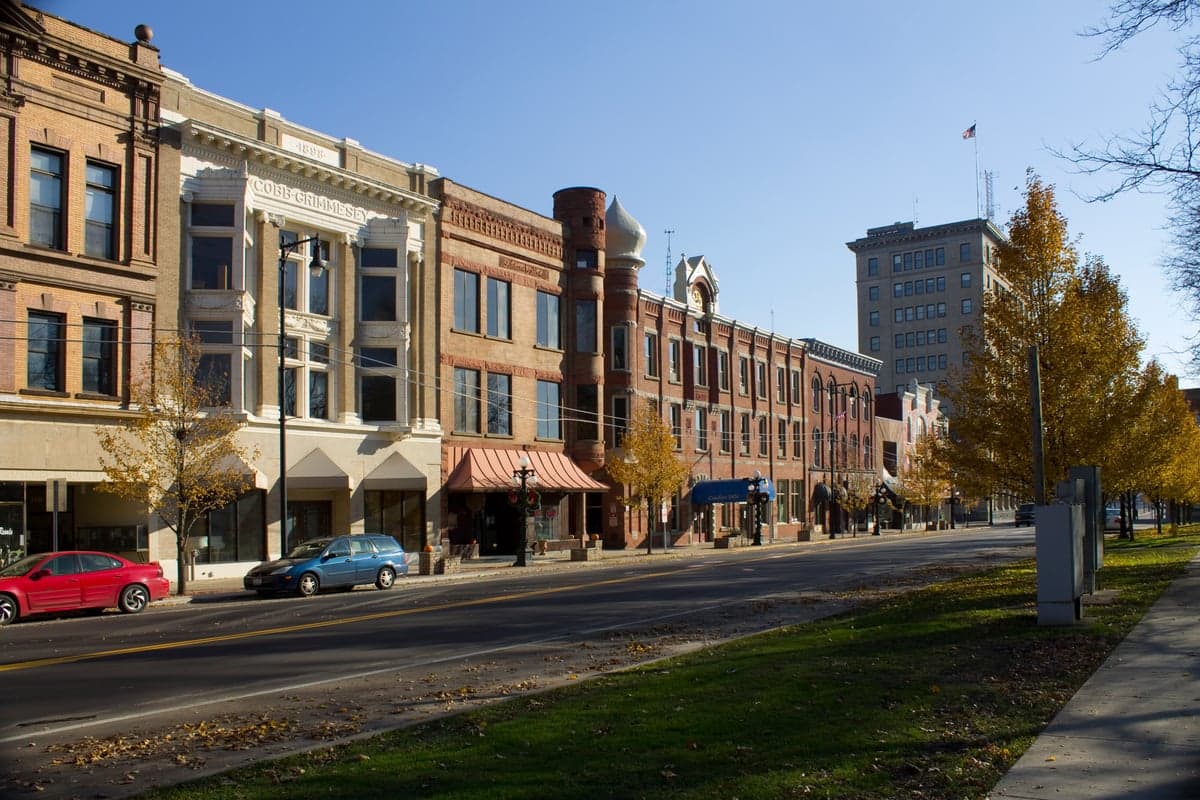
Photo: Wikipedia
Strategic Assessment of Warren, OH
Meaningful friction. Expect exposure to either population pressure, blast zones, or natural disaster risk. Consider buying a retreat property.
What does the Strategic Assessment tell us?
Our Strategic Assessment grades tactical survivability of an area. Major population centers, military targets, fallout zones, natural disasters, and border exposure all drive risk — lower exposure means a more defensible position in a crisis.
This is heavily inspired by Joel Skousen's Strategic Relocation book. Highly recommended you checkout the book ($)What does this tell us?
Our Strategic Assessment grades tactical survivability of an area. Major population centers, military targets, fallout zones, natural disasters, and border exposure all drive risk — lower exposure means a more defensible position in a crisis.
This is heavily inspired by Joel Skousen's Strategic Relocation book. Highly recommended you checkout the book ($)Strategic Pillars

Key Distances
Regional Safe Places
Below is our recommended "safe zones" in Ohio and the surrounding area based on our strategic heuristics. For most people, it's unrealistic to live in a “safe zone” full-time due to work, family or other personal reasons. They tend to be more rural. However, many of these areas are perfect for second homes and retreat properties that double as a vacation home or even a short-term rental.

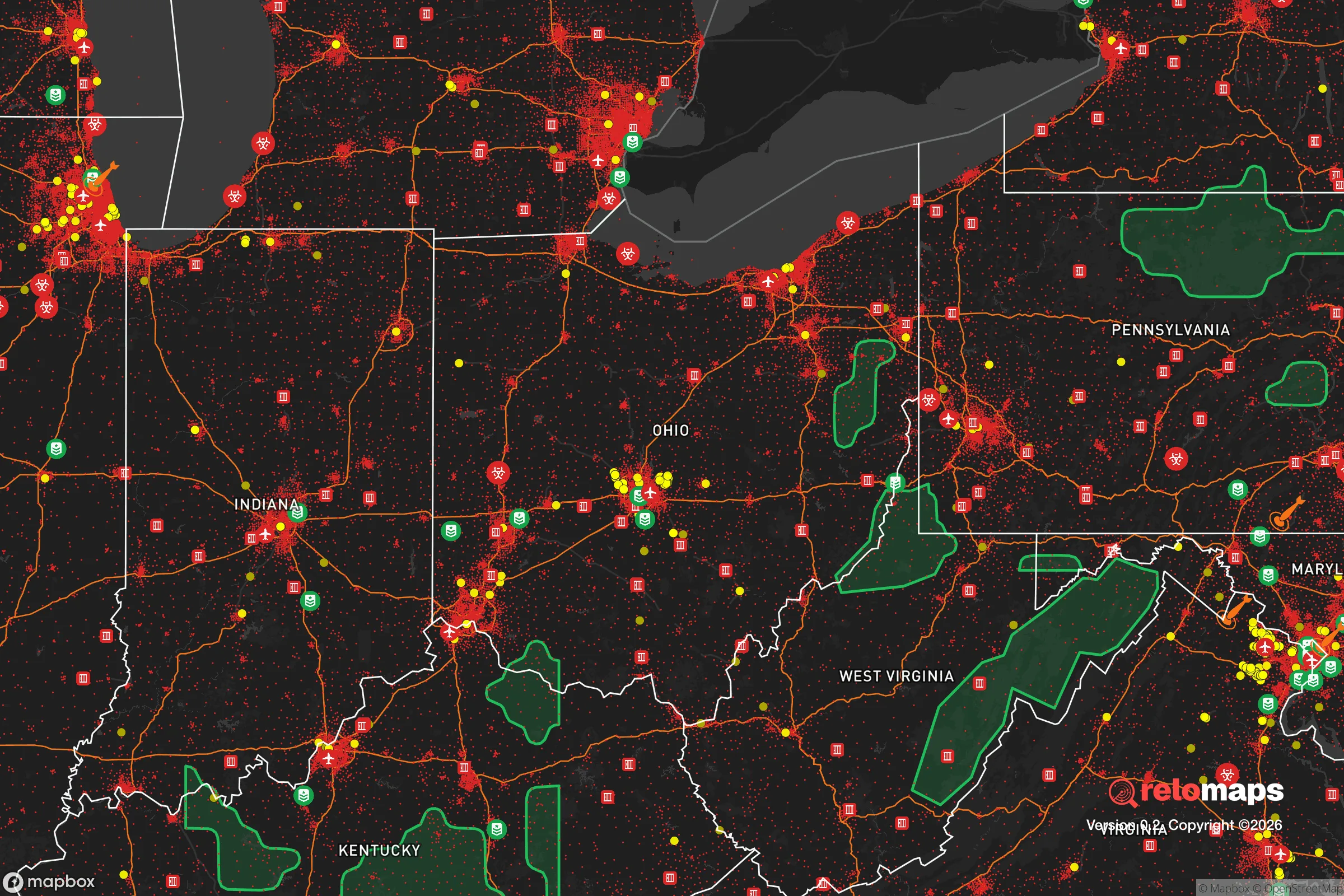


Important Note: For informational purposes only. This does not mean nothing bad ever happens in the green zones. Please use common sense. This is based on public data and modeled with AI. We tried to take a conservative approach but mistakes happen. We update this regularly as new information becomes available.
Solar Generator Recommendations
Backup power matters more here than in safer locations. We've picked three solar generators across budgets and capacity tiers — start with the budget unit if you only need a few essentials, or step up if you want to run a fridge and HVAC for days at a time.

Jackery Portable Power Station Explorer 300
Budget OptionPower on the Go: Weighing only 11 lbs, it's convenient to set up and store with book-sized foldable solar panels

BLUETTI Portable Power Station AC180
Designed for both indoor and outdoor scenarios, AC180 is highly capable as it has a robost capacity and continuous output power.

EF ECOFLOW DELTA Pro Ultra Power Station
Upgraded PickEcoFlow DELTA Pro Ultra is a whole-home energy system designed to grow with your family. Integrated with the Smart Home Panel 2, it scales to meet your evolving energy needs — keeping your home powered, intelligent, and secure through every stage of life.
We earn a commission, at no additional cost to you.
Strategic Assessment Analysis
Warren, Ohio, sits in a strategic sweet spot that resilience-minded relocators should take seriously: close enough to the Great Lakes water battery and the industrial muscle of the Mahoning Valley, yet far enough from the blast zones of major metros to offer a genuine buffer against the worst-case scenarios. The city’s position along the Mahoning River, its access to multiple interstate corridors, and its legacy as a steel town with a shrinking but still-functional industrial base give it a quiet, unglamorous durability. For a single individual or family thinking about where to ride out the next decade of potential instability, Warren offers a mix of geographic insulation and practical infrastructure that many flashier relocation destinations simply lack.
Geographic position and natural advantages for long-term security
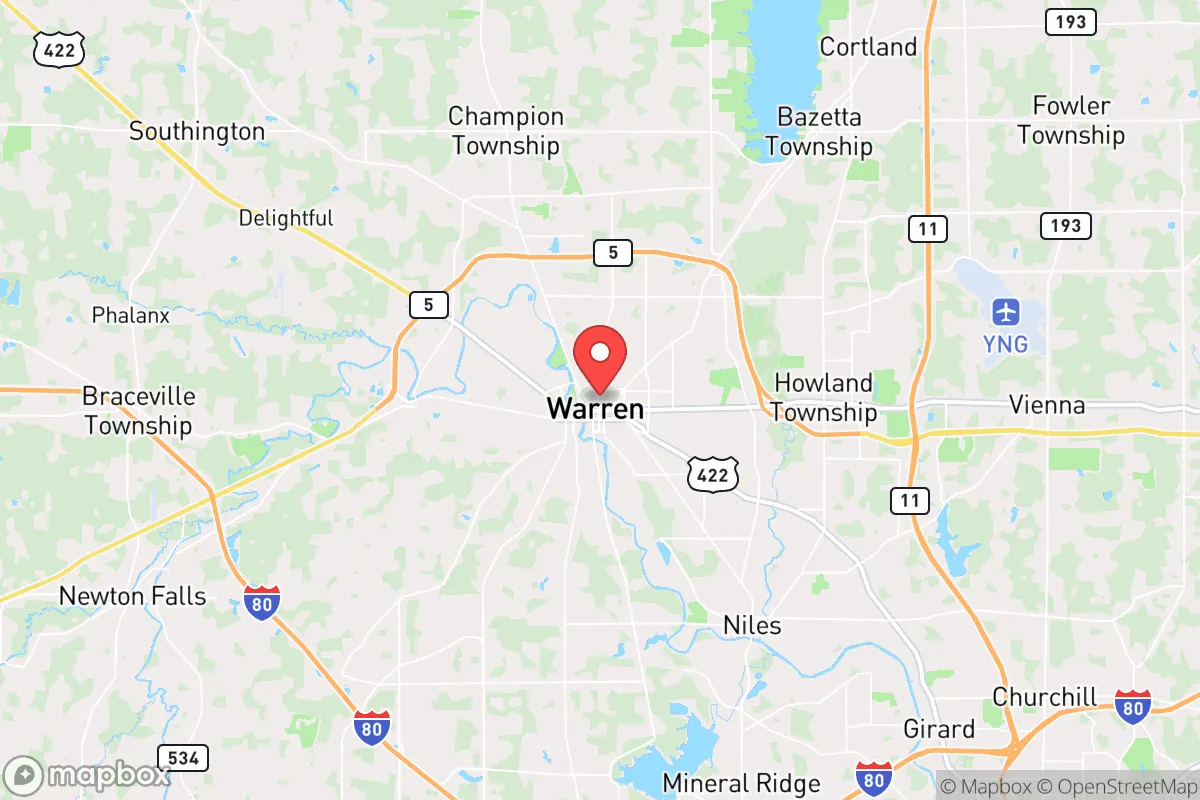
Warren’s location in northeastern Ohio, roughly 50 miles southeast of Cleveland and 15 miles northwest of Youngstown, places it in a zone that benefits from both distance and connectivity. The city sits on the Mahoning River, a tributary of the Beaver River that feeds into the Ohio River system—meaning water access is real, not theoretical. The surrounding Trumbull County is part of the Appalachian Plateau, with rolling hills, mixed hardwood forests, and a climate that supports four distinct seasons. This isn’t flat, exposed farmland; the terrain offers natural cover and defensible positions for those who know how to use it. The area’s average annual rainfall of about 38 inches and a growing season of roughly 160 days mean that small-scale agriculture is viable, not just a hobby. For a prepper or survivalist, the ability to grow food, harvest rainwater, and maintain a low profile in a region that’s neither a population magnet nor a strategic target is a significant advantage. Warren is also within a two-hour drive of Lake Erie, which provides an immense freshwater resource and a potential evacuation route by water if ground transport becomes compromised.
Risks, exposures, and proximity to fallout-relevant landmarks
No location is without its liabilities, and Warren has several that a serious relocator must weigh. The most obvious risk is proximity to the Rust Belt’s industrial and energy infrastructure. The city is about 30 miles from the Beaver Valley Nuclear Power Station in Shippingport, Pennsylvania, a pressurized water reactor that sits on the Ohio River. While the plant has a solid safety record, a major incident—whether from accident, sabotage, or grid failure—would put Warren within the plume zone for radioactive fallout, depending on wind direction. Additionally, the nearby Lordstown area was home to a massive General Motors assembly plant (now shuttered and partially redeveloped), and the region still hosts chemical storage, rail yards, and natural gas pipelines tied to the Utica Shale play. A derailment, pipeline rupture, or industrial fire could create localized contamination or evacuation scenarios. On the civil unrest front, Warren’s population of roughly 38,000 is small enough to avoid the worst of urban chaos, but the city has experienced economic decline and population loss for decades, which has left behind vacant properties, reduced tax base, and some neighborhoods with higher crime rates. The city’s location along major highways—particularly I-80 and State Route 5—means that any large-scale evacuation from the East Coast or Midwest could funnel through the area, bringing with it congestion, resource depletion, and potential security issues. For a survivalist, the key is to understand that Warren is not a remote bunker; it’s a semi-urban hub with real exposure to regional shocks, but those risks are manageable with proper planning.
Practical resilience for a relocator: food, water, energy, and defensibility
For someone actually moving to Warren with a prepper mindset, the practical details matter more than abstract location analysis. Water is the first concern, and the Mahoning River is a reliable surface water source, but it’s also subject to industrial runoff and agricultural pollution. A relocator should plan on drilling a well or installing a high-quality filtration system—Berkey or reverse osmosis—rather than relying on municipal supply, which could be compromised during a grid-down event. The region’s groundwater is generally good, with wells in Trumbull County typically producing 10-20 gallons per minute at depths of 50-150 feet. Food security is more challenging. The local growing season is short, and the soil in much of the area is clay-heavy, requiring amendment for serious vegetable production. However, the surrounding countryside has ample acreage for deer hunting, and the Mahoning River supports catfish, bass, and panfish. For long-term storage, the area has several Amish and Mennonite communities within a 30-minute drive, which means access to bulk grains, seeds, and livestock if you build relationships early. Energy resilience is a mixed bag. The grid in northeastern Ohio is aging, and power outages from winter storms and summer thunderstorms are common. Solar is viable—the region gets about 160 sunny days per year, which is below the national average but workable with a properly sized off-grid system. Natural gas is plentiful due to the Utica Shale, and many rural properties have access to propane delivery, which can be stored in large tanks for heating and cooking. Defensibility is where Warren’s layout becomes relevant. The city itself is a grid of older homes and commercial strips, which is not ideal for a stand-alone defense. But the outlying townships—Howland, Champion, Bazetta—offer larger lots, tree cover, and dead-end roads that are easier to secure. A relocator should prioritize a property with a basement (for storm and fallout shelter), a well, and a wood-burning heat source. The local gun culture is strong, with multiple shooting ranges and gun shops in the area, and Ohio’s constitutional carry law means no permit is needed to carry a concealed firearm. For a single person or family, the ability to blend in, stock supplies, and maintain a low profile is high—Warren is not a place where preppers stand out.
The overall strategic picture for Warren is one of cautious optimism for the prepared relocator. It lacks the glamour of mountain retreats or the isolation of the high desert, but it offers something arguably more valuable: a functional, low-attention location with real water access, decent agricultural potential, and a community that still remembers how to work with its hands. The risks from nuclear infrastructure, industrial corridors, and economic fragility are real, but they are not disqualifying—they are factors to be managed through site selection, supply stockpiling, and community networking. For a conservative-leaning individual or family looking to step off the treadmill of urban vulnerability without disappearing into the wilderness, Warren, Ohio, deserves a hard look. It’s not a paradise, but it’s a place where a serious plan can actually work.

* Values derived from national, state, county, city and local statistics and may differ in a specific area. Last updated: 2026-04-21T19:38:34.000Z
Narrative content on this page is AI-generated and may contain mistakes. Verify any details that matter before acting on them.
ReloMaps may earn a commission from affiliate links at no extra cost to you.

