 Popular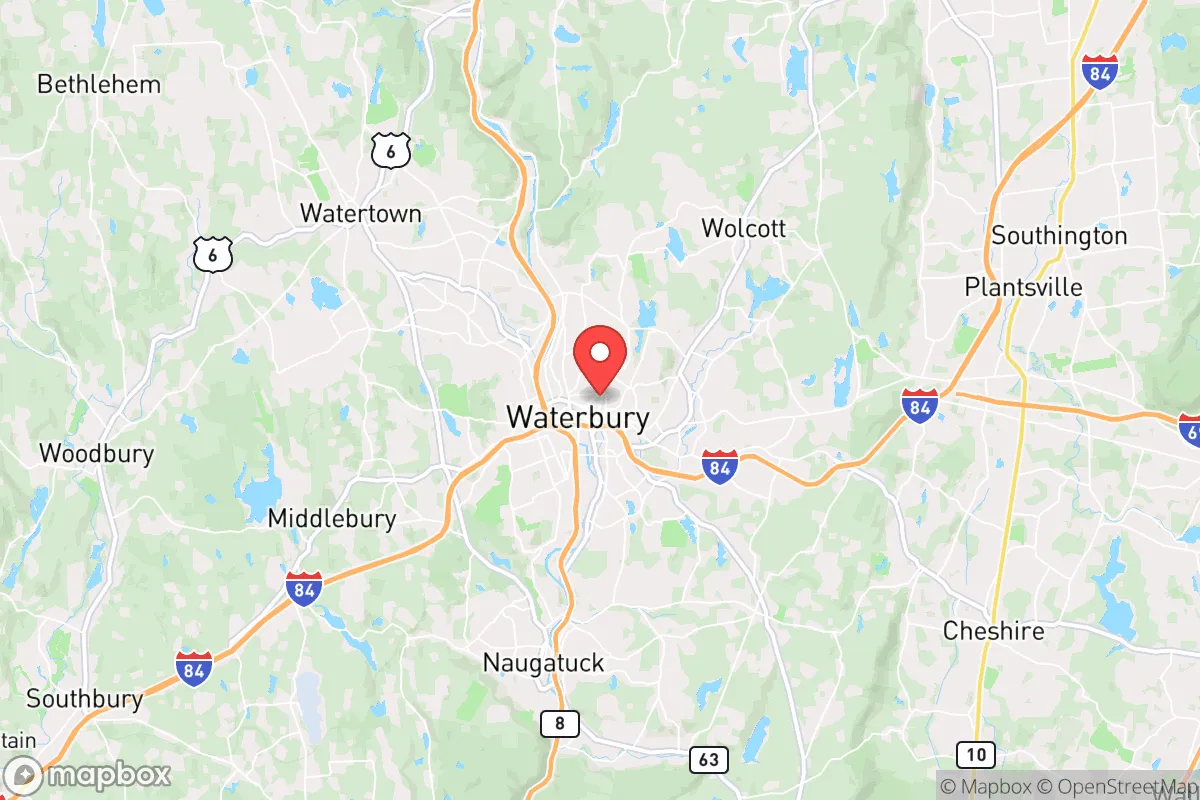
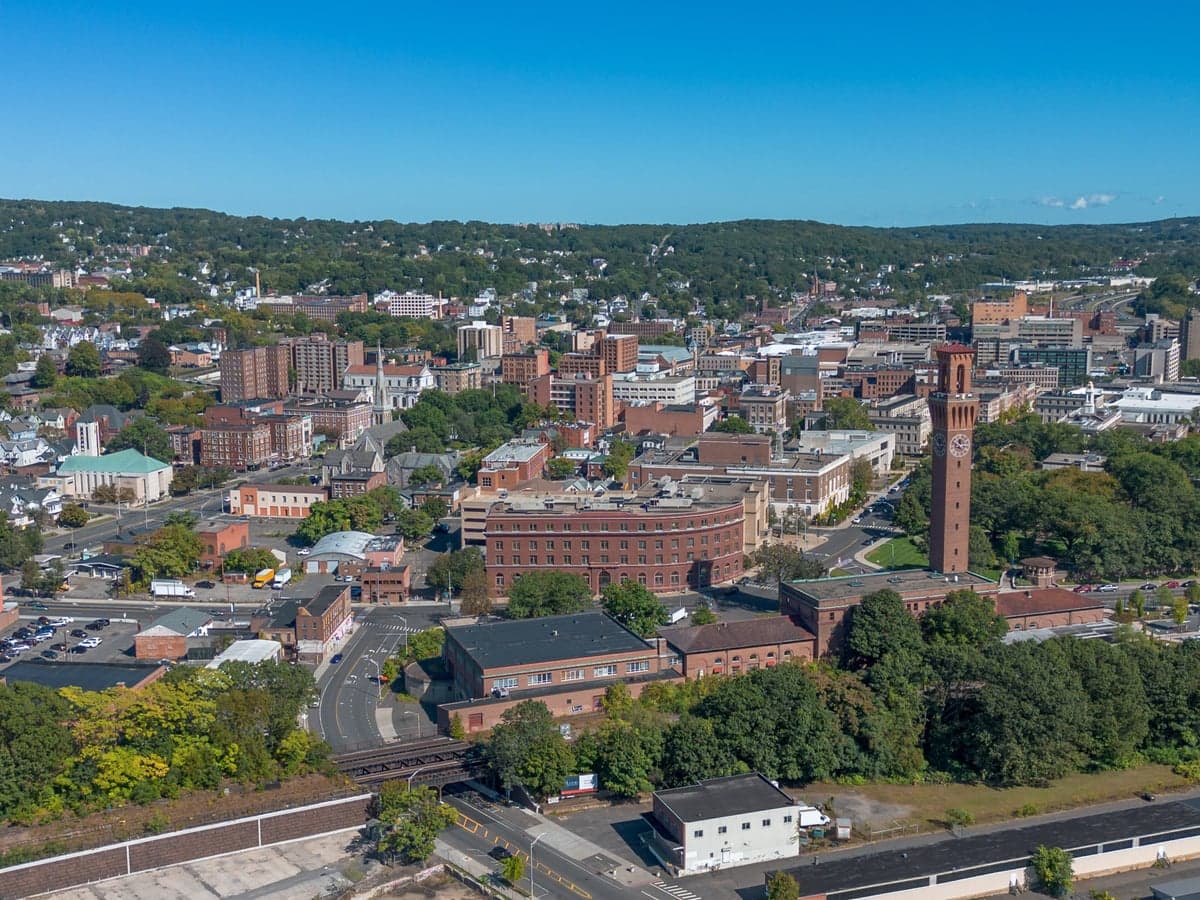
Photo: Wikipedia
Political ClimatePolitical Climate in Waterbury, CT
District shown is the primary district for this city’s centroid. Cities may span multiple districts.
Local Political AnalysisPolitical Analysis of Waterbury, CT
Waterbury, Connecticut, has long been a Democratic stronghold, but the political reality here is more complicated than the city’s D+3 Cook PVI suggests. For decades, this was a blue-collar, union-heavy town where folks voted Democrat out of habit and loyalty to labor, not because they bought into the whole progressive agenda. But over the last ten years or so, you’ve seen a real shift—the old-school, “leave me alone” Democrats are getting squeezed out by a younger, more activist crowd pushing policies that feel like government overreach. The city still votes blue in presidential elections, but the margins are tighter than they used to be, and a lot of long-time residents are starting to feel like their voices don’t matter anymore.
How it compares
If you drive ten miles west to Middlebury or twenty minutes south to Naugatuck, you’ll find towns that lean much more conservative—places where property rights, school choice, and low taxes are still the gospel. Waterbury, by contrast, has become a laboratory for progressive experiments. The city council and mayor’s office have pushed through zoning changes that make it harder for small businesses to operate, and there’s a growing appetite for “equity” initiatives that sound good on paper but often mean more bureaucracy and less personal freedom. Compare that to nearby Southbury or Oxford, where the local governments still respect the idea that you know what’s best for your own family and your own wallet. Waterbury’s trajectory is heading in the opposite direction, and it’s a real concern for anyone who values individual liberty over government mandates.
What this means for residents
For the average person living here, the political climate translates into a few concrete headaches. First, property taxes keep climbing—Waterbury’s mill rate is among the highest in the region, and the city keeps finding new ways to spend your money, from “sustainable” infrastructure projects to diversity training programs that don’t put a single cop on the street or fix a single pothole. Second, there’s a creeping sense that your rights are being nibbled away. Mask mandates, vaccine passports, and now talk of rent control and “just cause” eviction laws—it’s a pattern of the city getting more involved in your personal decisions. If you’re the kind of person who just wants to be left alone to raise your kids, run your business, and keep what you earn, Waterbury is becoming a harder place to do that. The long-term trend is concerning: as the old guard retires, the new blood coming in is more ideologically driven, and they don’t seem to care much about the folks who’ve been here for generations.
One cultural distinction that stands out is Waterbury’s stubborn Italian-American and Irish-Catholic heritage, which still anchors a lot of the social fabric—parish festivals, volunteer fire departments, and a general distrust of authority. That’s been a buffer against the most extreme progressive overreach, but it’s weakening. The city’s embrace of sanctuary city policies and its willingness to defy state law on immigration enforcement is a red flag for anyone who believes in the rule of law. In the near term, expect more fights over school curriculum, housing mandates, and police funding. Long term? If the current trajectory holds, Waterbury could become a cautionary tale of what happens when a once-pragmatic, working-class city lets ideology run the show. Keep an eye on the next few municipal elections—that’s where the real battle for your freedoms will be fought.

State Political ClimatePolitical Climate in Connecticut
State Political AnalysisPolitical Environment in the State
Connecticut has shifted from a classic "Rockefeller Republican" swing state into a reliably blue stronghold over the past two decades, with Democrats now holding every statewide office and supermajorities in both legislative chambers. The state voted for Hillary Clinton by 14 points in 2016, Joe Biden by 20 points in 2020, and Kamala Harris by roughly 17 points in 2024, reflecting a durable Democratic floor of about 56-58% in presidential elections. However, this top-line number masks a deep and growing urban-suburban-rural fracture that has left many towns feeling politically stranded, and the state's policy trajectory has become increasingly concerning for those who value fiscal restraint, parental rights, and Second Amendment protections.
Urban vs. rural divide
The political map of Connecticut is essentially a tale of three regions. The urban core — Bridgeport, New Haven, Hartford, and Waterbury — drives the Democratic supermajority, with these cities routinely delivering 70-80% of their votes to Democratic candidates. The affluent suburbs of Fairfield County, particularly Greenwich, Stamford, and Westport, have shifted hard left over the last decade, transforming from moderate Republican strongholds into reliably blue territory as wealthy professionals moved in from New York City. Meanwhile, the eastern half of the state — Litchfield County, the Quiet Corner (Windham and Tolland counties), and the shoreline east of New Haven — has become increasingly Republican. In 2024, Litchfield County voted for Trump by about 8 points, while Tolland County flipped from blue to red for the first time since 2004. The divide is stark: drive 20 minutes north of Hartford into Enfield or Suffield, and you'll find Trump signs still planted in yards; drive 20 minutes south into West Hartford, and you'll see "In This House We Believe" lawn signs that haven't moved since 2020.
Policy environment
Connecticut's policy environment is a case study in progressive governance with real consequences for residents. The state has the highest combined state and local tax burden in the nation, with income taxes topping 6.99% and property taxes averaging over 2% of home value annually — a crushing load for families. The 2023 "Work and Family" paid leave law mandates up to 12 weeks of paid time off funded by a new payroll tax, which many small business owners in Middletown and Wallingford say has forced them to cut hours or raise prices. Education policy is dominated by the teachers' unions, which successfully blocked most school choice expansion; Connecticut has no voucher program and only a tiny charter school sector, concentrated in New Haven and Hartford. Election laws have been loosened significantly: no-excuse absentee voting was expanded in 2023, and early voting began in 2024, with 14 days of in-person early voting now law. The state also passed a 2021 law banning police from enforcing federal immigration detainers, making Connecticut a de facto sanctuary state.
Trajectory & freedom
On the freedom front, Connecticut has been moving decisively in the wrong direction for conservatives. The 2023 "Responsible and Equitable Regulation of Firearms" Act (HB 6667) banned the open carry of handguns, raised the purchasing age to 21 for all firearms, and expanded the state's assault weapons ban to include more semi-automatic rifles — this after already passing some of the nation's strictest magazine capacity limits in 2013. Parental rights took a hit with the 2021 passage of a law requiring schools to allow students to use bathrooms and locker rooms matching their gender identity without parental notification, and a 2023 law that prohibits schools from disclosing a student's gender identity to parents without the student's consent. Medical freedom was curtailed by the 2021 vaccine mandate for healthcare workers and school staff, which remained in effect longer than in most neighboring states. On the positive side, the 2024 repeal of the state's "death tax" (estate tax) on estates under $10 million was a rare win for property rights and family businesses, particularly in Fairfield County where estate planning had become a nightmare.
Civil unrest & political movements
Connecticut has seen relatively little large-scale civil unrest compared to other blue states, but the political temperature has risen noticeably. The 2020 Black Lives Matter protests in New Haven and Hartford were large but mostly peaceful, though they did lead to the 2021 police accountability bill that banned chokeholds and created a new oversight system. The most visible conservative movement has been the "CT Parents United" network, which organized school board takeovers in Southington, Berlin, and Newington between 2021 and 2023, successfully flipping several districts to conservative majorities on issues of curriculum transparency and critical race theory. Immigration politics are a simmering issue: the 2021 "Trust Act" limited local police cooperation with ICE, and in 2023, West Haven became a flashpoint when the city council voted to declare itself a "welcoming city," prompting a recall effort that ultimately failed. Election integrity concerns have been muted compared to other states, but the 2024 expansion of early voting and no-excuse absentee ballots has grassroots conservatives in Litchfield and Windham counties worried about chain-of-custody issues.
Projection
Looking ahead 5-10 years, Connecticut's trajectory is concerning but not hopeless. The state is losing population — roughly 100,000 residents between 2020 and 2025 — with most departures heading to Florida, Texas, and the Carolinas. Those leaving are disproportionately higher-income families and small business owners, which will further shrink the tax base and accelerate the cycle of tax hikes. The in-migration is largely from New York City, bringing more progressive voters to Fairfield County and reinforcing the Democratic majority. However, the rural and exurban areas are growing more conservative, and the 2024 flip of Tolland County suggests a potential realignment if the state's tax burden continues to drive out the productive class. The most likely scenario is that Connecticut remains solidly blue at the state level, with Democratic supermajorities continuing to pass gun control, paid leave mandates, and sanctuary policies, while the rural towns become increasingly resistant and may eventually push for more local control or even secession talk — there's already a "CT 2.0" movement in the Quiet Corner exploring county-level autonomy. A new resident moving in now should expect high taxes, limited school choice, and a state government that is actively hostile to gun ownership and parental rights, but should also find strong communities in the red towns where conservative values still hold.
Bottom line for a new resident: If you're a conservative considering Connecticut, pick your town carefully — Litchfield, Southbury, or Woodstock will feel like a different country from Hartford or New Haven. You'll pay a premium in taxes for the privilege of living in a blue state, but you'll find like-minded neighbors in the eastern and northwestern corners. Just don't expect the state government to have your back on guns, school choice, or parental rights anytime soon. The best strategy is to get involved locally — school boards and town councils are where conservatives can still make a difference, and that's where the real fight for Connecticut's future is happening.
* Values derived from national, state, county, city and local statistics and may differ in a specific area. Last updated: 2026-04-30T00:57:17.000Z
Narrative content on this page is AI-generated and may contain mistakes. Verify any details that matter before acting on them.
ReloMaps may earn a commission from affiliate links at no extra cost to you.

