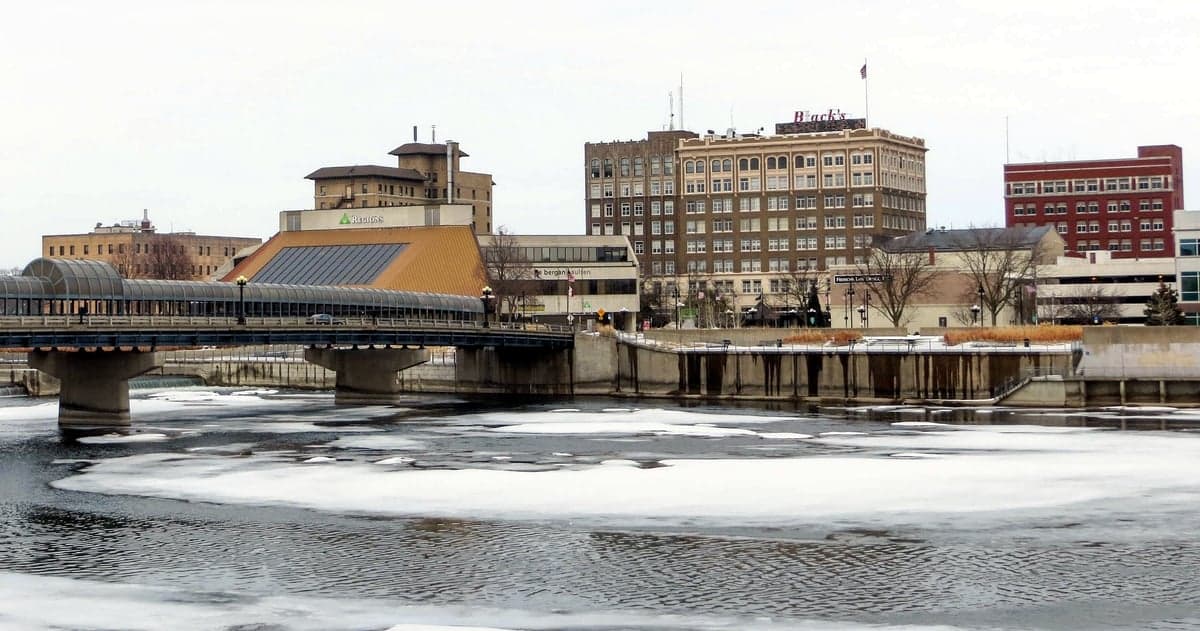
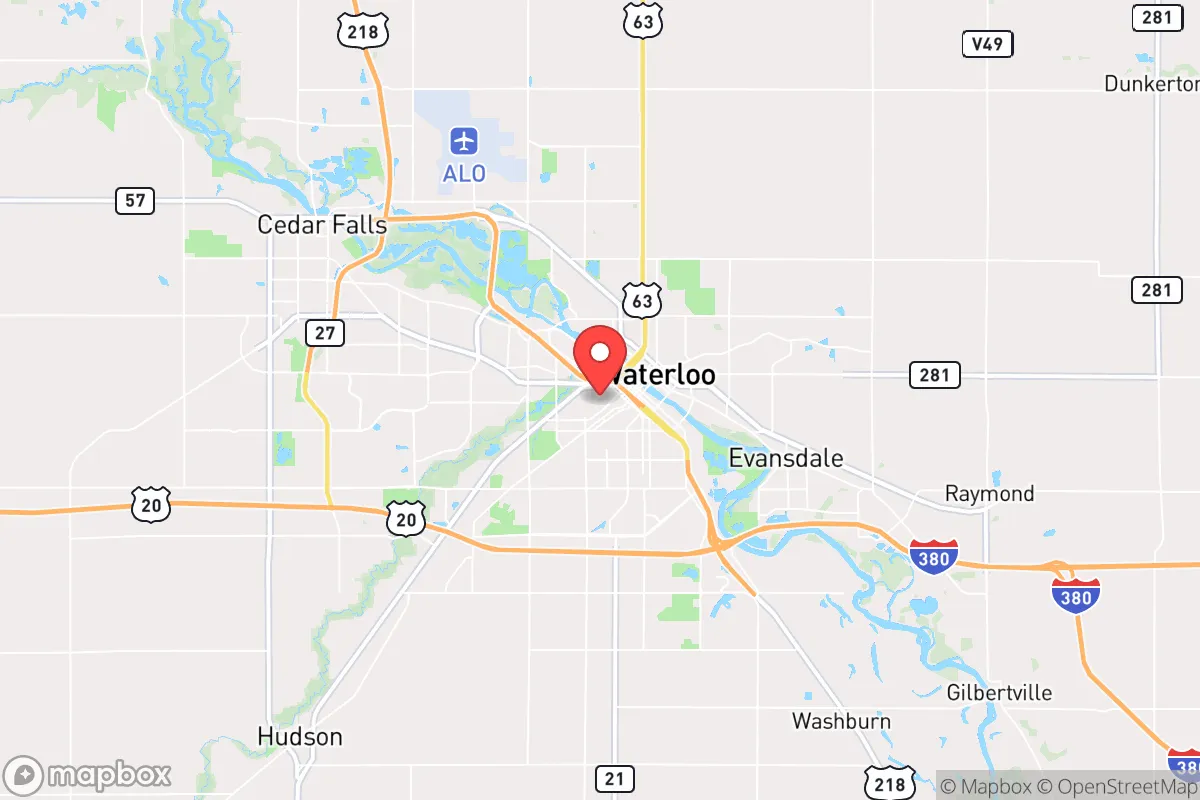
Photo: Wikipedia
Quality of Life in Waterloo, IA
Above-average quality of iife. The area offers a reasonable cost of living, decent mobility, and a mix of neighborhood amenities.
What does Quality of Life tell us?
Quality of Life blends cost of living, nearby amenities, socioeconomic signals, and neighborhood character. City-level scores represent the whole municipality; individual neighborhoods can differ.
What does this tell us?
Quality of Life blends cost of living, nearby amenities, socioeconomic signals, and neighborhood character. City-level scores represent the whole municipality; individual neighborhoods can differ.
Cost of Living
32% below national average
The Real Cost of Living in Waterloo, IA for 2026
| Tier | Individual | Family (4) |
|---|---|---|
| Survival | $14k | $27k |
| Comfortable | $29k | $43k |
| Luxury | $102k+ | $158k+ |
| Elite (Top 5%) | $124k+ | $192k+ |
131%
The Area Signal
A metric tracking the socioeconomic signals of the area.
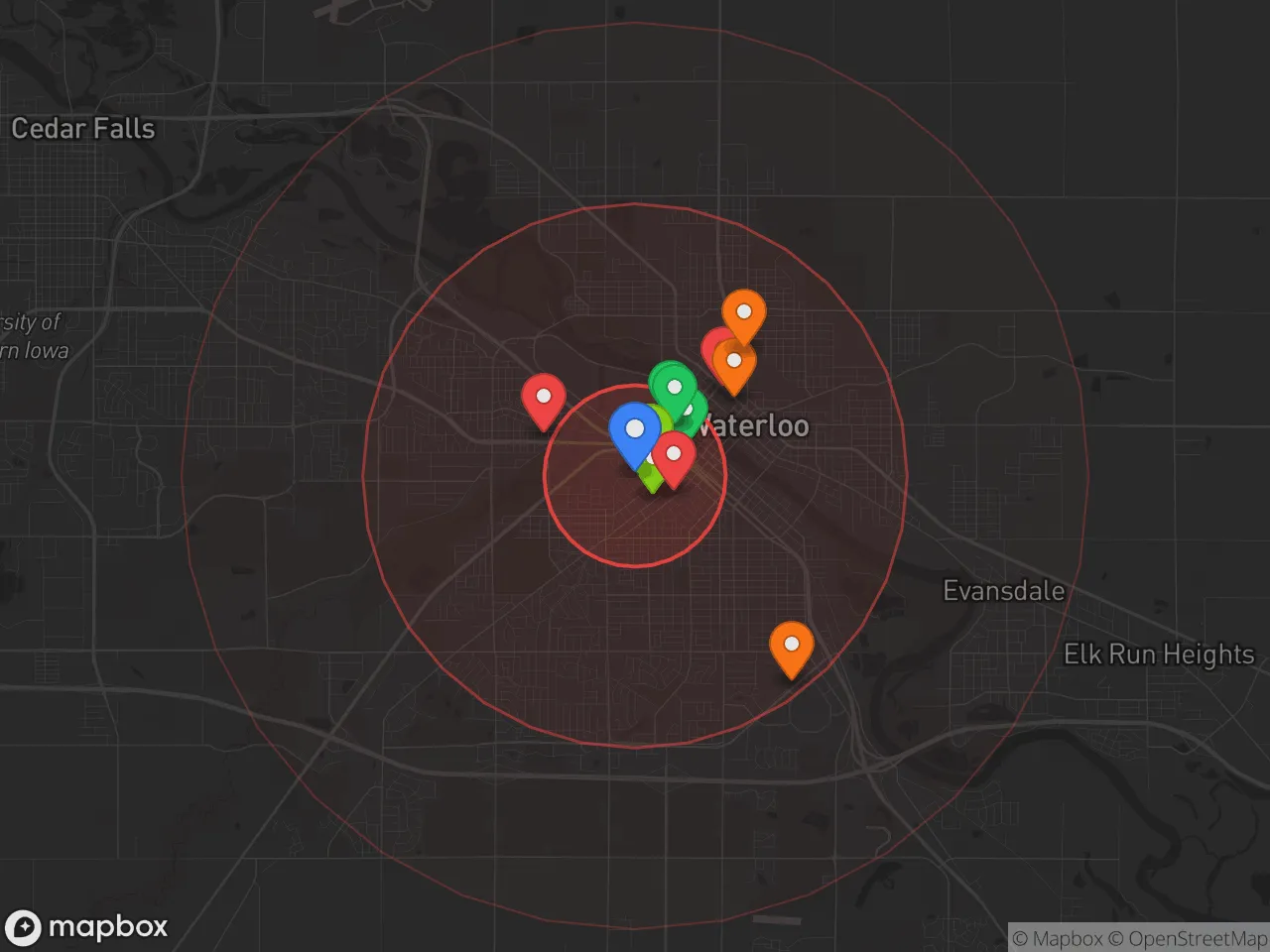
Hobbies
Explore the areaGroceries
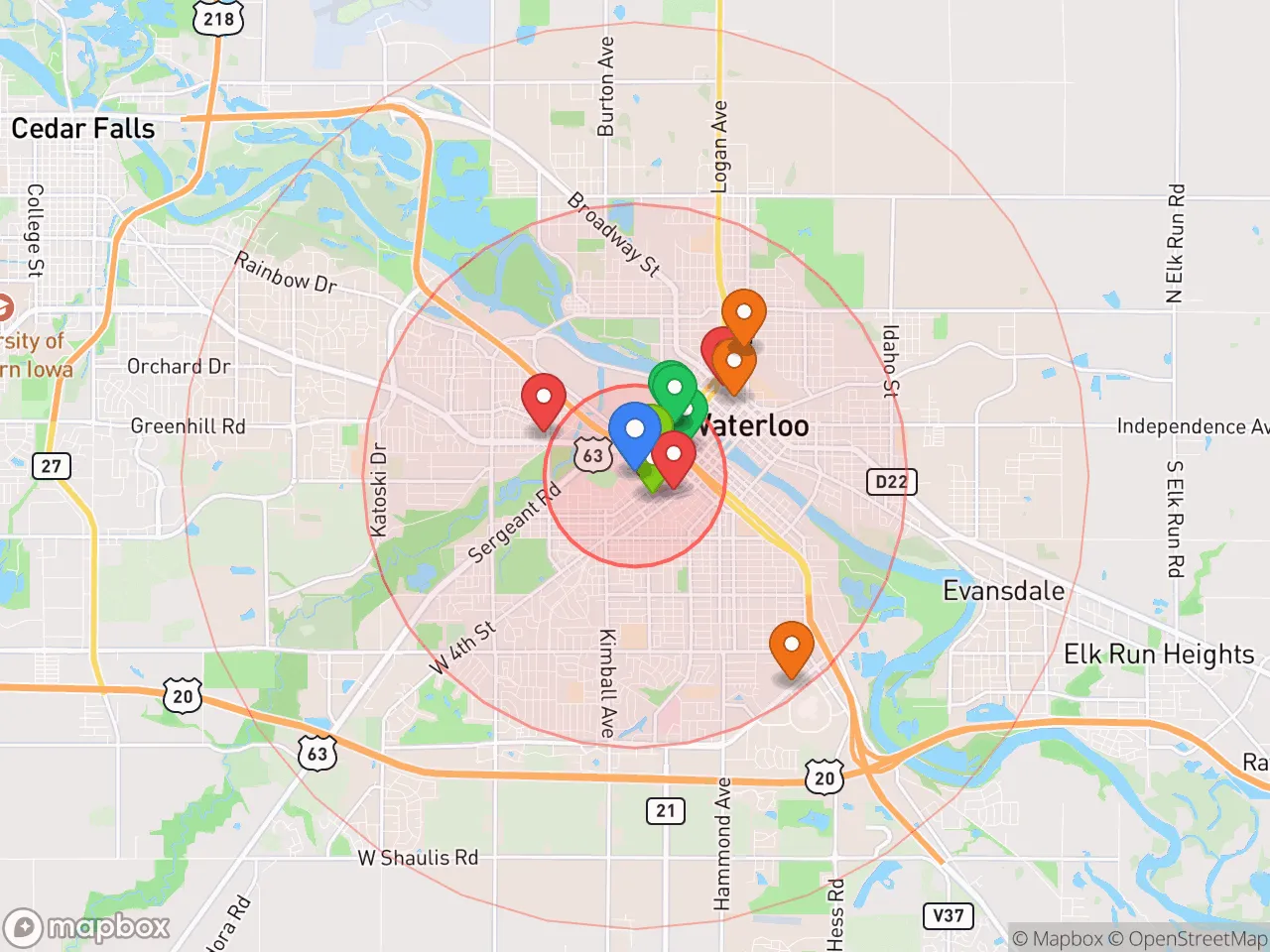
5 within 10 miles
Gas
20 within 10 miles
Hospital
4 within 20 miles
Airport
ORD — O'Hare International
Post Office
USPS — Waterloo, IA
Critical Amenities
Quality-of-Life Analysis
Waterloo, Iowa, presents a notably affordable quality of life, with a cost of living index of 68—32% below the national average—making it one of the most budget-friendly metro areas in the Midwest. The population skews toward working-class families, manufacturing employees, and retirees seeking to stretch fixed incomes, drawn by the city’s industrial roots in John Deere and Tyson Foods. While not affluent by national standards, Waterloo offers a stable, low-stress environment where homeownership is attainable for many, contrasting sharply with the escalating costs seen in larger Iowa cities like Des Moines or Cedar Rapids.
Cost of living, housing, and how Waterloo compares to nearby cities
Waterloo’s housing market is a standout advantage. The median home value sits at $150,200, roughly half the national median, while median rent is just $896 per month. This affordability is significantly lower than in Cedar Falls (just across the Cedar River), where median home values exceed $220,000, and far below Des Moines’ median of $260,000. The average commute of 16.2 minutes is among the shortest in Iowa, reducing transportation costs and freeing up time for family or recreation. Property taxes in Black Hawk County are moderate, averaging around 1.5% of assessed value, and utilities remain below national averages. For renters and first-time buyers, Waterloo offers a rare combination of low entry costs and stable, slow appreciation—home values have risen only about 3-4% annually since 2020, avoiding the volatility seen in hotter markets.
Schools, amenities, and what daily life feels like in Waterloo
Daily life in Waterloo is defined by a slower, community-oriented rhythm. The Waterloo Community School District operates 18 elementary schools, four middle schools, and three high schools, with East High and West High being the largest. While overall test scores trail state averages, the district offers specialized programs like the Waterloo Career Center for vocational training in manufacturing and healthcare. Amenities center on the Cedar Valley SportsPlex, the Grout Museum District (including the Sullivan Brothers Iowa Veterans Museum), and the Lost Island Waterpark, a regional draw. Outdoor recreation includes the 10-mile Cedar Valley Nature Trail and George Wyth State Park, popular for hiking and fishing. Dining leans toward classic Midwest fare—locally owned diners and barbecue joints dominate—with a growing craft beer scene at breweries like SingleSpeed Brewing. The city’s cultural calendar is anchored by the National Cattle Congress Fair and the My Waterloo Days festival. Healthcare is served by UnityPoint Health-Allen Hospital and MercyOne Waterloo Medical Center, both providing comprehensive services without the wait times of larger urban hospitals.
Waterloo is best suited for cost-conscious families, manufacturing and logistics workers, and retirees who prioritize affordability and a low-key pace over urban excitement. Young professionals may find the job market limited outside of industrial and healthcare sectors, but the short commute and low housing costs offer a strong work-life balance. Those seeking vibrant nightlife, high-end shopping, or top-tier public schools should look to Cedar Falls or the Des Moines suburbs. For anyone whose primary goal is financial breathing room and a tight-knit, blue-collar community, Waterloo delivers reliably.

Crime in Waterloo, IA
Higher crime rates than 64% of comparable U.S. locations.
Violent CrimeViolent Crime Analysis
Property CrimeProperty Crime Analysis
Crime Analysis
Waterloo, Iowa, reports a violent crime rate of 469.4 incidents per 100,000 residents and a property crime rate of 2,561.8 per 100,000, figures that place it above both the state and national averages for communities of its size. These statistics indicate that safety is a significant concern for those considering relocation, particularly as the city's crime profile reflects broader challenges seen in many Midwestern industrial centers. The data suggests that residents face a higher-than-average risk of both violent and property offenses compared to typical Iowa communities.
Crime in context
Waterloo's violent crime rate of 469.4 per 100,000 is roughly 25% higher than the national average and significantly exceeds Iowa's statewide rate of approximately 280 per 100,000. Property crime in Waterloo, at 2,561.8 per 100,000, also runs well above the national benchmark of around 1,950 per 100,000 and is nearly double the Iowa state average of roughly 1,400 per 100,000. These elevated rates place Waterloo among the higher-crime cities in Iowa, comparable to Council Bluffs and Davenport, though still below the most dangerous metros in the state. The city's crime index is driven primarily by larceny-theft and burglary, which together account for the majority of property offenses.
What residents experience
Residents commonly report that property crime—particularly vehicle break-ins, theft from porches, and residential burglaries—is the most visible safety issue in daily life. Violent crime, while less frequent, is concentrated in specific areas and often involves individuals who know each other, meaning random attacks on strangers are less common but not unheard of. Waterloo operates under a progressive prosecutorial philosophy in Black Hawk County, where district attorneys have emphasized diversion programs and reduced sentencing for nonviolent offenders. Critics argue this approach has contributed to a revolving-door justice system that fails to deter repeat property criminals and leaves victims feeling underserved. The presence of liberal judges in the local courts has been linked to lighter sentences for burglary and theft, which some residents believe emboldens offenders and keeps crime rates elevated.
Neighborhood-level variation
Safety in Waterloo varies sharply by neighborhood. The downtown core and areas near the former John Deere plant see higher concentrations of both violent and property crime, while west-side neighborhoods like the Orange District and areas near George Wyth State Park report significantly lower incident rates. The city's east side, particularly around the intersection of U.S. Highway 63 and Logan Avenue, has a reputation for more frequent police calls. Prospective residents should examine block-level crime maps and consider that even within a single ZIP code, safety can change dramatically from one street to the next. Local real estate agents and police precinct data are the best resources for identifying the safest pockets within Waterloo's city limits.
* Values derived from national, state, county, city and local statistics and may differ in a specific area. Last updated: 2026-04-30T01:32:15.000Z
Narrative content on this page is AI-generated and may contain mistakes. Verify any details that matter before acting on them.
ReloMaps may earn a commission from affiliate links at no extra cost to you.

