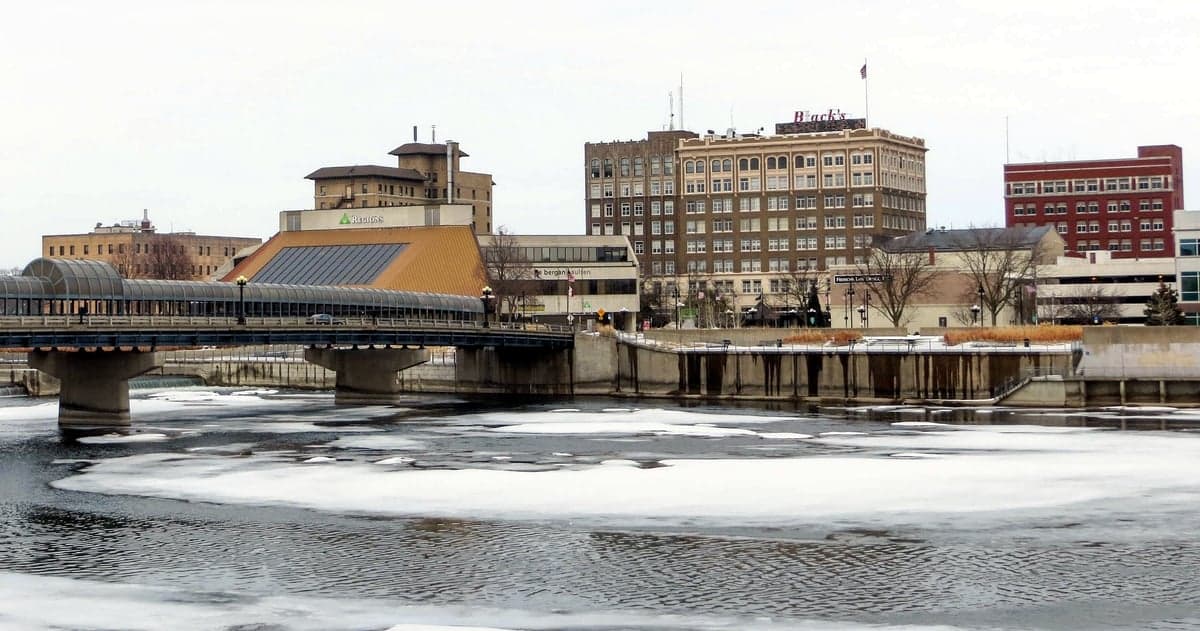
Photo: Wikipedia
Political ClimatePolitical Climate in Waterloo, IA
District shown is the primary district for this city’s centroid. Cities may span multiple districts.
Local Political AnalysisPolitical Analysis of Waterloo, IA
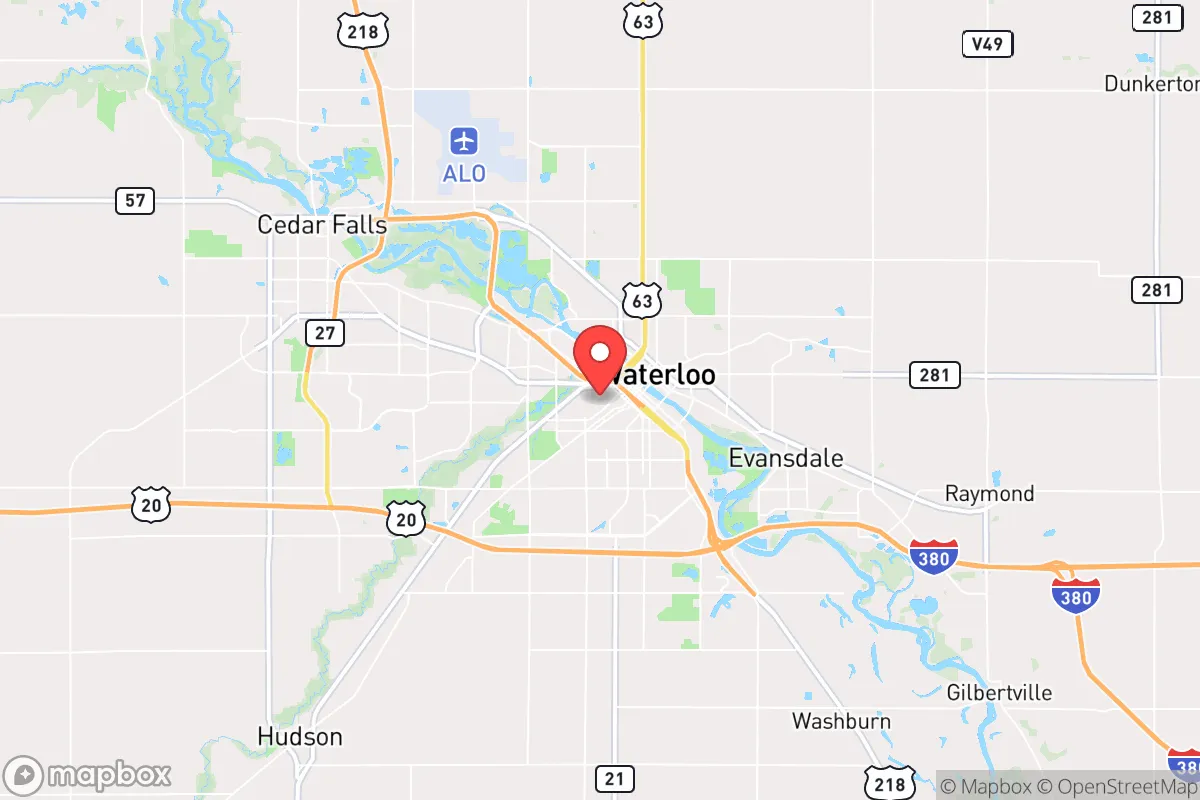
Waterloo, Iowa, sits in a political landscape that has shifted noticeably over the past decade, and if you’ve lived here as long as I have, you’ve felt it. The Cook PVI rating of R+4 tells you the district leans Republican overall, but that number masks a real tug-of-war. Black Hawk County itself has been trending bluer in presidential elections—going for Biden by about 10 points in 2020—while the surrounding rural areas, like Cedar Falls just across the river and towns like Evansdale and Hudson, vote solidly red. The real story is how the city’s core has drifted left, especially on social issues, while the county’s outer edges hold the line. It’s not a deep-blue stronghold, but the progressive influence is creeping in, and that’s something to keep an eye on if you value local control and personal freedoms.
How it compares
Drive ten minutes south to Cedar Falls, and you’ll find a different political animal. That city, home to the University of Northern Iowa, leans more liberal, with younger voters and faculty pushing for higher taxes and more government programs. Waterloo, by contrast, has a stronger working-class and manufacturing base—think John Deere and Tyson Foods—that tends to favor fiscal conservatism and less interference in daily life. Head west to the small towns of Raymond or La Porte City, and you’re in deep-red territory where the R+4 feels more like R+20. The contrast is stark: Waterloo’s city council has debated things like sanctuary city policies and police funding reforms, while those surrounding communities are still focused on keeping property taxes low and schools focused on basics. If you’re looking for a place where government stays out of your business, the suburbs and rural areas around Waterloo offer a much quieter, more predictable environment.
What this means for residents
For folks who value personal freedom—whether that’s the right to keep and bear arms, choose your own healthcare, or send your kids to a school without ideological overreach—Waterloo’s shift is concerning. The local school board has seen heated debates over curriculum content and library books, and there’s been a push for more diversity, equity, and inclusion training that some see as government-mandated thought. Property taxes have crept up to fund new city initiatives, and there’s talk of expanding public transit and affordable housing mandates that could mean more bureaucracy. On the flip side, the R+4 district still sends a Republican to Congress, and state-level laws on gun rights and abortion have kept some of the more extreme local proposals in check. Long-term, if the progressive wing gains more seats on the county board, you could see zoning changes or environmental regulations that hit small businesses and landowners hardest. It’s not a crisis yet, but the trajectory is worth watching.
Culturally, Waterloo has a few unique quirks that reflect its political middle ground. The city is home to the National Wrestling Hall of Fame and a strong agricultural heritage, which keeps things grounded. But you’ll also see more pride flags downtown than you would in the surrounding counties, and the local arts scene has a distinctly progressive tilt. One policy distinction that stands out: Waterloo has a rental inspection program that some landlords call overreach, while supporters say it ensures safe housing. That kind of debate—between individual property rights and collective standards—is playing out in city council meetings regularly. If you’re considering a move here, I’d say the rural townships offer a better fit if you want less government in your life, but Waterloo itself still has plenty of folks who remember when the city was more about hard work and less about social engineering. Just know the winds are shifting, and it’s up to residents to keep them from blowing too far.

State Political ClimatePolitical Climate in Iowa
State Political AnalysisPolitical Environment in the State
Iowa has long been a reliably Republican state in presidential elections, voting for the GOP candidate in every cycle since 2000 except for Barack Obama’s two wins in 2008 and 2012. But the real story is the state’s steady rightward shift over the past decade. In 2020, Donald Trump carried Iowa by 8.2 points, and in 2024, he won by a similar margin, with Republicans now holding all four U.S. House seats, both Senate seats, and supermajorities in the state legislature. The old “purple” Iowa that swung between parties is gone; today, it’s a solidly red state, driven by a coalition of rural conservatives, evangelical voters, and a growing number of suburban families fleeing blue states. The Democratic strongholds are shrinking to just a few urban islands, while the rest of the state has moved decisively right.
Urban vs. rural divide
The political map of Iowa is a textbook case of the urban-rural split. The Democratic base is concentrated in three metro areas: Des Moines (Polk County), Iowa City (Johnson County), and Davenport (Scott County). Polk County, home to the state capital, voted for Biden in 2020 by 12 points, but that margin is shrinking as suburban growth pushes outward. Johnson County, anchored by the University of Iowa, is the bluest county in the state, voting for Biden by 38 points. But outside these islands, the landscape is deep red. Rural counties like Sioux County in the northwest (home to a large Dutch Reformed population) routinely vote 80%+ Republican. The real battlegrounds are the suburban and exurban counties around Des Moines — Dallas County (Waukee, Adel) and Warren County (Indianola) — which have flipped from purple to solid red over the last two cycles. Dallas County, once a swing county, voted for Trump by 8 points in 2024. Meanwhile, smaller cities like Cedar Rapids (Linn County) and Council Bluffs (Pottawattamie County) are trending redder, with the latter now reliably Republican. The divide isn’t just geographic; it’s cultural. Rural Iowans see the urban centers as out of touch with traditional values, while city dwellers view the countryside as resistant to change.
Policy environment
Iowa’s policy environment has become a national model for conservative governance. The state enacted a flat income tax of 3.8% in 2023, down from a top rate of 8.53% just a decade ago, with a path to a 3.5% flat rate by 2026. Property taxes are among the lowest in the Midwest, and there is no inheritance tax. On education, Governor Kim Reynolds signed a universal school choice law in 2023, allowing any Iowa family to use state funds for private or homeschool expenses — a major win for parental rights. The state also passed a law banning transgender athletes from girls’ sports (HF 2416) and requiring schools to notify parents of any student requests for pronoun or name changes (SF 496). Healthcare policy is similarly conservative: Iowa rejected Medicaid expansion under the Affordable Care Act and instead runs a managed-care system. The state also passed a 6-week abortion ban in 2023 (HF 732), which was upheld by the Iowa Supreme Court in 2024. Election integrity measures include strict voter ID laws, a ban on ballot harvesting, and reduced early voting windows. The state also passed a constitutional amendment in 2022 affirming that there is no right to abortion in Iowa. For a conservative family, the policy environment is about as friendly as it gets in the Midwest.
Trajectory & freedom
Iowa is clearly trending toward more personal freedom, especially in areas that matter most to conservatives. The 2021 permitless carry law (SF 507) allows any law-abiding adult to carry a concealed firearm without a permit, and the state preempts local gun ordinances, so cities like Des Moines and Iowa City can’t impose their own restrictions. The 2023 school choice law expanded educational freedom dramatically. On medical freedom, Iowa passed a law in 2022 prohibiting COVID-19 vaccine mandates by private employers (HF 889) and banned mask mandates in schools. The state also enacted a “medical conscience” law allowing healthcare workers to refuse to participate in procedures they object to. Property rights are strong, with no statewide zoning mandates and a right-to-farm law that protects agricultural operations from nuisance lawsuits. The only area where freedom has contracted is on abortion, which many conservatives see as a protection of life rather than a restriction. Overall, the trajectory is toward less government interference in daily life, which is exactly what draws people here from states like Illinois and California.
Civil unrest & political movements
Iowa has seen relatively little civil unrest compared to coastal states, but there have been flashpoints. In 2020, Des Moines and Iowa City saw Black Lives Matter protests, some of which turned destructive, including the toppling of a statue of a Civil War soldier on the Capitol grounds. The response from the state legislature was swift: in 2021, Iowa passed a law increasing penalties for rioting and blocking highways (HF 766). Immigration politics are a growing issue, particularly in meatpacking towns like Storm Lake and Postville, where large immigrant populations have led to tensions. Governor Reynolds sent state troopers to the Texas border in 2023 as part of a multi-state effort. There is no sanctuary city policy anywhere in Iowa; in fact, state law prohibits such policies. Election integrity remains a hot topic: the 2020 election in Iowa was smooth, but the legislature tightened laws anyway. Organized activist movements are mostly on the right — groups like The Family Leader and Iowa Right to Life are powerful, while progressive groups are largely confined to the university towns. A new resident would notice that political signs and flags are common in rural areas, but open political conflict is rare outside of social media.
Projection
Over the next 5-10 years, Iowa is likely to become even more conservative. The state is experiencing steady in-migration from blue states, particularly Illinois and California, and these newcomers tend to be conservative-leaning families looking for lower taxes and more freedom. The urban centers will continue to shrink as a share of the state’s population, while the suburbs and exurbs grow. The Democratic Party in Iowa is in disarray, having lost its organizational strength after the 2020 caucus fiasco. The state’s congressional delegation will remain all-Republican, and the legislature will likely pass further tax cuts and school choice expansions. The only wild card is the aging rural population — if young people continue to leave, some rural counties could see population decline, but the political lean will remain red. A conservative moving to Iowa now should expect to find a state that is more aligned with their values in a decade than it is today.
For a new resident, the bottom line is clear: Iowa offers a stable, conservative environment with low taxes, strong gun rights, school choice, and a government that respects personal freedom. The trade-off is that you’ll be living in a state with harsh winters and limited cultural amenities compared to the coasts. But if your priority is raising a family in a place where your values are the norm, Iowa is one of the best bets in the country. Just avoid the urban islands of Des Moines and Iowa City if you want to stay in deep-red territory.
* Values derived from national, state, county, city and local statistics and may differ in a specific area. Last updated: 2026-04-30T01:32:15.000Z
Narrative content on this page is AI-generated and may contain mistakes. Verify any details that matter before acting on them.
ReloMaps may earn a commission from affiliate links at no extra cost to you.

