
Photo: Wikipedia
Personal Sovereignty in Waterville, ME
Viable for self-reliance. Generally workable, though some barriers may limit total independence.
What does Personal Sovereignty tell us?
Personal Sovereignty measures your capacity for self-reliance and independence with minimal government friction. Higher scores mean fewer barriers between you and the way you want to live... but it assumes you have the space you need and good neighbors.
What does this tell us?
Personal Sovereignty measures your capacity for self-reliance and independence with minimal government friction. Higher scores mean fewer barriers between you and the way you want to live... but it assumes you have the space you need and good neighbors.
State Policy
Energy independence: Importer (30% of energy produced in-state)
Personal Liberty
Homesteading

Personal Liberty Analysis
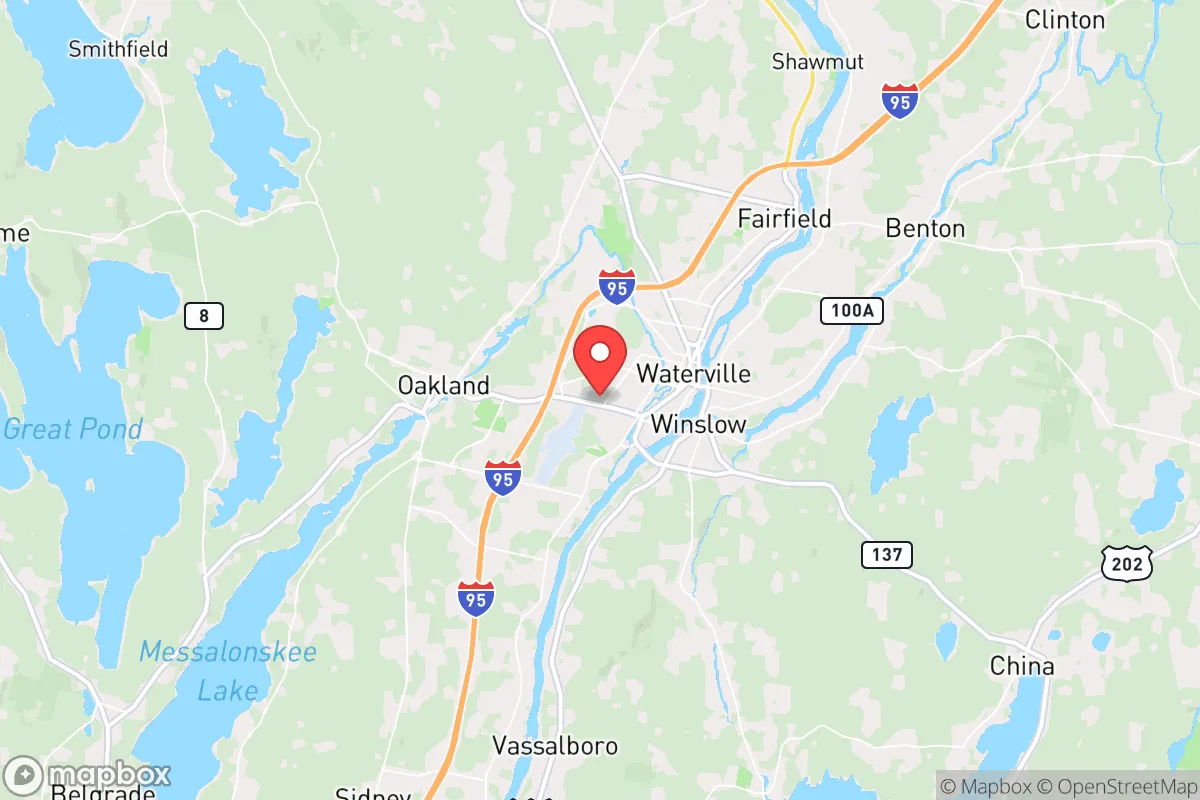
For the liberty-minded individual or family weighing a strategic relocation, Waterville, Maine, offers a mixed bag of personal sovereignty that requires careful scrutiny. The state’s constitutional protections are robust on paper, but the practical reality is shaped by a progressive state government in Augusta that has increasingly flexed its regulatory muscle. Waterville itself, a small city of about 16,000 along the Kennebec River, sits in a politically moderate-to-liberal county (Kennebec), which means local ordinances can sometimes feel more restrictive than the surrounding rural towns. The key question for a survivalist or prepper is whether the area’s natural advantages—abundant water, low population density, and a strong tradition of self-reliance—outweigh the creeping reach of state-level mandates on everything from firearms to land use.
Tax burden and regulatory posture: what the state takes and how it controls
Maine’s tax burden is among the highest in the nation, and that’s a hard pill to swallow for anyone prioritizing financial sovereignty. The state levies a progressive income tax with rates from 5.8% to 7.15%, and the average property tax rate in Kennebec County hovers around 1.3% of assessed value—which, on a $200,000 home, means roughly $2,600 annually. Waterville’s mill rate is slightly above the county average, so expect to pay a premium for city services you may not want. Sales tax is 5.5%, but it jumps to 8% on prepared food and lodging, a hidden cost for anyone who dines out or travels. On the regulatory front, Maine has a reputation for environmental and land-use oversight that can frustrate off-grid ambitions. The state’s Site Location of Development Law requires permits for any project disturbing more than three acres, and the Department of Environmental Protection (DEP) has broad authority over wetlands, shorelands, and even private wells in some cases. For a prepper looking to build a self-sufficient homestead, this means navigating a bureaucratic maze before you can break ground. Waterville’s local zoning is relatively permissive for a city its size, but the state’s overarching regulatory posture is one of active management—not outright hostility, but certainly not the hands-off approach found in, say, New Hampshire or northern Idaho.
Self-defense and gun law specifics: what you can own and where you can carry
Maine is often cited as a “shall-issue” state for concealed carry, and that’s accurate—but the devil is in the details. Since 2015, Maine has allowed permitless concealed carry for anyone 21 or older who is legally allowed to possess a firearm. That’s a strong point for personal sovereignty. However, the state also has a “yellow flag” law (enacted in 2019) that allows law enforcement to temporarily seize firearms from individuals deemed a threat by a mental health professional, and a 2023 law expanded background checks to private sales. For the survivalist, the concern is that these laws create a slippery slope: what starts as “temporary” seizure can become indefinite without due process. Waterville itself is not a gun-friendly enclave—the city council has passed resolutions supporting stricter state-level controls, and local police are generally cooperative with state mandates. Magazine capacity is not restricted, and there is no state-level assault weapons ban, but the political winds in Augusta are shifting. A 2024 bill to ban “ghost guns” (privately made firearms without serial numbers) passed the legislature, though it was vetoed by the governor. Expect continued pressure on this front. For long guns and hunting, Maine remains a paradise—no permit needed for purchase, and the state’s vast public lands (over 5 million acres) are open for hunting and sport shooting. But if you’re building a defensive arsenal, be aware that Waterville’s proximity to the state capital (Augusta, 20 miles south) means you’re in a region where anti-gun sentiment is more concentrated than in the rural north.
Self-reliance and homesteading viability: lot sizes, zoning, and off-grid feasibility
Waterville’s urban core is not where you’ll find homesteading opportunities—lots are small (typically 0.1 to 0.25 acres), and city zoning restricts livestock, large gardens, and non-standard structures like shipping container homes or earthships. But the surrounding towns within a 15-minute drive—such as Fairfield, Oakland, and Belgrade—offer a different story. In unincorporated areas of Kennebec County, you can find 2- to 5-acre parcels for under $50,000, with minimal zoning beyond state-mandated shoreland protection (if you’re near a lake or river). Off-grid feasibility is high: Maine has no state law prohibiting rainwater collection, and solar panels are widely used, though net metering rules have become less favorable in recent years. Wells are common, and the water table is generally accessible at 50-100 feet. Septic systems require a state permit and must meet DEP standards, which can be costly ($5,000-$15,000) but are straightforward for standard gravity-fed designs. The biggest hurdle for a prepper is the state’s building code: any dwelling intended for year-round occupancy must meet the Maine Uniform Building and Energy Code, which includes insulation and structural requirements that can add 10-20% to construction costs compared to a simple cabin. For those willing to live in a “camp” (a seasonal structure without full utilities), the rules are looser, but year-round residency in a camp is technically illegal in most towns. Waterville itself has a strong local food scene—the Waterville Farmers Market runs year-round—and the Kennebec River provides excellent fishing and a reliable water source for those with riparian access. Overall, the area is viable for self-reliance, but you’ll need to buy outside city limits and be prepared to work within state environmental regulations.
Personal liberties: parental rights, medical autonomy, speech, and property
On parental rights, Maine is a mixed bag. The state has a strong tradition of local control in education, but recent years have seen Augusta assert more authority. In 2021, Maine passed a law requiring schools to adopt policies that affirm LGBTQ+ students, which some conservative parents view as overreach into family values. Waterville’s public schools (part of the Waterville Public Schools district) have implemented these policies, and there is no formal opt-out for sex education or controversial materials—though individual schools may allow it informally. Homeschooling is legal and relatively straightforward: you must submit a notice of intent and provide annual assessments, but there is no curriculum approval or home inspection. Medical autonomy is a flashpoint. Maine has broad vaccine mandates for school attendance (including COVID-19 for healthcare workers, though not for K-12 students as of 2025), and the state’s medical marijuana program is well-established but heavily regulated. For the survivalist concerned about medical freedom, the state’s emergency powers law (Title 37-B) gives the governor broad authority during declared emergencies, including the power to mandate treatments or restrict movement—a red flag for those who remember 2020. Free speech is protected under the Maine Constitution, and Waterville has no local ordinances restricting political expression, though the city’s liberal lean means conservative viewpoints may face social pushback. Property rights are generally strong: Maine has no statewide rent control, and Waterville does not impose it. Eminent domain is rarely used for private development, and the state’s “right to farm” law protects agricultural operations from nuisance lawsuits, which is a plus for homesteaders. However, the state’s shoreland zoning (mandated by the DEP) can restrict what you build within 250 feet of a water body, which is a significant limitation for riverfront or lakefront properties.
In the broader landscape of personal sovereignty, Waterville and its surrounding region offer a workable but imperfect environment for the liberty-minded individual. The state’s high taxes and regulatory creep are genuine concerns, especially for those who want to minimize government entanglement. But the area’s natural resources—abundant water, fertile soil, and vast public lands—provide a foundation for self-reliance that is hard to find in more populated states. Compared to the Northeast corridor (Massachusetts, New York, Connecticut), Maine is a clear winner for personal freedom. Compared to the Mountain West or the Deep South, it falls short on tax burden and gun rights stability. For the survivalist or prepper willing to navigate the bureaucracy and accept a higher tax load in exchange for a lower population density and a strong tradition of independence, Waterville can work—but it’s not a sanctuary. The key is to buy land outside city limits, stay informed on state legislation, and build relationships with like-minded locals who share a distrust of centralized authority. If you’re looking for a place where you can quietly prepare without constant interference, this area has potential—but keep one eye on Augusta, because the political landscape can shift faster than a Maine winter.

* Values derived from national, state, county, city and local statistics and may differ in a specific area. Last updated: 2026-05-04T10:28:53.000Z
Narrative content on this page is AI-generated and may contain mistakes. Verify any details that matter before acting on them.
ReloMaps may earn a commission from affiliate links at no extra cost to you.

