
Photo: Wikipedia
Political ClimatePolitical Climate in Waterville, ME
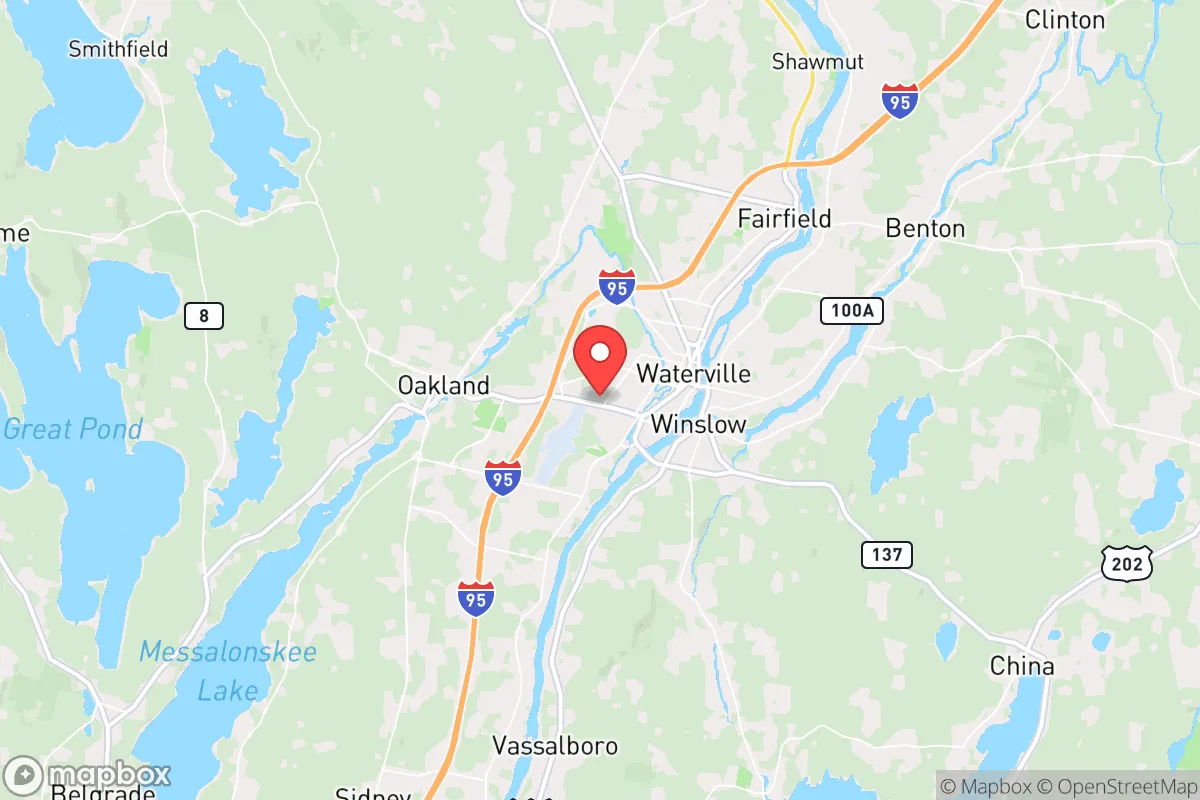
District shown is the primary district for this city’s centroid. Cities may span multiple districts.
Local Political AnalysisPolitical Analysis of Waterville, ME
Waterville, Maine, leans heavily Democratic, with a Cook PVI of D+11, meaning it votes about 11 points more Democratic than the national average. This wasn’t always the case—I remember when this town was more of a mixed bag, with a strong working-class, independent streak that didn’t automatically fall in line with either party. Over the last decade or so, though, the shift has been pretty dramatic, driven largely by the influence of Colby College and an influx of younger, more progressive residents. The local elections and policy debates now feel like they’re moving further left every cycle, and it’s something that’s hard to ignore if you’ve been here a while.
How it compares
If you drive just 15 minutes south to Fairfield or 20 minutes north to Pittsfield, you’ll find towns that still vote more conservatively, often splitting tickets and keeping a healthy skepticism of big government. Even Skowhegan, about 25 minutes north, has a more balanced political mix. Waterville, by contrast, has become an island of progressive politics in central Maine. The city council and school board have increasingly pushed initiatives that feel like they’re coming straight out of Portland or Boston—things like expanded social programs, zoning changes that prioritize density over property rights, and a general attitude that government knows best. It’s a stark contrast to the surrounding towns, where folks are more likely to push back on mandates and want to keep decisions local.
What this means for residents
For those of us who value personal freedoms and limited government, living in Waterville means constantly watching for overreach. The local government has shown a willingness to get involved in areas that used to be left to individuals—whether it’s business regulations, property use, or even how you heat your home. There’s a growing sense that if you don’t align with the progressive agenda, your voice gets drowned out. Property taxes have crept up to fund new programs, and there’s less patience for the old-school Maine attitude of “live and let live.” If you’re a small business owner or someone who just wants to be left alone, you might find yourself butting heads with the local bureaucracy more often than you’d like. The long-term trend is concerning: as the college and its affiliated institutions gain more influence, the political culture is likely to keep shifting left, making it harder for traditional values to get a fair hearing.
One cultural distinction that stands out is the local push for “sanctuary city” policies and climate action plans that go beyond state requirements. These aren’t just symbolic—they come with real costs and enforcement mechanisms that can feel intrusive. The city has also embraced diversity, equity, and inclusion initiatives in public schools and city hiring, which sounds good on paper but often translates into mandatory training and policies that prioritize group identity over individual merit. It’s a far cry from the Waterville I grew up in, where the focus was on hard work and community, not on checking ideological boxes. If you’re considering a move here, just know that the political climate is increasingly one-size-fits-all, and it’s not likely to change direction anytime soon.

State Political ClimatePolitical Climate in Maine
State Political AnalysisPolitical Environment in the State
Maine has long been a political paradox — a state that votes blue at the presidential level but maintains a fiercely independent, libertarian streak that often surprises outsiders. Over the past 20 years, the state has shifted from a moderate, blue-dog Democratic stronghold to a more progressive-leaning state, but the rural-urban divide has widened dramatically, with coastal and southern Maine pulling left while the northern and western counties dig in as conservative redoubts. For a conservative considering relocation, the key question is whether Maine’s famous “Live Free or Die” ethos still holds water, or whether the progressive wave from Portland is washing over the rest of the state.
Urban vs. rural divide
The political map of Maine is essentially a tale of two states. The Portland metro area — including Portland, South Portland, and Westbrook — is the engine of the state’s Democratic vote, delivering margins of +30 to +40 points in recent elections. Cumberland County alone accounts for nearly a quarter of the state’s population and reliably votes blue. Meanwhile, York County (home to Kennebunk and Sanford) has become a swing area, with some towns trending left as commuters from Boston move in. Drive north of Augusta, and the picture flips dramatically. Penobscot County (Bangor) is a classic swing county, but further north, Aroostook County — the largest county east of the Mississippi — votes heavily Republican, with many precincts going +20 to +30 for Trump in 2020. Washington County (Machias, Eastport) and Oxford County (Rumford, Norway) are also reliably red, driven by logging, fishing, and a deep suspicion of Augusta’s overreach. The Kennebec River Valley (Augusta, Waterville) leans slightly blue but is more moderate than Portland. The bottom line: if you want a conservative community, you’re looking at the northern two-thirds of the state, not the southern coast.
Policy environment
Maine’s policy climate is a mixed bag for conservatives. The state has a progressive income tax with rates up to 7.15%, and property taxes are among the highest in the nation — expect to pay 1.2% to 1.5% of your home’s value annually. There is no sales tax on most goods, but the state has expanded its tax base in recent years. Education policy is dominated by the teachers’ union, and school choice is limited — Maine has a weak charter school law and no voucher program, though homeschooling is legal with moderate reporting requirements. Healthcare is heavily regulated, with a state-run insurance exchange and Medicaid expansion (passed via ballot initiative in 2017). Election laws are relatively open: same-day voter registration is allowed, and no voter ID is required at the polls — a point of concern for those worried about election integrity. The state also has a ranked-choice voting system for federal and state primaries, which has been criticized by conservatives as confusing and prone to manipulation. On the plus side, Maine has no “red flag” gun law (yet), and the state’s constitution explicitly protects the right to keep and bear arms.
Trajectory & freedom
Over the past decade, Maine has been trending in a concerning direction for personal liberty. The most significant flashpoint is LD 2004, a 2023 law that imposes a 72-hour waiting period on firearm purchases and expands background checks to private sales — a direct infringement on the Second Amendment that passed along party lines. Governor Janet Mills, a Democrat, signed it into law, and it has galvanized conservative opposition. On the parental rights front, Maine’s Department of Education has adopted policies that allow students to change their gender identity on school records without parental consent, and the state’s “Maine Learning Results” curriculum includes controversial social-emotional learning standards that some parents view as indoctrination. Medical autonomy took a hit with the state’s strict COVID-19 mandates, which included a vaccine requirement for healthcare workers that remains in place. Property rights are under pressure from the Land for Maine’s Future program, which uses taxpayer money to acquire private land for conservation — a noble goal, but one that can limit development and raise costs for rural landowners. On the tax front, the state’s Property Tax Fairness Credit offers some relief for low-income residents, but overall, the tax burden has increased faster than inflation. The one bright spot: Maine’s right-to-try law and its constitutional carry (permitless concealed carry) remain intact, though under constant attack from the legislature.
Civil unrest & political movements
Maine is not a hotbed of street protests, but there have been notable flashpoints. In 2020, Portland saw large Black Lives Matter demonstrations, and the city’s sanctuary city status (declared in 2014) has been a source of tension, with the state refusing to cooperate with ICE detainers. The Maine Gun Owners’ Rights Coalition is active and well-organized, holding rallies at the State House whenever gun bills come up. The Maine Republican Party has been split between establishment moderates and a more populist, Trump-aligned wing, with the latter gaining ground in rural counties. There have been secessionist rumblings in Aroostook County — talk of forming a “North Maine” or joining New Brunswick — but nothing serious has materialized. Election integrity concerns flared after the 2020 election, when Maine’s use of ranked-choice voting and universal mail-in ballots drew criticism from conservatives, though no major fraud was proven. The Maine Wire and other conservative outlets have documented instances of voter roll irregularities, but the state’s Democratic secretary of state has resisted calls for a full audit. For a new resident, the most visible political movement is the “Maine Way” — a quiet, stubborn independence that resists both Augusta and Washington, but is slowly being eroded by in-migration from Massachusetts and New York.
Projection
Looking ahead 5-10 years, the trend is not favorable for conservatives. In-migration from blue states — particularly Massachusetts, New York, and Connecticut — is accelerating, especially in southern Maine and along the coast. These newcomers tend to bring their voting habits with them, pushing Cumberland and York counties further left. The state’s population is aging and shrinking in rural areas, which means the political power of the northern counties will continue to decline relative to the Portland metro. The Democratic Party has a firm grip on the governorship (Mills is term-limited in 2026, but a progressive successor is likely) and both chambers of the legislature. Expect more gun control, more education mandates, and higher taxes. The one wild card is the Maine Constitution’s strong home rule provisions, which allow towns to opt out of some state mandates — conservative towns like Caribou and Fort Kent may become de facto sanctuaries for Second Amendment rights. But overall, a conservative moving to Maine today should expect to find a state that is increasingly hostile to their values, especially if they settle south of Augusta.
Bottom line for a new resident: If you’re a conservative looking for a low-tax, high-freedom environment, Maine is not the safe bet it was 20 years ago. The northern and western counties still offer a strong sense of community and limited government interference, but the state-level trajectory is clearly leftward. You’ll need to be politically active to protect your rights, and you should expect to pay a premium in property taxes for the privilege of living in a beautiful but increasingly progressive state. If you’re willing to fight for your values and live in a rural area, Maine can still work — but don’t expect the state to stay the same for long.
* Values derived from national, state, county, city and local statistics and may differ in a specific area. Last updated: 2026-05-04T10:28:53.000Z
Narrative content on this page is AI-generated and may contain mistakes. Verify any details that matter before acting on them.
ReloMaps may earn a commission from affiliate links at no extra cost to you.

