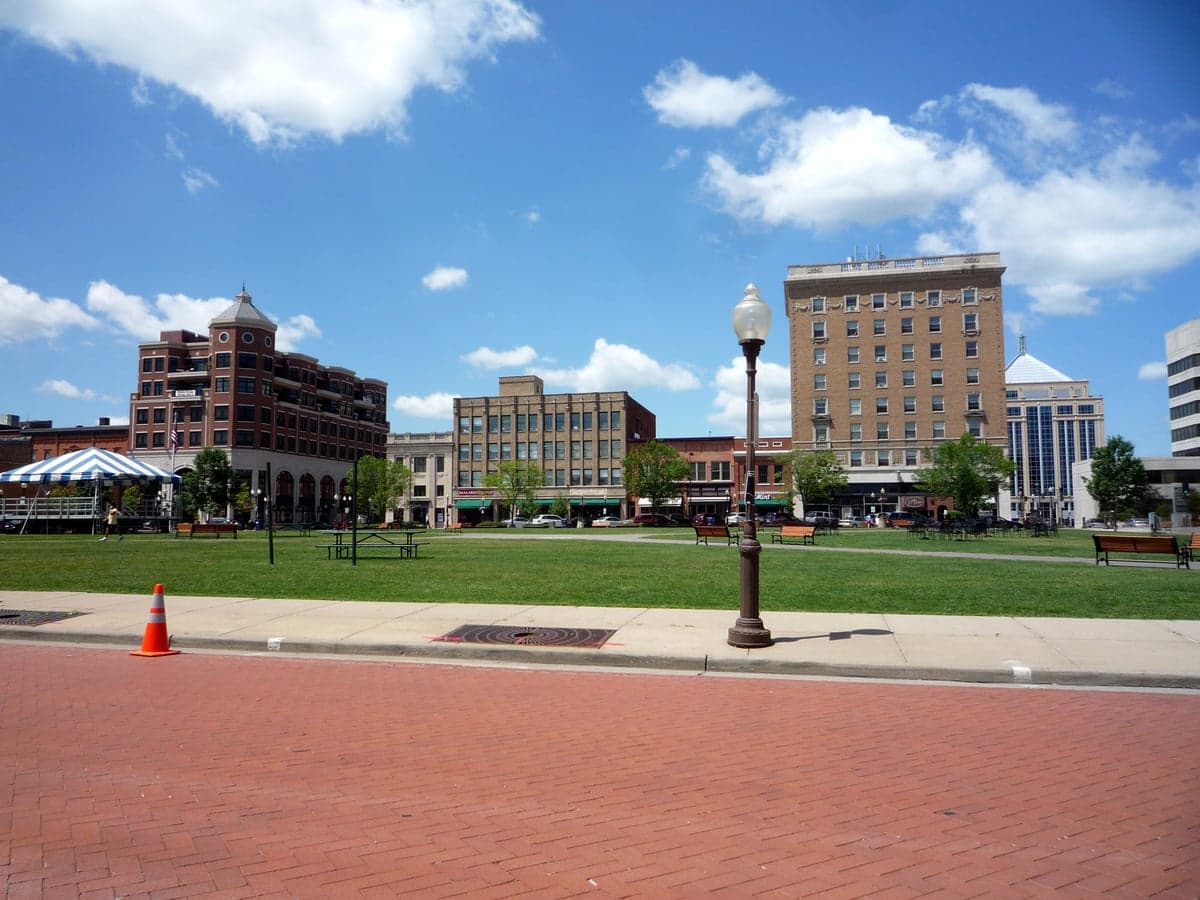
Photo: Wikipedia
Strategic Assessment of Wausau, WI
Meaningful friction. Expect exposure to either population pressure, blast zones, or natural disaster risk. Consider buying a retreat property.
What does the Strategic Assessment tell us?
Our Strategic Assessment grades tactical survivability of an area. Major population centers, military targets, fallout zones, natural disasters, and border exposure all drive risk — lower exposure means a more defensible position in a crisis.
This is heavily inspired by Joel Skousen's Strategic Relocation book. Highly recommended you checkout the book ($)What does this tell us?
Our Strategic Assessment grades tactical survivability of an area. Major population centers, military targets, fallout zones, natural disasters, and border exposure all drive risk — lower exposure means a more defensible position in a crisis.
This is heavily inspired by Joel Skousen's Strategic Relocation book. Highly recommended you checkout the book ($)Strategic Pillars

Key Distances
Regional Safe Places
Below is our recommended "safe zones" in Wisconsin and the surrounding area based on our strategic heuristics. For most people, it's unrealistic to live in a “safe zone” full-time due to work, family or other personal reasons. They tend to be more rural. However, many of these areas are perfect for second homes and retreat properties that double as a vacation home or even a short-term rental.
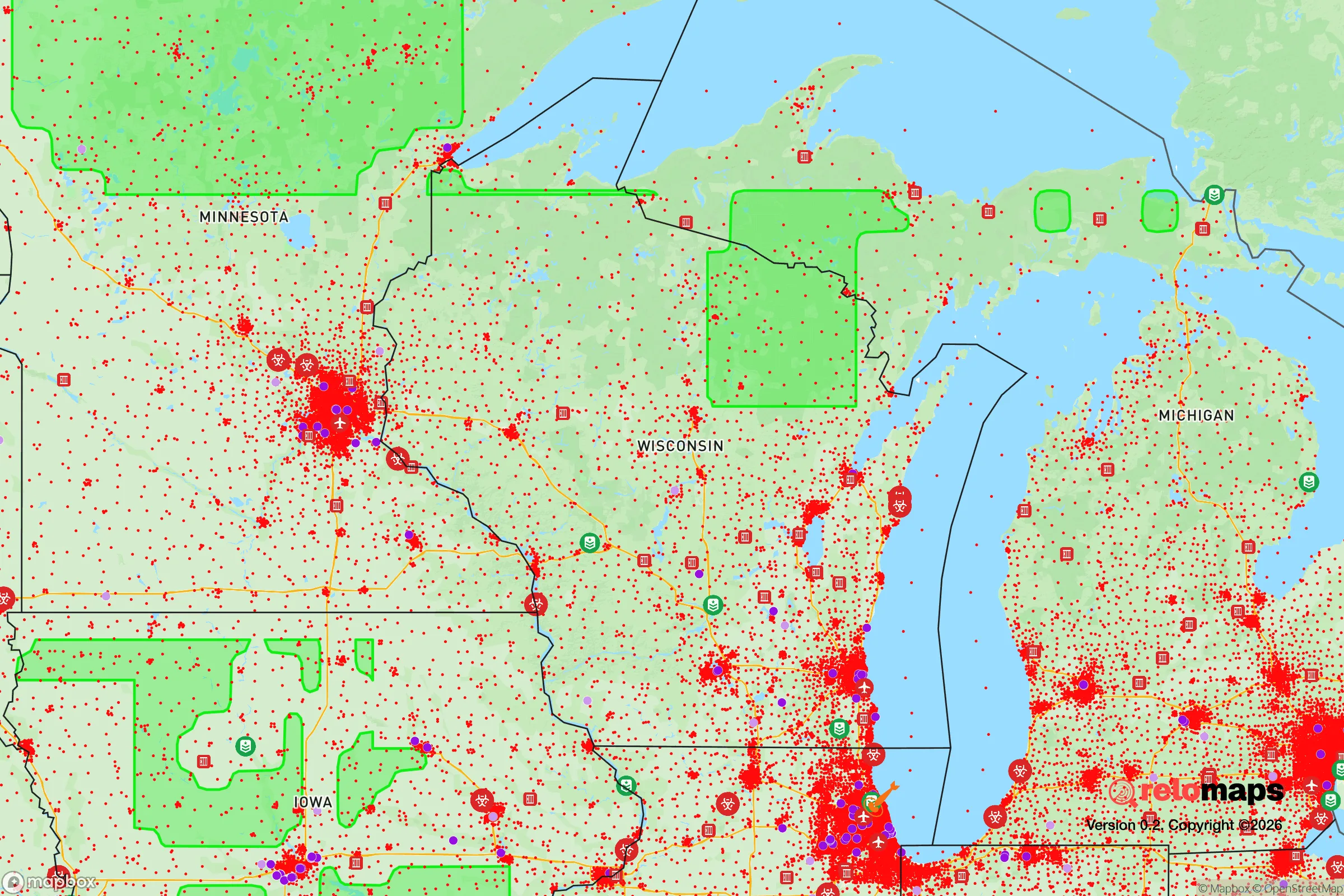
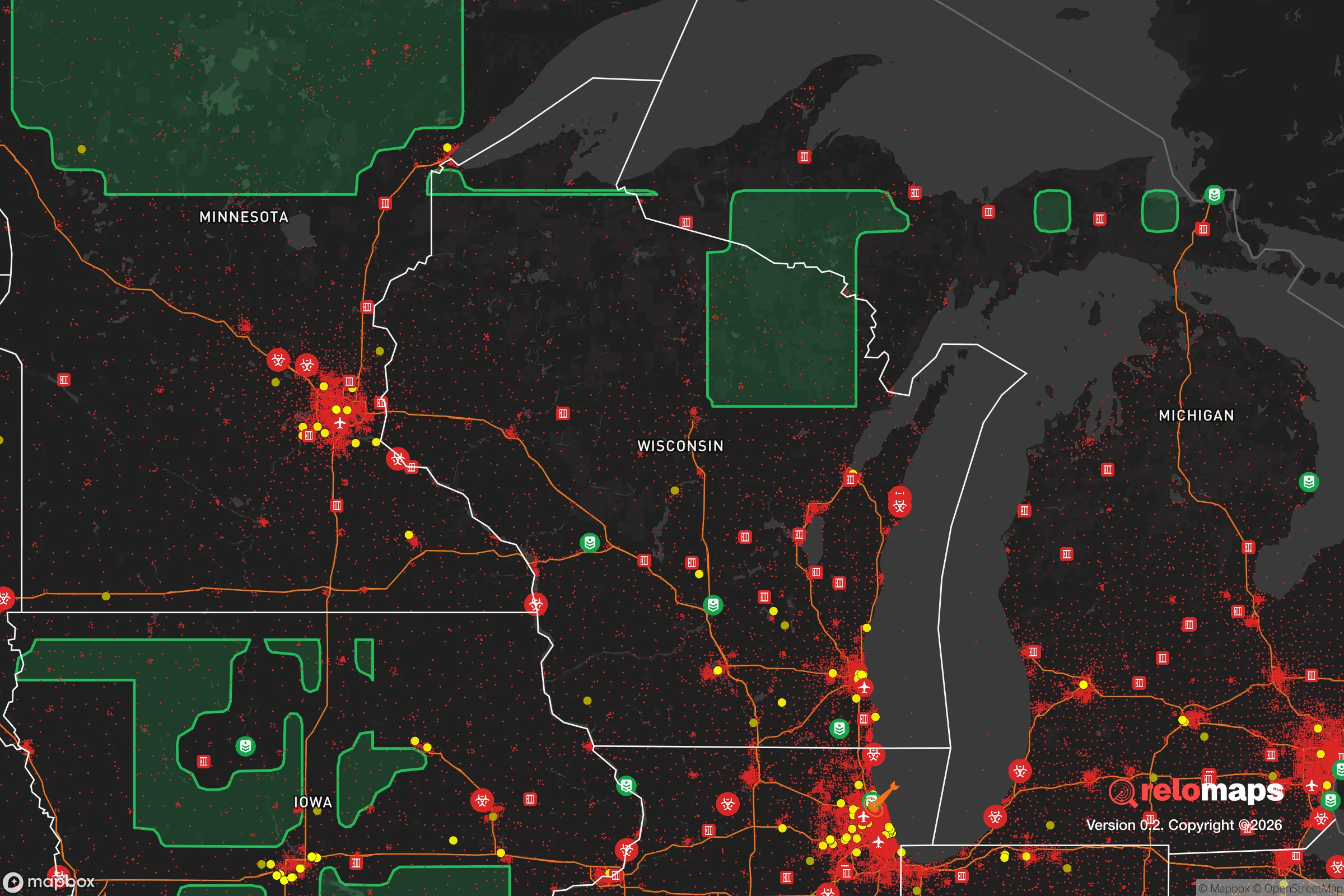


Important Note: For informational purposes only. This does not mean nothing bad ever happens in the green zones. Please use common sense. This is based on public data and modeled with AI. We tried to take a conservative approach but mistakes happen. We update this regularly as new information becomes available.
Solar Generator Recommendations
Backup power matters more here than in safer locations. We've picked three solar generators across budgets and capacity tiers — start with the budget unit if you only need a few essentials, or step up if you want to run a fridge and HVAC for days at a time.

Jackery Portable Power Station Explorer 300
Budget OptionPower on the Go: Weighing only 11 lbs, it's convenient to set up and store with book-sized foldable solar panels

BLUETTI Portable Power Station AC180
Designed for both indoor and outdoor scenarios, AC180 is highly capable as it has a robost capacity and continuous output power.

EF ECOFLOW DELTA Pro Ultra Power Station
Upgraded PickEcoFlow DELTA Pro Ultra is a whole-home energy system designed to grow with your family. Integrated with the Smart Home Panel 2, it scales to meet your evolving energy needs — keeping your home powered, intelligent, and secure through every stage of life.
We earn a commission, at no additional cost to you.
Strategic Assessment Analysis
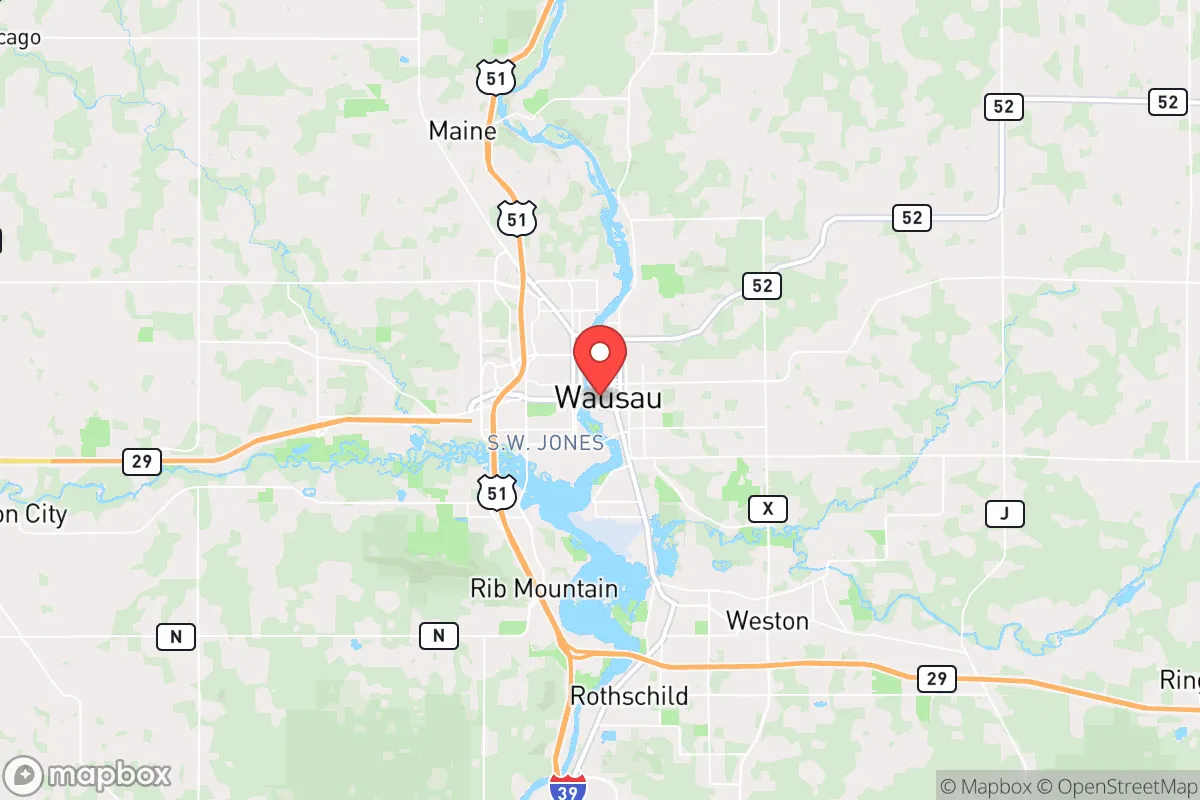
Wausau, Wisconsin, sits in a strategic sweet spot that few relocation analysts fully appreciate: far enough from the nation’s most volatile population centers to avoid the worst of cascading failures, yet close enough to essential supply chains and medical infrastructure to remain functional during prolonged disruptions. Nestled along the Wisconsin River in Marathon County, this city of roughly 40,000 anchors a region defined by hardscrabble self-reliance, cold winters that naturally filter out the unserious, and a geography that offers genuine defensibility without the isolation that makes long-term survival impractical. For a conservative-minded relocator—whether single or raising a family—Wausau presents a rare combination of low strategic risk, high practical resilience, and a cultural baseline that hasn’t yet been hollowed out by the trends destabilizing larger metros.
Geographic position and natural advantages for long-term stability
Wausau’s location in north-central Wisconsin places it roughly 150 miles from Minneapolis, 180 miles from Milwaukee, and 200 miles from Chicago—close enough to access major medical centers and supply hubs in a crisis, but far enough that a riot, grid collapse, or disease outbreak in those cities is unlikely to reach here before you have time to react. The city sits at the southern edge of the Northwoods, a vast region of state and national forests that provides natural barriers to mass movement and offers abundant game, timber, and water. The Wisconsin River runs directly through town, providing a reliable surface water source that doesn’t depend on municipal treatment plants staying online. The surrounding terrain is rolling hills and mixed hardwood-conifer forest, which limits line-of-sight for any hostile reconnaissance and creates natural choke points on the few roads leading in and out. Marathon County’s agricultural base—dairy, potatoes, ginseng, and corn—means local food production is not a theoretical backup but an ongoing reality. The area’s cold climate, with average January highs around 20°F, acts as a built-in population filter: those unwilling or unable to handle sustained winter conditions simply don’t stay, which keeps the transient and dependent populations lower than in warmer relocation destinations.
Risks, exposures, and proximity to fallout-relevant landmarks
No location is without vulnerabilities, and Wausau has several that a serious relocator must weigh. The most obvious is the Kewaunee Nuclear Power Plant, located about 100 miles east on Lake Michigan. While not close enough to be in the immediate blast or lethal radiation zone of a worst-case event, prevailing westerly winds mean a release could carry fallout across central Wisconsin within hours. A secondary concern is the Dairyland Power Cooperative coal plant in Genoa, roughly 120 miles southwest—an aging facility that, if targeted or failing, could create regional grid instability. More immediate for daily prepping: Wausau lies within the tornado alley of the Upper Midwest, with an average of 12-15 tornado warnings per season. The city’s older housing stock, much of it built before modern wind-load standards, means a direct hit could disrupt shelter and supply chains for weeks. On the human-risk side, Wausau has seen a modest but steady influx of Hmong and Somali refugees over the past two decades, which has created some cultural friction and occasional low-level civil unrest—nothing approaching Milwaukee or Minneapolis, but worth noting for those prioritizing homogeneous social cohesion. The nearest major military installation is Volk Field Air National Guard Base, 80 miles south, which is a low-priority target but could become a staging area during federal emergencies, potentially drawing unwanted attention.
Practical resilience for a relocator: food, water, energy, and defensibility
For a single person or family serious about self-sufficiency, Wausau’s practical assets are substantial. Water access is excellent: the Wisconsin River is year-round and fishable, and the region’s high water table means shallow wells are viable on most rural properties within 15 minutes of downtown. The city’s municipal water supply draws from deep sandstone aquifers, not surface reservoirs, so it’s less vulnerable to contamination or drought. Food production is realistic: Marathon County is the top ginseng producer in the U.S. and a major dairy region, meaning local farmers’ markets and CSAs operate from May through October. For long-term storage, the cold winters allow natural freezing of meat and produce without relying on electric freezers. Hunting licenses for deer, turkey, and small game are inexpensive and readily available; the Chequamegon-Nicolet National Forest, an hour north, offers public land with minimal competition. Energy resilience is moderate: Wausau’s grid is served by WPS (Wisconsin Public Service), which has a decent reliability record but is not hardened against EMP or cyberattack. Solar panels are viable—the area gets about 4.2 peak sun hours per day in summer—but winter generation drops to under 2 hours, so battery storage and a backup generator (preferably dual-fuel) are essential. Wood heating is the real advantage here: firewood permits on state land cost $5 per cord, and the surrounding forests provide enough deadfall to heat a home through a hard winter without ever touching the grid. Defensibility is good for a small city: Wausau’s layout, with the river cutting through the center and hills on both sides, means a small group could control the bridges and main arterials (Business 51, Highway 29) with minimal manpower. The surrounding rural areas offer numerous farmhouses, hunting cabins, and undeveloped parcels where a family could lay low for months without detection. The local sheriff’s department is professional and well-funded, but in a prolonged breakdown, law enforcement will concentrate on the city core, leaving the outskirts to those who prepared.
The overall strategic picture for Wausau is one of balanced viability. It lacks the extreme remoteness of, say, the Idaho panhandle or the Upper Peninsula, but that’s a feature, not a bug—complete isolation creates its own risks, from medical emergencies to supply shortages to simple loneliness. Wausau offers a middle path: a community that still functions as a community, with a working hospital (Aspirus Wausau Hospital, Level II trauma center), a regional airport that can handle cargo flights, and a population that, by and large, still believes in neighborly mutual aid rather than government dependency. The winters are brutal, and that’s exactly the point—they ensure that only those with genuine grit and preparation will be here when things get hard. For a conservative relocator who wants to be ready for the worst without moving to a bunker in the woods, Wausau deserves a serious look. It’s not a paradise, but it’s a place where a prepared individual or family can ride out the coming storms with a reasonable chance of coming through intact.

* Values derived from national, state, county, city and local statistics and may differ in a specific area. Last updated: 2026-04-19T09:25:02.000Z
Narrative content on this page is AI-generated and may contain mistakes. Verify any details that matter before acting on them.
ReloMaps may earn a commission from affiliate links at no extra cost to you.

