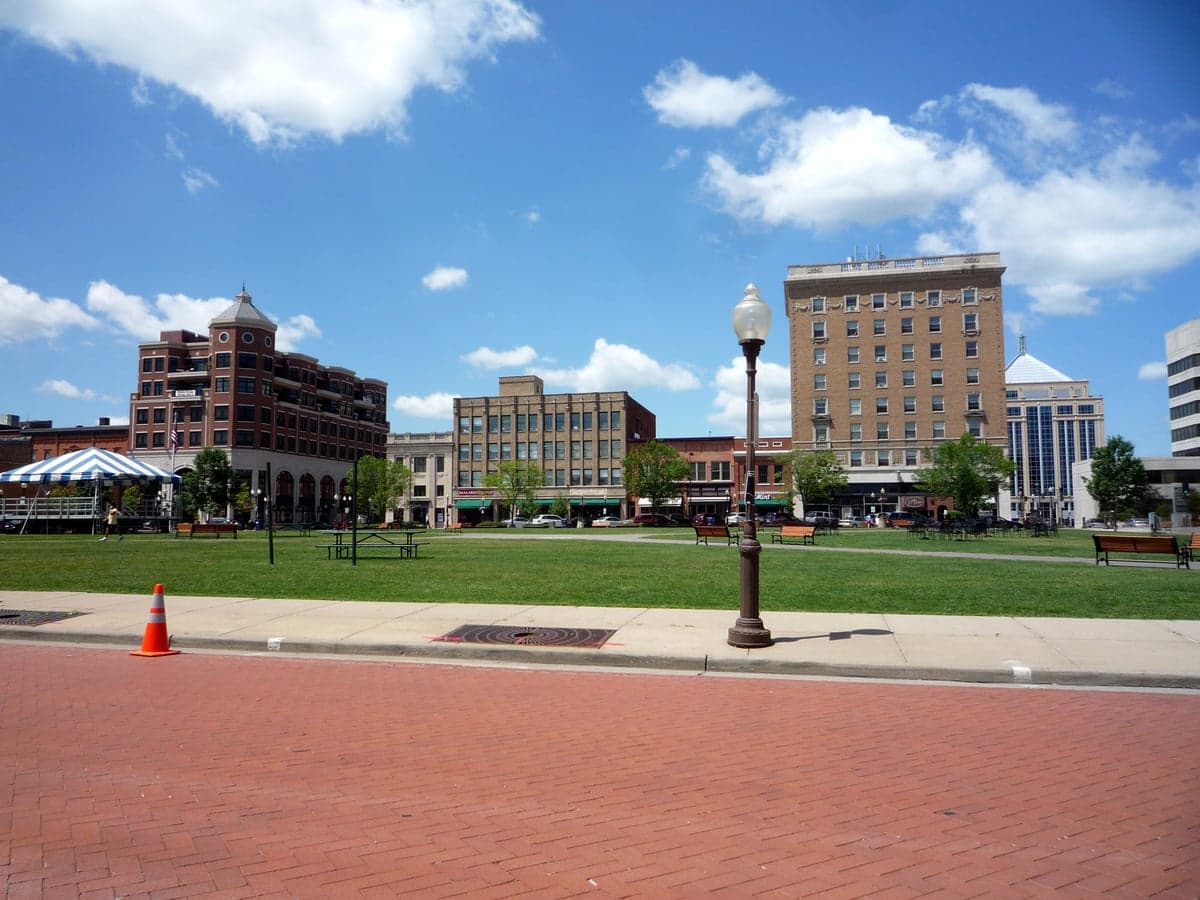
Photo: Wikipedia
Political ClimatePolitical Climate in Wausau, WI
District shown is the primary district for this city’s centroid. Cities may span multiple districts.
Local Political AnalysisPolitical Analysis of Wausau, WI
Wausau has long been a solidly conservative stronghold in central Wisconsin, with a Cook PVI of R+11 that reflects its deep-rooted Republican lean. But if you’ve lived here as long as I have, you’ve seen the political winds shift in ways that feel less like a natural evolution and more like a slow erosion of the values that made this town a great place to raise a family. The area still votes reliably red in most elections, but there’s a growing undercurrent of progressive activism—especially in the city proper—that’s starting to chip away at the traditional, liberty-minded culture we’ve always known.
How it compares
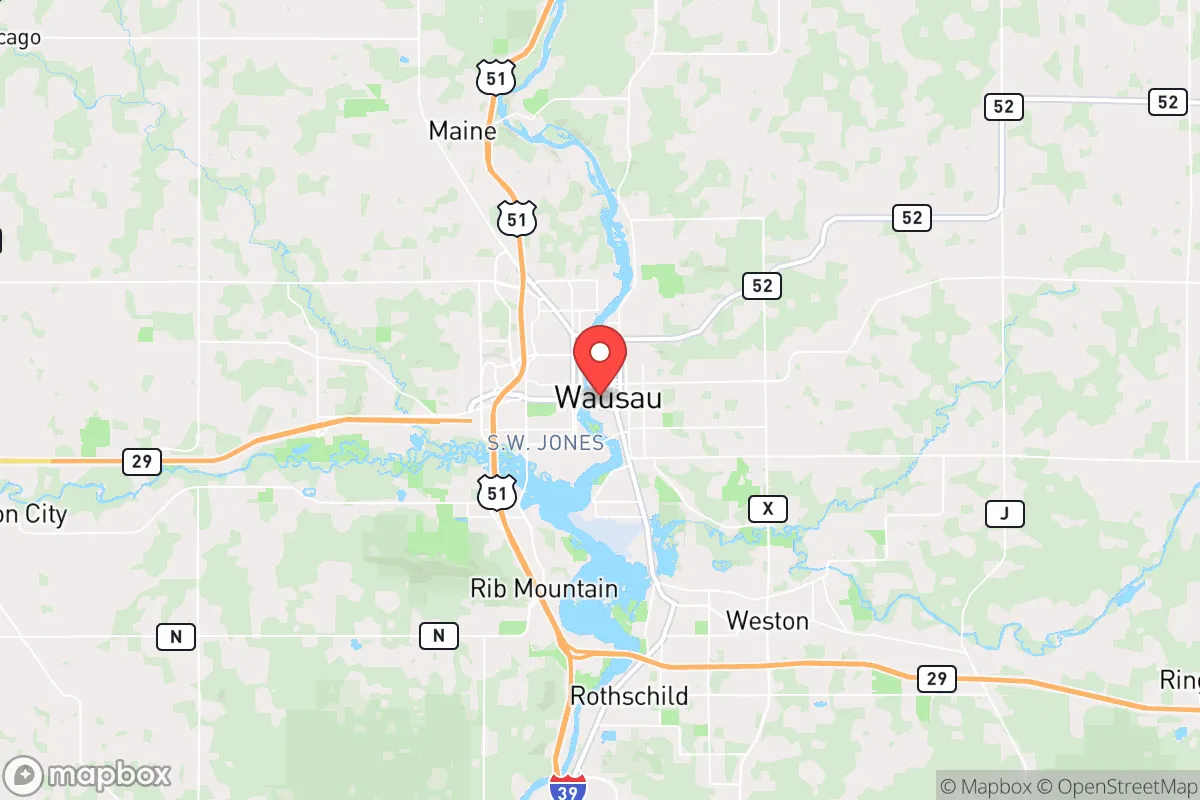
Drive 15 minutes south to Stevens Point, and you’ll find a starkly different political climate—a college town that’s swung hard left, with a city council that’s embraced everything from sanctuary city policies to heavy-handed zoning restrictions. Wausau, by contrast, has held the line better, but the contrast is getting blurrier. The surrounding townships like Rib Mountain and Weston remain deeply conservative, with strong support for limited government and Second Amendment rights. But inside Wausau’s city limits, you’ll see more yard signs for progressive candidates and hear more chatter about “equity” initiatives at school board meetings. It’s a tale of two Wausaus now: the rural, common-sense majority versus a vocal, organized minority pushing for bigger government and more control over our daily lives.
What this means for residents
For those of us who value personal freedoms—like the right to make our own healthcare choices, keep and bear arms without endless red tape, or run a small business without drowning in regulations—the trend is concerning. The local government has flirted with mask mandates and vaccine passport discussions in recent years, and while those didn’t stick, the appetite for that kind of overreach hasn’t disappeared. Property taxes have crept up as the city expands its social programs, and there’s a growing push to adopt “climate action plans” that could mean higher energy costs and more bureaucratic hurdles for homeowners and farmers alike. The school district has also become a battleground, with debates over curriculum transparency and parental rights heating up. If you’re someone who believes government should stay out of your living room and your wallet, you’ll want to keep a close eye on local elections—because the quiet shift toward progressive policies is real, even if it hasn’t fully taken hold yet.
One thing that still sets Wausau apart is its strong sense of community and its resistance to the kind of radical change you see in Madison or Milwaukee. The Marathon County Board remains majority conservative, and the local gun culture is alive and well—you’ll still see “Come and Take It” stickers on pickup trucks at the Menards parking lot. But the cultural battle lines are drawn. The annual Hmong New Year celebration is a point of pride, but it’s also been co-opted by activists pushing for “diversity, equity, and inclusion” mandates in city hiring. The bottom line: Wausau is still a good place for folks who want to live free, but you can’t afford to be complacent. The same forces that have turned other Wisconsin towns into progressive enclaves are knocking on our door, and the only thing standing between us and that future is staying informed and showing up to vote.

State Political ClimatePolitical Climate in Wisconsin
State Political AnalysisPolitical Environment in the State
Wisconsin has long been a classic swing state, but over the past decade it has hardened into a deeply polarized battleground where the rural-urban split defines everything. The state’s overall partisan lean is essentially dead-even at the presidential level—Donald Trump won it by less than a point in 2016 and 2020, and the 2024 race was similarly razor-thin—but beneath that surface, the political coalitions have shifted dramatically. The Democratic base is now overwhelmingly concentrated in the Madison-Milwaukee corridor, while the rest of the state has moved decisively right, creating a political geography that feels like two different countries sharing a border.
Urban vs. rural divide
The political map of Wisconsin is a textbook case of the urban-rural chasm. Milwaukee County, home to the state’s largest city, votes reliably Democratic by 30-40 points, while Dane County (Madison) is even more lopsided, often pushing +50 or more for Democrats. These two counties alone generate enough votes to keep statewide races competitive. Meanwhile, the rest of the state—the WOW counties (Waukesha, Ozaukee, Washington) surrounding Milwaukee—are deeply Republican, with Waukesha County routinely voting +30 or more for GOP candidates. The real story, though, is the exurban and rural shift: counties like Brown (Green Bay), Outagamie (Appleton), and Winnebago (Oshkosh) have all trended rightward over the past two cycles, driven by working-class voters who feel abandoned by Democratic trade and cultural policies. The Driftless Region in the southwest, once a Democratic stronghold, has flipped hard red, with counties like Vernon and Crawford voting for Trump after backing Obama twice. The only blue outliers in rural Wisconsin are a handful of Native American reservation counties and the university town of Eau Claire, which has become a mini-Madison as the city has grown.
Policy environment
Wisconsin’s policy environment is a mixed bag for conservatives, reflecting its divided government. The state has a flat income tax rate of 4.4% (down from 7.65% a decade ago), and property taxes are relatively moderate compared to Illinois or Minnesota. The state legislature, gerrymandered by Republicans after the 2011 redistricting, has passed a number of conservative priorities: Act 10 (2011) effectively ended collective bargaining for most public employees, and the state is a right-to-work state. However, Democratic Governor Tony Evers has vetoed numerous conservative bills, including a 2023 parental rights bill that would have required schools to notify parents of curriculum changes. On education, Wisconsin has a robust school choice program—one of the oldest in the nation—with vouchers available in Milwaukee, Racine, and statewide. But the state also has a high per-pupil spending level, and the Department of Public Instruction is run by a liberal superintendent. Election laws are a flashpoint: Wisconsin has strict voter ID requirements, but also allows same-day registration and no-excuse absentee voting, creating a system that both sides distrust. The state’s healthcare landscape is dominated by two large systems (Aurora and UW Health), and Medicaid expansion was rejected by the legislature but partially implemented through a waiver.
Trajectory & freedom
On the freedom front, Wisconsin is a study in contradictions. The good news: the state has a strong tradition of gun rights, with shall-issue concealed carry and no state-level assault weapons ban. In 2023, the legislature passed a bill allowing permitless carry, though Evers vetoed it. Property rights are generally respected, and there is no state income tax on retirement income, which has made Wisconsin increasingly attractive to retirees from Illinois. The bad news: the state has seen a steady creep of government overreach, particularly from the executive branch. During COVID, Evers unilaterally extended a statewide mask mandate and used emergency powers to shut down businesses, actions that were later struck down by the state Supreme Court. More recently, the governor has used his partial veto power to rewrite budget bills in ways that bypass the legislature—a uniquely Wisconsin power that has been abused. Parental rights have become a major battleground: in 2024, the legislature passed a bill requiring schools to notify parents if a student requests a name or pronoun change, but Evers vetoed it. The state Supreme Court flipped to a 4-3 liberal majority in 2023 after a record-spending election, and that court is now considering a challenge to the state’s legislative maps, which could fundamentally alter the balance of power. For a conservative, the trajectory is concerning: the state is becoming less free at the institutional level, even as the legislature tries to push back.
Civil unrest & political movements
Wisconsin has been a flashpoint for political unrest in ways that few states can match. The 2011 Act 10 protests in Madison drew over 100,000 people to the Capitol and occupied the building for weeks, setting a template for left-wing activism. In 2020, the Kenosha riots after the Jacob Blake shooting saw two nights of arson and looting, followed by the Kyle Rittenhouse shooting, which became a national flashpoint for self-defense and Second Amendment debates. The state has a well-organized conservative grassroots network, particularly around gun rights (Wisconsin Carry, Inc.) and election integrity, with groups like the Wisconsin Voters Alliance filing lawsuits over ballot drop boxes and private funding of elections. Immigration politics are less heated than in border states, but the issue flared in 2024 when Evers vetoed a bill that would have required local law enforcement to cooperate with ICE. There is no sanctuary city policy in Milwaukee, but the city has a "trust ordinance" that limits cooperation. Election integrity remains a raw nerve: the 2020 election saw widespread use of drop boxes in Madison and Milwaukee, and a subsequent investigation by the conservative Wisconsin Institute for Law & Liberty found numerous irregularities, though no evidence of widespread fraud. The 2024 election saw a massive increase in partisan poll watchers on both sides.
Projection
Looking ahead 5-10 years, Wisconsin is likely to become even more polarized, with the urban-rural divide deepening. The Madison-Milwaukee corridor will continue to grow, driven by university expansion and corporate relocations (Microsoft is building a data center in Racine County, and Foxconn’s failed project in Mount Pleasant still looms). This in-migration is predominantly left-leaning, which will make the state harder for Republicans to win statewide. However, the rural and exurban areas are also growing, particularly in the WOW counties and the Fox Valley, and these areas are becoming more conservative as they absorb refugees from Illinois and Minnesota. The wild card is the state Supreme Court: if the liberal majority redraws legislative maps to be more competitive, Republicans could lose their structural advantage in the Assembly, leading to a more evenly divided government. On policy, expect continued battles over school choice, parental rights, and election laws. The state’s flat tax is likely to stay, but property taxes may rise as local governments struggle with pension costs. For a conservative moving in, the bottom line is that Wisconsin offers a high quality of life, low crime outside the cities, and a strong economy, but you will be living in a state where the political pendulum swings hard every two years, and where your vote truly matters.
For a new resident, the practical takeaway is this: if you’re moving to the WOW counties, the Fox Valley, or the Driftless Region, you’ll find a community that shares your values on taxes, guns, and education. If you’re moving to Madison or Milwaukee, you’ll be in a blue bubble where progressive policies dominate. Either way, expect to pay attention to politics—Wisconsin is not a state where you can tune out. The constant electioneering, the high-stakes court battles, and the cultural flashpoints mean that your vote and your voice will matter more here than in most places. Just know that the state is in the middle of a demographic and political transformation, and the next decade will determine whether it becomes a red-leaning swing state or a blue-leaning one.
* Values derived from national, state, county, city and local statistics and may differ in a specific area. Last updated: 2026-04-19T09:25:02.000Z
Narrative content on this page is AI-generated and may contain mistakes. Verify any details that matter before acting on them.
ReloMaps may earn a commission from affiliate links at no extra cost to you.

