Photo: Wikipedia
Quality of Life in Waverly, IA
Above-average quality of iife. The area offers a reasonable cost of living, decent mobility, and a mix of neighborhood amenities.
What does Quality of Life tell us?
Quality of Life blends cost of living, nearby amenities, socioeconomic signals, and neighborhood character. City-level scores represent the whole municipality; individual neighborhoods can differ.
What does this tell us?
Quality of Life blends cost of living, nearby amenities, socioeconomic signals, and neighborhood character. City-level scores represent the whole municipality; individual neighborhoods can differ.
Cost of Living
23% below national average
The Real Cost of Living in Waverly, IA for 2026
| Tier | Individual | Family (4) |
|---|---|---|
| Survival | $15k | $27k |
| Comfortable | $42k | $61k |
| Luxury | $142k+ | $220k+ |
| Elite (Top 5%) | $190k+ | $294k+ |
128%
The Area Signal
A metric tracking the socioeconomic signals of the area.


Hobbies
Explore the areaGroceries
7 within 10 miles
Gas
8 within 10 miles
Hospital
3 within 20 miles
Airport
ORD — Chicago O'Hare International
Post Office
USPS — Waverly, IA
Critical Amenities
Quality-of-Life Analysis
Waverly, Iowa, offers a notably affordable quality of life that attracts a mix of young families, retirees, and professionals seeking a slower pace without sacrificing access to essentials. With a cost of living index of 77—well below the U.S. average of 100—the community is characterized by its stable, middle-to-upper-middle-class demographic, where many residents work in education, healthcare, or manufacturing. The town’s low crime rates and strong sense of civic engagement make it particularly appealing to those prioritizing safety and community connection over urban amenities.
Cost of living, housing affordability, and how Waverly compares to nearby cities
Waverly’s cost of living is a standout advantage, driven largely by housing costs that are significantly lower than national benchmarks. The median home value sits at $215,200, which is roughly 30% below the national median, while the median rent of $909 per month is similarly accessible. Compared to nearby Waterloo (cost of living index 82) or Cedar Falls (index 85), Waverly is more affordable, though it offers a quieter, less commercialized environment. The average commute of just under 17 minutes is notably short, reflecting the town’s compact layout and the prevalence of local employment—many residents work at Waverly Health Center, the Waverly-Shell Rock School District, or regional manufacturers like Midwest Manufacturing. This combination of low housing costs and minimal commuting expenses means that even median-income households can achieve a comfortable standard of living with room for savings.
Schools, local amenities, and what daily life feels like in Waverly
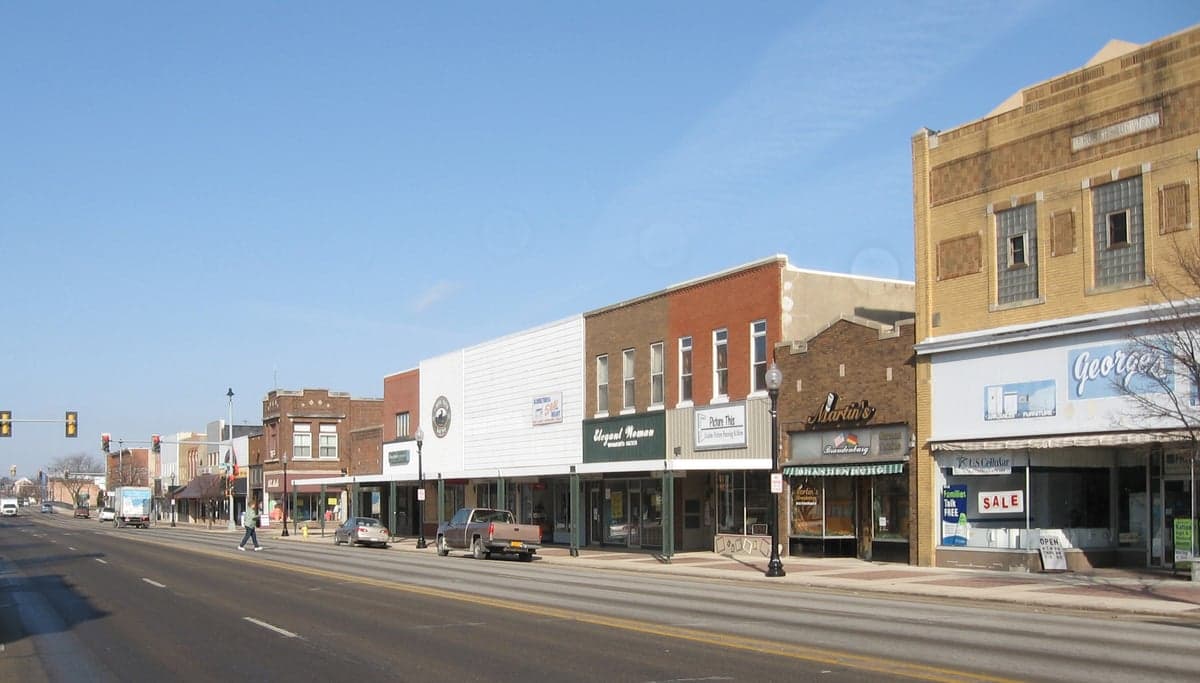
Daily life in Waverly revolves around a walkable downtown, the Cedar River, and a calendar of community events. The Waverly-Shell Rock Community School District is a major draw, consistently earning above-average ratings for academics and extracurriculars, with a graduation rate near 95%. The town’s amenities include the Waverly Public Library, a YMCA, and several parks like Kohls Park and Bremer County River Greenbelt, which offer trails, fishing, and canoeing. For shopping and dining, residents rely on local businesses such as Brenda’s Bar & Grill and Waverly Produce, while larger retail is a 20-minute drive to Waterloo. The rhythm of life is unhurried—weekends often feature farmers’ markets, high school sports, or volunteer events—and the absence of heavy traffic or chain-store sprawl reinforces a small-town feel. Healthcare is accessible via the Waverly Health Center, a 25-bed critical access hospital, and specialty care is available in nearby Cedar Falls.
Waverly is best suited for those who value affordability, safety, and community engagement over nightlife or career diversity. Young families will appreciate the strong schools and low housing costs, while retirees benefit from the walkable downtown and access to healthcare. Professionals in education, healthcare, or remote work can thrive here, though those seeking high-paying tech or finance roles may need to commute to Waterloo or Cedar Falls. The town’s stable, family-oriented atmosphere is a deliberate trade-off—it lacks the cultural density of larger cities but offers a predictable, low-stress environment where neighbors know each other and local events like the Waverly Christmas Walk draw the entire community together. For anyone seeking a cost-effective, grounded lifestyle in northeast Iowa, Waverly delivers consistently.

Crime in Waverly, IA
Lower crime rates than 91% of comparable U.S. locations.
Violent CrimeViolent Crime Analysis
Property CrimeProperty Crime Analysis
Crime Analysis
Waverly, Iowa, presents a mixed safety profile for prospective residents. The city’s violent crime rate of 75.4 incidents per 100,000 people is notably low, but its property crime rate of 1,139.8 per 100,000 is significantly higher than both state and national averages. This combination means that while violent confrontations are rare, theft and property-related offenses are a more common concern for those living in or moving to this Bremer County community.
Crime in context
To understand Waverly’s safety, it helps to compare its numbers to broader benchmarks. The city’s violent crime rate is roughly one-quarter the national average and well below the Iowa state average of about 280 per 100,000. This places Waverly among the safer small cities in the state for personal safety. However, the property crime rate is a different story. At nearly 1,140 per 100,000, it exceeds the national average of approximately 1,950 per 100,000 by a smaller margin but is roughly 40% higher than the Iowa state average of around 800 per 100,000. Theft from vehicles and residential burglaries are the primary drivers of this elevated property crime figure.
What residents experience
For daily life in Waverly, the low violent crime rate means that random acts of violence are extremely uncommon. Residents generally feel safe walking downtown or using public parks. The more tangible safety issue is property crime. Residents should take standard precautions: locking vehicles, securing garages, and not leaving valuables visible. The city’s police department is proactive, but the higher property crime rate suggests that opportunistic theft is a persistent problem. It is worth noting that Waverly is a small, non-metropolitan city in a conservative-leaning state, which typically means local judicial and prosecutorial approaches are more traditional and less likely to be influenced by the progressive ideologies that can lead to higher recidivism and reduced public safety in larger metro areas.
Neighborhood-level variation in Waverly is modest but present. The areas immediately surrounding the downtown core and the Wartburg College campus see slightly higher reports of theft and vandalism, likely due to higher foot traffic and student populations. The newer subdivisions on the city’s east and south sides, along with the more rural outskirts, generally report fewer property crimes. Overall, Waverly offers a safe environment for families and retirees, with the primary caveat being a need for vigilance against property crime—a manageable risk in an otherwise low-threat community.
* Values derived from national, state, county, city and local statistics and may differ in a specific area. Last updated: 2026-04-20T06:24:44.000Z
Narrative content on this page is AI-generated and may contain mistakes. Verify any details that matter before acting on them.
ReloMaps may earn a commission from affiliate links at no extra cost to you.

