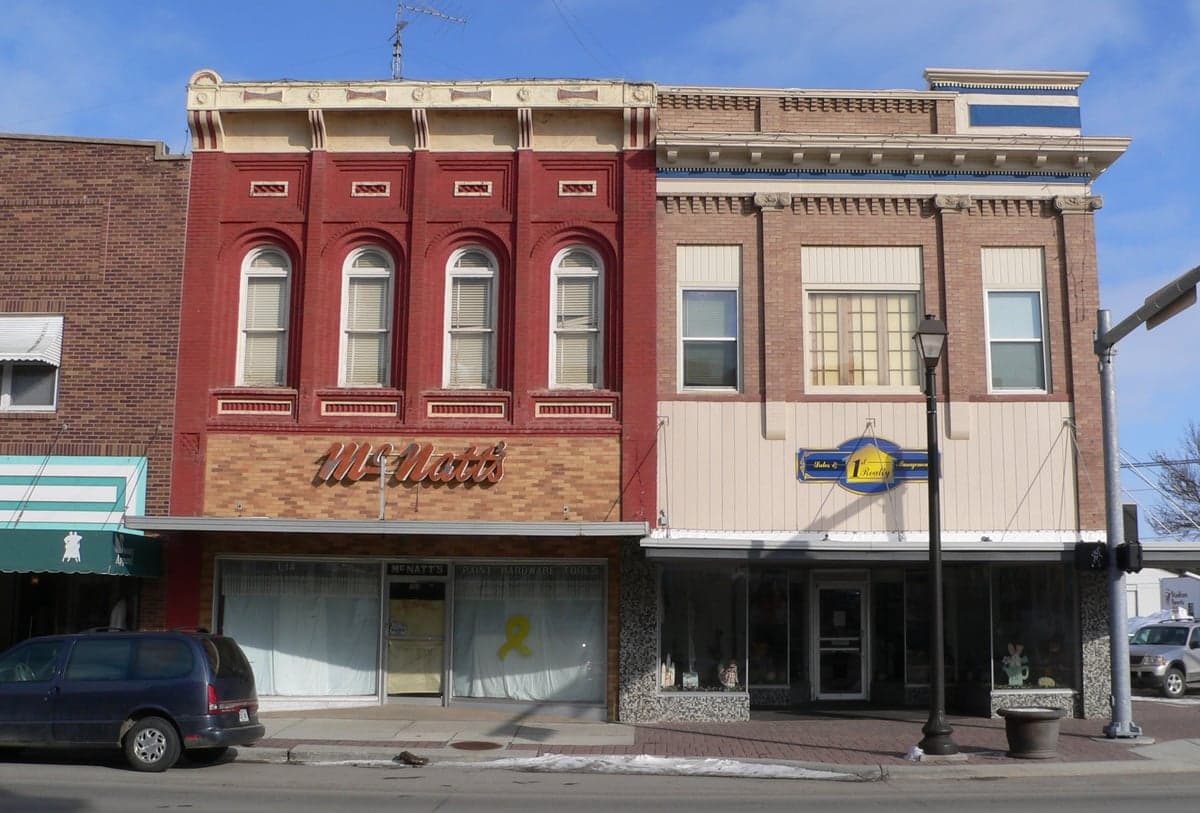
Photo: Wikipedia
Strategic Assessment of Wayne, NE
Strong survivability profile. Good buffer from population centers, with manageable environmental and tactical risks.
What does the Strategic Assessment tell us?
Our Strategic Assessment grades tactical survivability of an area. Major population centers, military targets, fallout zones, natural disasters, and border exposure all drive risk — lower exposure means a more defensible position in a crisis.
This is heavily inspired by Joel Skousen's Strategic Relocation book. Highly recommended you checkout the book ($)What does this tell us?
Our Strategic Assessment grades tactical survivability of an area. Major population centers, military targets, fallout zones, natural disasters, and border exposure all drive risk — lower exposure means a more defensible position in a crisis.
This is heavily inspired by Joel Skousen's Strategic Relocation book. Highly recommended you checkout the book ($)Strategic Pillars

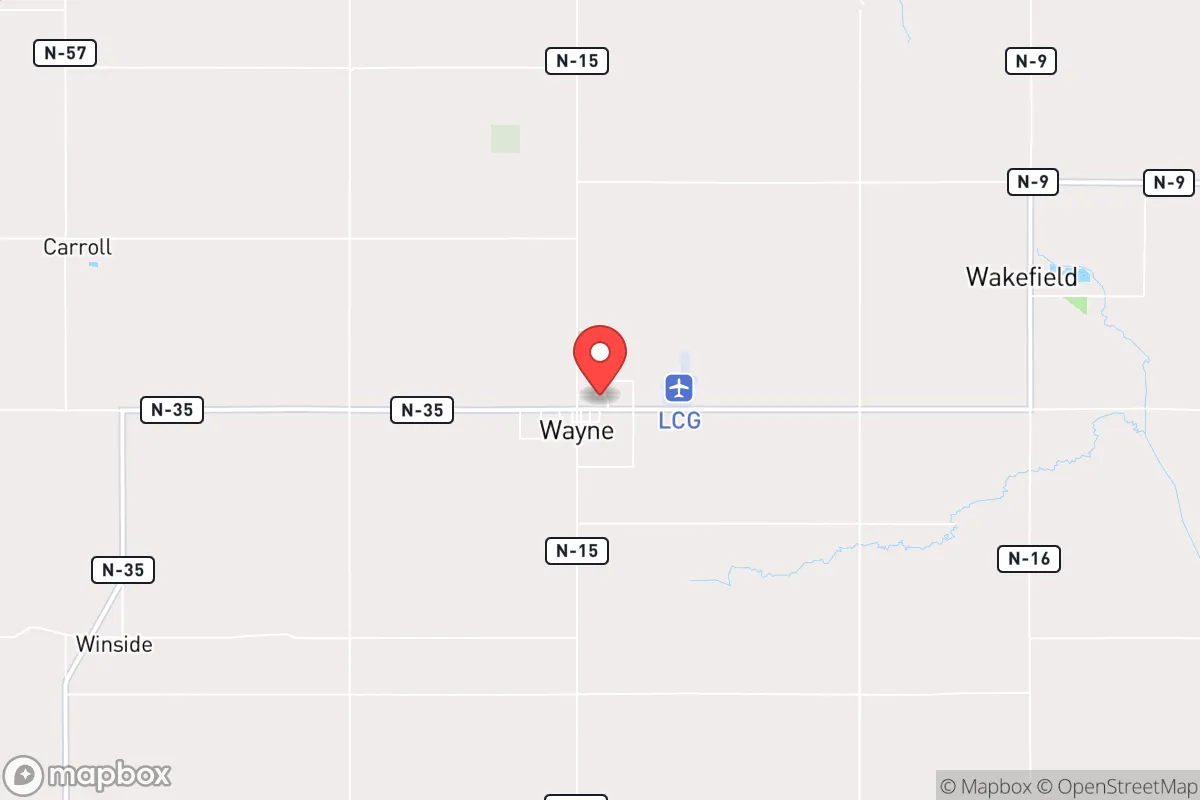
Key Distances
Regional Safe Places
Below is our recommended "safe zones" in Nebraska and the surrounding area based on our strategic heuristics. For most people, it's unrealistic to live in a “safe zone” full-time due to work, family or other personal reasons. They tend to be more rural. However, many of these areas are perfect for second homes and retreat properties that double as a vacation home or even a short-term rental.
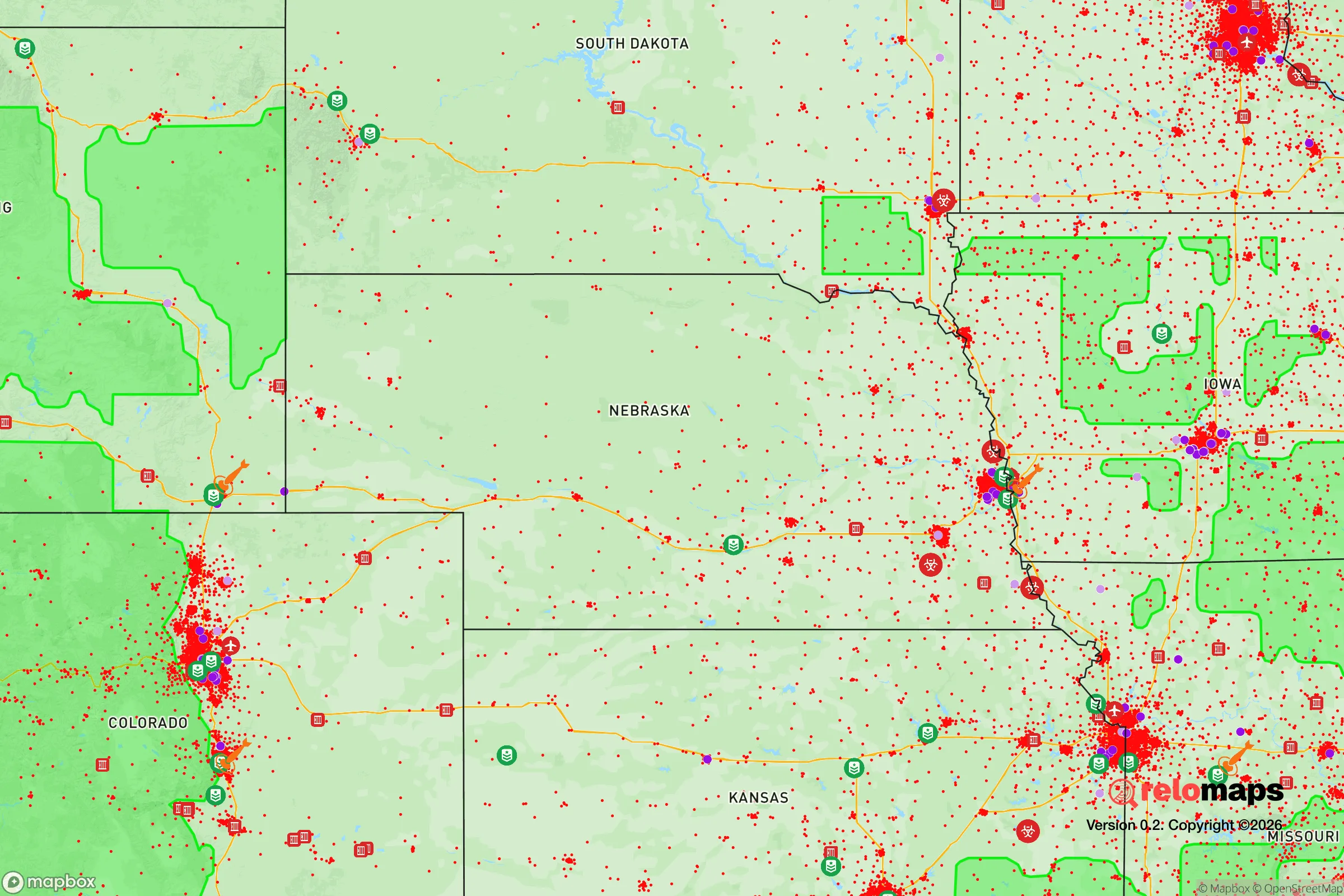
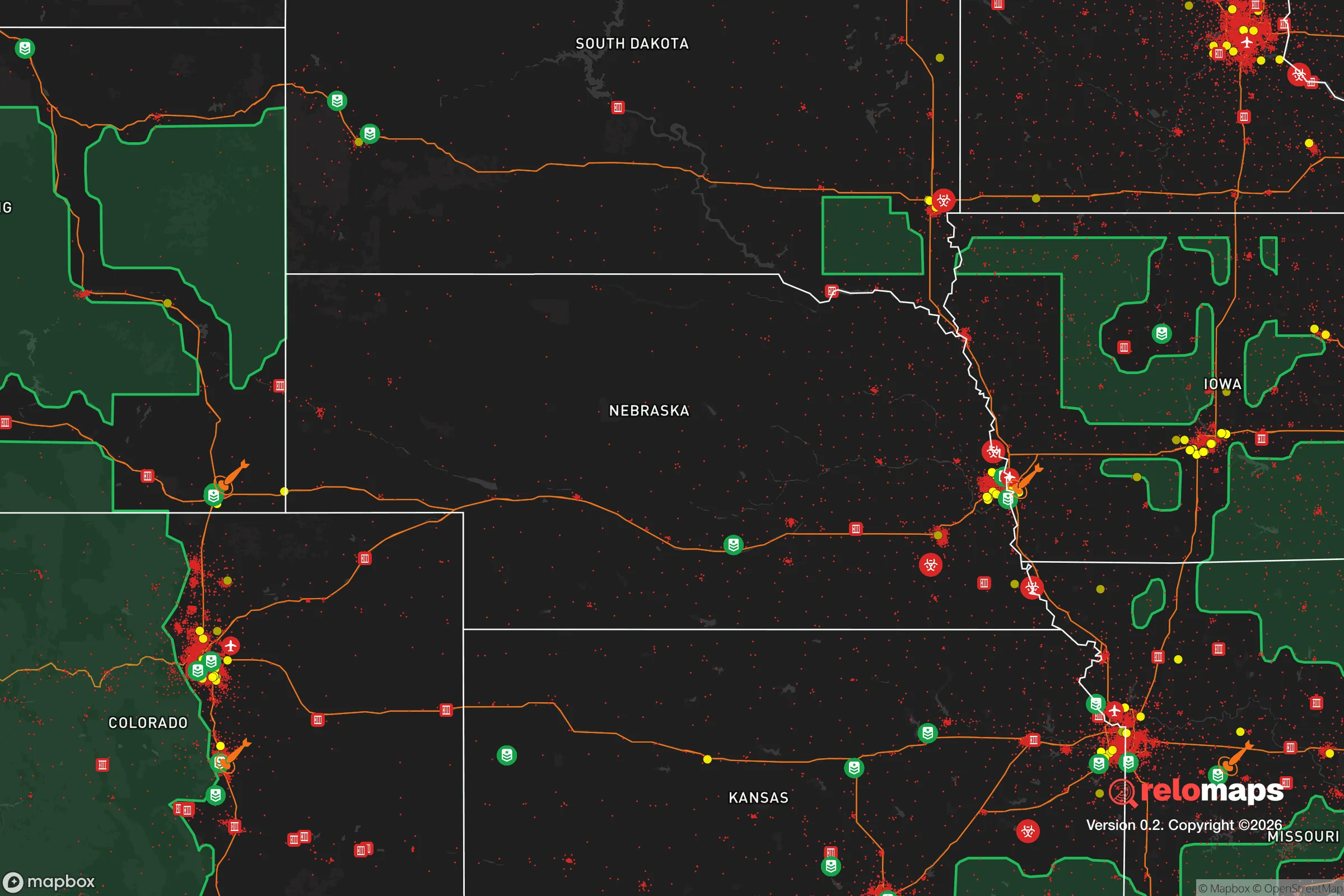


Important Note: For informational purposes only. This does not mean nothing bad ever happens in the green zones. Please use common sense. This is based on public data and modeled with AI. We tried to take a conservative approach but mistakes happen. We update this regularly as new information becomes available.
Solar Generator Recommendations
Backup power matters more here than in safer locations. We've picked three solar generators across budgets and capacity tiers — start with the budget unit if you only need a few essentials, or step up if you want to run a fridge and HVAC for days at a time.

Jackery Portable Power Station Explorer 300
Budget OptionPower on the Go: Weighing only 11 lbs, it's convenient to set up and store with book-sized foldable solar panels

BLUETTI Portable Power Station AC180
Designed for both indoor and outdoor scenarios, AC180 is highly capable as it has a robost capacity and continuous output power.

EF ECOFLOW DELTA Pro Ultra Power Station
Upgraded PickEcoFlow DELTA Pro Ultra is a whole-home energy system designed to grow with your family. Integrated with the Smart Home Panel 2, it scales to meet your evolving energy needs — keeping your home powered, intelligent, and secure through every stage of life.
We earn a commission, at no additional cost to you.
Strategic Assessment Analysis
Wayne, Nebraska, offers a strategic relocation option for those prioritizing resilience and self-sufficiency, anchored by its position in the rural Great Plains and a local economy that has shown steady, if unspectacular, growth. The town’s population hovers around 5,600, and its distance from major metropolitan centers—roughly 100 miles northwest of Omaha and 80 miles southwest of Sioux City—provides a meaningful buffer against the cascading effects of urban unrest, supply chain disruptions, or mass casualty events. Wayne State College, a public liberal arts institution, provides a stabilizing economic and cultural anchor, while the surrounding agricultural land offers a foundation for local food production and a lower population density that reduces the risks of disease spread or resource competition during a crisis.
Geographic position and natural advantages for long-term stability
Wayne sits in the rolling hills of northeast Nebraska’s loess plains, a region characterized by fertile soil and a moderate climate that supports both row crops and livestock. The area’s natural advantages include a reliable annual rainfall of about 28 inches, which reduces dependence on irrigation and makes small-scale farming or gardening viable for a relocator. The nearby Missouri River, roughly 30 miles east, provides a secondary water source, though the town itself draws from the Lewis and Clark Aquifer, a groundwater system that is less vulnerable to surface contamination than river-fed supplies. The terrain is gently undulating, offering some natural defensibility—elevated ridges provide sightlines over the surrounding farmland, and the lack of dense forest means fewer concealment opportunities for threats, but also easier surveillance of the perimeter. Winters are cold, with average January lows around 12°F, which can be a hardship for the unprepared but also a natural deterrent to transient populations or large-scale migration during a collapse scenario. The area’s low seismic risk and absence of hurricane or wildfire threats further enhance its stability, making it a solid choice for those seeking a location that won’t be disrupted by natural disasters while larger systems fail.
Risks, exposures, and proximity to fallout-relevant landmarks
Wayne’s primary risk exposure comes from its proximity to Offutt Air Force Base near Omaha, home to the U.S. Strategic Command (STRATCOM) and a key nuclear command-and-control node. In a major conflict or nuclear exchange, Offutt is a high-priority target, and Wayne sits roughly 100 miles northwest—close enough that a ground burst or large airburst could produce fallout reaching the area within hours, depending on wind patterns. The prevailing westerly winds in this region mean that fallout from a strike on Offutt would likely drift eastward, but a shift in weather could put Wayne in the plume path. Additionally, the nearby Fort Calhoun Nuclear Station, a decommissioned plant about 70 miles southeast, poses a residual risk of radiological release during a catastrophic event, though its spent fuel is stored in dry casks designed to withstand most scenarios. On the positive side, Wayne is far from major ports, refineries, or chemical plants that could become secondary targets or sources of industrial accidents. The town’s small size and agricultural character mean it lacks the dense infrastructure that would attract a direct strike, but the shadow of Offutt means a relocator must plan for potential fallout—stockpiling potassium iodide, maintaining a sealed shelter, and having a wind-monitoring plan are prudent steps. The risk is real but manageable, especially compared to living within 50 miles of a major city or military installation.
Practical resilience for a relocator: food, water, energy, and defensibility
For a relocator focused on practical resilience, Wayne offers a strong baseline but requires deliberate preparation. The surrounding farmland is dominated by corn and soybeans, with a growing number of small-scale livestock operations—poultry, hogs, and cattle—that can be tapped through direct relationships with local farmers. The Wayne Farmers Market operates seasonally, but a prepper should establish a network of suppliers for bulk grains, seeds, and livestock feed before a crisis. Water access is reliable via the municipal system, which draws from the aquifer, but a private well is the gold standard for self-sufficiency; many rural properties outside town limits already have wells, and drilling a new one is feasible given the shallow water table (typically 50–100 feet). Energy infrastructure is a mixed bag: the local grid is served by the Nebraska Public Power District, which relies heavily on coal and nuclear (from the Fort Calhoun plant), making it vulnerable to fuel shortages or grid failure. Solar potential is moderate—about 4.5 peak sun hours per day—and a modest off-grid system with battery storage can cover basic needs for a single individual or small family. Defensibility is aided by the town’s layout: a compact core with a college campus, a hospital (Providence Medical Center), and a police department that maintains a visible presence, but the surrounding rural areas offer better options for a hardened retreat. A property with a basement, a well, and a clear line of sight to the main road is ideal. The local gun culture is strong, with several sporting goods stores and a shooting range nearby, and Nebraska’s constitutional carry law (effective 2023) allows permitless concealed carry for residents 21 and older, which is a practical advantage for self-defense in a breakdown scenario.
The overall strategic picture for Wayne, Nebraska, is one of moderate resilience with a clear trade-off: it offers a solid buffer from urban chaos and a supportive agricultural base, but the shadow of Offutt Air Force Base introduces a non-trivial nuclear risk that cannot be ignored. For a conservative-leaning relocator who values community stability, low crime rates (Wayne’s violent crime rate is roughly one-third the national average), and a culture of self-reliance, the town is a viable option—provided they invest in fallout preparedness and a robust off-grid setup. The local economy, anchored by the college and agriculture, is less volatile than urban centers, and the population’s homogeneity (over 90% white, with a strong Lutheran and Catholic church presence) may appeal to those seeking social cohesion in uncertain times. However, the area’s flat terrain and lack of natural barriers mean that a determined threat—whether from a displaced urban population or a military conflict—could reach Wayne within hours. The smart play is to treat Wayne as a base of operations, not a fortress: build relationships with local farmers, stockpile supplies for 6–12 months, and have a secondary retreat plan farther west (e.g., the Sandhills region) if the situation deteriorates. It’s not a perfect haven, but for the prepared relocator, it’s a defensible position in a state that still values individual liberty and community resilience.

* Values derived from national, state, county, city and local statistics and may differ in a specific area. Last updated: 2026-04-22T23:52:15.000Z
Narrative content on this page is AI-generated and may contain mistakes. Verify any details that matter before acting on them.
ReloMaps may earn a commission from affiliate links at no extra cost to you.

