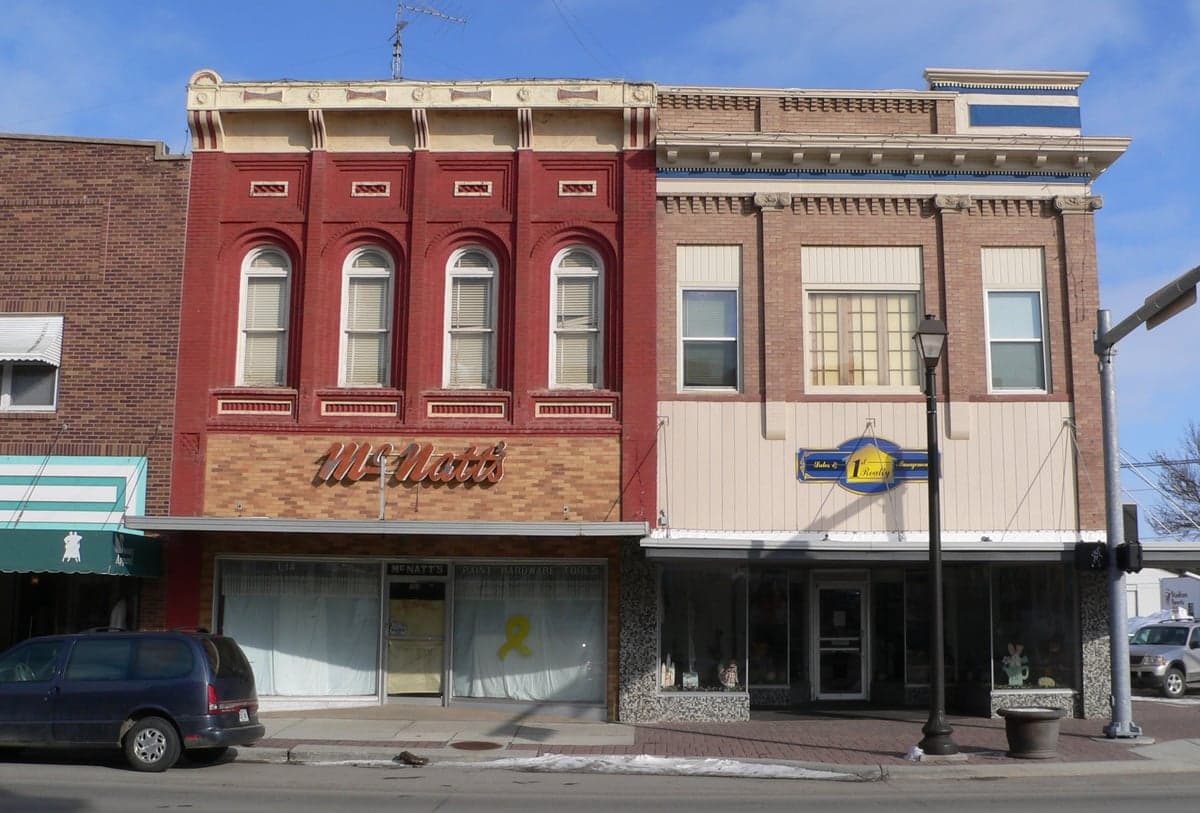
Photo: Wikipedia
Political ClimatePolitical Climate in Wayne, NE
District shown is the primary district for this city’s centroid. Cities may span multiple districts.
Local Political AnalysisPolitical Analysis of Wayne, NE
Wayne, Nebraska, is about as solidly conservative as it gets in the state, with a Cook PVI of R+27 that puts it deep in the red column. That number isn't just a statistic; it reflects a community where traditional values and personal responsibility are still the default, not something you have to fight for. For a long time, that meant you could pretty much count on the local government to stay out of your business and let you live your life, but like everywhere else, there's been a slow creep of outside influence that's worth keeping an eye on.
How it compares
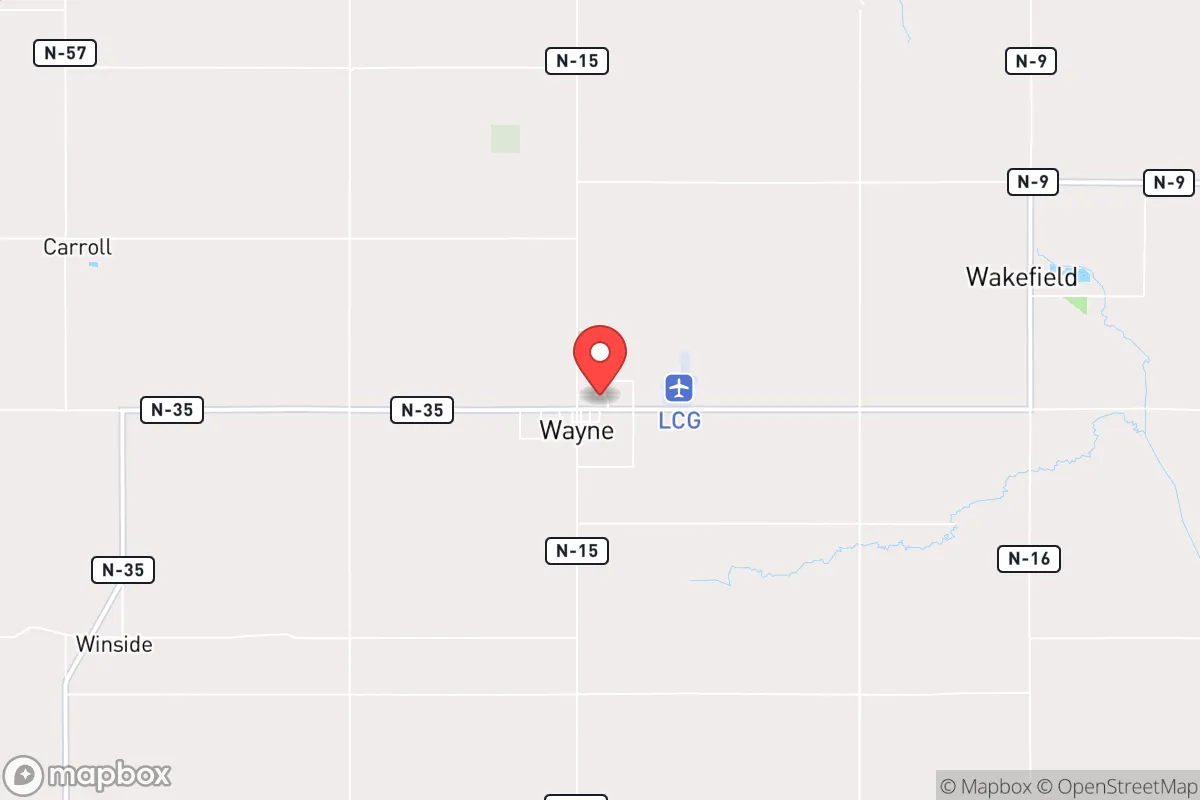
When you look at the map, Wayne stands out as a conservative anchor in northeast Nebraska. Drive 30 minutes east to Sioux City, Iowa, and you'll feel the shift—that city leans more moderate, with a noticeable progressive push in local politics, especially around zoning and school policies. Head south to Norfolk, and while it's still conservative, it's not as rock-ribbed as Wayne; you'll see more of a split on things like property tax rates and local business regulations. The real contrast is with Lincoln, about 90 minutes south, where the state's progressive wing is concentrated. In Wayne, you don't get the same pressure to conform to the latest social trends or government mandates. The local county commission and school board here still largely believe in letting families make their own choices, which is a breath of fresh air compared to what you hear coming out of the bigger cities.
What this means for residents
For the people living here, the political climate translates into a lower likelihood of government overreach into your daily life. You're not going to see the kind of heavy-handed zoning rules that tell you what you can do with your own property, or the kind of school board that pushes curriculum that undermines what you're teaching at home. The tax burden, while not perfect, is still more focused on local control rather than state-level mandates that feel like they're coming from people who don't understand rural life. The biggest concern I've seen in the last few years is the slow trickle of progressive ideas through state-level funding requirements—things like strings attached to grants that force local schools or law enforcement to adopt policies they wouldn't choose on their own. That's the kind of thing that makes you wonder how long the local independence will last.
Culturally, Wayne still holds onto its agricultural roots and the common-sense values that come with them. You'll find a strong sense of community where people look out for each other, but also respect each other's privacy. The local paper and the chatter at the coffee shop still lean heavily toward fiscal conservatism and a healthy skepticism of government expansion. There's a quiet but firm resistance to the kind of identity politics and top-down social engineering that's taken hold in other parts of the country. If you're looking for a place where you can raise a family without feeling like the government is breathing down your neck, Wayne is still that place—but you have to stay engaged to keep it that way. The next few elections, especially for the state legislature, will be critical in determining whether this area can hold the line or starts to drift toward the same kind of overreach we see elsewhere.

State Political ClimatePolitical Climate in Nebraska
State Political AnalysisPolitical Environment in the State
Nebraska has long been a reliably conservative state, but its political landscape is more nuanced than a simple red-state label suggests. The state has voted Republican in every presidential election since 1968, and its current congressional delegation is a solid 3-0 GOP majority. However, the last 15 years have seen a slow but steady shift, with the state’s two largest counties—Douglas (Omaha) and Lancaster (Lincoln)—trending leftward, while the vast rural expanse has hardened its conservative stance. The result is a state that remains broadly center-right, but with a growing urban-liberal wedge that is beginning to challenge the old order.
Urban vs. rural divide
The political map of Nebraska is a textbook case of the urban-rural split. The state’s 2nd Congressional District, which covers the Omaha metro area (Douglas County and parts of Sarpy County), is the most competitive district in the state. In 2020, it cast its electoral vote for Joe Biden, a rare blue dot in the Great Plains. This is driven by a growing population of younger professionals, tech workers, and a significant African American and Latino community in North and South Omaha. Meanwhile, Lincoln (Lancaster County) has also trended blue, with the University of Nebraska-Lincoln and state government jobs creating a more progressive voting bloc. In contrast, the rest of the state—places like Grand Island, Kearney, North Platte, and Scottsbluff—vote overwhelmingly Republican. The 3rd Congressional District, which covers the western 80% of the state, is one of the most Republican districts in the nation, often winning by 40+ points. The rural counties of Holt, Cherry, and Box Butte are deeply conservative, with strong ties to agriculture, ranching, and gun culture. The divide is stark: Omaha and Lincoln are increasingly blue islands in a red sea, and the tension between these two worlds defines Nebraska’s politics.
Policy environment
Nebraska’s policy environment is a mixed bag for conservatives. On the plus side, the state has no income tax on Social Security benefits, a flat state income tax rate of 5.58% (recently cut from 6.84%), and a relatively low corporate income tax rate of 5.58%. Property taxes, however, are a perennial sore spot—among the highest in the region, driven by school funding and local levies. The state has a right-to-work law, and its regulatory posture is generally business-friendly, with minimal red tape for small businesses. On education, Nebraska has a robust system of public schools, but school choice is limited—there is no universal voucher program, though a small pilot program for low-income students exists. Healthcare is a mixed bag: the state expanded Medicaid under the Affordable Care Act in 2020, a move that rankled many conservatives, but it also has a strong network of rural hospitals. Election laws are relatively secure: Nebraska requires a photo ID to vote (passed in 2023), has no same-day registration, and conducts all-mail elections for most local races. The state’s unique unicameral, nonpartisan legislature is a point of pride, but it can also lead to unpredictable outcomes—like the 2023 bill banning abortion after 12 weeks, which passed with a narrow majority.
Trajectory & freedom
Nebraska’s trajectory on personal freedom is a tale of two trends. On the positive side, the state has expanded gun rights significantly. In 2023, the legislature passed a permitless carry law (LB 77), allowing any law-abiding adult to carry a concealed firearm without a permit. This was a major win for Second Amendment advocates. On parental rights, Nebraska passed a bill in 2023 (LB 574) that bans gender-affirming surgeries for minors and restricts hormone therapy, a move that has drawn national attention and legal challenges. The state also has a strong property rights tradition, with no state-level rent control and minimal zoning restrictions in rural areas. However, the state’s tax burden remains a concern—property taxes are high, and while income taxes have been cut, they are still above the national average. On medical autonomy, Nebraska has a 12-week abortion ban, but voters in 2024 will likely face a ballot initiative to enshrine abortion rights in the state constitution, which could overturn that law. The state also has a history of government overreach in the form of eminent domain battles, particularly around the Keystone XL pipeline, which was ultimately canceled. Overall, Nebraska is moving in a more conservative direction on guns and parental rights, but the tax burden and potential ballot initiatives on abortion could shift the balance.
Civil unrest & political movements
Nebraska has seen its share of political flashpoints, though they are less dramatic than in coastal states. The most visible recent unrest was the 2020 George Floyd protests in Omaha and Lincoln, which saw some property damage and clashes with police, but were relatively small compared to other cities. The state has a strong pro-life movement, with annual rallies at the state capitol, and a growing parental rights movement that has targeted school boards in Elkhorn, Millard, and Papillion over curriculum and library books. Immigration politics are a hot-button issue, particularly in Grand Island and South Sioux City, where meatpacking plants have drawn a large Latino workforce. There have been calls for sanctuary city policies in Omaha, but they have been rejected by the city council. Election integrity has been a recurring theme, with the 2020 election seeing a controversial decision by the Nebraska Secretary of State to allow mail-in ballots without an excuse, a move that angered many conservatives. The state also saw a brief secessionist movement in 202 generators, with some rural counties threatening to join neighboring states over perceived neglect by Lincoln and Omaha, though this has largely fizzled. Overall, the political climate is tense but not volatile, with most activism happening at the local level.
Projection
Looking ahead 5-10 years, Nebraska is likely to become more politically divided, not less. The Omaha metro area will continue to grow, driven by tech and insurance jobs (e.g., the Mutual of Omaha headquarters and the growing startup scene in the Aksarben Village area). This will push the 2nd District further left, potentially making it a permanent swing district or even a safe blue seat. Lincoln will also trend left, though more slowly. Meanwhile, the rural areas will continue to depopulate and harden their conservative stance. The key wildcard is in-migration: Nebraska is not a major destination for out-of-state movers, but the ones who do come tend to be retirees from the Midwest or younger workers drawn to Omaha’s lower cost of living. If the state attracts more coastal refugees fleeing high taxes and crime, they could tilt the balance further right. However, if the state’s tax burden remains high and property taxes continue to rise, it could drive out the very people who make the state conservative. The 2024 ballot initiative on abortion rights will be a bellwether—if it passes, it could signal a shift towards more progressive social policies in the urban areas, while rural areas push back. Expect more legislative battles over school choice, tax reform, and election laws in the coming years.
For a new resident, the bottom line is this: Nebraska is a good place to live if you value low crime, strong communities, and a conservative culture in the rural areas. But if you’re moving to Omaha or Lincoln, be prepared for a more progressive environment, especially on social issues. The state’s tax burden is a real concern, and you’ll need to factor that into your budget. On the plus side, the state’s gun laws are among the best in the nation, and parental rights are strong. Just keep an eye on the ballot box—the next few years could determine whether Nebraska stays red or starts to purple up.
* Values derived from national, state, county, city and local statistics and may differ in a specific area. Last updated: 2026-04-22T23:52:15.000Z
Narrative content on this page is AI-generated and may contain mistakes. Verify any details that matter before acting on them.
ReloMaps may earn a commission from affiliate links at no extra cost to you.

