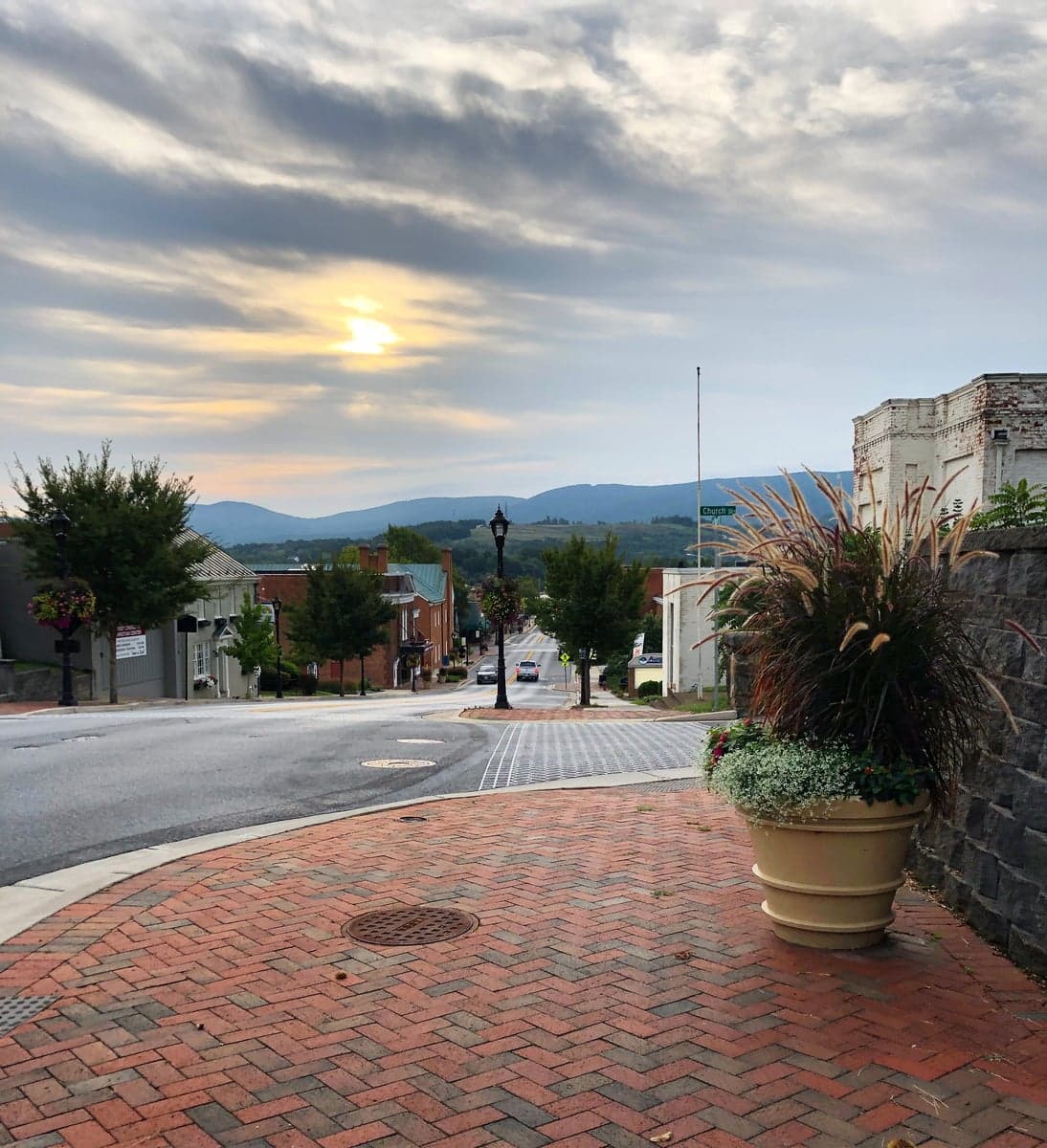
 Popular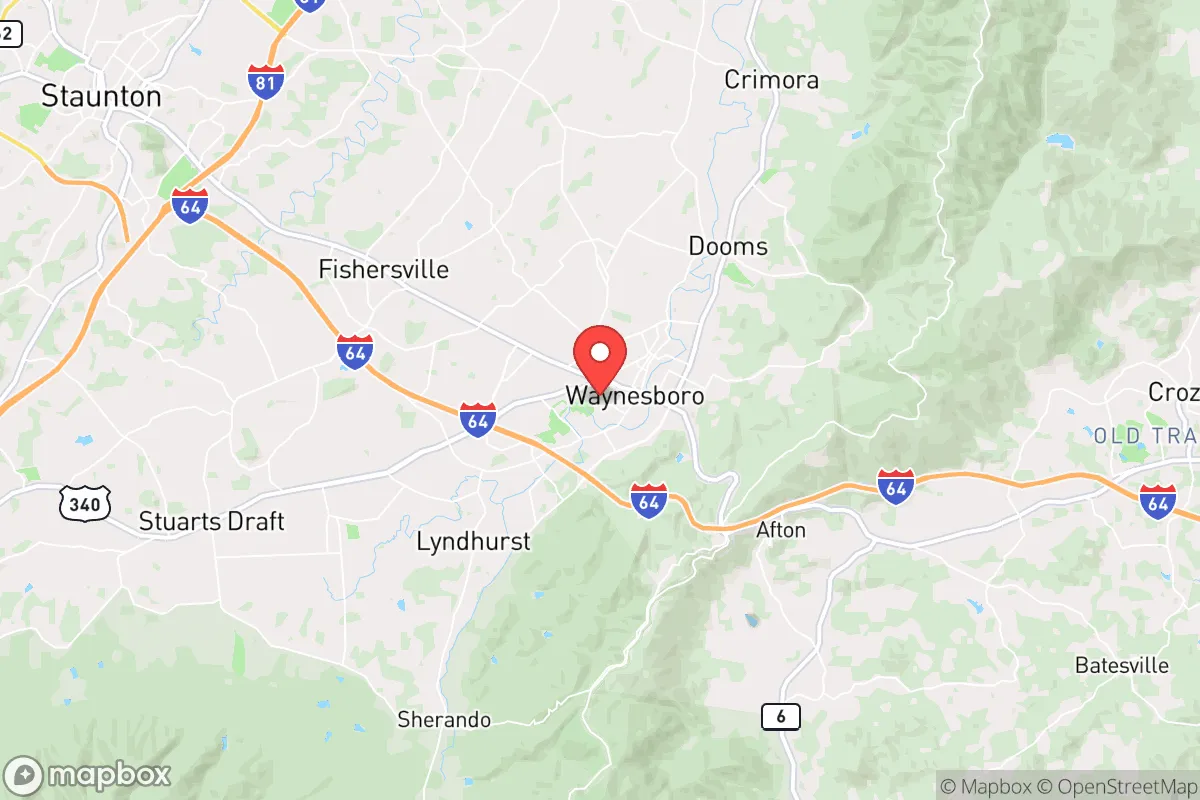
Photo: Wikipedia
Demographics of Waynesboro, VA
Affluence Level in Waynesboro, VA
A middle-class area roughly in line with national averages across income, home values, education, and employment.
People of Waynesboro, VA
The people of Waynesboro, Virginia, today number 22,574, forming a predominantly white (72.6%) and native-born (foreign-born population just 2.4%) community with a modest but growing Hispanic (9.2%) and Black (11.0%) presence. The city’s identity is rooted in its industrial working-class heritage, with a lower-than-average college attainment rate (26.3%) and a population density that feels more like a small town than a city. Distinctively, Waynesboro remains a place where generational families live alongside a steady trickle of domestic newcomers drawn by lower costs and mountain access, rather than a destination for international migration.
How the city was settled and grew
Waynesboro’s original population was drawn by the intersection of the Shenandoah Valley’s fertile land and, later, the arrival of the railroad in the mid-19th century. The city was officially founded in 1798 as a small crossroads settlement, but its real growth came after the Civil War, when the railroad and the establishment of the DuPont textile plant (later Invista) and the General Electric (GE) plant attracted waves of white Appalachian and German-American laborers from surrounding counties. These workers settled in what are now the Basic City and South River neighborhoods—working-class districts built around the mills and rail yards. A smaller wave of Black families, many descended from freed slaves who worked in agriculture and domestic service, concentrated in the West End neighborhood, which remains the city’s historic African American enclave. By the mid-20th century, Waynesboro was a classic industrial mill town, overwhelmingly white and native-born, with a small but stable Black minority.
Modern era (post-1965)
After the 1965 Hart-Cellar Act, Waynesboro saw almost no international immigration—its foreign-born share remains minuscule at 2.4%, far below national averages. Instead, the city’s demographic change since the 1970s has been driven by domestic in-migration and suburbanization. The closure of many textile and manufacturing jobs in the 1980s and 1990s led to population stagnation, but a slow rebound began in the 2000s as retirees and remote workers from Northern Virginia and the Washington, D.C., area discovered the area’s lower housing costs. These newcomers have gravitated toward newer subdivisions like Sherando Lake Estates and North Park, while the older Downtown district has seen modest reinvestment. The Hispanic population—now 9.2%—grew primarily through domestic migration from other U.S. states, especially Texas and Florida, with families settling in the East End and South River neighborhoods, where older housing stock is more affordable. The Black population (11.0%) has remained stable, concentrated in the West End and parts of Basic City, with little new in-migration. East/Southeast Asian residents (1.8%) are a small but visible presence, mostly in professional roles tied to the local hospital and university, and live scattered across newer subdivisions rather than in a single ethnic enclave.
The future
Waynesboro’s population is heading toward slow, modest diversification—not through immigration, but through continued domestic in-migration of white retirees and remote workers, alongside a gradual increase in Hispanic families drawn by service-sector jobs. The city is not homogenizing into a single melting pot; rather, it is tribalizing into distinct enclaves: the historic white working-class neighborhoods (Basic City, South River) remain predominantly white and older, while the West End stays Black, and the East End and newer subdivisions absorb most Hispanic growth. The Asian population is too small to form a distinct neighborhood and will likely plateau or assimilate into majority-white areas. Over the next 10–20 years, the city’s white share will likely decline slowly (from 72.6% toward the mid-60s), while the Hispanic share may rise to 12–14%, and the Black share will remain stable. The foreign-born share will stay below 5%, as Waynesboro lacks the job base or ethnic networks to attract significant international migration.
For someone moving in now, Waynesboro is becoming a slightly more diverse but still overwhelmingly white and native-born small city, where neighborhood choice largely determines one’s social and demographic experience. Newcomers will find a place where the old industrial identity is fading, replaced by a quieter, more residential character—but where the legacy of its mill-town past still shapes who lives where and how communities interact.

* Values derived from national, state, county, city and local statistics and may differ in a specific area. Last updated: 2026-05-01T13:13:16.000Z
Narrative content on this page is AI-generated and may contain mistakes. Verify any details that matter before acting on them.
ReloMaps may earn a commission from affiliate links at no extra cost to you.

