Photo: Wikipedia
Political ClimatePolitical Climate in Webster Groves, MO
District shown is the primary district for this city’s centroid. Cities may span multiple districts.
Local Political AnalysisPolitical Analysis of Webster Groves, MO
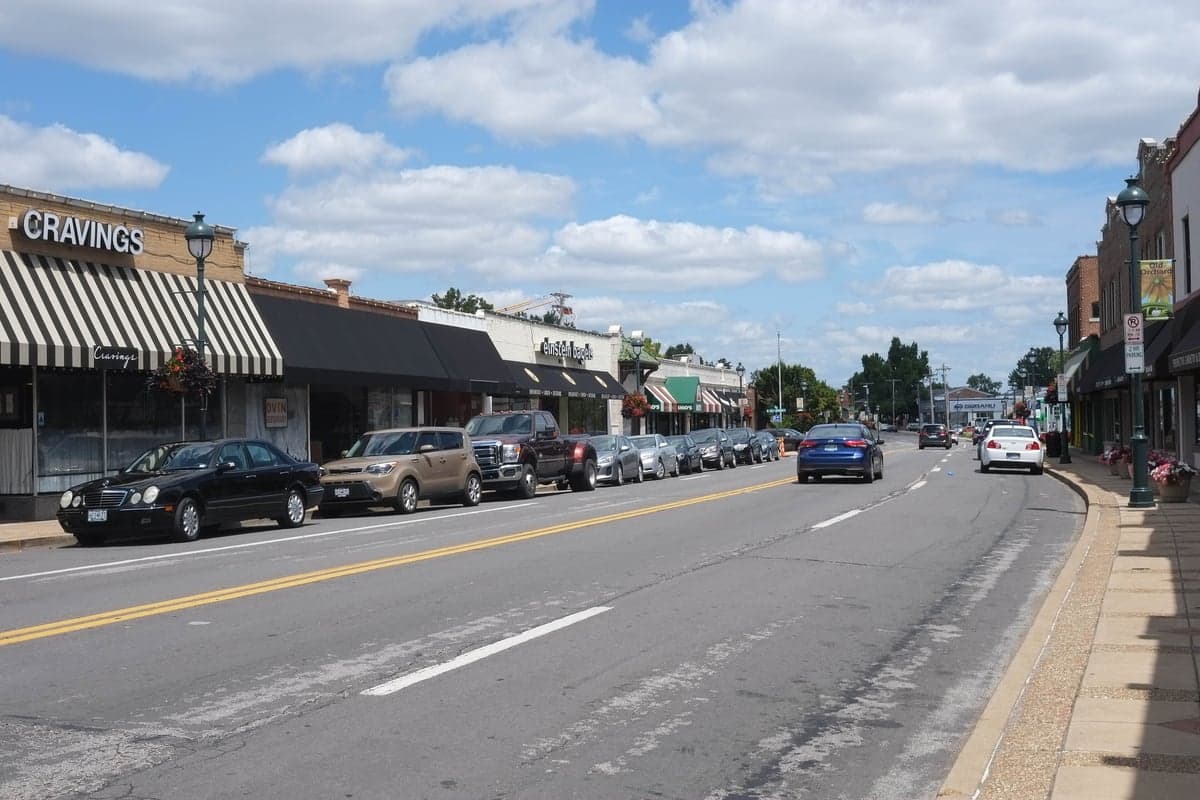
Webster Groves is a deep blue island in a sea of red, and it’s been that way for a long time. The Cook PVI of D+29 tells you everything you need to know: this is one of the most reliably Democratic suburbs in the entire St. Louis metro. But what’s changed in the last decade isn’t the party label—it’s the intensity. Back in the 90s and early 2000s, you had a mix of old-school moderate Democrats and a few quiet Republicans who just wanted good schools and low crime. Now? The local politics have shifted hard toward progressive activism, and the old “live and let live” vibe is getting squeezed out by a more assertive, government-first approach to everything from zoning to school curriculum.
How it compares
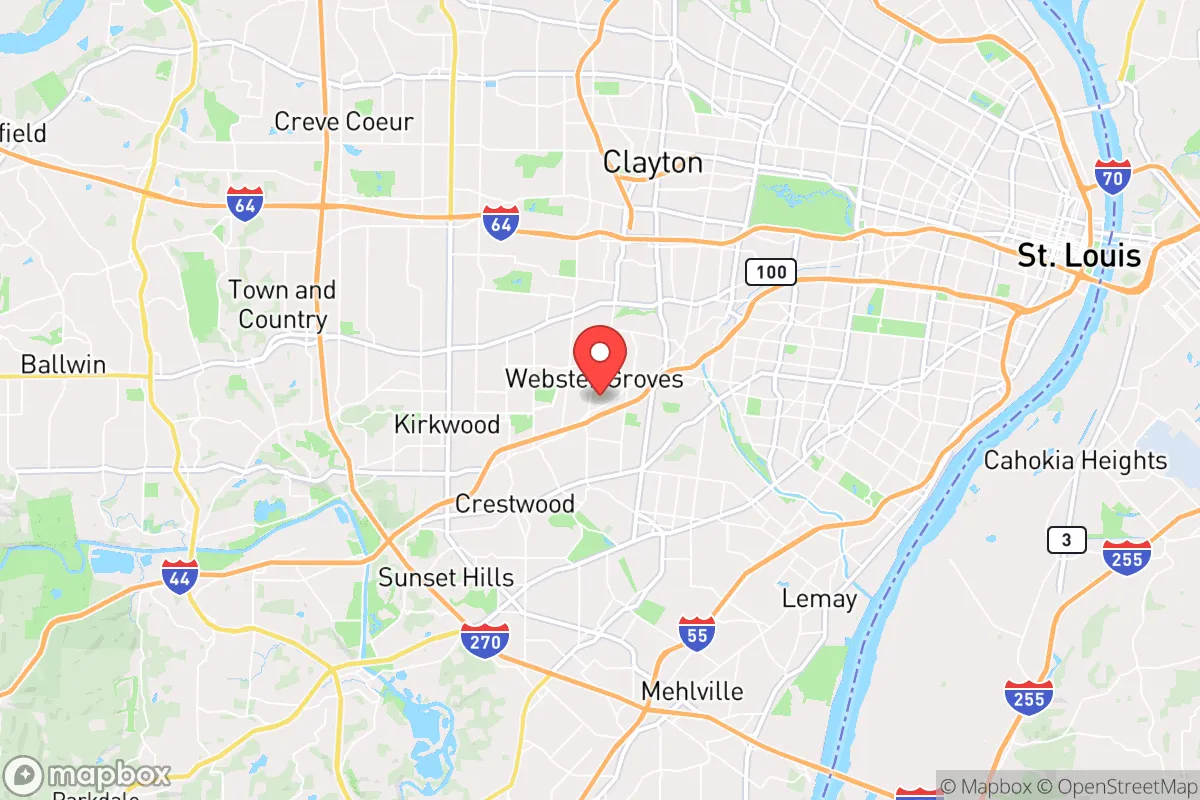
Drive ten minutes west to Kirkwood or fifteen minutes south to Sunset Hills, and you’re in a completely different political world. Kirkwood still leans blue, but it’s softer—more of a D+5 or D+8 feel, with a vocal Republican minority that actually wins city council seats. Sunset Hills and Des Peres are solidly red-leaning, where property rights and low taxes are the default. Webster Groves, by contrast, is surrounded by towns that vote more like the rest of Missouri. Even neighboring Shrewsbury and Oakland are noticeably more moderate. The difference isn’t subtle: in Webster, the city council and school board are almost entirely progressive, and there’s very little organized opposition. That’s not the case in most of St. Louis County.
What this means for residents
If you value personal freedoms—like deciding what’s best for your own kids, your own property, or your own business—Webster Groves can feel like a slow squeeze. The local government has gotten more comfortable with telling people what to do. There are strict tree ordinances that limit what you can cut down on your own lot, aggressive stormwater management fees that feel like a hidden tax, and a school district that’s leaned hard into DEI initiatives and social-emotional learning mandates. The city has also pushed for more density and transit-oriented development, which sounds good on paper but often means less parking, more traffic, and less say for existing homeowners. None of this is illegal or unusual for a blue suburb, but it’s a far cry from the “keep the government out of my backyard” attitude you’ll find in places like Wildwood or Eureka.
For families, the biggest concern is the direction of the schools. Webster Groves School District is academically strong—no question there—but the cultural shift is real. Curriculum decisions and book selection have become more politicized, and parents who raise concerns are often labeled as troublemakers. The school board elections are dominated by progressive slates, and there’s little appetite for traditional values or parental oversight. If you’re the kind of person who thinks schools should stick to reading, writing, and arithmetic—and leave the social engineering to families—you’ll feel increasingly out of step here.
Looking ahead, I don’t see Webster Groves moderating anytime soon. The demographic trends are all one direction: younger, more educated, more progressive. The old-timers who remember when this was a quiet, middle-class suburb with a mix of viewpoints are aging out. The newcomers are coming from the city or from other blue strongholds, and they’re bringing big-government expectations with them. If you’re considering a move here, just know what you’re signing up for. The schools are great, the walkability is real, and the community is tight-knit—but the political climate is increasingly one-sided, and that one side is comfortable using government power to shape daily life in ways that might not sit well with anyone who values personal liberty over collective conformity.

State Political ClimatePolitical Climate in Missouri
State Political AnalysisPolitical Environment in the State
Missouri has long been a bellwether state, but over the past 20 years it has shifted from a classic purple swing state to a solidly red one, with Republicans now holding supermajorities in both legislative chambers and every statewide office except the governorship (which flipped back to Republican in 2024). The state voted for Donald Trump by 18 points in 2020 and by a similar margin in 2024, a dramatic rightward swing from 2008 when Barack Obama lost the state by just 0.1%. This transformation is driven by a deepening urban-rural divide, a conservative exodus from St. Louis and Kansas City, and a steady influx of retirees and remote workers from blue states seeking lower taxes and fewer regulations.
Urban vs. rural divide
The political map of Missouri is a study in stark contrasts. The two major metros—St. Louis and Kansas City—are deep blue islands in a sea of red. St. Louis City and County together cast roughly 30% of the state’s vote and reliably deliver 70-80% Democratic margins. Kansas City’s Jackson County is similarly lopsided. But outside those two corridors, the state is overwhelmingly Republican. The rural Ozarks, including Springfield and Branson, are among the most conservative regions in the country, with Greene County voting +35 R in 2024. The bootheel, anchored by Cape Girardeau, is reliably red, while the northern plains counties like St. Joseph (Buchanan County) have trended redder as union influence wanes. The most notable shift has been in the suburban ring counties—St. Charles, Jefferson, and Cass—which were once competitive but now vote Republican by 20-30 points, driven by families fleeing the urban cores for lower taxes and better schools. The only blue outpost outside the metros is Columbia (Boone County), home to the University of Missouri, which votes Democratic by a narrow margin but is surrounded by deep red territory.
Policy environment
Missouri’s policy environment is among the most conservative in the Midwest. The state has a flat income tax rate of 4.8% (down from 5.4% in 2022, with further cuts triggered by revenue triggers), no estate tax, and a sales tax cap that keeps local rates manageable. Property taxes are low, averaging 0.8% of home value, and there is no tax on Social Security benefits. The regulatory posture is business-friendly: Missouri is a right-to-work state (though the law was repealed by ballot initiative in 2018, the legislature has since passed a new version), and occupational licensing requirements are being steadily reduced. Education policy is a flashpoint: the state has a robust school choice program, including charter schools in St. Louis and Kansas City, and a growing voucher-like tax credit scholarship program. However, the state’s public schools rank near the bottom nationally in funding per pupil, and rural districts are struggling with consolidation. Healthcare policy is mixed: Missouri expanded Medicaid under the 2020 ballot initiative (Amendment 2), which passed with 53% support despite Republican opposition, but the state has some of the most restrictive abortion laws in the country (trigger ban with no exceptions for rape or incest). Election laws have tightened: voter ID is required, absentee voting is restricted to those with an excuse, and the state purged 100,000+ voters from rolls in 2023. The legislature has also passed laws banning ranked-choice voting and limiting ballot initiatives, a direct response to the Medicaid expansion and marijuana legalization votes that bypassed the GOP supermajority.
Trajectory & freedom
On balance, Missouri is becoming more free for conservatives, but the trajectory is uneven. The biggest expansion of personal liberty came in 2021 with the passage of the Second Amendment Preservation Act (SAPA), which nullifies federal gun laws and prohibits state and local law enforcement from enforcing them. This law has been challenged in court but remains in effect, and it has made Missouri a haven for gun owners. In 2023, the legislature passed a parental rights bill that requires schools to notify parents of any changes to a student’s mental, emotional, or physical health (effectively a “don’t say gay” law) and bans transgender athletes from female sports. Medical freedom saw a win with the 2022 passage of a constitutional amendment legalizing medical marijuana (and later recreational use in 2023), though the state’s medical cannabis program is heavily regulated and expensive. On the downside, the state has seen an erosion of property rights through aggressive use of eminent domain for private development, particularly in St. Louis County. Taxation has become more burdensome at the local level, with many municipalities raising sales taxes to fund pensions and infrastructure. The biggest concern for freedom-minded residents is the growing power of the state government: the GOP supermajority has shown a willingness to preempt local ordinances (e.g., banning local minimum wage hikes and plastic bag bans), which some see as a necessary check on progressive cities but others view as overreach.
Civil unrest & political movements
Missouri has a history of civil unrest that remains a live issue. The 2014 Ferguson protests (sparked by the shooting of Michael Brown) were a national flashpoint and led to the creation of the Department of Justice consent decree that still governs the St. Louis County Police Department. In 2020, protests in Kansas City and St. Louis turned violent, with looting and arson in the Delmar Loop and the Central West End. The state has seen a rise in organized activist movements on both sides: on the left, Missourians for a Fair Democracy has pushed for ranked-choice voting and independent redistricting, while on the right, the Missouri Freedom Caucus has become a powerful force in the legislature, pushing for further tax cuts, school choice, and nullification of federal laws. Immigration politics are relatively quiet compared to border states, but the legislature has passed bills banning sanctuary city policies and requiring local law enforcement to cooperate with ICE. Election integrity remains a hot-button issue: the 2020 election saw Trump’s margin shrink in St. Louis and Kansas City suburbs, leading to a wave of conspiracy theories and a push for hand-counting of ballots (a bill that failed in 2023). The most visible flashpoint for a new resident would be the constant tension between St. Louis City (which is considering seceding from St. Louis County) and the state government, which has repeatedly preempted the city’s gun control and minimum wage ordinances.
Projection
Over the next 5-10 years, Missouri is likely to become more Republican and more culturally conservative, but with growing internal friction. The demographic trends are clear: the St. Louis and Kansas City metros are losing population (St. Louis City has lost 20% of its residents since 2010), while the suburbs and exurbs are booming. St. Charles County is projected to add 100,000 residents by 2035, and Springfield is growing at 2% annually. These new residents are disproportionately conservative-leaning families and retirees from Illinois, California, and New York. The state’s political trajectory will likely see further tax cuts (the flat income tax could drop to 4% or lower), expanded school choice (possibly universal vouchers), and more preemption of local progressive ordinances. The biggest wild card is the growing power of the Missouri Freedom Caucus, which is pushing for a constitutional convention to rewrite the state’s constitution and make it harder for ballot initiatives to pass. If they succeed, the state could become even more resistant to progressive policy shifts. However, the urban-rural divide will continue to widen, and the state may see more secessionist talk from St. Louis and Kansas City, though actual secession is unlikely. A new resident moving in now should expect to find a state that is increasingly friendly to conservative values—low taxes, gun rights, school choice—but with a simmering cultural war between the red countryside and the blue cities that will only intensify.
Bottom line for a new resident: If you’re a conservative looking for a low-tax, high-freedom environment with a strong sense of community and a growing economy, Missouri is a solid bet. You’ll find like-minded neighbors in the suburbs and rural areas, good schools in places like St. Charles and Nixa, and a state government that actively protects your rights. But be prepared for the culture war: the blue cities are not going anywhere, and the state’s politics will remain a battleground over education, guns, and local control. If you’re moving from a blue state, expect a transition period where you adjust to a slower pace, lower taxes, and a more hands-off government—but also a more polarized public square. Missouri is not a utopia, but for those who value personal liberty and fiscal conservatism, it’s one of the best bets in the Midwest.
* Values derived from national, state, county, city and local statistics and may differ in a specific area. Last updated: 2026-04-30T00:09:53.000Z
Narrative content on this page is AI-generated and may contain mistakes. Verify any details that matter before acting on them.
ReloMaps may earn a commission from affiliate links at no extra cost to you.

