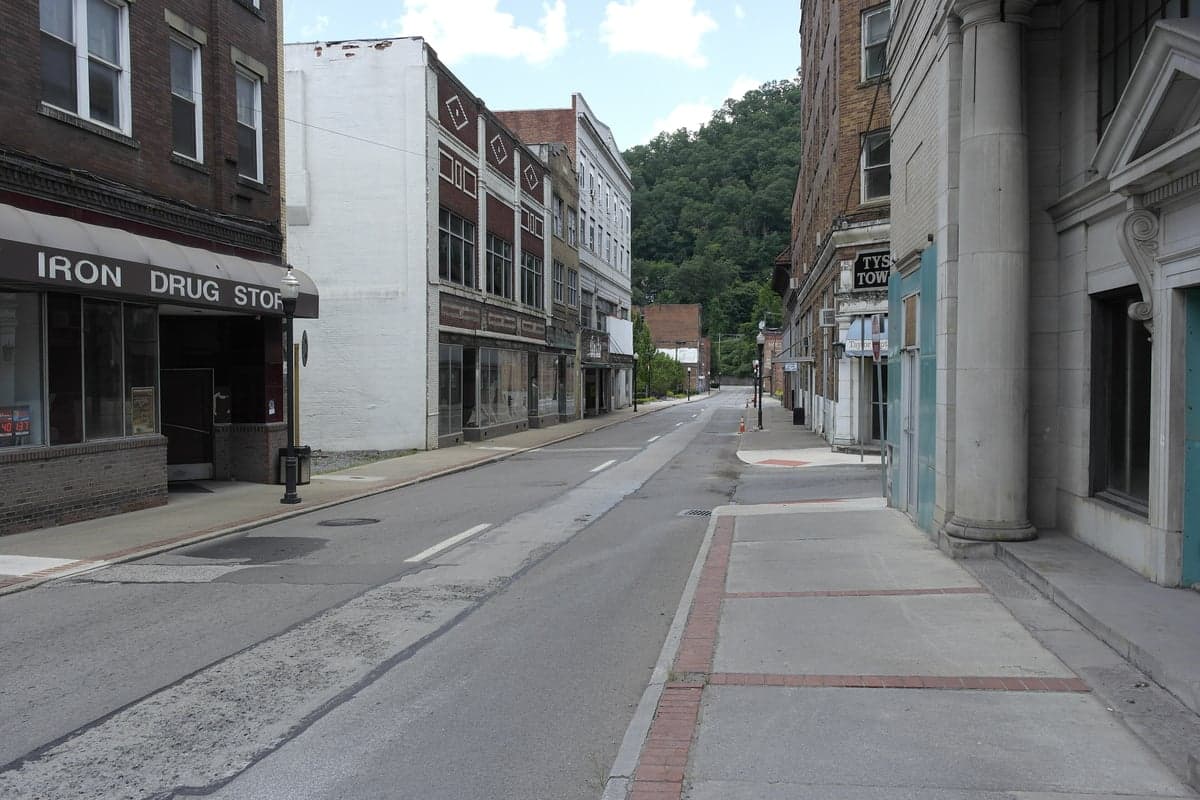
Photo: Wikipedia
Strategic Assessment of Welch, WV
Meaningful friction. Expect exposure to either population pressure, blast zones, or natural disaster risk. Consider buying a retreat property.
What does the Strategic Assessment tell us?
Our Strategic Assessment grades tactical survivability of an area. Major population centers, military targets, fallout zones, natural disasters, and border exposure all drive risk — lower exposure means a more defensible position in a crisis.
This is heavily inspired by Joel Skousen's Strategic Relocation book. Highly recommended you checkout the book ($)What does this tell us?
Our Strategic Assessment grades tactical survivability of an area. Major population centers, military targets, fallout zones, natural disasters, and border exposure all drive risk — lower exposure means a more defensible position in a crisis.
This is heavily inspired by Joel Skousen's Strategic Relocation book. Highly recommended you checkout the book ($)Strategic Pillars

Key Distances
Regional Safe Places
Below is our recommended "safe zones" in West Virginia and the surrounding area based on our strategic heuristics. For most people, it's unrealistic to live in a “safe zone” full-time due to work, family or other personal reasons. They tend to be more rural. However, many of these areas are perfect for second homes and retreat properties that double as a vacation home or even a short-term rental.
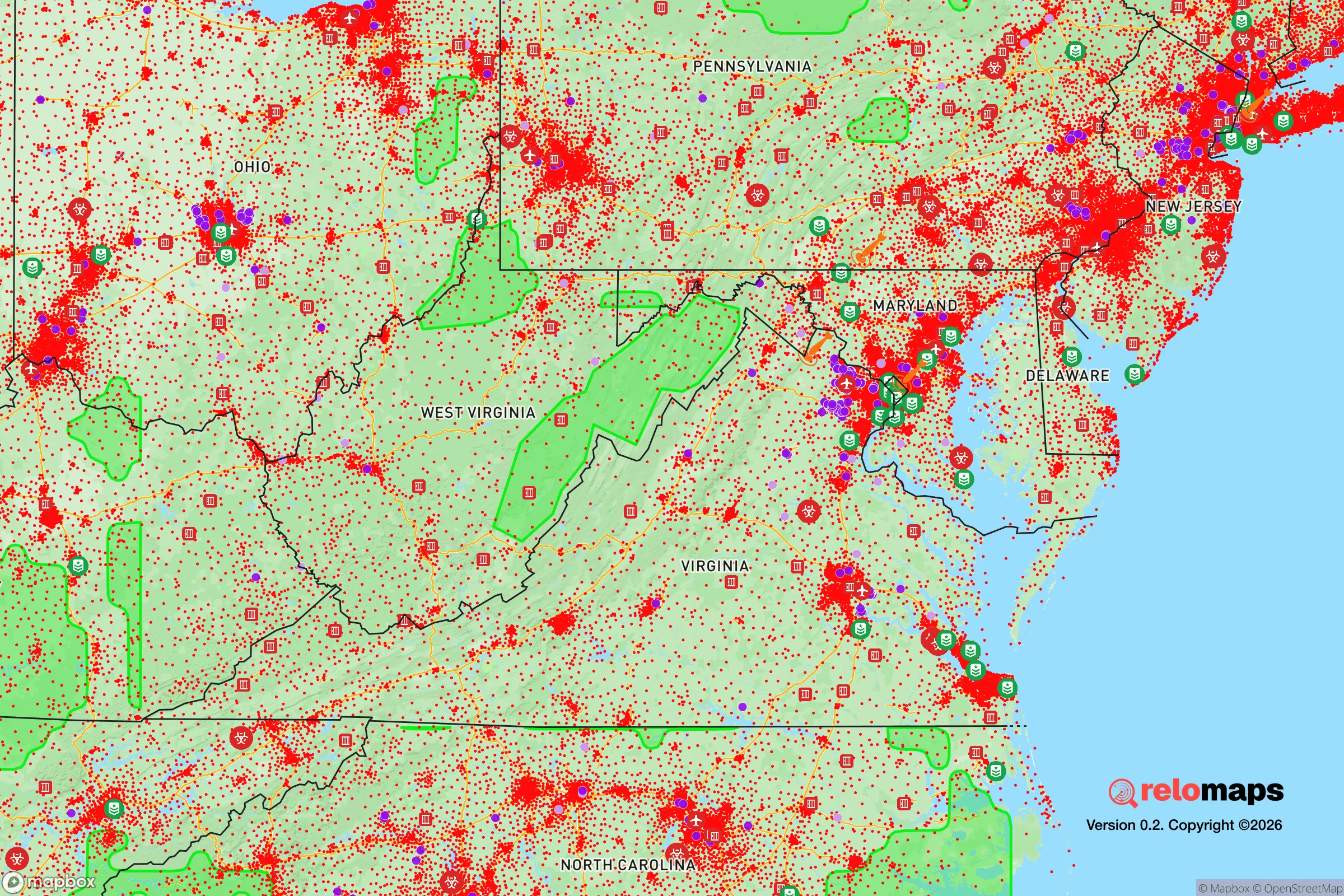
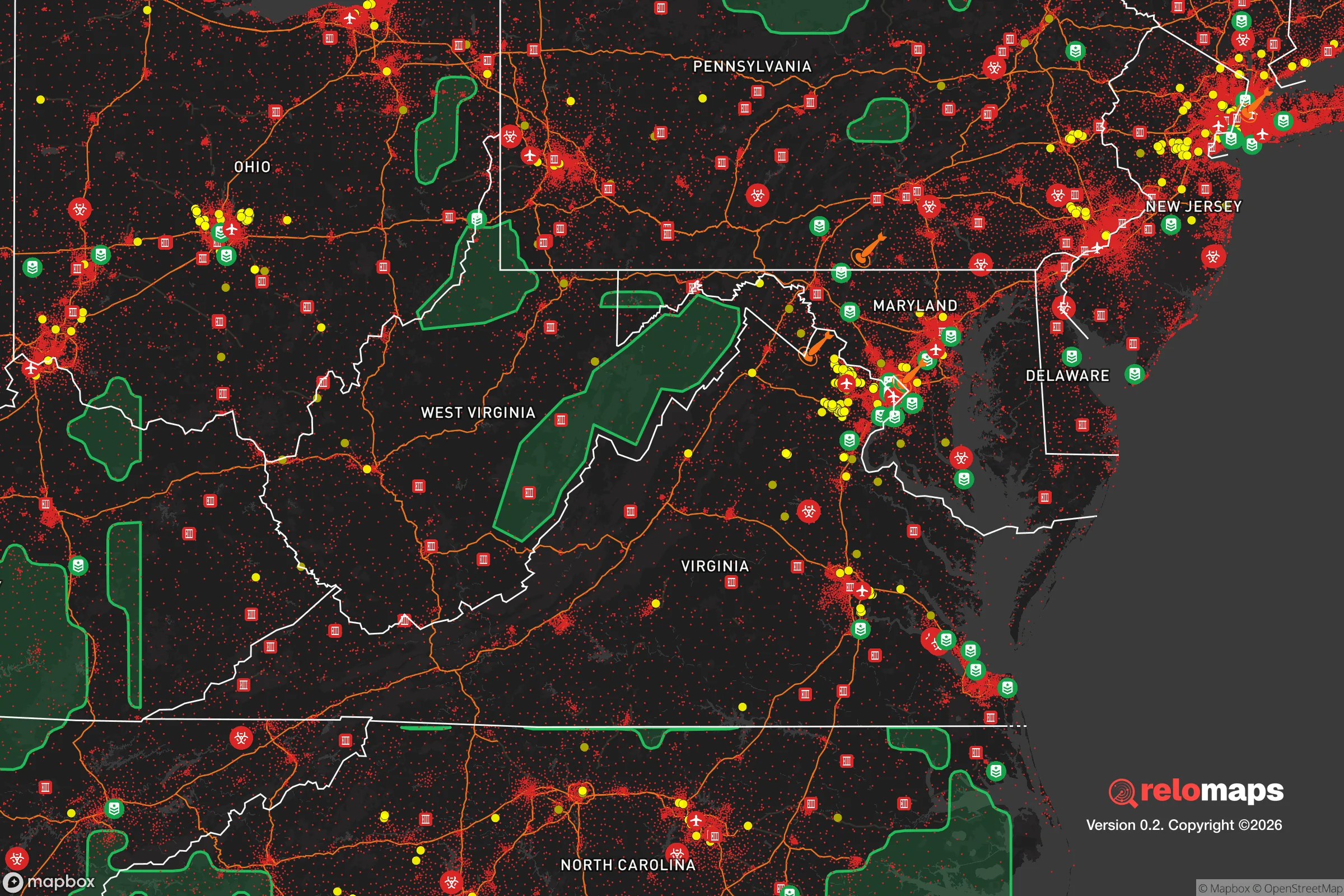


Important Note: For informational purposes only. This does not mean nothing bad ever happens in the green zones. Please use common sense. This is based on public data and modeled with AI. We tried to take a conservative approach but mistakes happen. We update this regularly as new information becomes available.
Solar Generator Recommendations
Backup power matters more here than in safer locations. We've picked three solar generators across budgets and capacity tiers — start with the budget unit if you only need a few essentials, or step up if you want to run a fridge and HVAC for days at a time.

Jackery Portable Power Station Explorer 300
Budget OptionPower on the Go: Weighing only 11 lbs, it's convenient to set up and store with book-sized foldable solar panels

BLUETTI Portable Power Station AC180
Designed for both indoor and outdoor scenarios, AC180 is highly capable as it has a robost capacity and continuous output power.

EF ECOFLOW DELTA Pro Ultra Power Station
Upgraded PickEcoFlow DELTA Pro Ultra is a whole-home energy system designed to grow with your family. Integrated with the Smart Home Panel 2, it scales to meet your evolving energy needs — keeping your home powered, intelligent, and secure through every stage of life.
We earn a commission, at no additional cost to you.
Strategic Assessment Analysis
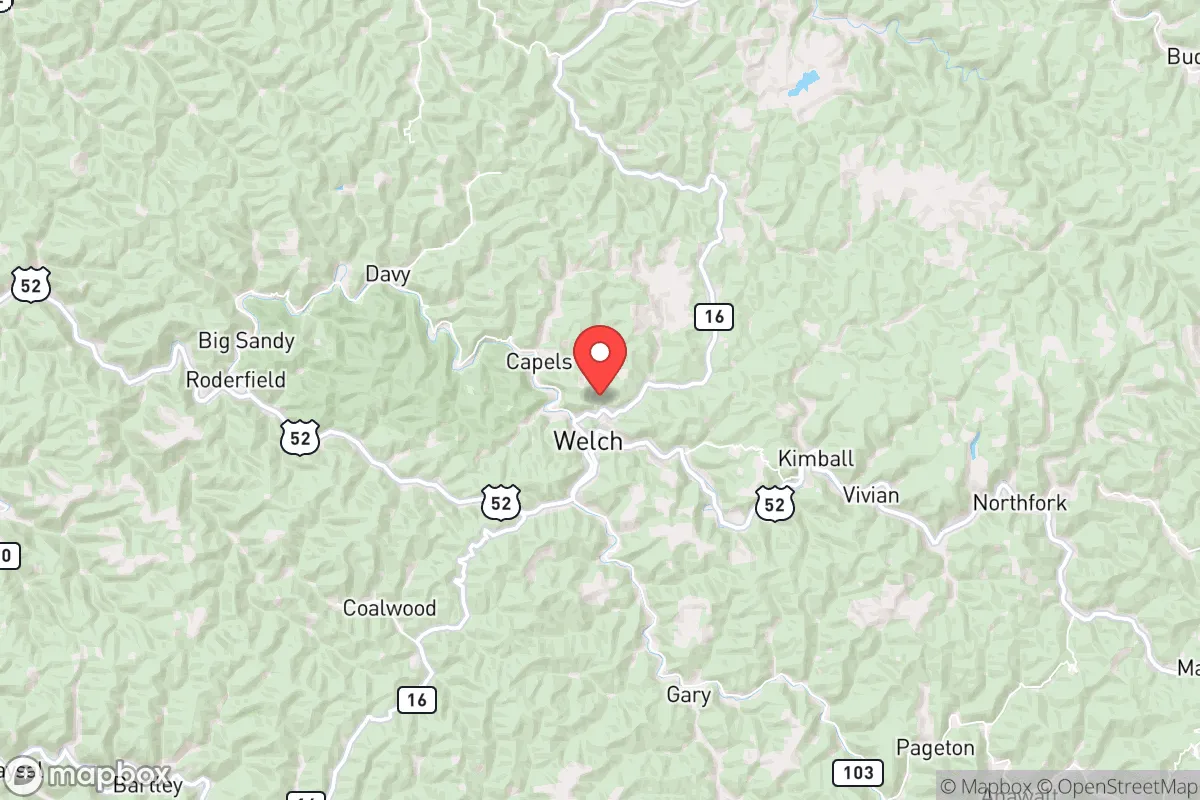
Welch, West Virginia, offers a compelling strategic position for those prioritizing resilience and self-sufficiency, largely due to its deep Appalachian geography and distance from major population centers. Located in McDowell County, this small town sits in a narrow valley carved by the Tug Fork River, roughly 90 miles from Roanoke, Virginia, and 120 miles from Charleston, West Virginia. Its isolation from interstate highways and major metropolitan areas provides a natural buffer against the cascading effects of urban unrest, supply chain disruptions, or mass casualty events, making it a serious consideration for preppers and conservative-leaning individuals seeking a low-profile relocation option.
Geographic position and natural advantages for long-term security
Welch’s primary strategic asset is its terrain. The surrounding Appalachian Mountains create a series of natural chokepoints and defensible ridgelines, with only a handful of two-lane roads—primarily US-52 and WV-16—providing access into the valley. This topography inherently limits the flow of traffic and potential threats, whether from civil unrest or external chaos. The area’s elevation, averaging around 1,300 feet, offers cooler summers and reduced flood risk compared to lower-lying river towns, though the Tug Fork itself can flash flood during heavy rains. The dense forest cover provides excellent concealment and a renewable source of timber for construction, heating, and barrier creation. For a relocator, this means a property can be positioned with natural surveillance over approach routes, and the rugged landscape makes large-scale incursions difficult without significant local knowledge. The region’s coal mining history has also left behind a network of abandoned mine portals and secondary roads that can serve as emergency shelter or alternative travel corridors, though these require careful navigation due to safety hazards.
Risks, exposures, and proximity to fallout-relevant landmarks
While Welch’s isolation is a strength, it is not without exposure. The most significant risk is the proximity to the North Anna Nuclear Generating Station in Virginia, approximately 180 miles east—well within the 200-mile fallout zone considered by many preppers for a major reactor incident. Additionally, the Kingsport-Bristol metropolitan area (about 80 miles southwest) hosts chemical manufacturing and a major Eastman Chemical plant, which could be a target for sabotage or industrial accident. The Norfolk Southern rail line running through Welch carries hazardous materials, including chlorine and ammonia, through the valley daily—a derailment could force an immediate evacuation of the narrow floodplain. On the positive side, Welch is far from any major military installations, nuclear weapons storage sites, or large-scale government facilities that would be primary targets in a conflict. The nearest significant military presence is the West Virginia Air National Guard’s 130th Airlift Wing in Charleston, 120 miles north. For a relocator, the key takeaway is that while Welch avoids the worst of direct targeting, it sits within the secondary risk zone for both nuclear fallout and industrial chemical release, requiring a robust sheltering plan and at least two weeks of sealed supplies.
Practical resilience for a relocator: food, water, energy, and defensibility
For daily life and crisis preparedness, Welch presents a mixed but workable picture. Water security is excellent: the Tug Fork River and numerous mountain springs provide year-round surface water, though treatment is necessary due to historical mining runoff (acid mine drainage) and agricultural silt. A good well with a hand pump or a Berkey-style filter system is essential. Food production is limited by steep terrain and poor soil quality—most valley bottomland is narrow and prone to flooding. However, the surrounding national forest (over 1 million acres of the Jefferson National Forest is within 30 miles) offers hunting for deer, turkey, and small game, plus foraging for ramps, mushrooms, and berries. A greenhouse or raised-bed gardening system on a south-facing slope is advisable for year-round vegetables. Energy independence is feasible: the region has decent solar potential (about 4.5 peak sun hours per day), and wood is abundant for heating and cooking. Coal stoves are still common locally and provide a reliable backup fuel source. Defensibility is the standout feature. The valley’s narrow entrance points can be monitored from a single vantage, and the surrounding ridges offer natural firing positions. Most homes are set back from main roads, with limited visibility from passing traffic. The local population is small (around 1,800 in Welch proper, 17,000 in the county) and aging, meaning a new resident with skills in medicine, mechanics, or security would be a valuable asset rather than a threat. The downside is the lack of a strong local community network for mutual aid—many younger people have left, so building trust will take time. A relocator should plan to be self-reliant for at least the first year, including stockpiling ammunition, medical supplies, and spare parts for vehicles and generators.
The overall strategic picture for Welch is one of high potential with notable trade-offs. It offers genuine geographic isolation, defensible terrain, and access to natural resources that few suburban or exurban locations can match. The risks from nuclear fallout and industrial rail traffic are real but manageable with proper preparation—a basement shelter with HEPA filtration and a pre-planned evacuation route to higher ground would address the most likely scenarios. For a conservative-minded individual or family seeking to step off the grid and away from the chaos of urban America, Welch provides a viable base of operations. The key is to arrive with a clear plan for water treatment, food production, and community integration, and to accept that the area’s economic decline means limited local employment and services. If self-sufficiency is the goal, this hollow in the West Virginia coalfields is a serious contender—just don’t expect to find a prepper community waiting for you. You’ll be building it yourself.

* Values derived from national, state, county, city and local statistics and may differ in a specific area. Last updated: 2026-04-24T11:21:39.000Z
Narrative content on this page is AI-generated and may contain mistakes. Verify any details that matter before acting on them.
ReloMaps may earn a commission from affiliate links at no extra cost to you.

