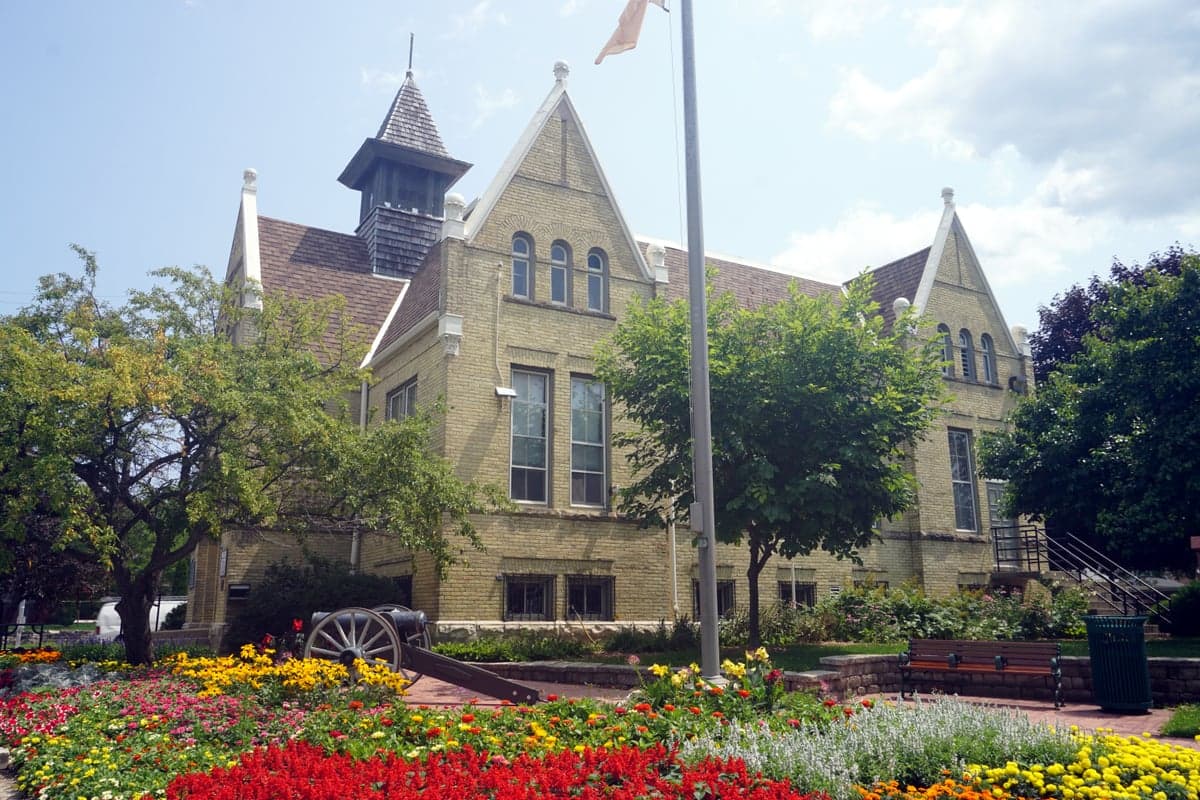
Photo: Wikipedia
Political ClimatePolitical Climate in West Allis, WI
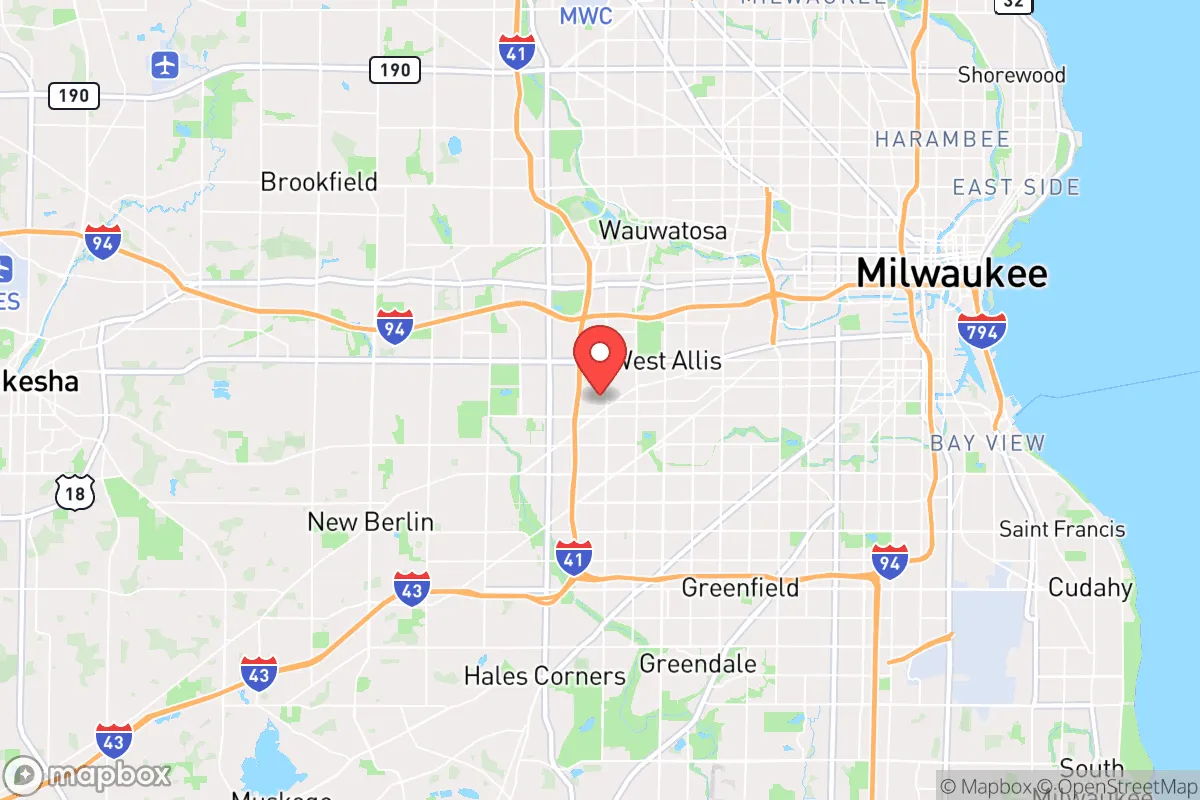
District shown is the primary district for this city’s centroid. Cities may span multiple districts.
Local Political AnalysisPolitical Analysis of West Allis, WI
West Allis has long been a working-class, conservative-leaning community in a state that’s become a national battleground, but the political winds here are shifting in ways that should give any freedom-minded resident pause. The city’s Cook PVI of R+11 tells you it’s still solidly Republican on paper, but that number masks a slow, steady drift toward progressive policies that feel out of step with the folks who’ve lived here for generations. If you’ve been around since the 80s or 90s, you remember when West Allis was a place where people minded their own business and the government stayed out of your garage, your backyard, and your paycheck. That’s not the West Allis I see today.
How it compares
Drive ten minutes east into Milwaukee proper, and you’re in a deep-blue stronghold where progressive politics run the show—higher taxes, more regulations, and a city council that’s not shy about telling you how to live. West Allis used to be the clear alternative to that, a place where you could breathe without the government breathing down your neck. But now, you’ve got neighboring suburbs like Wauwatosa and Brookfield trending more moderate or even left on social issues, and that pressure is bleeding into West Allis. The contrast is stark: while Waukesha County to the west remains a conservative fortress, West Allis sits right on the edge, caught between the old-school values of its residents and the encroaching influence of Milwaukee County’s progressive machine. You can feel it in local elections—races that used to be sleepy are now contested by candidates pushing zoning changes, diversity initiatives, and environmental mandates that sound a lot like what you’d hear in Shorewood or Whitefish Bay.
What this means for residents
For the average West Allis homeowner or small business owner, this political drift translates into real headaches. The city council has been flirting with stricter rental inspection ordinances and higher fees on property owners, which sounds like “consumer protection” but ends up as another layer of government overreach into what you can do with your own land. There’s also been chatter about adopting more aggressive sustainability goals—think bans on certain lawn chemicals or pressure to replace gas appliances—that would hit your wallet and your freedom to choose. The school board isn’t immune either; you’re seeing curriculum debates that would’ve been unthinkable a decade ago, with some pushing for critical race theory or gender ideology lessons that many parents here find intrusive and unnecessary. The long-time residents I talk to are worried that the next few election cycles could tip the balance, turning West Allis into a mini-Milwaukee where personal freedoms take a backseat to government mandates.
One cultural distinction that still holds is West Allis’s strong blue-collar identity—the Wisconsin State Fair Park, the old industrial roots, the sense that hard work should be rewarded, not regulated. But that identity is under threat as younger, more progressive transplants move in, drawn by lower home prices but bringing big-government ideas with them. The local gun rights and property rights advocates are still active, but they’re fighting an uphill battle against a growing chorus that sees government intervention as a solution, not a problem. If you value your right to live without constant oversight, keep an eye on the next city council and school board races—that’s where the real fight for West Allis’s soul is happening right now.

State Political ClimatePolitical Climate in Wisconsin
State Political AnalysisPolitical Environment in the State
Wisconsin has long been a classic swing state, but over the past decade it has shifted from a true purple battleground to a state with a razor-thin Republican lean in statewide elections, driven by a deep urban-rural divide and a growing conservative base in the WOW counties (Waukesha, Ozaukee, Washington) surrounding Milwaukee. The 2024 presidential race saw Donald Trump carry the state by roughly 1 point, continuing a trend where no candidate has won by more than a single point since 2012. For a conservative considering relocation, the state offers a mixed bag: a reliably red legislative map that has delivered conservative policy wins, but a Democratic stronghold in Madison and Milwaukee that keeps the state perpetually competitive and often gridlocked on cultural issues.
Urban vs. rural divide
The political map of Wisconsin is a textbook case of geographic polarization. The Democratic base is concentrated in two major metros: Milwaukee County, which delivered over 69% of its vote to Joe Biden in 2020, and Dane County (Madison), which hit 75% for Biden. These two counties alone produce a massive Democratic vote margin that Republicans must overcome everywhere else. The Republican stronghold is the WOW counties — Waukesha, Ozaukee, and Washington — which routinely give GOP candidates 60-65% of the vote. Outside those metros, the rest of the state is a sea of red. The Fox Valley cities like Appleton and Green Bay have trended rightward, with Brown County flipping from Obama in 2012 to Trump in 2016 and staying red since. The northwestern counties like Douglas and Bayfield remain Democratic-leaning due to union and mining history, but the rest of the northwoods — Vilas, Oneida, Lincoln — are deeply Republican. The real story is the suburban ring around Milwaukee: places like Brookfield and Menomonee Falls have become even more conservative as Milwaukee itself has become more Democratic, creating a stark contrast visible in everything from school board elections to local tax policy.
Policy environment
Wisconsin’s policy environment is a tug-of-war between a Republican-controlled legislature and a Democratic governor (Tony Evers, elected in 2018 and 2022). The result is a state that has conservative tax policy but liberal spending priorities. The state income tax is a flat 4.4% rate, down from a progressive structure that peaked at 7.65% a decade ago — a major win for conservatives. Property taxes are moderate, with the median effective rate around 1.6%, but they vary wildly by school district. The legislature passed a universal school choice program in 2023, making Wisconsin one of the most expansive school choice states in the nation, with vouchers available to any family regardless of income. On the downside, Evers has vetoed Republican bills to expand gun rights (including permitless carry) and to restrict abortion after 14 weeks. The state’s election laws are a flashpoint: Wisconsin uses bipartisan-staffed municipal clerks, but the legislature passed voter ID requirements in 2011 and banned most private election funding in 2022. The state Supreme Court flipped to a 4-3 liberal majority in 2023 after a heavily funded election, which has already led to the overturning of Republican-drawn legislative maps — new maps for 2024 are expected to shift the Assembly and Senate toward more competitive seats.
Trajectory & freedom
On personal liberty, Wisconsin is a state of contradictions. Gun rights are strong: the state has shall-issue concealed carry, no permit required for long guns, and no magazine capacity limits. However, the state still requires a permit to carry a concealed handgun, and efforts to pass constitutional carry have been vetoed by Evers. On parental rights, the 2023 school choice expansion was a clear win, giving families control over where their children are educated. But the state also passed a 2023 law banning conversion therapy for minors, which some conservatives view as government overreach into medical decisions. Medical freedom took a hit during COVID: Evers issued a statewide mask mandate in 2020 and extended emergency orders that the state Supreme Court eventually struck down. The state’s response to the pandemic was a major driver of rural conservative anger and fueled the recall effort against Evers. Property rights are generally respected, but the state’s Department of Natural Resources has broad authority over wetlands and shoreline development, which has frustrated landowners in the northwoods. The biggest freedom concern for conservatives is the trajectory of the state Supreme Court: with a liberal majority, rulings on abortion, election law, and redistricting are likely to shift leftward over the next decade.
Civil unrest & political movements
Wisconsin has been a hotbed of political activism on both sides. The 2011 Act 10 protests in Madison, which drew over 100,000 people to the Capitol to oppose collective bargaining restrictions, were a defining moment that energized the state’s labor movement and Democratic base. In 2020, the Kenosha unrest following the Jacob Blake shooting saw riots, arson, and the killing of two protesters by Kyle Rittenhouse, which became a national flashpoint on self-defense and Second Amendment rights. The Rittenhouse trial in 2021 was a major cultural event, with conservatives viewing the acquittal as a vindication of self-defense laws. On the right, the Wisconsin Republican Party has been dominated by grassroots activists pushing for election integrity reforms, including the 2020 audit and the 2022 ban on private election funding. The state also saw a significant push for county-level secession in 2020, with several rural counties passing resolutions calling for a break from Dane and Milwaukee counties — though none had legal effect. Immigration politics are less intense than in border states, but the 2023 surge of migrants at the northern border via Canada has led to increased border security rhetoric. The state’s sanctuary city policies are limited: Milwaukee and Madison have declared themselves sanctuary cities, but the legislature has passed bills to withhold state funding from such cities, though Evers has vetoed them.
Projection
Over the next 5-10 years, Wisconsin is likely to remain a competitive swing state, but the demographic trends favor Democrats in the long run. The Madison metro is growing rapidly, adding young, college-educated professionals who lean left. Milwaukee’s population is stable, but its Democratic margins are solid. Meanwhile, the rural northwoods and western counties are losing population, which shrinks the Republican base. The WOW counties are still growing, but at a slower rate. The wild card is in-migration: Wisconsin is seeing a net inflow from Illinois, particularly from Chicago suburbs, and these newcomers tend to be moderate to conservative on taxes but more liberal on social issues. The new legislative maps, drawn by a liberal court, will likely produce a more competitive Assembly and Senate, which could lead to divided government even if Republicans hold the governorship. The state Supreme Court will be the key battleground: the next election in 2025 will determine whether the liberal majority holds or flips back. For a conservative, the bottom line is that Wisconsin offers a strong policy foundation — low taxes, school choice, gun rights — but the cultural and electoral winds are shifting toward the left, especially in the growing urban centers. If you move here, expect to fight for every inch of ground, because nothing comes easy in this state.
For a conservative considering relocation, Wisconsin is a state where you can live well — low taxes, good schools in the suburbs, and a strong sense of community in the rural areas — but you need to be politically engaged to protect those gains. The WOW counties and the Fox Valley are your best bets for a like-minded community, while Madison and Milwaukee are best avoided if you want to avoid progressive policies. The state’s trajectory is uncertain, but the next decade will be defined by the battle between a growing urban left and a shrinking but determined rural right. If you’re willing to get involved in local politics, you can make a difference. If you just want to be left alone, the northwoods or the Driftless region offer a quieter life, but even there, the culture war is never far away.
* Values derived from national, state, county, city and local statistics and may differ in a specific area. Last updated: 2026-04-21T10:03:45.000Z
Narrative content on this page is AI-generated and may contain mistakes. Verify any details that matter before acting on them.
ReloMaps may earn a commission from affiliate links at no extra cost to you.

