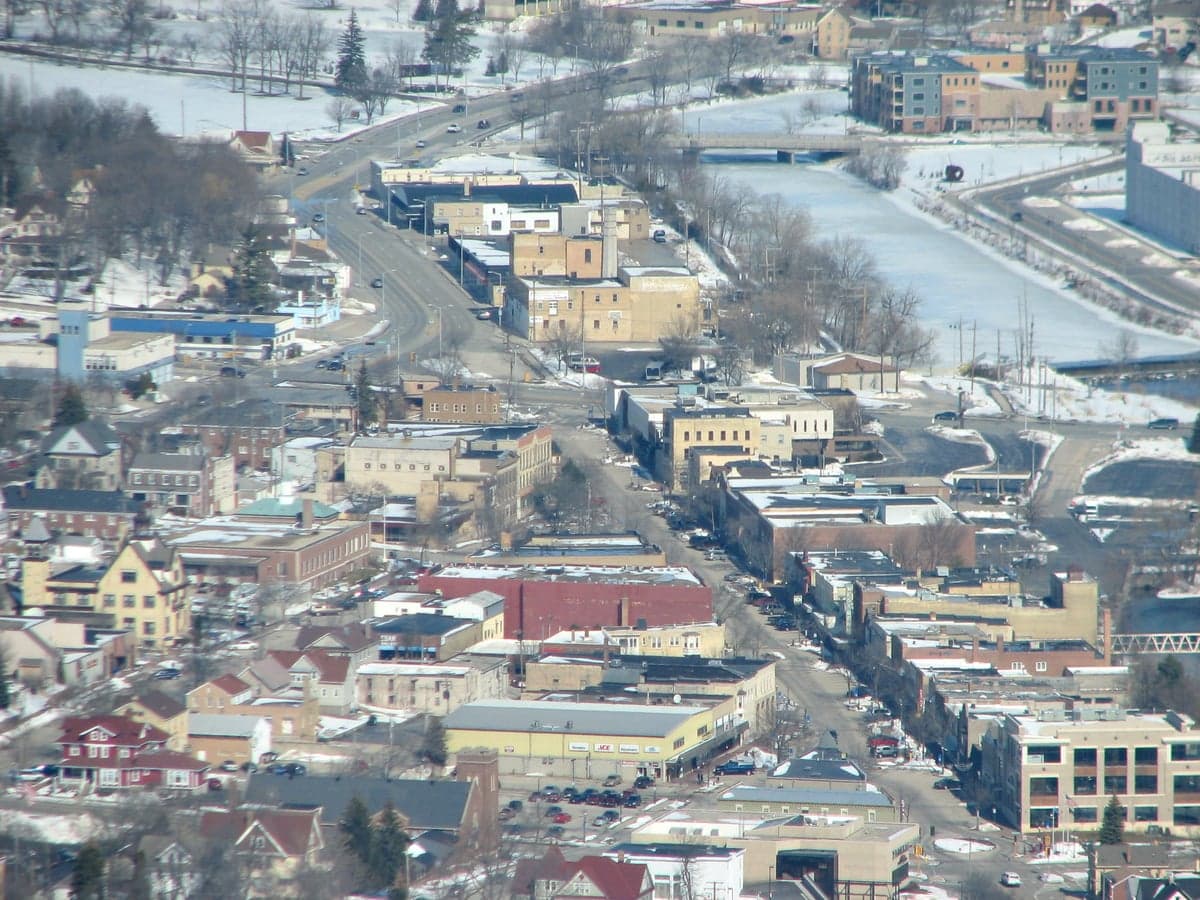
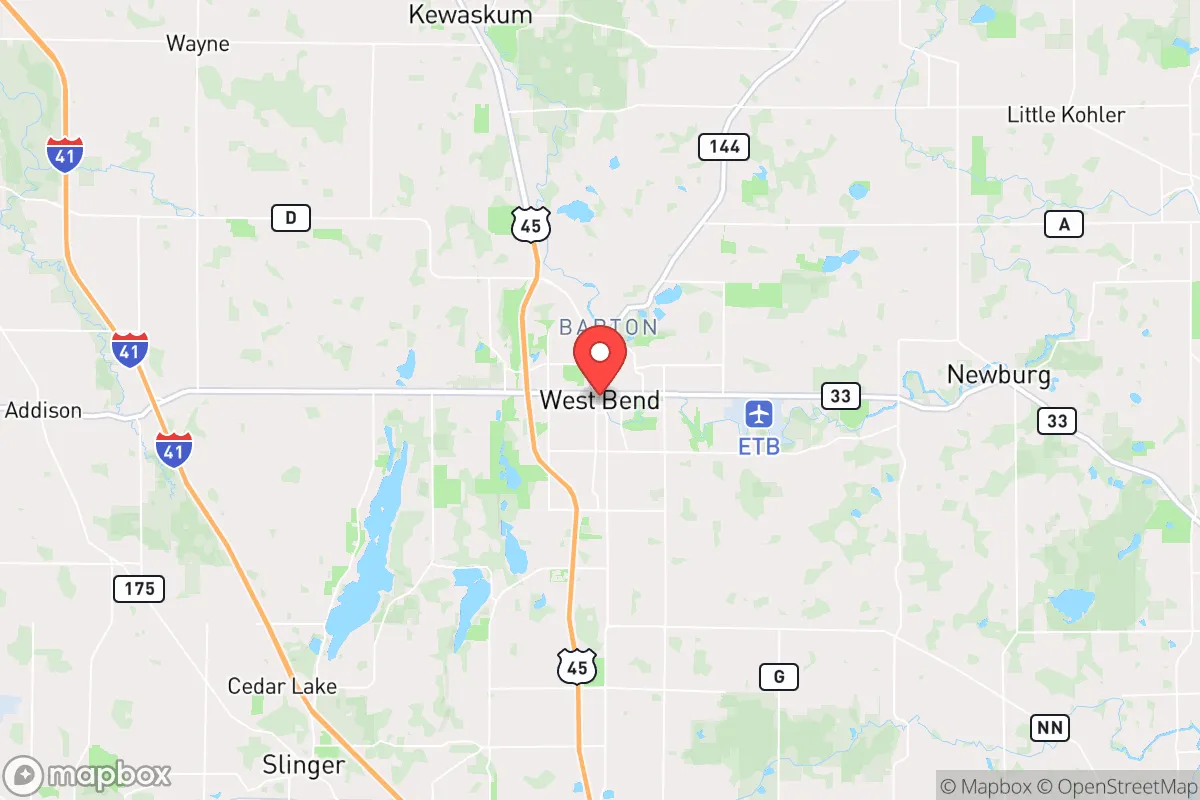
Photo: Wikipedia
Political ClimatePolitical Climate in West Bend, WI
District shown is the primary district for this city’s centroid. Cities may span multiple districts.
Local Political AnalysisPolitical Analysis of West Bend, WI
West Bend has long been a solidly conservative community, and that hasn’t changed much despite some national trends. The Cook PVI rating of R+11 tells you the real story—this area leans Republican by a comfortable margin, and that’s been the case for as long as most folks around here can remember. You see it in local elections, school board races, and even the way people talk about things at the coffee shop. The political trajectory here has stayed pretty steady, though you’ll notice a bit more chatter about national issues creeping into local conversations over the last few years. Still, the core values—personal responsibility, limited government, and a healthy skepticism of federal overreach—remain the bedrock of West Bend’s political identity.
How it compares
If you drive just 30 minutes south to Milwaukee, you’re in a completely different political universe—solidly blue, with a Cook PVI of D+28. That contrast is stark, and it’s something West Bend residents are very aware of. Closer to home, places like Hartford and Slinger lean conservative too, but not quite as heavily as West Bend. The difference is subtle but real: West Bend tends to be more vocal about pushing back against state mandates and what many see as government overreach into personal freedoms. During the pandemic, for instance, you saw a lot more “we’ll figure this out ourselves” attitude here compared to some neighboring towns. The surrounding Washington County as a whole is reliably red, but West Bend often leads the charge on issues like Second Amendment rights and local control over schools.
What this means for residents
For someone moving here, the political climate means you can expect a government that generally stays out of your business. Property taxes are reasonable, zoning is fairly permissive, and there’s a strong expectation that local officials answer to the community, not to party bosses or state bureaucrats. That said, it’s not a monolith—you’ll find a few progressive voices, especially among younger residents and some newcomers, but they’re the minority. The real concern for many long-timers is watching how national trends toward progressive ideology could trickle down. There’s been some tension around school curriculum debates and library policies, with folks worried about losing local control to state or federal mandates. So far, the community has held the line, but it’s something people keep an eye on.
What daily life is like for families
Day-to-day, the political leanings here shape a pretty straightforward lifestyle. Neighbors look out for each other, but there’s not a lot of hand-holding from the government. The schools are decent, the parks are well-maintained, and you can still have a backyard bonfire without worrying about a dozen regulations. The local economy is driven by small businesses and manufacturing, and there’s a real sense that hard work should be rewarded, not taxed into oblivion. You’ll see plenty of American flags and “We Support Our Veterans” signs, and the local churches are active in community life. It’s the kind of place where you can still have a conversation with your city council member at the grocery store, and they’ll listen—because they know you’ll remember come election day.
One thing that sets West Bend apart is its willingness to push back on state-level overreach. When Madison tries to impose one-size-fits-all policies on everything from gun laws to land use, West Bend is often one of the first municipalities to pass resolutions opposing them. There’s a strong tradition of localism here—the idea that the people closest to a problem should be the ones solving it. That’s not just talk; it shows up in how the city handles everything from snow removal to business permits. Looking ahead, the biggest concern is whether that local control can hold up as the state and federal governments keep trying to centralize power. For now, West Bend remains a place where you can live your life pretty much the way you see fit, as long as you’re willing to be a good neighbor. That’s a trade-off most residents are happy to make.

State Political ClimatePolitical Climate in Wisconsin
State Political AnalysisPolitical Environment in the State
Wisconsin has long been a classic purple state, but over the past decade it has shifted from a genuine battleground to a state where Republicans hold a structural advantage in statewide elections, even as Democrats cling to power in the cities. The 2024 presidential race saw Donald Trump carry the state by roughly 1 point, a margin that would have been unthinkable in 2012 when Barack Obama won it by nearly 7 points. The real story, though, is the slow-motion realignment: working-class voters in the southeast and rural north have moved hard right, while the Madison-Milwaukee corridor has become a Democratic stronghold. For a conservative looking to relocate, the key question is whether the state’s current trajectory toward more freedom will hold or if the blue metros will drag it back.
Urban vs. rural divide
The political map of Wisconsin is a tale of two worlds. Milwaukee County, home to the state’s largest city, votes about 70% Democratic, and Dane County (Madison) is even more lopsided at nearly 75% blue. These two counties alone produce a massive Democratic vote margin that Republicans must overcome everywhere else. The rest of the state is overwhelmingly red. The WOW counties — Waukesha, Ozaukee, and Washington — just west of Milwaukee are among the most reliably Republican suburban areas in the entire Midwest, routinely voting 60-65% for GOP candidates. Further north, the rural Northwoods counties like Vilas, Oneida, and Lincoln have become deeply red as well. The real battlegrounds are the smaller cities and exurbs: Green Bay and its surrounding Brown County have trended right, while Kenosha and Racine along the I-94 corridor remain competitive but are drifting red. The 2020 election saw Door County, a long-time swing area, flip to Biden, but that was an outlier — most rural counties have moved sharply right since 2016.
Policy environment
Wisconsin’s policy landscape is a mixed bag for conservatives. On the plus side, the state has a flat income tax rate of 4.4% (down from 7.75% in 2011), and property taxes are relatively moderate compared to Illinois or Minnesota. The state is a right-to-work state, and union power has been severely curtailed since Act 10 in 2011, which effectively ended collective bargaining for most public employees. However, the state has a Democratic governor, Tony Evers, who has vetoed numerous conservative bills, including a 2023 bill that would have banned abortion after 14 weeks and a 2024 bill to expand school choice. The state’s election laws are a bright spot: voter ID is required, and the 2020 election integrity concerns led to a 2022 law banning most private grant money for election administration. But the state still uses drop boxes, and the Wisconsin Supreme Court flipped to a 4-3 liberal majority in 2023, which has already led to the overturning of the state’s gerrymandered legislative maps. That ruling will likely produce more competitive districts in 2026, which could shift the legislature leftward.
Trajectory & freedom
Wisconsin has been on a rollercoaster regarding personal freedom. On the positive side, the state passed a constitutional carry law in 2011, and gun rights remain strong — no permit is needed to carry concealed, and the state has preemption laws preventing local gun bans. Parental rights in education got a boost in 2022 with a law requiring schools to notify parents of any changes to a student’s health or emotional well-being, a direct response to the “Don’t Say Gay” debate. However, the state’s medical freedom took a hit during COVID: Governor Evers imposed a statewide mask mandate in 2020 and kept emergency orders in place for months, though the legislature successfully sued to limit his powers. More recently, the 2023 state budget included a $1 billion tax cut, but Evers vetoed a provision that would have indexed the tax code to inflation. The biggest freedom concern is the state’s abortion landscape: after the 2022 Dobbs decision, a 1849 law banning abortion was briefly in effect, but a 2023 court ruling allowed abortions to resume. The issue remains unsettled, and a future conservative legislature could pass a ban if they get a governor who will sign it.
Civil unrest & political movements
Wisconsin has been a flashpoint for political violence and protest. The 2020 Kenosha riots, sparked by the Jacob Blake shooting, saw businesses burned and two people killed by a 17-year-old armed civilian, Kyle Rittenhouse, who was later acquitted on self-defense grounds. That event polarized the state deeply, with the left calling for gun control and the right rallying around the Second Amendment. The 2011 Act 10 protests in Madison drew over 100,000 people to the Capitol, and the building was occupied for weeks — a preview of the left’s willingness to use civil disobedience. More recently, the 2023 election of liberal Justice Janet Protasiewicz, who campaigned explicitly on abortion rights and redistricting, has energized progressive activists. On the right, the Wisconsin Republican Party has become more populist, with groups like the Wisconsin Grassroots Network pushing for election integrity audits and school board takeovers. Immigration politics are less heated than in border states, but the 2023 surge of migrants through Chicago has led to some busing to Milwaukee, which has strained city resources and sparked local backlash.
Projection
Over the next 5-10 years, Wisconsin is likely to become more competitive, not less. The liberal Supreme Court’s redistricting decision will probably produce a state assembly that is more evenly split, giving Democrats a chance to win majorities. In-migration patterns are mixed: the state is gaining retirees from Illinois and Minnesota, who tend to be more conservative, but also attracting young professionals to Madison and Milwaukee, who lean left. The rural population is shrinking, while the suburbs are growing. The wild card is the 2026 governor’s race: if a Republican wins, the state could see a flurry of conservative legislation on school choice, tax cuts, and abortion restrictions. If Evers or another Democrat holds the office, the state will likely remain gridlocked, with the legislature passing bills and the governor vetoing them. For a conservative moving in now, expect a state that is politically divided but where your vote actually matters — unlike in deep blue or deep red states.
Bottom line for a new resident: Wisconsin offers a relatively low-tax, gun-friendly environment with strong school choice options, but you’ll be living in a state where the political pendulum swings hard every election. If you’re moving to the WOW counties or the Northwoods, you’ll find a like-minded community. If you’re in Madison or Milwaukee, prepare for a blue bubble. The state’s future depends on whether the rural and suburban conservative coalition can hold off the urban progressive wave — and that’s a fight that’s far from over.
* Values derived from national, state, county, city and local statistics and may differ in a specific area. Last updated: 2026-04-19T07:43:23.000Z
Narrative content on this page is AI-generated and may contain mistakes. Verify any details that matter before acting on them.
ReloMaps may earn a commission from affiliate links at no extra cost to you.

