Photo: Wikipedia
Demographics of West Burke, VT
Affluence Level in West Burke, VT
A low-income area with significant economic hardship. Household wealth and educational attainment are well below national averages.
People of West Burke, VT
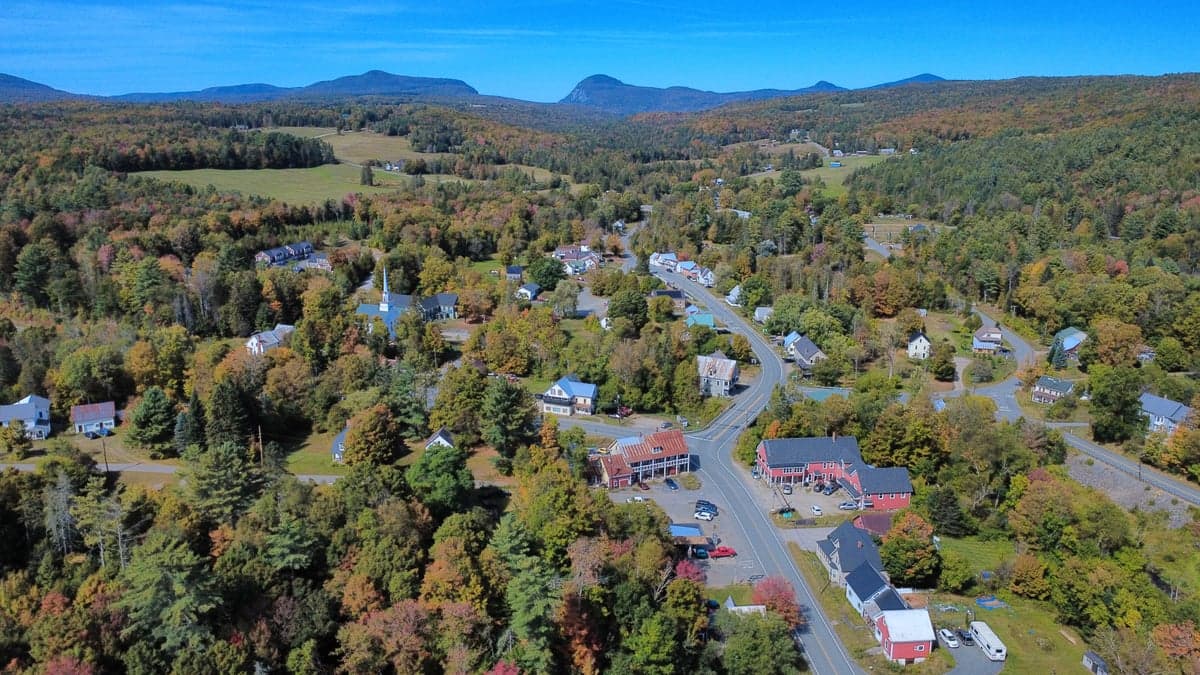
West Burke, Vermont, is a tiny, overwhelmingly white village of 165 residents where nearly everyone is native-born and the population has been shrinking for decades. With a 91.5% white share, zero foreign-born residents, and a 16.9% college-educated rate, the village retains a working-class, rural character that has changed little since the mid-20th century. The population is aging and declining, making West Burke one of the most demographically static places in Caledonia County.
How the city was settled and grew
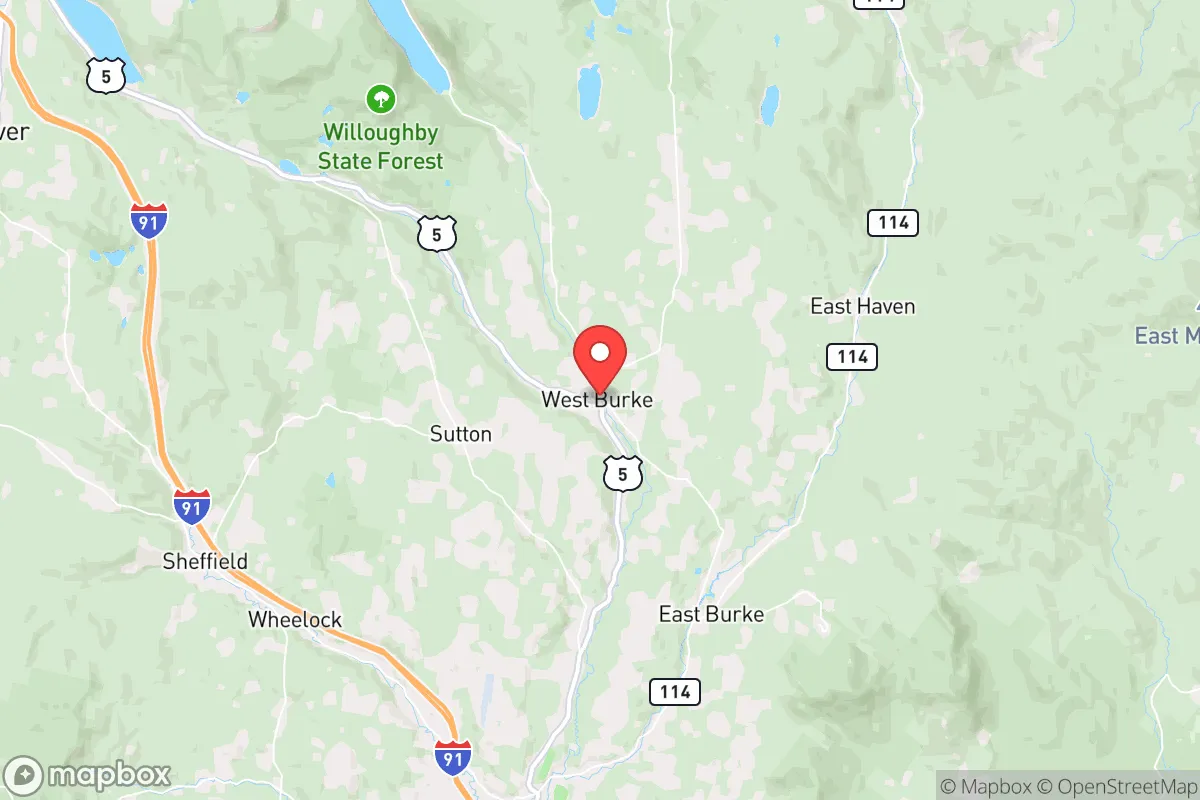
West Burke was never a city but a village within the town of Burke, chartered in 1782 as part of a land grant to Revolutionary War veterans. The earliest settlers were Yankees from southern New England—primarily Connecticut and Massachusetts—who arrived in the 1790s to clear forest for subsistence farms. By the 1820s, the village center formed around the West Branch of the Passumpsic River, where water-powered sawmills and gristmills drew a second wave of farmers and millwrights. The arrival of the Passumpsic Railroad in the 1850s turned West Burke into a modest shipping point for lumber and dairy products, attracting a small number of Irish laborers who built the rail line and settled in what is still called Depot Hill, a cluster of homes near the former station. A third wave came in the 1880s when granite quarrying began in nearby Burke Mountain; French-Canadian families moved down from Quebec to work the quarries, establishing a Catholic presence in the Mill Village district along the river. By 1900, the population peaked near 400, with Yankees, Irish, and French Canadians forming the three main groups, each concentrated in distinct neighborhoods: Yankees on the hilltops (the Burke Hollow area), Irish around the depot, and French Canadians in the mill flats.
Modern era (post-1965)
After the quarries closed in the 1950s and the railroad stopped passenger service in 1966, West Burke entered a long decline. The 1965 Hart-Cellar Act had no effect here—the village recorded zero foreign-born residents in every census from 1970 onward. Domestic out-migration was the dominant trend: young adults left for jobs in St. Johnsbury, Lyndonville, or out of state, while retirees stayed put. The white share remained above 95% through the 1990s, and the small Hispanic population (6.1% today) arrived only in the 2010s, likely as seasonal workers in the region's maple syrup and logging operations. These Hispanic residents are scattered rather than concentrated, with no distinct ethnic neighborhood emerging. The Burke Mountain area, once home to quarry workers, saw a modest influx of second-home buyers from southern New England after the Burke Mountain Ski Area expanded in the 1990s, but these newcomers are seasonal and do not alter the year-round demographic picture. The Village Green district, the historic commercial core, has lost its grocery store and gas station, leaving only a post office and a general store.
The future
West Burke's population is projected to continue shrinking, with the median age (estimated at 52–55) well above the state average. The zero foreign-born share means no immigration-driven growth is likely, and the small Hispanic cohort shows no signs of expanding into a permanent community—most are renters in aging single-family homes. The village is homogenizing into an older, whiter, and poorer enclave as younger families leave and are not replaced. The only potential for stabilization lies in remote workers drawn by low housing costs—median home values hover around $120,000—but the lack of broadband infrastructure and services limits that appeal. The East Haven Road corridor, a sparsely settled area of mobile homes and older houses, may absorb any new residents, but they will likely be retirees or low-income Vermonters, not a new demographic wave.
For a conservative-leaning mover seeking a quiet, affordable, and racially homogeneous rural setting, West Burke offers exactly that—but at the cost of declining services, an aging population, and limited economic opportunity. The village is becoming a place where people age in place rather than a community attracting new families, and anyone moving in should expect a very small, insular social environment with little demographic change on the horizon.

* Values derived from national, state, county, city and local statistics and may differ in a specific area. Last updated: 2026-04-19T09:19:37.000Z
Narrative content on this page is AI-generated and may contain mistakes. Verify any details that matter before acting on them.
ReloMaps may earn a commission from affiliate links at no extra cost to you.

