Photo: Wikipedia
Personal Sovereignty in West Burke, VT
Moderate friction. Expect trade-offs in some aspect of personal liberty and independence.
What does Personal Sovereignty tell us?
Personal Sovereignty measures your capacity for self-reliance and independence with minimal government friction. Higher scores mean fewer barriers between you and the way you want to live... but it assumes you have the space you need and good neighbors.
What does this tell us?
Personal Sovereignty measures your capacity for self-reliance and independence with minimal government friction. Higher scores mean fewer barriers between you and the way you want to live... but it assumes you have the space you need and good neighbors.
State Policy
Energy independence: Importer (15% of energy produced in-state)
Personal Liberty
Homesteading

Personal Liberty Analysis
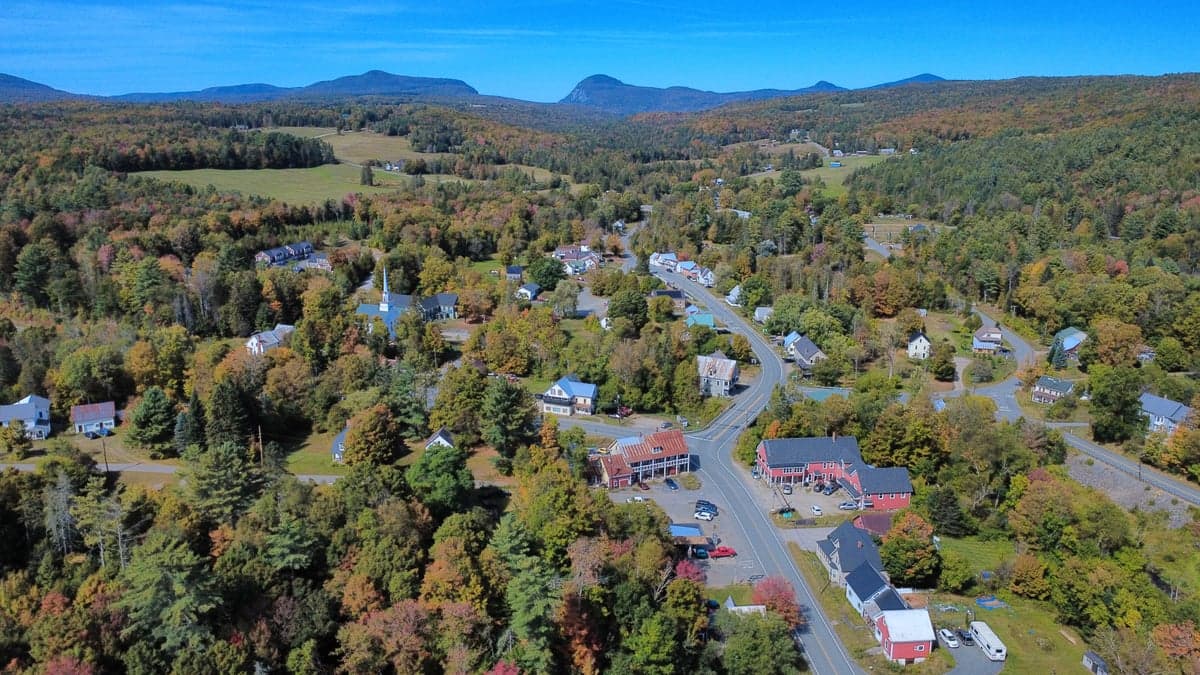
West Burke, Vermont, offers a notably high degree of personal sovereignty relative to much of the Northeast, but it is not a libertarian free-for-all. The town’s rural character, low population density (roughly 1,700 residents in the broader Burke area), and distance from state government hubs in Montpelier create a practical buffer against the most intrusive forms of governance. However, Vermont’s state-level policies—particularly on taxation, healthcare mandates, and environmental regulation—impose real constraints that any prepper or conservative relocating here must weigh carefully. The key trade-off is between day-to-day autonomy in your immediate surroundings and the long-term creep of state-level overreach.
Tax burden and regulatory posture: what it costs to live free in the Northeast Kingdom
Vermont’s tax burden is among the highest in the nation, and West Burke is not exempt. The state levies a progressive income tax with a top marginal rate of 8.75% on income over $213,150 (2025), plus a statewide property tax that averages roughly $1.80 per $100 of assessed value in Caledonia County. For a modest home valued at $200,000, that’s about $3,600 annually in property taxes alone—before local school and municipal add-ons. The state also imposes a 6% sales tax, though groceries and prescription drugs are exempt. For a survivalist mindset, this is a significant drain on resources that could otherwise go toward land, supplies, or self-sufficiency investments. On the regulatory side, Vermont is known for Act 250, a statewide land-use law that can trigger permit reviews for any development over 10 acres or involving substantial construction. This means even building a large off-grid homestead or adding a workshop can require state-level sign-off, adding months of delays and legal costs. The state also mandates renewable energy standards and has strict wetland and water-use regulations, which can complicate well drilling or pond construction. In short, the tax and regulatory posture here is moderate-to-heavy at the state level, but local enforcement in West Burke is often lax due to limited town staff and a culture of “live and let live.”
Self-defense and gun law specifics: what you can and cannot do in Vermont
Vermont is a constitutional carry state—no permit is required to carry a firearm openly or concealed, and there is no state-level firearm registry or waiting period. This is a major plus for personal sovereignty. As of 2025, the state does not ban any specific class of firearms, including AR-15s or standard-capacity magazines, and there is no red-flag law (extreme risk protection order) on the books, though such legislation has been proposed repeatedly. However, the state does require a background check for all firearm sales, including private transfers, through the Vermont Firearm Transfer System (VFTS). This is a point of friction for preppers who value off-the-books transactions. Additionally, Vermont law prohibits carrying firearms in courthouses, schools (with limited exceptions for permit holders), and federal buildings. Self-defense law in Vermont follows the “duty to retreat” standard outside the home—you cannot use deadly force unless you are in your dwelling and face an imminent threat of death or great bodily harm. Inside your home, the Castle Doctrine applies, but there is no “stand your ground” statute for public spaces. For a survivalist, this means your home is your castle, but defending yourself on the road or in town carries legal risk. Overall, Vermont’s gun laws are among the most permissive in New England, but they are not as free as states like New Hampshire or Maine.
Self-reliance and homesteading viability: lot sizes, zoning, and off-grid feasibility
West Burke’s rural zoning and land availability make it a strong candidate for homesteading and off-grid living. Minimum lot sizes in unzoned areas of Burke are typically 2 to 5 acres for a single-family dwelling, though many parcels in the surrounding hills are 10 acres or larger. The town has no building code enforcement for owner-occupied single-family homes, meaning you can build a cabin, yurt, or earthship without county inspections—provided you meet state septic and well requirements. Off-grid solar is entirely legal, and net metering is available through Vermont’s Green Mountain Power, but you are not required to connect to the grid if you can demonstrate self-sufficiency. Rainwater collection is permitted for non-potable uses, and composting toilets are allowed with a state-approved system. The growing season is short (roughly 100 frost-free days), so food self-sufficiency requires a greenhouse or cold frames. Livestock—chickens, goats, pigs—are allowed on parcels over 2 acres without special permits, though slaughtering for personal consumption is legal. The biggest regulatory hurdle for a prepper is the state’s Act 250, which can kick in if you plan to subdivide land, build multiple structures, or operate a home business that draws customers. For a single family on 5+ acres, you can largely live off-grid without state interference, but any expansion beyond a single dwelling triggers review. The local culture in West Burke is supportive of self-reliance—neighbors help each other with logging, fencing, and water systems—and the town’s low crime rate (violent crime is virtually nonexistent) means you can store supplies without constant worry.
Personal liberties: parental rights, medical autonomy, speech, and property
Vermont’s record on parental rights is mixed. The state mandates vaccination for school attendance (with medical and religious exemptions, but no philosophical exemption), and it has a universal pre-K program that some conservatives view as government encroachment on family decisions. However, homeschooling is legal with minimal regulation—you must file an enrollment notice annually and provide a basic curriculum outline, but there are no standardized testing requirements or home visits. Medical autonomy is a sore point: Vermont was one of the first states to legalize assisted suicide (Act 39, 2013), and it has a state-run health insurance exchange (Vermont Health Connect) that imposes individual mandate penalties at the state level. For those who distrust government healthcare, this is a negative. On the positive side, Vermont has no state-level mask or vaccine mandates as of 2025, and the governor has stated he will not reimpose them without legislative approval. Free speech is protected under the Vermont Constitution, which has stronger protections than the First Amendment in some areas (e.g., no “fighting words” exception). Property rights are generally respected, but the state’s environmental regulations—particularly on wetlands, shorelands, and forest management—can limit what you do with your land. For example, clear-cutting more than 5 acres requires a state permit, and building within 250 feet of a stream or lake triggers a Shoreland Protection Act review. For a prepper, this means you cannot simply bulldoze your property for a bunker or firing range without state oversight. The town of Burke itself has minimal zoning, so local government overreach is low, but state-level environmental agencies have a long reach.
Overall, West Burke offers a solid foundation for personal sovereignty compared to most of New England, but it is not a haven like rural Idaho or Montana. The state’s high taxes, Act 250 regulatory burden, and healthcare mandates are real constraints that require strategic planning—such as choosing a parcel that avoids wetlands, building within existing footprint to avoid permits, and maintaining a low profile to avoid state attention. For a single individual or family willing to navigate these hurdles, the trade-off is a tight-knit community, abundant natural resources, and a culture that values independence. If you are looking for a place where you can live largely on your own terms with minimal government interference in daily life, West Burke is a viable option—but you will need to stay informed and engaged to protect those freedoms from Montpelier’s reach.

* Values derived from national, state, county, city and local statistics and may differ in a specific area. Last updated: 2026-04-19T09:19:37.000Z
Narrative content on this page is AI-generated and may contain mistakes. Verify any details that matter before acting on them.
ReloMaps may earn a commission from affiliate links at no extra cost to you.

