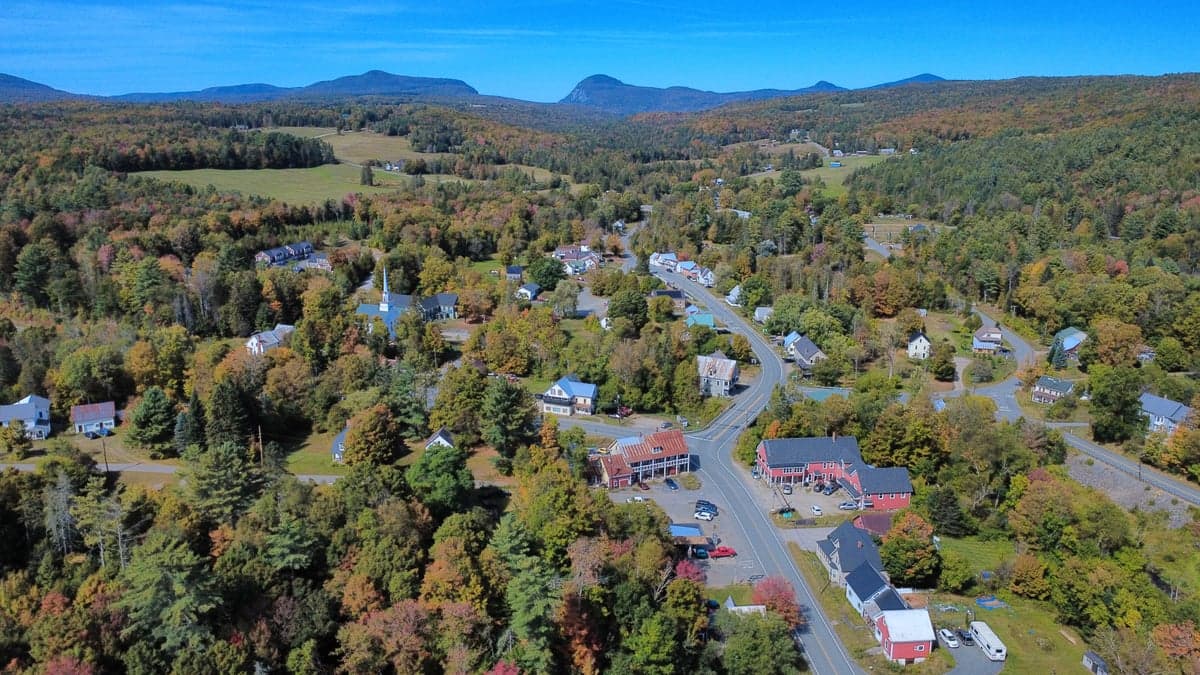
Photo: Wikipedia
Political ClimatePolitical Climate in West Burke, VT
District shown is the primary district for this city’s centroid. Cities may span multiple districts.
Inherited from parent state — no local data available.
Local Political AnalysisPolitical Analysis of West Burke, VT
West Burke, Vermont, sits in a part of the state that has been trending left for a while now, and the numbers back it up—the area carries a Cook PVI of D+17, meaning it votes about 17 points more Democratic than the national average. That’s a pretty solid blue stamp, and it’s not just a recent fluke; the shift has been building for years, with local elections and state representation reflecting that same lean. If you’ve been around here long enough, you remember when Caledonia County was a lot more purple, but the influx of out-of-state folks and the pull of Burlington’s influence have nudged things steadily leftward.
How it compares
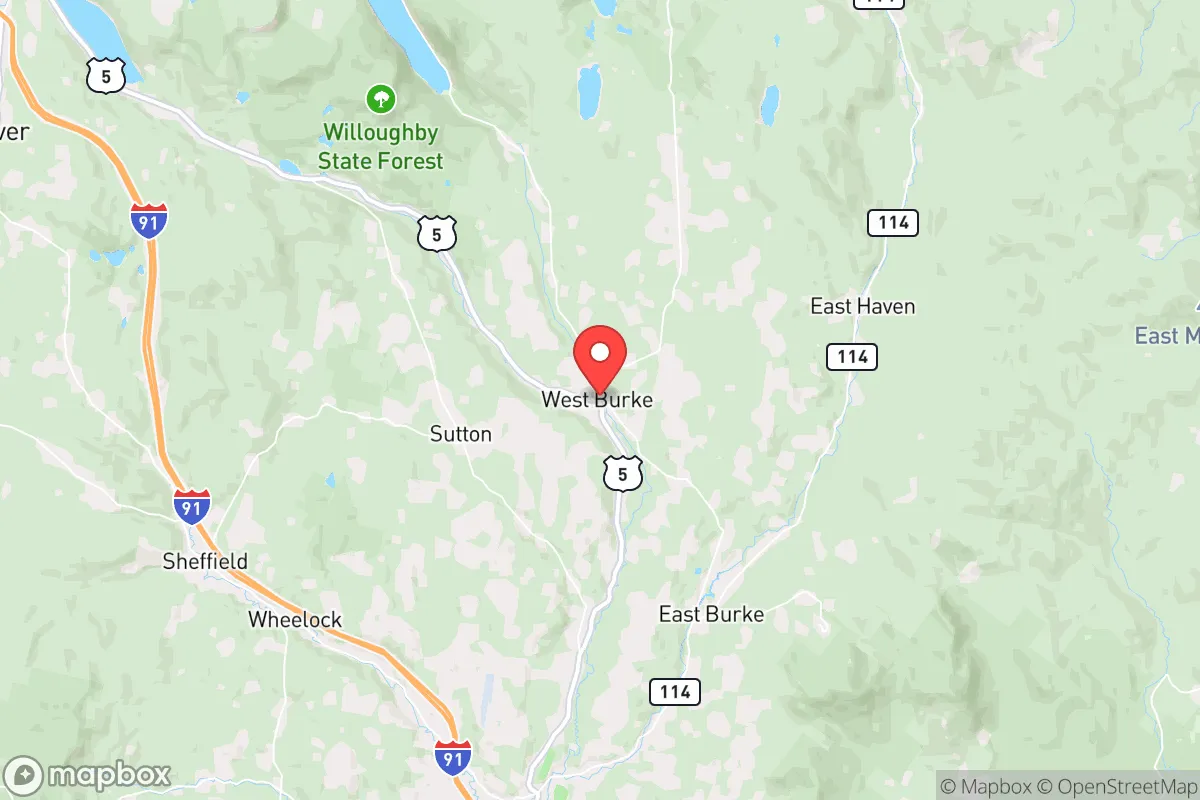
West Burke isn’t an island, and its politics stand out when you look at the surrounding towns. Head a few miles south to St. Johnsbury, and you’ll find a similar D+ lean, though maybe not quite as pronounced. But drive west toward Lyndonville or north toward the Newport area, and the political vibe shifts—those communities still have a stronger independent and conservative streak, especially on issues like property taxes and land use. The contrast is sharpest when you compare West Burke to places like Danville or Peacham, which have held onto more of that old-school Vermont libertarian spirit, where folks are skeptical of government meddling in their daily lives. In West Burke, you’re more likely to see yard signs for progressive candidates and hear talk of state-level initiatives that feel like they’re coming from Montpelier, not Main Street.
What this means for residents
For someone who values personal freedoms and keeping government out of their business, the political climate here can feel a bit suffocating at times. The local and state governments have been pushing policies that expand their reach—think stricter environmental regulations on private land, higher taxes to fund social programs, and a general attitude that the state knows best. Property taxes in Vermont are already among the highest in the nation, and the progressive majority in Montpelier shows little interest in reining them in. For a long-time resident, it’s frustrating to see your rights to use your own land or run a small business get tangled up in red tape that feels like it’s designed for a city, not a rural town like West Burke. The school system, while decent, is also a point of tension—curriculum decisions and funding mandates often come from the state level, leaving local parents with less say than they used to have.
What daily life is like for families
On the ground, this political tilt means you’re living in a community that’s generally welcoming and neighborly, but there’s an undercurrent of frustration among those who remember when things were more hands-off. Local town meetings can get heated, especially when it comes to zoning changes or school budgets, and the divide between newer residents (often from out of state) and old-timers is real. If you’re a family looking to settle here, you’ll find good schools and a tight-knit feel, but you’ll also need to brace for a tax burden that keeps climbing and a state government that doesn’t always respect local autonomy. The long-term trajectory doesn’t look great for conservatives—the demographic trends suggest the D+17 lean could deepen, not reverse, as more people move in from blue states. For now, West Burke is a place where you can still find pockets of old Vermont independence, but they’re getting harder to hold onto.

State Political ClimatePolitical Climate in Vermont
State Political AnalysisPolitical Environment in the State
Vermont has long been a deep blue state, but its political climate is far more complex than the national narrative suggests. The state’s dominant coalition is a progressive-liberal alliance centered in Chittenden County (Burlington, South Burlington) and a handful of college towns, but this coalition has been tightening its grip over the past 20 years, pushing the state from a moderate New England Republican tradition to a near one-party rule. Since 2000, the Vermont House and Senate have been under Democratic supermajorities, and the governorship has been held by Republicans only twice (Jim Douglas, 2003-2011, and Phil Scott, 2017-present), though Scott is a liberal Republican who often sides with Democrats on social and fiscal issues. The state’s overall partisan lean is D+16, but the real story is the growing urban-rural chasm and the accelerating erosion of personal freedoms.
Urban vs. rural divide
The political map of Vermont is a tale of two states. The urban core—Burlington, South Burlington, Winooski, and Montpelier—drives the progressive agenda. Burlington, home to the University of Vermont, is a bastion of far-left activism, with a city council that has passed rent control, sanctuary city ordinances, and a $15 minimum wage. These metros account for roughly 20% of the state’s population but generate the bulk of Democratic votes. In contrast, the rural counties—Orleans, Essex, Franklin, and Rutland—are increasingly red or purple. In 2024, Orleans County voted +12 for Trump, while Essex County flipped from blue to red for the first time since 2004. The divide is stark: a resident of St. Johnsbury (Caledonia County) lives under the same state laws as someone in Burlington, but their values, economic realities, and daily concerns are worlds apart. The rural areas feel ignored by Montpelier, and that resentment is growing.
Policy environment
Vermont’s policy environment is a case study in progressive overreach. The state has the highest combined state and local tax burden in the nation (12.8% of income), driven by a progressive income tax (top rate 8.75%), a statewide property tax that funds education, and a sales tax of 6%. In 2023, the legislature passed Act 47, a clean heat standard that effectively mandates a transition away from fossil fuels for home heating, adding costs to rural homeowners who lack natural gas access. Education policy is dominated by the Agency of Education, which has pushed critical race theory and gender ideology curricula into public schools, with parental opt-out rights severely limited. Healthcare is single-payer adjacent: Green Mountain Care is a state-run exchange, and in 2024, the legislature debated a universal health care bill that would eliminate private insurance. Election laws are among the most permissive in the country: same-day voter registration, no-excuse mail-in voting, and automatic voter registration at the DMV. For a conservative, the policy environment feels like a slow-motion takeover of personal choice by state mandate.
Trajectory & freedom
Vermont is becoming less free by nearly every measure, and the trend is accelerating. On gun rights, the state passed Act 69 in 2023, banning the sale of many semi-automatic firearms and magazines over 10 rounds, and requiring a state police-issued permit for handgun purchases—effectively a de facto registry. Parental rights took a hit with Act 1 (2022), which removed the requirement for schools to notify parents if a child changes their gender identity or pronouns. Medical freedom is under assault: Act 76 (2023) mandated COVID-19 vaccines for all healthcare workers, with no religious exemption, and the state’s Department of Health has aggressively enforced mask mandates in schools and businesses. Property rights are constrained by Act 250, a 1970s-era land-use law that has been expanded to block new housing construction, driving up costs. The Vermont Supreme Court ruled in 2023 that the state constitution requires the legislature to fund abortion on demand, including late-term procedures, with no parental notification for minors. The trajectory is clear: more mandates, less choice, and a government that sees itself as the arbiter of personal decisions.
Civil unrest & political movements
Vermont has seen a rise in organized political movements on both sides, but the left dominates the streets. In 2020, Burlington saw weeks of Black Lives Matter protests that turned violent, with businesses vandalized and the city council defunding the police by 30%. The Rights and Democracy (RAD) group, a progressive activist network, has successfully pushed for rent control and sanctuary policies. On the right, the Vermont Republican Party is weak, but grassroots groups like Vermonters for Liberty and Gun Owners of Vermont have organized against gun bans and vaccine mandates. The Secessionist movement is a fringe but vocal element, with the Second Vermont Republic advocating for independence from the U.S., though it has no real political power. Immigration politics are a flashpoint: Burlington and Winooski are sanctuary cities, and in 2023, the state legislature passed a bill prohibiting local law enforcement from cooperating with ICE, leading to a rise in illegal immigration in rural areas. Election integrity is a growing concern—the state’s universal mail-in voting system has no voter ID requirement, and in 2022, the Secretary of State admitted to thousands of duplicate registrations on the rolls. A new resident will notice the tension: the progressive activism in the cities versus the quiet resentment in the countryside.
Projection
Over the next 5-10 years, Vermont will likely become more progressive and less free. Demographic trends are working against conservatives: the state has the oldest population in the nation (median age 43), and young people are moving to Burlington for the university and tech jobs, while rural areas are losing population. In-migration from out-of-state, particularly from New York and Massachusetts, is accelerating the leftward shift—new arrivals tend to be wealthy, educated, and progressive, and they vote for more government. The Vermont Housing and Conservation Board is buying up rural land for conservation, reducing the tax base and driving up property taxes. The Climate Council is pushing for a carbon tax by 2028, which will hit rural drivers hard. The only brake is the state’s fiscal crisis: the pension system is underfunded by $5 billion, and the population is shrinking, which could force a reckoning. But for now, the trajectory is toward a California-style progressive state, with high taxes, strict regulations, and limited personal freedoms. Someone moving in now should expect to see more mandates, fewer choices, and a government that is increasingly intrusive.
Bottom line for a new resident: If you value low taxes, gun rights, parental control over education, and medical freedom, Vermont is a tough place to live. The state is beautiful, but the political climate is hostile to conservative values. You’ll find like-minded communities in rural towns like Newport or St. Albans, but you’ll be fighting a losing battle against a legislature that is determined to remake the state in a progressive image. If you’re moving here, be prepared to pay high taxes, navigate a complex regulatory environment, and accept that your personal freedoms will be increasingly restricted. It’s a trade-off: stunning natural beauty for a government that wants to run your life.
* Values derived from national, state, county, city and local statistics and may differ in a specific area. Last updated: 2026-04-19T09:19:37.000Z
Narrative content on this page is AI-generated and may contain mistakes. Verify any details that matter before acting on them.
ReloMaps may earn a commission from affiliate links at no extra cost to you.

