 Popular
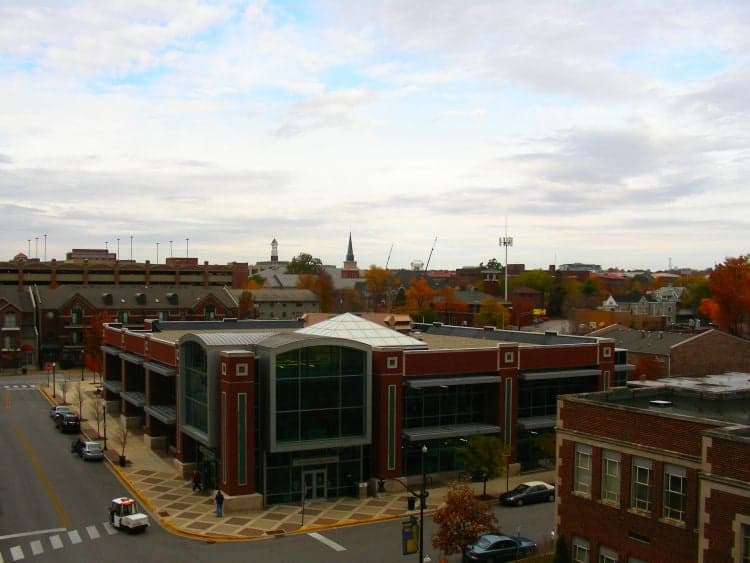
Photo: Wikipedia
Personal Sovereignty in West Lafayette, IN
Viable for self-reliance. Generally workable, though some barriers may limit total independence.
What does Personal Sovereignty tell us?
Personal Sovereignty measures your capacity for self-reliance and independence with minimal government friction. Higher scores mean fewer barriers between you and the way you want to live... but it assumes you have the space you need and good neighbors.
What does this tell us?
Personal Sovereignty measures your capacity for self-reliance and independence with minimal government friction. Higher scores mean fewer barriers between you and the way you want to live... but it assumes you have the space you need and good neighbors.
State Policy
Energy independence: Importer (35% of energy produced in-state)
Personal Liberty
Homesteading

Personal Liberty Analysis
West Lafayette, Indiana, presents a mixed picture for those prioritizing personal sovereignty. While the city itself operates within a state that has taken notable steps to protect individual rights, the local environment is shaped by a university-dominated culture and municipal codes that can feel restrictive to those accustomed to maximum autonomy. For the strategic relocator—particularly one with a survivalist or prepper mindset—the key is understanding that the state-level legal framework offers a solid foundation, but the day-to-day reality in West Lafayette requires navigating a more collectivist, regulation-heavy atmosphere than what you'd find in rural Indiana.
Tax burden and regulatory posture: How Indiana compares to neighboring states
Indiana's tax structure is a net positive for personal sovereignty. The state levies a flat income tax of 3.15% (as of 2025, with a scheduled phase-down to 2.9% by 2027), and property taxes are capped at 1% of assessed value for owner-occupied homes. This is a far cry from the burdens in Illinois or Michigan, where combined state and local tax rates can exceed 10% of income. West Lafayette's local option income tax adds roughly 1.5%, but even with that, your total tax load remains manageable. The regulatory posture at the state level is generally light-touch: no state-level OSHA for small businesses, no universal paid leave mandates, and a right-to-work law that limits union power. However, the city of West Lafayette imposes its own set of ordinances—including strict noise regulations, rental property licensing, and a tree preservation ordinance that can limit what you do on your own lot. The county (Tippecanoe) has no zoning in unincorporated areas, but inside city limits, expect a permitting process for anything beyond routine maintenance. For the prepper, this means the state won't tax you into submission, but the city will demand paperwork for your projects.
Self-defense and gun law specifics: What Indiana's preemption means for West Lafayette
Indiana is a constitutional carry state—no permit required to carry a handgun, openly or concealed, for anyone 18 or older who can legally possess a firearm. This is a major win for personal sovereignty. The state also has strong preemption laws: no city or county can pass its own gun restrictions that are stricter than state law. West Lafayette cannot ban carry in parks, impose waiting periods, or require registration. However, Purdue University is a gun-free zone by state statute, which means you cannot carry on campus property—including the many university-owned buildings and green spaces that dot the city. This creates a practical limitation: if you live near campus, your daily carry may be restricted during commutes or errands that cross university land. Stand-your-ground laws are in effect, and there is no duty to retreat in any place you are legally present. Castle doctrine applies to your home and vehicle. For the survivalist, the legal framework is solid, but the geography of West Lafayette means you'll need to be hyper-aware of where the university's boundaries lie—they're not always clearly marked.
Self-reliance and homesteading viability: Lot sizes, zoning, and off-grid feasibility
This is where West Lafayette falls short for the serious prepper. The city's zoning code is designed for dense, walkable neighborhoods, not self-sufficient homesteads. Minimum lot sizes in residential zones are typically around 6,000 to 8,000 square feet—enough for a garden, but not for livestock or significant food production. Keeping chickens is allowed with a permit (hens only, no roosters), but larger animals like goats or pigs are prohibited within city limits. Rainwater collection is legal in Indiana, but West Lafayette's building code requires any cistern system to be approved by the city engineer, adding bureaucratic friction. Off-grid solar is technically allowed, but the city requires interconnection to the grid if you're within 300 feet of a power line, and net metering policies are favorable only if you stay connected. Composting toilets are not recognized by the city's plumbing code, making true off-grid living nearly impossible inside city limits. For those serious about self-reliance, the unincorporated areas of Tippecanoe County—just a 10- to 15-minute drive from downtown West Lafayette—offer 1- to 5-acre parcels with no zoning restrictions, where you can build a pole barn, keep livestock, and install a septic system without city interference. The strategic move is to live in the county and commute to the city for work or amenities.
Personal liberties: Parental rights, medical autonomy, speech, and property
Indiana has been a battleground for personal liberties, with mixed results. On parental rights, the state passed a law in 2023 requiring schools to notify parents of any changes in a student's mental, emotional, or physical health—a strong win for family sovereignty. Medical autonomy is more complicated: Indiana banned nearly all abortions in 2022, which aligns with conservative values, but also maintains a vaccine mandate for school attendance (with broad medical and religious exemptions). The state does not have a general health emergency law that allows forced medical treatment, and the 2023 law restricting gender transition procedures for minors is a significant protection for parental authority. Free speech is robust—Indiana has no hate speech laws that criminalize expression, and public protests are generally allowed with a permit. Property rights are protected by the state's "right to farm" law, which shields agricultural operations from nuisance lawsuits, but this doesn't apply inside West Lafayette city limits. The city's rental inspection program, which requires landlords to submit to periodic property checks, has been criticized as an overreach into private property rights. For the property owner, the state provides strong protections against eminent domain abuse, but the city's code enforcement can feel intrusive.
Overall, West Lafayette offers a foundation of state-level sovereignty that is better than most of the Midwest, but the city's university-driven culture imposes a layer of regulation that will frustrate those seeking maximum autonomy. The tax burden is low, gun laws are favorable, and parental rights are protected. But for self-reliance—homesteading, off-grid living, and true independence from municipal oversight—you'll want to look at the surrounding county. Compared to a place like Bloomington or Indianapolis, West Lafayette is slightly more restrictive on property use but similar on personal liberties. Compared to rural Indiana, it's a trade-off: you gain access to a strong job market and amenities, but you lose the freedom to do whatever you want on your own land. The strategic relocator should treat West Lafayette as a base of operations—live in the county, work in the city, and keep your prepping projects outside the city limits. That's the path to real personal sovereignty in this area.

* Values derived from national, state, county, city and local statistics and may differ in a specific area. Last updated: 2026-04-22T07:27:17.000Z
Narrative content on this page is AI-generated and may contain mistakes. Verify any details that matter before acting on them.
ReloMaps may earn a commission from affiliate links at no extra cost to you.

