Photo: Wikipedia
Find The Best Places To Live
in Bloomington
PRO TIP! You can paste a Zillow or Redfin link to get info on that property.
What It's Like Living in Bloomington, IN
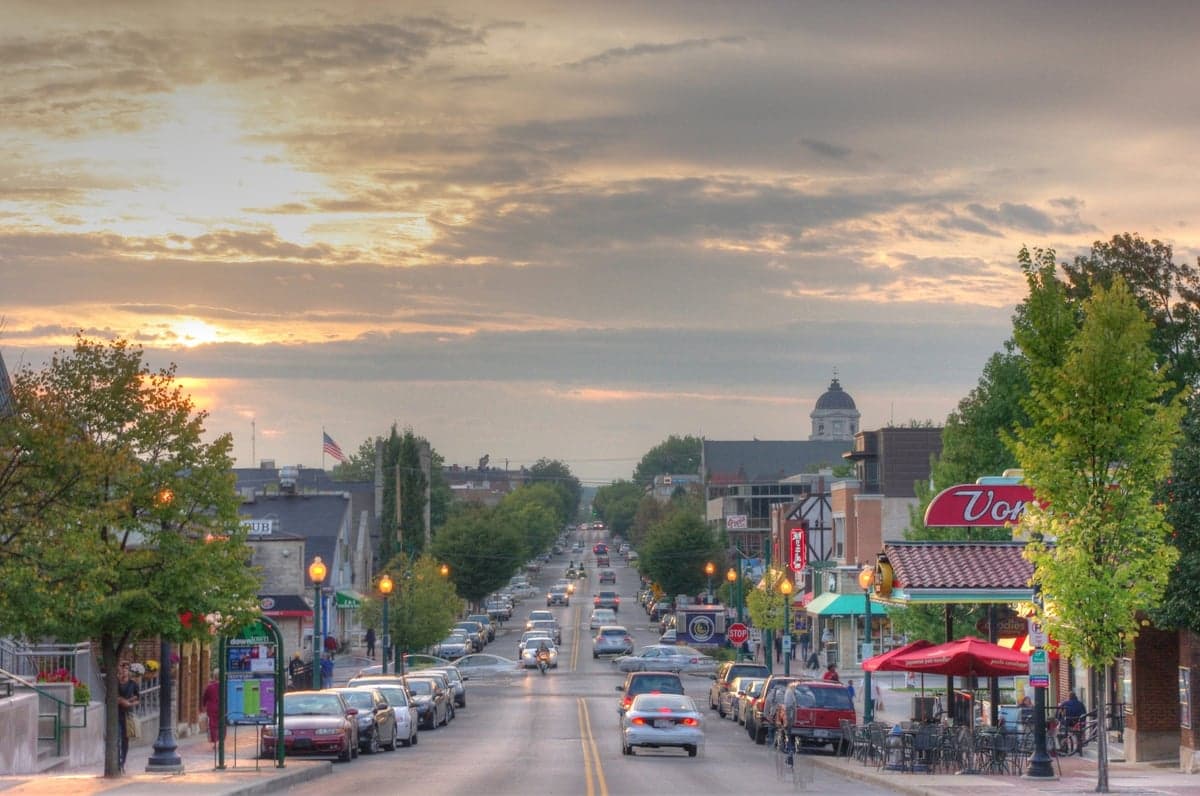
Bloomington is a college town that doesn’t feel like one once you get past the campus core. Indiana University dominates the economy and the calendar, but the city itself has a slower, more grounded rhythm—think farmers’ markets, limestone architecture, and a surprising number of people who’ve lived here for decades without ever working for the university. It’s liberal-leaning in a red state, young (median age 24.9), and highly educated (60% hold a bachelor’s or higher), which creates a culture that values ideas, live music, and outdoor access over strip malls or corporate chains.
Daily Rhythm: What People Actually Do
Most weekdays in Bloomington start with a coffee run—locals swear by the pour-overs at Needmore Coffee Roasters on the west side or the patio at Soma near the square. The commute is famously short: the average drive time is just under 17 minutes, so you’re rarely stuck in traffic unless it’s a home football Saturday or the annual Little 500 bike race weekend. People shop at the Bloomington Community Farmers’ Market on Saturday mornings (year-round, indoor in winter), and the big grocery anchors are Kroger and Fresh Thyme. Dinner out often means Upland Brewing Company for a burger and a local IPA, or FARMbloomington for something nicer. The kind of person who fits in here tends to be either a student or early-career professional, a professor or researcher, or a retiree who values walkability and culture over low taxes—because property taxes here are higher than in surrounding counties, and the cost of living index sits at 101, right at the national average.
Sports, Festivals, and the Social Calendar
IU sports are the main event. Assembly Hall fills up for men’s basketball (think candy-striped warmups and the student section’s “cream and crimson” chant), and Memorial Stadium draws 50,000-plus for football in the fall. High school sports are a quieter affair—Bloomington North and South both have competitive teams, but they don’t command the same civic attention as the Hoosiers. The real local tradition is Little 500, a week-long bike race and party in April that brings alumni back and turns the town into a block-party scene. Summer brings the Bloomington Summer Music Festival and free concerts at the Buskirk-Chumley Theater. For outdoor life, Lake Monroe is the go-to—it’s Indiana’s largest lake, with sailing, hiking, and a state recreation area that feels like a genuine escape from town. The B-Line Trail, a converted rail corridor, runs through the heart of the city and is packed with runners, dog walkers, and cyclists from dawn until dusk.
What Frustrates Longtime Residents
The biggest complaint you’ll hear is about housing. The median home value is $289,700, which is steep for a city where the median income is only $48,918. Rentals are expensive and often dominated by student housing complexes, making it hard for non-students to find a decent apartment under $1,200. The second frustration is the seasonal rhythm: the town empties out during winter break and summer, so restaurants and services sometimes feel like they’re running on a skeleton crew. And while the violent crime rate (133.8 per 100,000) is lower than the national average, property crime—especially bike theft and package theft near campus—is a real annoyance. Politically, conservative residents sometimes feel like a minority voice in a city that votes reliably blue, though the surrounding county leans more mixed. The weather is typical Midwest: humid summers, gray winters with occasional snow, and a beautiful but brief spring and fall that locals call “the two perfect weeks.”
Pros and Cons of Living Here
- Pros: Walkable downtown with a real sense of place; strong arts and music scene for a city of 78,791; excellent public schools (Bloomington High School South and North both have strong reputations); low commute times; access to Lake Monroe and state parks.
- Cons: High housing costs relative to local wages; seasonal population swings that affect business hours and social life; limited job market outside of IU, healthcare (IU Health), and a handful of tech startups; property taxes that feel high for what you get in services.
Bloomington works best for people who want a small city with a big-university heartbeat—where you can walk to a concert, a farmers’ market, and a hiking trail in the same afternoon. It’s less ideal if you’re looking for a low-cost, quiet suburb or a place where conservative values are the default. Most people who stay past graduation do so because they’ve found a niche: a job at the university, a community around the local food scene, or simply a lifestyle that values culture and nature over square footage and low taxes.

Similar small cities to Bloomington
* Values derived from national, state, county, city and local statistics and may differ in a specific area. Last updated: 2026-04-22T07:25:39.000Z
Narrative content on this page is AI-generated and may contain mistakes. Verify any details that matter before acting on them.
ReloMaps may earn a commission from affiliate links at no extra cost to you.

