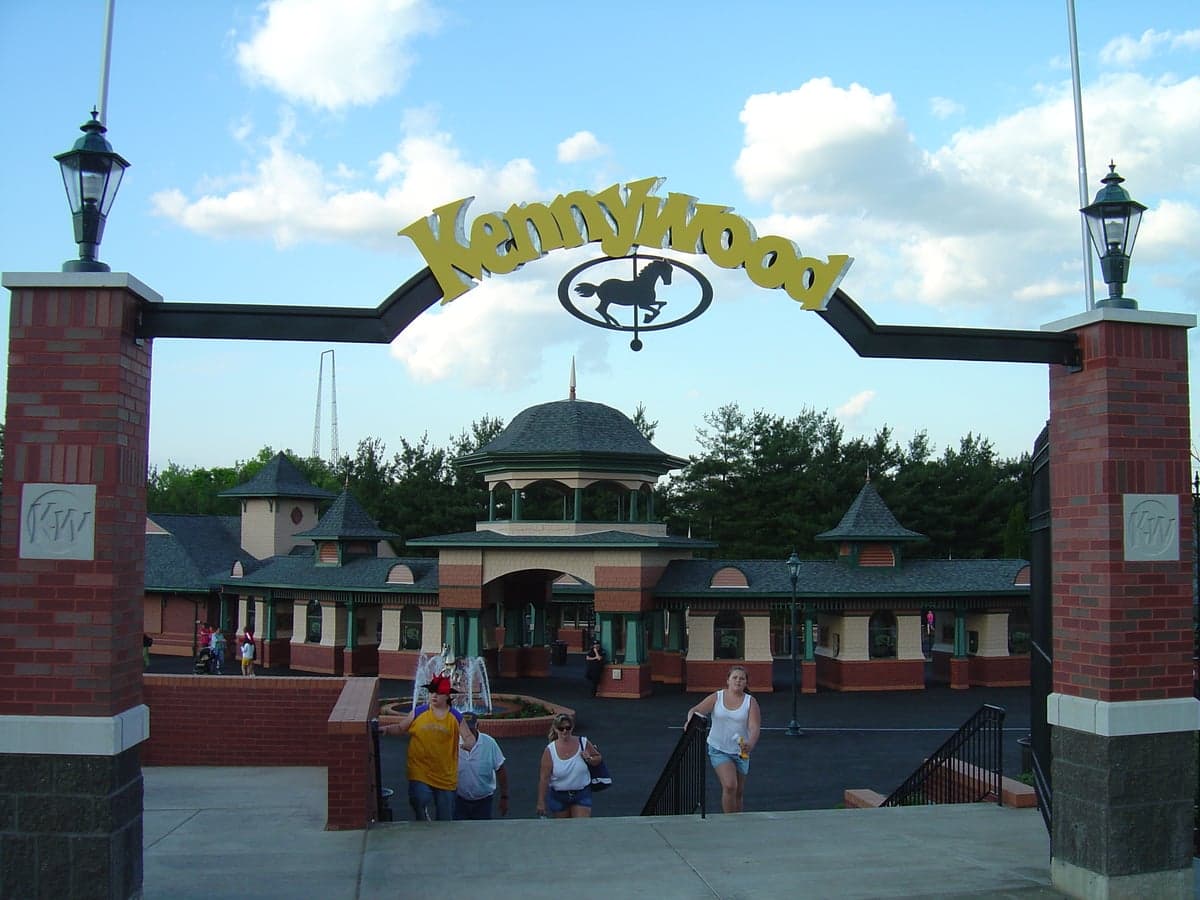
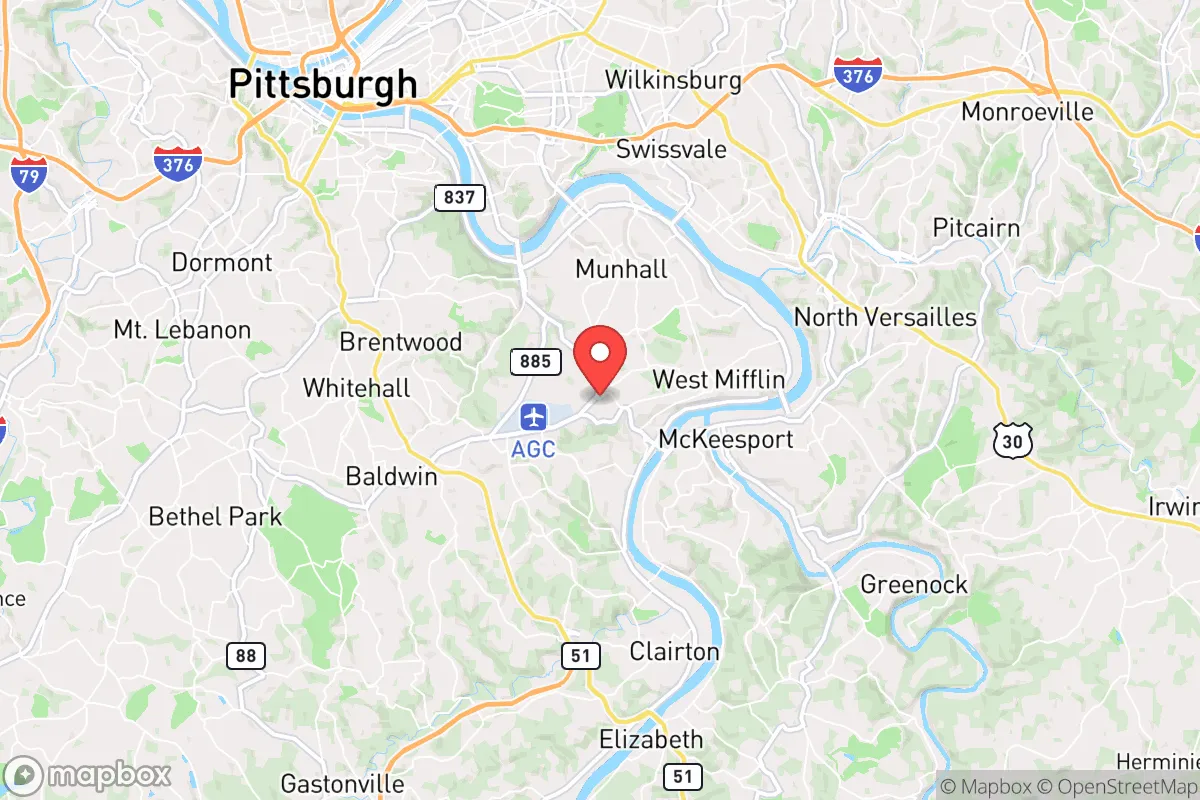
Photo: Wikipedia
Political ClimatePolitical Climate in West Mifflin, PA
District shown is the primary district for this city’s centroid. Cities may span multiple districts.
Local Political AnalysisPolitical Analysis of West Mifflin, PA
West Mifflin, Pennsylvania, has long been a solidly Democratic stronghold, carrying a Cook PVI of D+10, but if you’ve lived here as long as I have, you know that label doesn’t tell the whole story. This area was built on blue-collar values—hard work, self-reliance, and a healthy skepticism of government telling you how to live your life. Over the past decade, though, you’ve seen a slow but steady shift: the old-school, union Democrat vibe is giving way to something more progressive, and frankly, that’s got a lot of us longtime residents watching our backs. The political trajectory here isn’t a sudden flip—it’s a gradual creep toward policies that feel less about helping folks and more about controlling them.
How it compares
Drive ten minutes north to Pittsburgh proper, and you’ll hit a whole different world—a city that’s gone all-in on progressive politics, with bike lanes, green mandates, and a city council that seems to think it knows best about everything from your heating source to your business hours. West Mifflin used to be a refuge from that kind of overreach, but now you see the same ideas seeping in. Compare us to nearby communities like Jefferson Hills or Elizabeth Township, which lean more conservative and have held the line on things like property rights and school curriculum. Those towns still feel like the West Mifflin I grew up in—where the biggest government intrusion was a pothole repair notice. Meanwhile, our local school board and borough council have started flirting with diversity initiatives and climate resolutions that sound nice on paper but come with new rules and higher taxes. It’s a stark contrast: we’re not Pittsburgh yet, but we’re drifting away from our neighbors who’ve kept their heads down and focused on what works.
What this means for residents
For the average family here, this political shift means you’re paying more attention to local elections than you used to. The days of just voting the straight ticket are over—now you’ve got to vet candidates on things like zoning ordinances that could affect your backyard shed or school board members who might push critical race theory into your kid’s classroom. Property taxes have crept up, partly to fund programs that feel more like social engineering than education. And if you run a small business—say, a landscaping company or a diner—you’ve probably noticed more paperwork and fees tied to “sustainability” goals that don’t do much except make you feel like the government’s your silent partner. The real concern is long-term: as the older generation fades and younger, more progressive transplants move in from the city, we could lose the character that made West Mifflin a place where you could raise a family without constant interference. It’s not a crisis today, but it’s a trend worth watching.
Culturally, West Mifflin still holds onto some old-school distinctions—the volunteer fire department, the VFW hall, and the annual community days where everyone knows your name. But you’ll notice fewer flags on porches and more yard signs for candidates who talk about “equity” and “systemic change.” The biggest policy distinction is how the borough handles things like short-term rentals and noise ordinances: they’re getting stricter, and it feels like a slow erosion of the live-and-let-live attitude that used to define us. If you’re thinking about moving here, just know that the political climate is in flux. It’s not the redoubt it once was, but it’s not a lost cause either—if you’re willing to get involved and push back, you can still make a difference. Just don’t expect the government to stay out of your business without a fight.

State Political ClimatePolitical Climate in Pennsylvania
State Political AnalysisPolitical Environment in the State
Pennsylvania has long been a classic swing state, but over the past 10-20 years, its political center of gravity has shifted noticeably toward the left, driven by explosive growth in the Philadelphia and Pittsburgh metros and a steady erosion of conservative strongholds in the rural middle. While the state still elects split-ticket officials — a Democratic governor and a Republican-controlled state House as of 2026 — the underlying trend is concerning for conservatives: the state has voted Democratic in every presidential election since 1992 except 2016, and the margin in 2020 was just over 1% for Biden. The real story is that the old "Pennsylvania is a purple state" narrative is becoming less true by the cycle, as the urban cores tighten their grip on statewide outcomes.
Urban vs. rural divide
The political map of Pennsylvania is a tale of two worlds. The southeastern corner — Philadelphia and its collar counties like Montgomery, Delaware, and Bucks — is a Democratic fortress that alone can swing a statewide election. Philadelphia County delivered over 600,000 votes for Biden in 2020, more than the entire vote total of 30 rural counties combined. Pittsburgh and its Allegheny County base are similarly blue, though slightly less monolithic. The real action is in the "collar counties" that used to be swing areas: Bucks County flipped from red to blue in the 2000s and is now reliably Democratic, while Lancaster County remains a conservative stronghold but is seeing rapid in-migration from the Philadelphia exurbs that is slowly diluting its red hue. The rural "T" — stretching from the northern tier (Tioga, Bradford) down through the center (Centre, Clinton) and into the southwest (Fayette, Greene) — votes heavily Republican, but these areas are losing population and political weight. Erie County in the northwest is a classic bellwether that has trended blue in recent cycles, while Northampton County (Lehigh Valley) is now a true swing county that both parties target heavily. The bottom line: the state's political future is being written in the suburbs of Philadelphia and Pittsburgh, not in the farm country.
Policy environment
Pennsylvania's policy environment is a mixed bag for conservatives, with some bright spots and several growing concerns. On taxes, the state has a flat income tax rate of 3.07% — relatively low compared to neighboring New York and New Jersey — but property taxes are among the highest in the nation, averaging over $3,500 annually, which hits homeowners hard. There is no state sales tax on groceries or clothing, but the 6% base rate applies broadly. The regulatory posture is moderate: Pennsylvania is not a "right-to-work" state, meaning unions still wield significant power, especially in public education and construction. Education policy is a flashpoint: the state has a robust school choice program (the Educational Improvement Tax Credit and Opportunity Scholarship Tax Credit), but Governor Josh Shapiro has pushed for increased funding to traditional public schools and resisted expansion of universal school vouchers. Election laws have been a battleground: Act 77 of 2019 expanded no-excuse mail-in voting, which conservatives argue opened the door to fraud and reduced election integrity. Efforts to require voter ID have stalled in the legislature. Healthcare is heavily regulated, with the state expanding Medicaid under the Affordable Care Act and maintaining a state-run insurance exchange. For a conservative, the policy environment is a tug-of-war: low income tax is a plus, but high property taxes, union power, and a loosening of election laws are red flags.
Trajectory & freedom
Pennsylvania is trending in a concerning direction for personal liberty, with several recent legislative moves that expand government overreach. On gun rights, the state is a "shall-issue" for concealed carry and has preemption laws that prevent local municipalities from enacting their own gun bans — a win for the Second Amendment. However, in 2023, the legislature passed a "red flag" law (HB 1018) that allows courts to temporarily seize firearms from individuals deemed a risk, which conservatives view as a due process violation. On parental rights, the state has not passed a broad "parents' bill of rights," but school boards in blue counties like Montgomery and Delaware have implemented policies on transgender student accommodations that override parental input — a growing flashpoint. Medical freedom took a hit during COVID: Pennsylvania had one of the longest-lasting mask mandates in schools and a vaccine passport system for certain venues, though these have since been repealed. Property rights are generally strong, but the state's Act 32 of 2024 expanded the use of eminent domain for "economic development" projects, which alarms property owners. Taxation freedom is eroding: the state's inheritance tax (4.5% to 15%) and a new "millionaire's surcharge" proposed in 2025 (though not yet passed) signal a trend toward higher burdens on wealth. The overall trajectory is one of slow, steady encroachment on individual liberties, particularly in the urban centers.
Civil unrest & political movements
Pennsylvania has seen its share of political turbulence. The 2020 election aftermath was particularly intense in Philadelphia, where allegations of ballot counting irregularities led to protests and counter-protests outside the Convention Center. The city has a "sanctuary city" policy that limits cooperation with federal immigration enforcement, which has been a rallying cry for conservative activists in the state. Organized movements on the right include the Pennsylvania Freedom Coalition, which focuses on school board elections and parental rights, and the Pennsylvania Firearms Owners Association, which has been active in challenging red flag laws in court. On the left, Indivisible chapters in Pittsburgh and Philadelphia have been highly organized, pushing for progressive policies on climate, housing, and criminal justice reform. Election integrity remains a live issue: the 2024 cycle saw lawsuits over mail-in ballot drop boxes and signature verification, with a state Supreme Court ruling in 2025 that weakened signature matching requirements. A new resident in a rural area like Franklin County would notice a very different political culture than someone in Center City Philadelphia — the divide is palpable in everyday conversations, local news coverage, and even which businesses are boycotted.
Projection
Looking 5-10 years out, Pennsylvania is likely to continue its slow drift leftward, driven by demographic trends that favor the urban and suburban counties. The Philadelphia metro is projected to add another 200,000 residents by 2035, while rural counties will continue to lose population. This means the Democratic base in the southeast will only grow stronger, making it harder for Republicans to win statewide. The state's in-migration is coming disproportionately from blue states like New York and New Jersey, bringing their political preferences with them. However, there is a counter-trend: the "exurban frontier" — places like York County and Cumberland County — are seeing growth from conservatives fleeing higher-tax states, which could shore up the red vote in the middle of the state. The wild card is the state legislature: if Republicans can hold the House and Senate, they can block the worst progressive overreach, but the governor's office is likely to remain Democratic for the foreseeable future. A new resident moving in now should expect a state that is politically competitive but tilting blue, with increasing policy battles over education, taxes, and personal freedoms.
For a conservative considering a move to Pennsylvania, the bottom line is this: you can find a good life here, but you need to choose your location carefully. The rural and exurban areas still offer a strong sense of community, lower crime, and a culture that respects personal liberty. But the state-level political winds are blowing against you, and you should expect to fight for your values at the ballot box and in your local school board. If you're looking for a state that is actively expanding freedom, Pennsylvania is not that place — but if you're willing to engage in the fight, it's still a state where your vote matters and your voice can be heard.
* Values derived from national, state, county, city and local statistics and may differ in a specific area. Last updated: 2026-04-24T12:03:21.000Z
Narrative content on this page is AI-generated and may contain mistakes. Verify any details that matter before acting on them.
ReloMaps may earn a commission from affiliate links at no extra cost to you.

